Where the Autopista Ends
Two motorcycle bloggers in the San Francisco Bay Area.
On the move
Posted on April 3, 2014

We stopped to take a photo with this sign along with two Harley-Davidson riders. One of the Harley guys used to be the official photographer of HOG Chile so he took this photo for us. Photo: HOG Guy
From Mendoza we were on a mission to get to Santiago so that we could make the push down south. Ariel the mechanic (along with others) had told us we could make it to Santiago in about five hours, though the big question mark was how long the border crossing was going to take, as our last experience had scared us in terms of waiting time.
We got up and headed toward the border, along with tons of Harleys, BMWs, and KTMs among other motorcycles. It was Sunday, and on top of that there had been a giant Harley-Davidson rally in Mendoza that weekend, putting tons of motorcycles on the road heading back to Santiago. It felt good to be surrounded by motorcyclists who were out enjoying the weather, the weekend, and just riding.
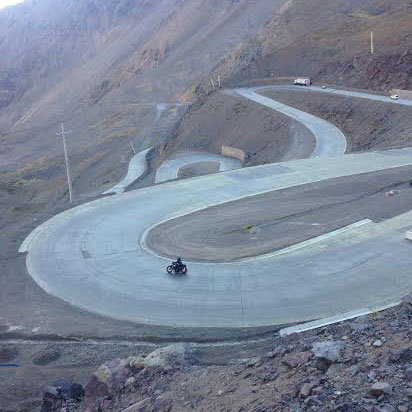
A Harley-Davidson starts to make its way down the infamous snail pass of Chile. Photo: Alex Washburn
The border to Chile is through a half mile long tunnel and on the other side you are in Chile. We didn’t see any signs for where to get stamped out of Argentina, and went through the tunnel three times before finding out that it was all done in one location, about five miles into Chile.
While waiting at the border, we got to talk to several bikers and pick their brains about the route we were taking to Ushuaia and rumors we had heard about Southern Argentina. One Harley rider said that we should prepare for wind and to make sure we had a gas can with us (this was echoed by friends who had already rode through southern Argentina) as many of the gas stations are closed or simply don’t have any gas.
The border involved the usual inefficiency and the second searching of the bikes we have had on the entire trip. Finally done and processed we got to ride the snail’s pass on our way down the mountains. As you can see from the picture, it is s-curves all day long and quit fun to ride down, though I was glad that the on coming traffic was stopped for road repairs or it might have been a scary ride.
We made it to Santiago just as the sun was setting and it was long after dark by the time we made it to our hostel. We decided to take one day in the city to enjoy the sites and rest up before we made the big push down the 5. Santiago has a European feel with both the atmosphere and the architecture of the city and we enjoyed just walking around and exploring.
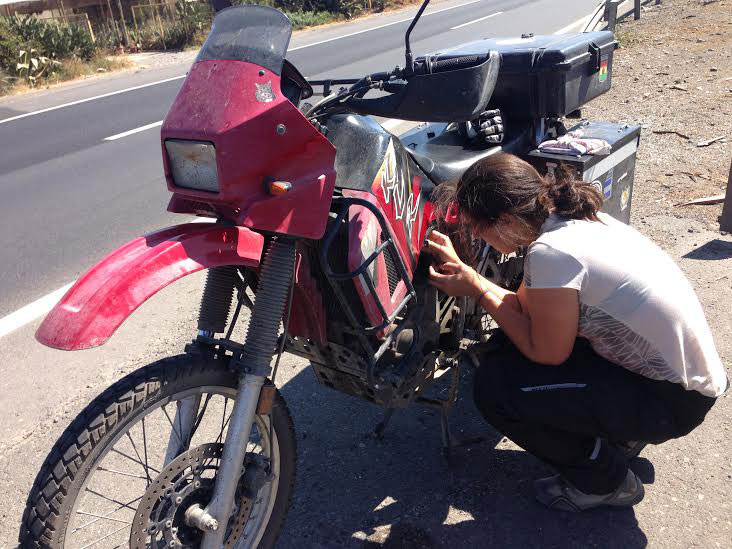
Alex tries to get her bike moving again on the side of the freeway. Photo: Nathaniel Chaney
We were able to make it to Chillán (past where we thought we would make it due to the US quality road that is the 5) and found a cheap hostel with parking and a place to clean our chains, that badly needed some attention. It was in the last minutes of twilight that Alex was close to finishing cleaning her chain as Tobee (from Germany) came walking up the driveway of the hostel.
Tobee has been experiencing some extreme bad luck with his KTM and delighted us with his stories from the road, a portion of which involved him removing the air filter of his motorcycle and using, in his words, panties to cover the intake. It was nice having someone to talk to and we spent the night swapping stories from the road and talking about the journey to Ushuaia. (The last we heard, Tobbe is still stuck in Chillán trying to get his carburetor repaired with the most patient of mechanics).
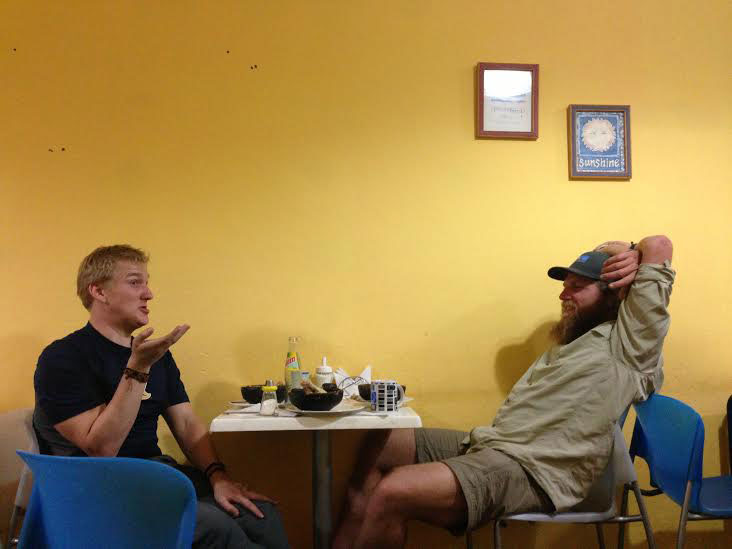
Nathaniel and Tobee swap stories over pastel de choclo (amazing chilean dish). Photo: Alex Washburn
The next day, after a comment from Tobee, we stopped by a motorcycle shop to pick up an extra chain as Alex’s appeared to be on its last leg. It was here where I made a grievous error. It was close to when we were going to have to get the last oil filter change of the trip (we should have done this in Santiago). The “mechanic” at the shop said he didn’t know if he had the right size of oil filter and asked if he could just open up my bike and check to see.
After spilling oil all over my bike (should have been the first clue) he determined he didn’t have the right size oil filter, which if you looked at the size of the oil filter housing it was clear he didn’t have the right size. He put the oil filter back in and we purchased a chain and went to go fill up before heading out-of-town. It was at the gas station that I noticed the oil filter cap was not flush and decided we needed someone else to look at it before we hopped on the freeway. It was on the two block drive to the Yamaha dealership that my bike started hemorrhaging oil as if from a gunshot wound.
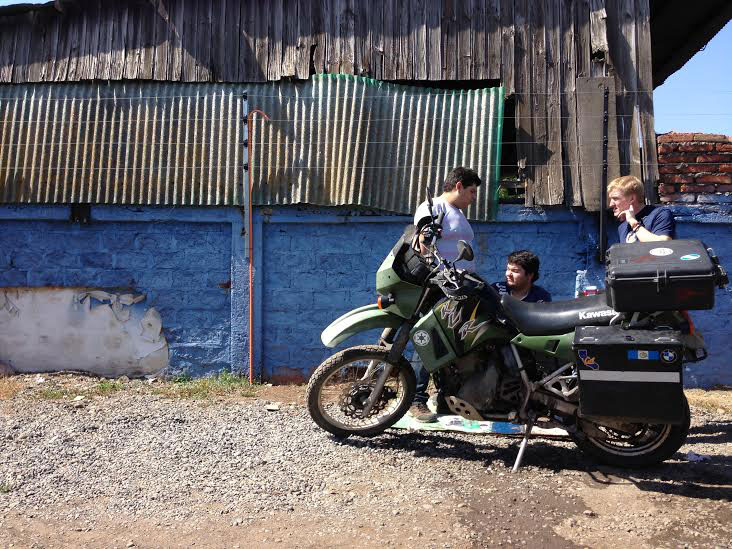
Nathaniel talks to the mechanics at the Yamaha shop in Chillán after they repaired the damage another shop did to his bike. Photo: Alex Washburn
Alex and I found out that there was a Kawasaki authorized dealership in Temuco, which just happened to be on our way along the 5. Having wasted half a day with the oil disaster, we hightailed it to Temuco and got an appointment for the following morning. We used this as an opportunity to change the chains and spokes, as well as, the oil to get the bikes ready for the last leg of the trip. Though this ended up sucking up one more day than we thought it would.
Fresh chains and riding like new we headed for the border to cross back to Argentina. Everyone had told us it was going to be cold in the south, we just didn’t know that the cold was going to come this soon. We stocked up on new winter gloves (that still wouldn’t be warm enough for snow) and gas cans for Southern Argentina.
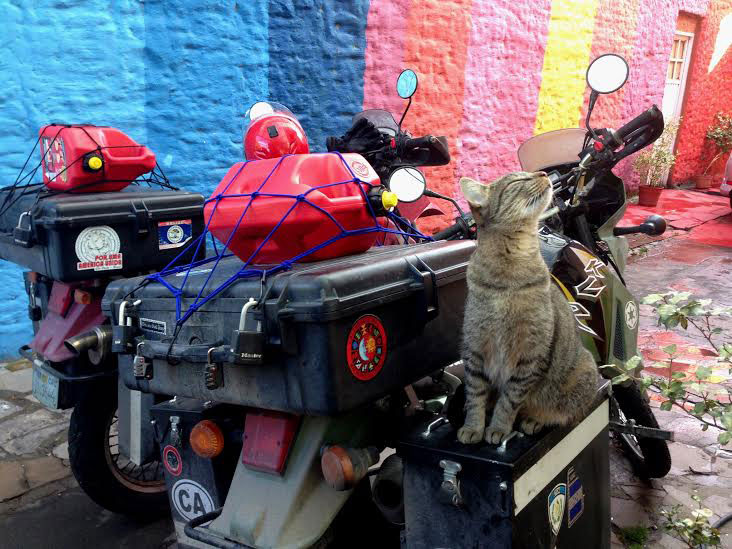
For the final portion of our trip we must carry gas cans. Photo: Alex Washburn
After the best border crossing of the trip, we made it to San Carlos de Barlioche (the lake Tahoe of Argentina) and this is where things got interesting. It was cold on the ride along the lake, but we didn’t know we were going to wake up and see snow falling outside the window.
We took showers, got packed, and the snow had stopped, to be replaced with a light rain. We ate breakfast and got the bikes packed to try to make it out-of-town before the real rain started. We didn’t succeed.
Ten miles down the road it started pouring, and didn’t stop for the rest of the day. Our new gloves and five layers of clothing wasn’t enough to keep the cold out and on top of that, we got our first snow ride. Not little flakes, but literally snow that falls, hits your helmet visor, and sticks.
We could only make it about 30 miles at a time before we had to pull over and warm up our hands as they were turning numb with cold. Making it to El Bolsón (only 80 miles past Bariloche) we had to give up for the day as we were numb in both fingers and toes and were soaked to the bone. The best part of being in a part of the country that is cold for a large portion of the year, they have heaters.
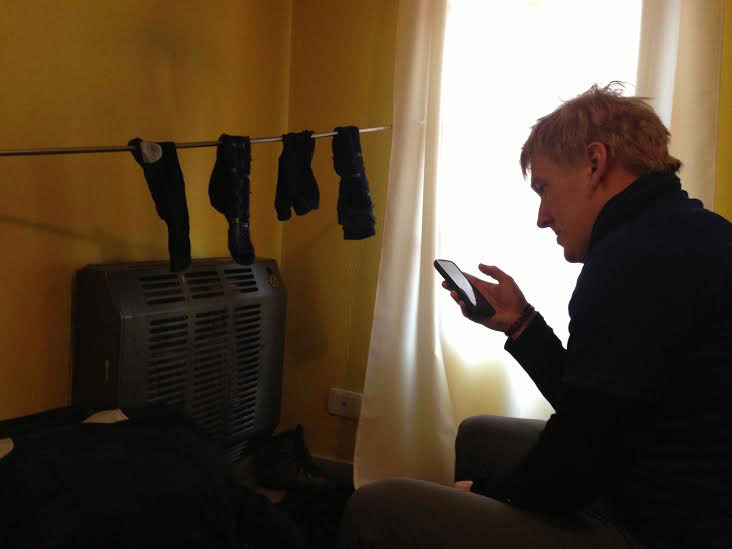
I (Alex) took apart one of the window fixtures in our room to create a drying rack for our clothes. Photo: Alex Washburn
Not knowing what the day would bring at 7am, the sun started to peak out around 9 and we were off. Riding through snow-capped mountains and frosty fields we made our way south, 36 miles at a time while we let our hands warm up. It wouldn’t be till after Esquel that we started dropping down in elevation and the ambient temperature rose, at least enough so that we could start putting some miles down without stopping.
The excitement of the day was that Alex’s bike was going to turn 30,000 miles. After lunch, ten miles outside of Tecka her bike hit the 30,000 mile mark and we pulled over to the side of the road to take pictures and I did a little dance in celebration. It was during this dance I noticed the massive amount of liquid coming out of the bottom of Alex’s bike…
To be Continued…
Epic Asado
Posted on March 30, 2014
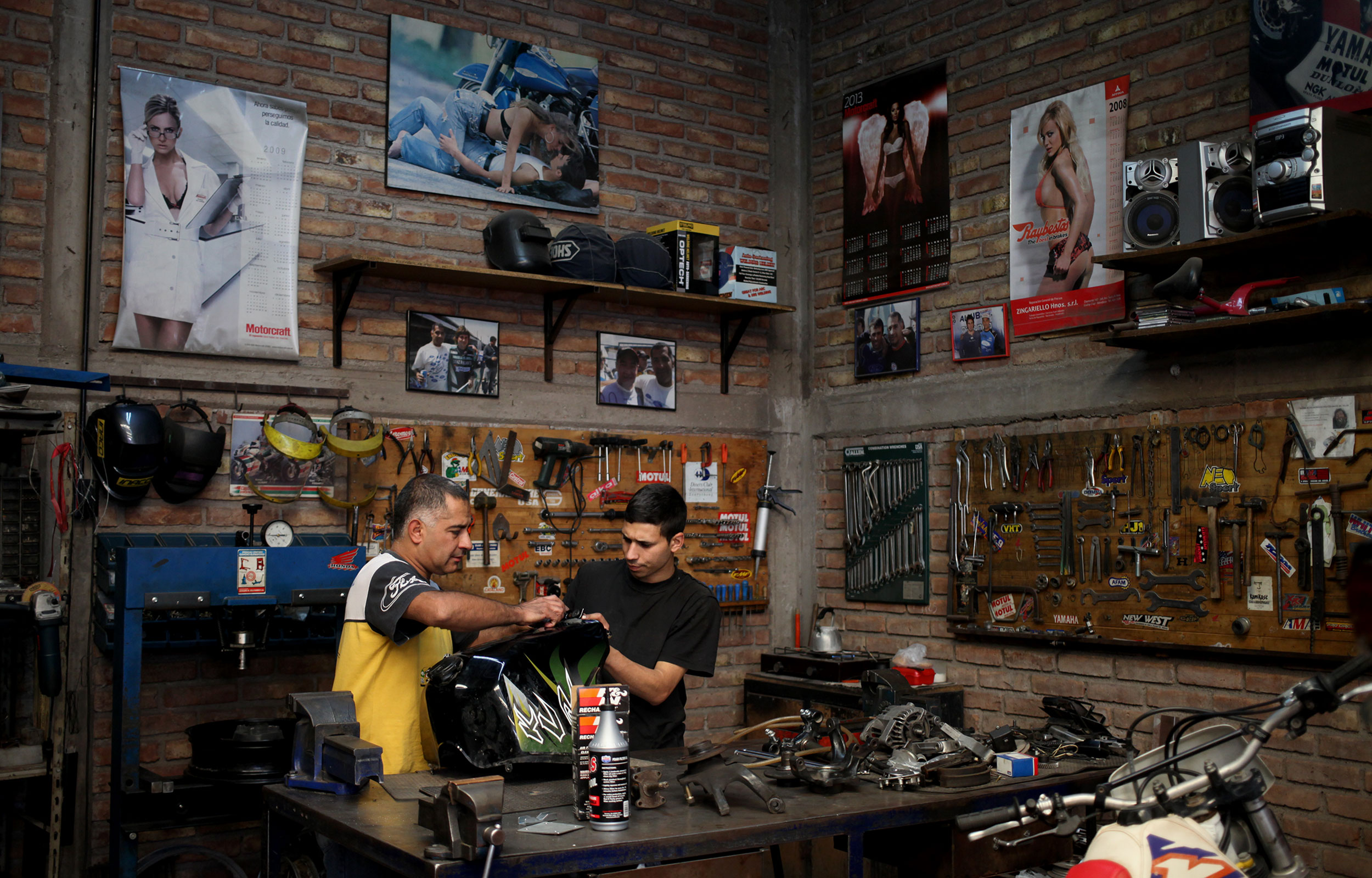
Ariel (left) discusses the crack with his apprentice. Photo: Alex Washburn
Travelers crave the authentic. They idealize it. And they brag about it when they achieve it.
Travel magazines, guide books and blogs do a great job motivating new tourists to pick up a passport and head to the airport every year which is AWESOME, however it also makes it harder for travelers (there is a difference) to make a real and unique connection to a place before it’s time to head back to the fluorescent life.
About a week ago Nathaniel and I managed to achieve one of those beautiful, authentic moments that made every time we’ve gotten stuck and had to pay too much for a hotel or broke down and bought American fast food (effing Tegucigalpa!) worth it.
It started in Lavalle Argentina, where the now familiar smell of gas was coming from Nathaniel’s gas tank and we suspected he had a new fracture in the tank, but couldn’t confirm till the morning as it was dark and we had rode 300+ miles that day.
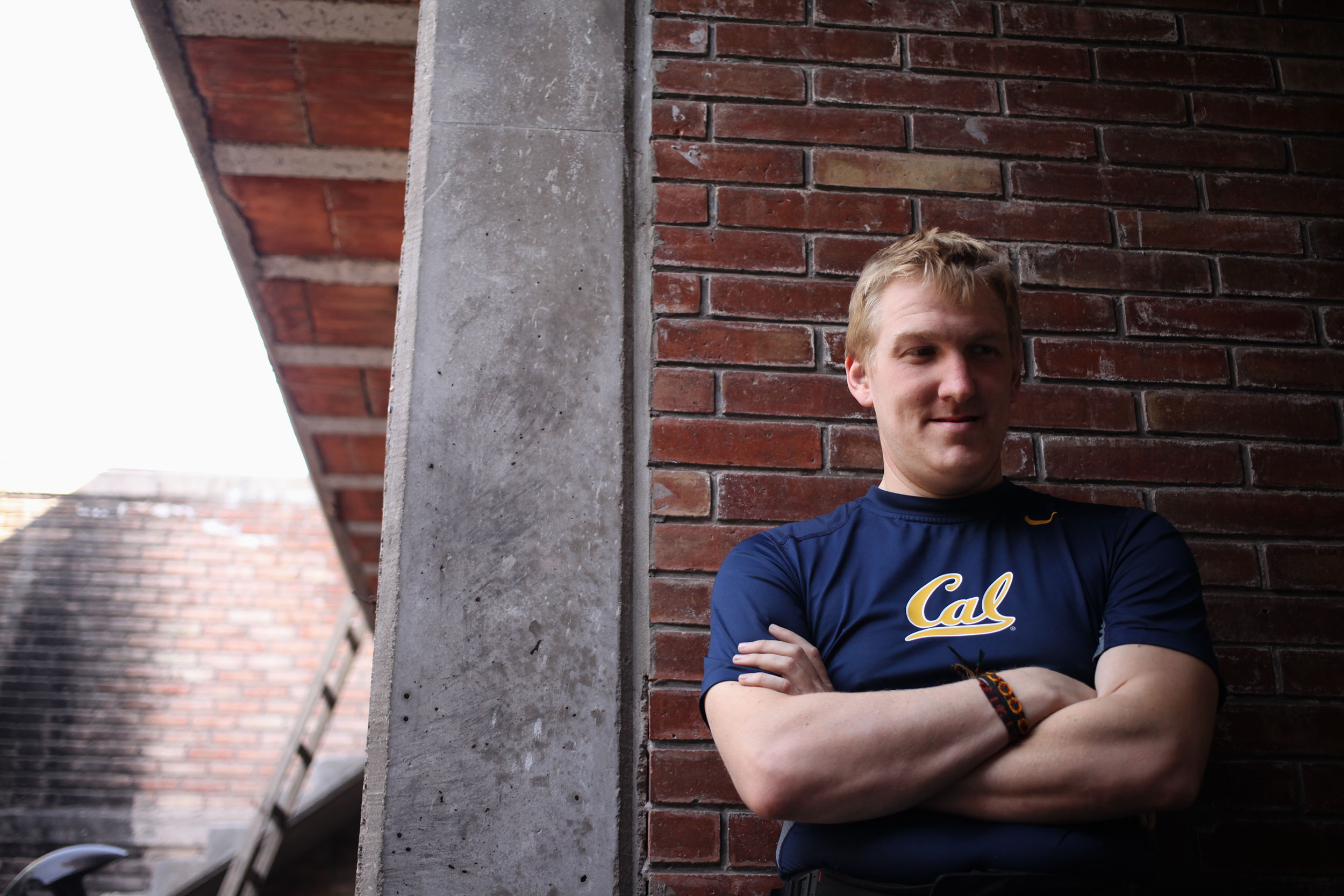
Nathaniel and I had a lot of hanging around to do as Ariel and his helper worked on the gas tank. Photo: Alex Washburn
The next morning Nathaniel went through the process of taking off his panniers and top box and discovered one of the weld seams on his tank was slowly oozing gasoline. We would wipe the spot where it was collecting dry and then gas would immediately begin spreading from a crack so small we couldn’t actually see it.
We had fixed a different fracture in the tank with JB weld a few days before, though the position of the new fracture made it impossible to seal with the JB Weld.
While we waited for the JB Weld to set, Nathaniel googled “KLR Mechanic Mendoza” because the next large-ish town was only about 30 minutes down the highway. I still think that phrase was an incredibly specific thing to look for, but it gave us the name, address and phone number of a man that according to legend is half mechanic half wizard. Looking at the thread about “Ariel” on Horizons Unlimited was impressive, although it was seven years old – just for the heck of it we gave the phone number a call and someone answered!
I asked if it was Ariel the mechanic and he told me it was. I next inquired if we could bring a motorcycle for him to look at and he confirmed his address for me.
Less than an hour later we were sitting in the middle of a residential intersection in Mendoza Argentina confused about which house was the mechanic’s shop. A pregnant woman motioned to me and asked if we were looking for the bike mechanic- I replied we were and she pointed to a house (her house). The woman was Ariel’s wife and a lovely hostess for the next two days.
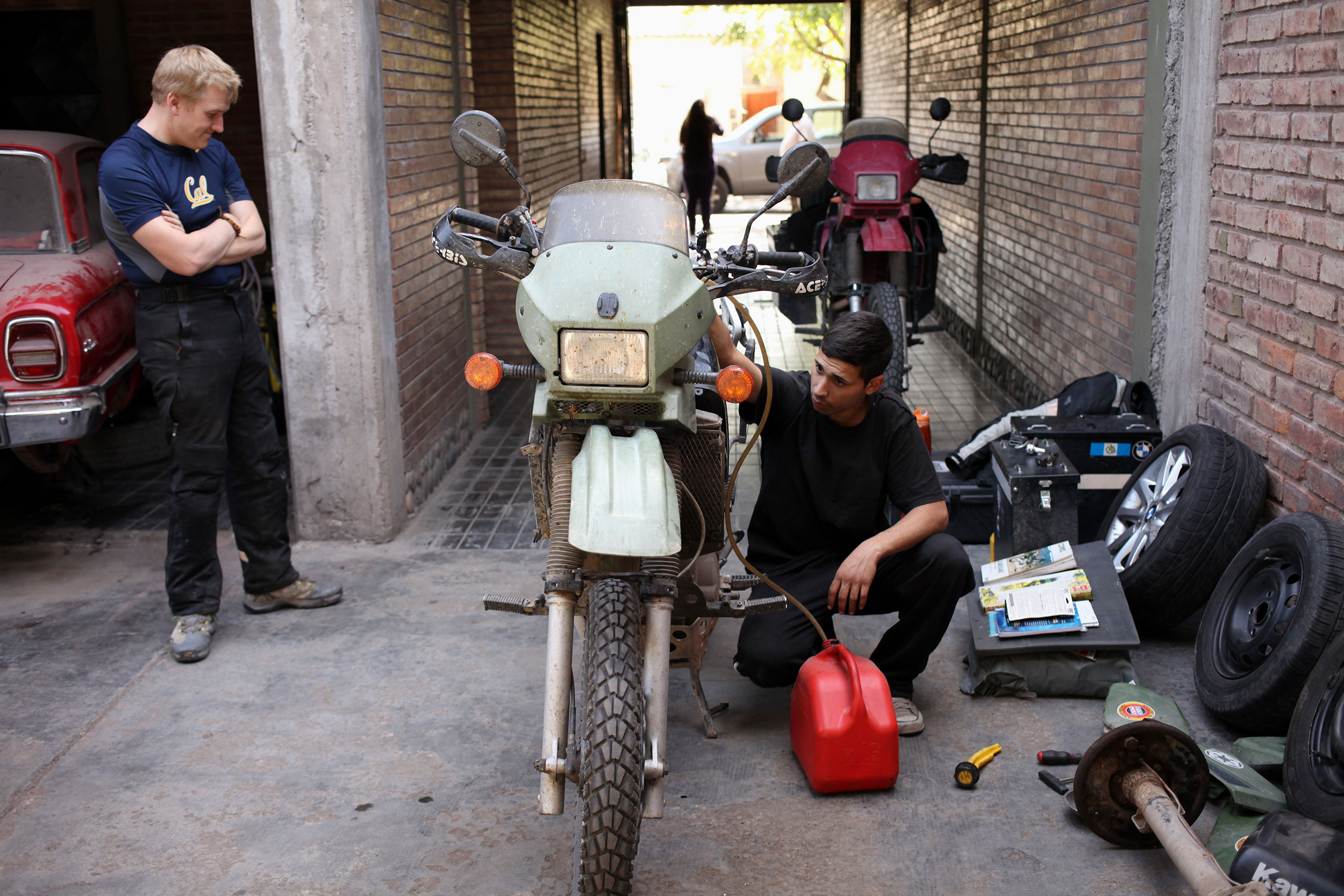
When preparing to weld a gas stank you need to remove all of the gas first… Photo: Alex Washburn
The back of Ariel’s house opens up into a huge work space with dozens of motorcycles, cars, quads and even a full size truck tucked in cozily next to each other (also a couple of 60’s Ford Falcons). The walls are covered with every tool imaginable and the obligatory sexy lady posters, although he of course seems to be a loving father and husband.
Before we were introduced to this space he met with us out in front and told use he could help us, but that we needed to come back a few hours later at 4pm. Argentina takes ‘siesta’ seriously and from 2 o’clock to 4:30 pm it is often impossible to get errands done. Even banks and ATMs close during this time.
When we came back at four we rolled our bikes into the back portion of his house and Ariel’s assistant went to work draining Nathaniel’s gas tank after they had a look at the cracks and temporary repairs. Ariel floated around monitoring his assistant, drinking mate and helping another young guy in the shop who was working on his own bike. The whole process was very laid back, so after an hour and a half the tank was prepped for surgery and Ariel went to work with the blow torch.
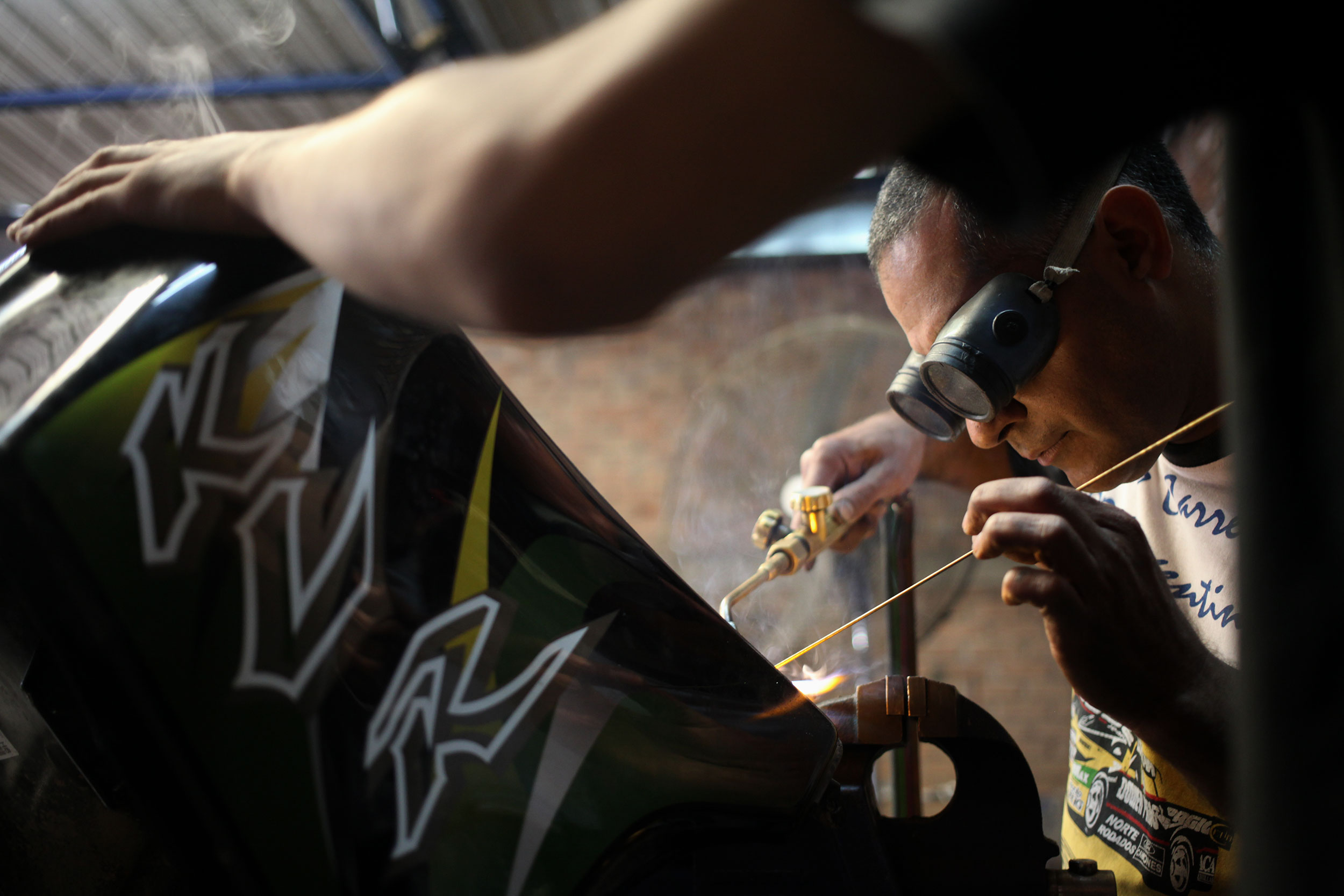
Ariel demonstrates why he is considered half magician by the ADV riders of Horizons Unlimited. Photo: Alex Washburn
After several blow torch sessions, we waited for what seemed like forever for the tank to cool down enough to be re-installed on Nathaniel’s bike and re-filled with gasoline. When we were ready to leave, Nathaniel asked Ariel how much he wanted for the work and Ariel told us not to worry about it and to come back the next day as he wanted to make sure the weld held and to ensure the quality of his work (it was now past dark). We were itching to get on the road, but agreed and then Ariel asked us if we would be able to return at noon and have asado with him and his family.
In situations like this I usually try to be polite and decline a few times before giving in. However, when an Argentinian gives you an invitation to eat asado at his house you say thank you and ask what time you should show up.

The tank rested on Ariel’s work bench for a while so it could cool off. Photo: Alex Washburn
We arrived a little after noon the next day and things were awkward at first. Nathaniel doesn’t speak Spanish and Ariel clearly wanted his 11-year-old daughter to practice her English with us. It was interesting to talk to her and see what her life was like. Ariel double checked the weld and approved that it was going to hold, but he later joked to Nathaniel that he wasn’t giving a lifetime guarantee.
Eventually we all moved to the top floor patio of Ariel’s house where they have a brick grilling area built right into the patio. The conversation got easier once we all began to relax and I carried my miniature dictionary with me the whole day. I can communicated pretty well in Spanish (obviously), however I knew that over the course of the next several hours words would come up in conversation that I wouldn’t understand and I didn’t care about looking like a nerd leafing through a dictionary.
By the end of the day I was mentally exhausted.
It’s impossible for me to explain the feeling of being wrapped up in that afternoon. The conversation was warm and easy while I tried to translate back and for between Nathaniel and our hosts as much as I could, though the conversation never really slowed.
A friend of Ariel’s manned the grill which was fueled by a wood fire and although the stomach meat was marinated the rest only saw a generous sprinkling of salt before he laid the pieces out on the hot grill with the care and skill of a surgeon.

This grill looks simple, but it cooked the best beef I’ve eaten in my entire life. Photo: Alex Washburn
Argentinians don’t eat the meat once it has cooled off so there was one point where they took a cooled off piece from my plate and gave me a new one hot from the grill. I thought of it as strange, however there is no denying they are the masters of beef when you are crunching through the slightly crisped salty fat and biting into those simple delicious flavors.
I also really enjoyed their blood sausage, which was much softer than the blood sausages I’ve had in the past. It had the texture of pate on the inside and paired so well with the crusty fresh bread they had laid out on the table.
The entire time we sat on the patio I kept thinking to myself how lucky we were to be in that place at that moment.
As dusk came we started to say our goodbyes before disappearing off into the dark, back to our $20 a night hostel after having a dinner money cannot buy.
Perfect.
P.S. Ariel never did allow Nathaniel to pay for the services her provided, he said we had already paid with good company.
Big Pictures Salar de Uyuni
Posted on March 13, 2014
We visited the world’s largest salt flat – Salar de Uyuni a few days ago before making a big push toward the Argentinian border.
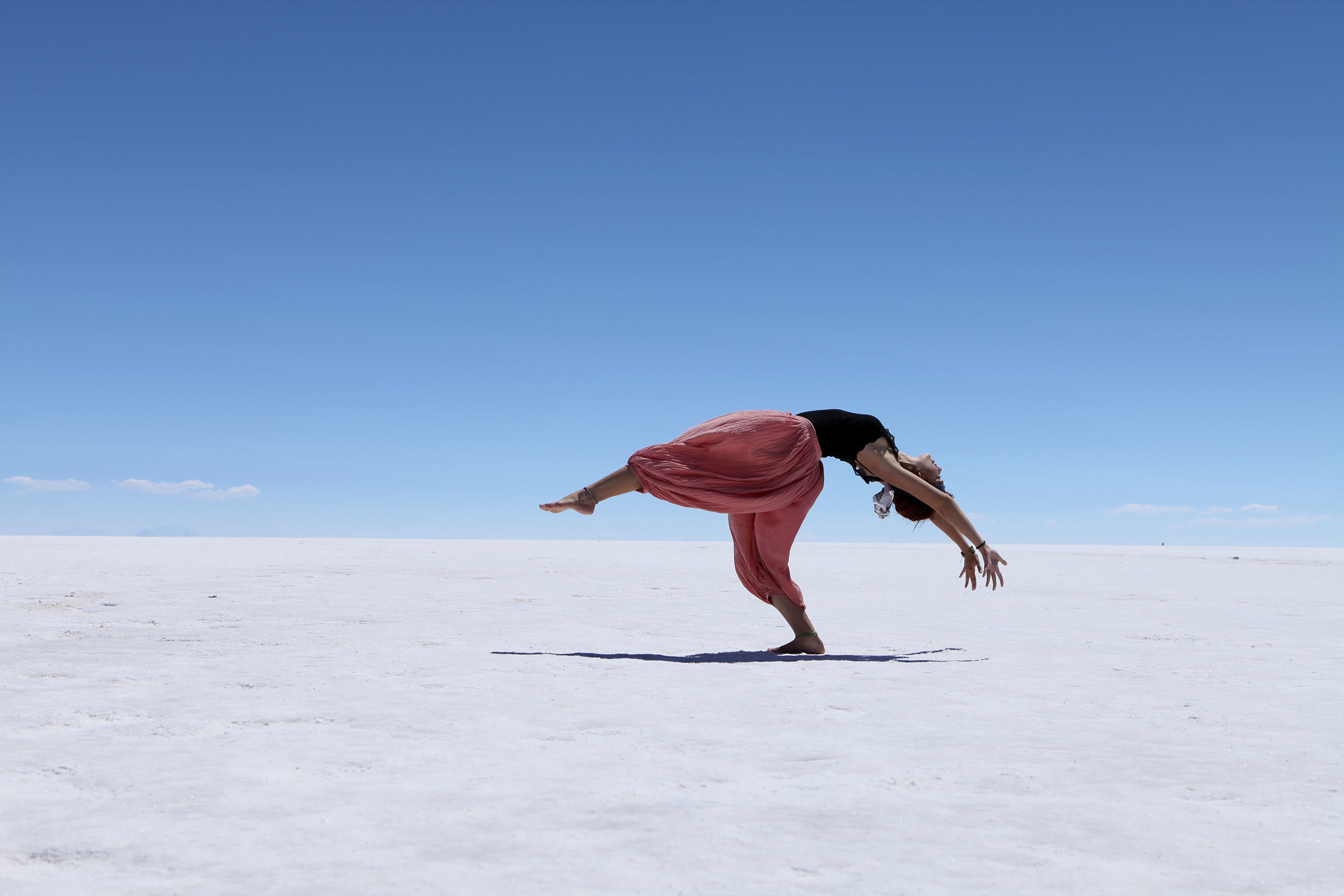
A Brazilian girl dances for her boyfriend’s camera on the Salar de Uyuni. Tourists usually bring props to play with the strange perspective the salt flat creates so I found this especially ethereal. Photo: Alex Washburn
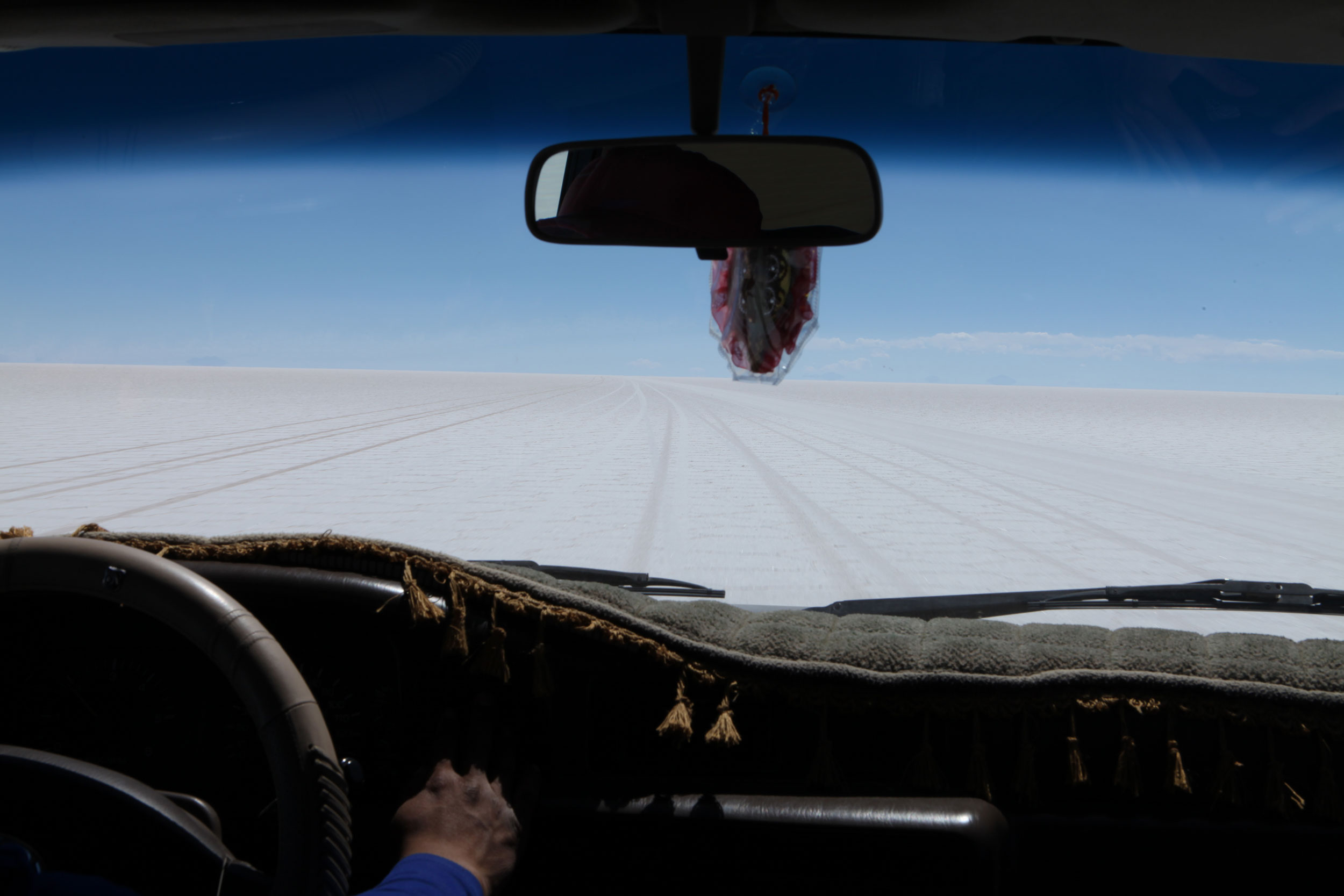
Driving through the Salar de Uyuni is a strange experience. White hard packed salt stretches for miles in every direction and the local guides navigate across the expanse of nothingness using the surrounding mountains as navigational markers. Once we got out onto the salt flat we were glad we hadn’t driven out there alone. Photo: Alex Washburn
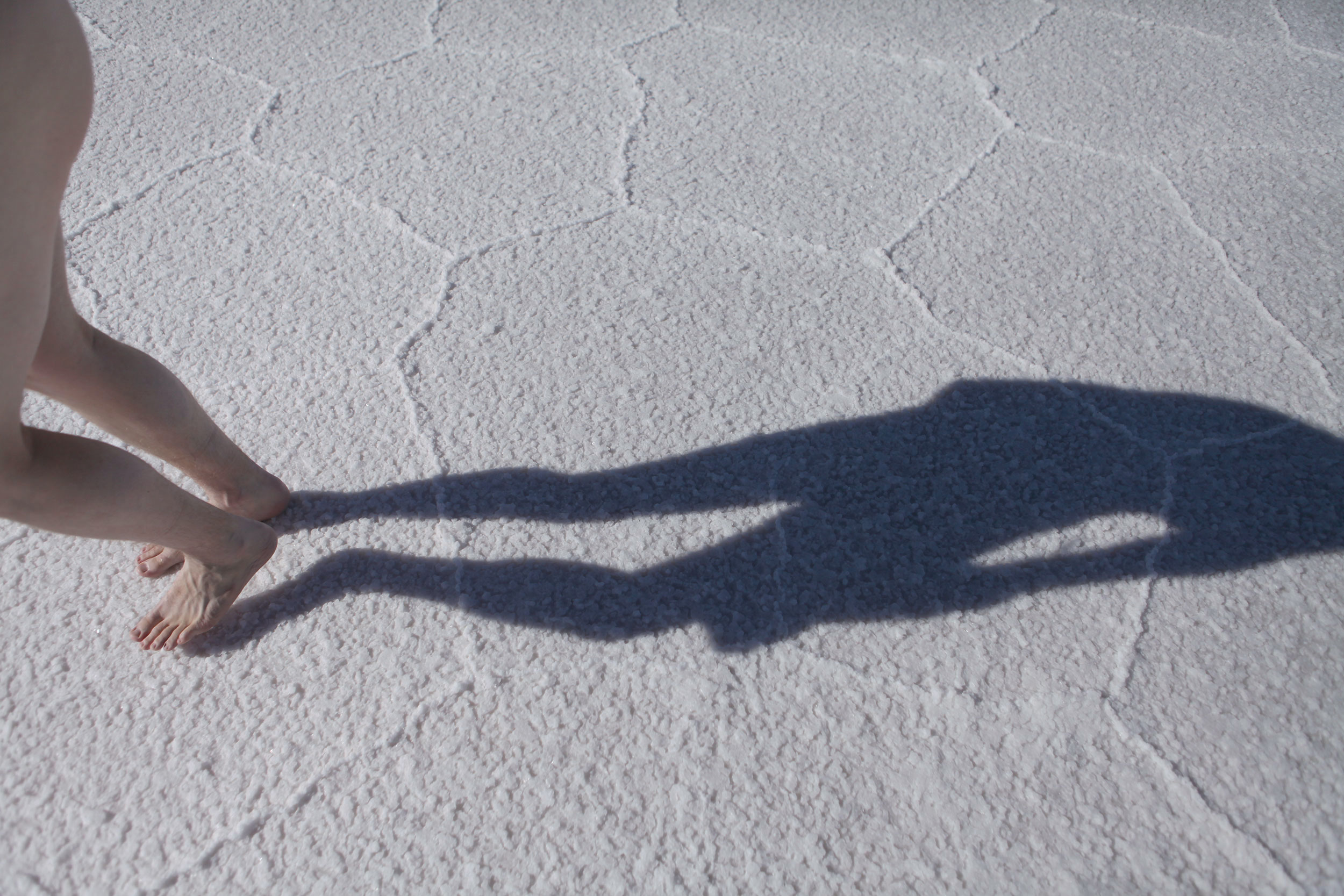
Nathaniel decided before we had made it out onto the Salar de Uyuni that he wanted a photo for instagram of himself standing out in the middle of the salt flat ‘sin ropa’. The other people in our SUV thought this was hysterical. Nathaniel was the only person in our car of 8 who did not speak Spanish so this was his bonding moment with the others. Photo: Alex Washburn
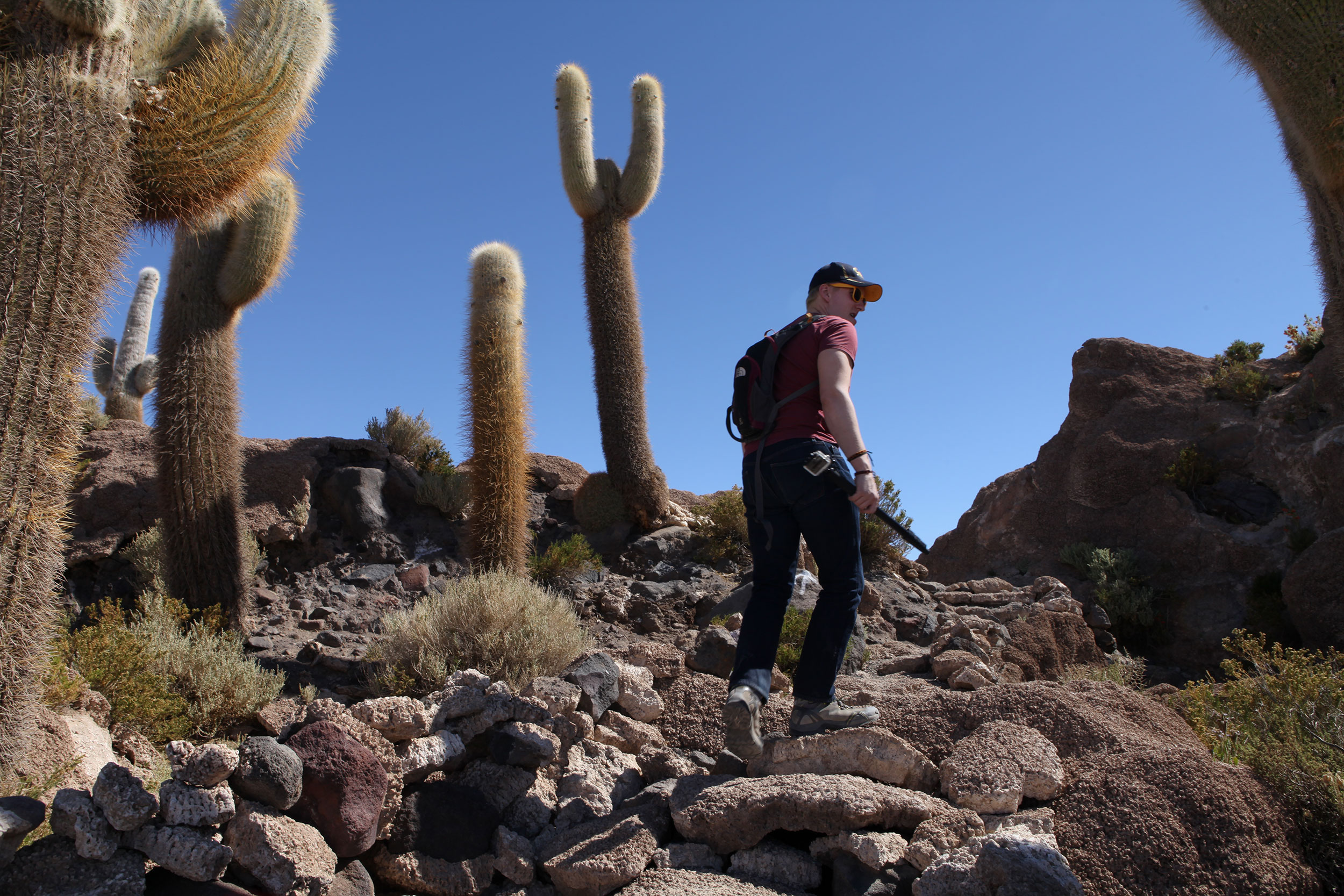
There are two ‘islands’ on the Salar de Uyuni. We paid our 30 Bolivianos to walk around the Isla Incahuasi and the desert flora made a strange contrast to the smooth expanse of white surrounding it. Photo: Alex Washburn
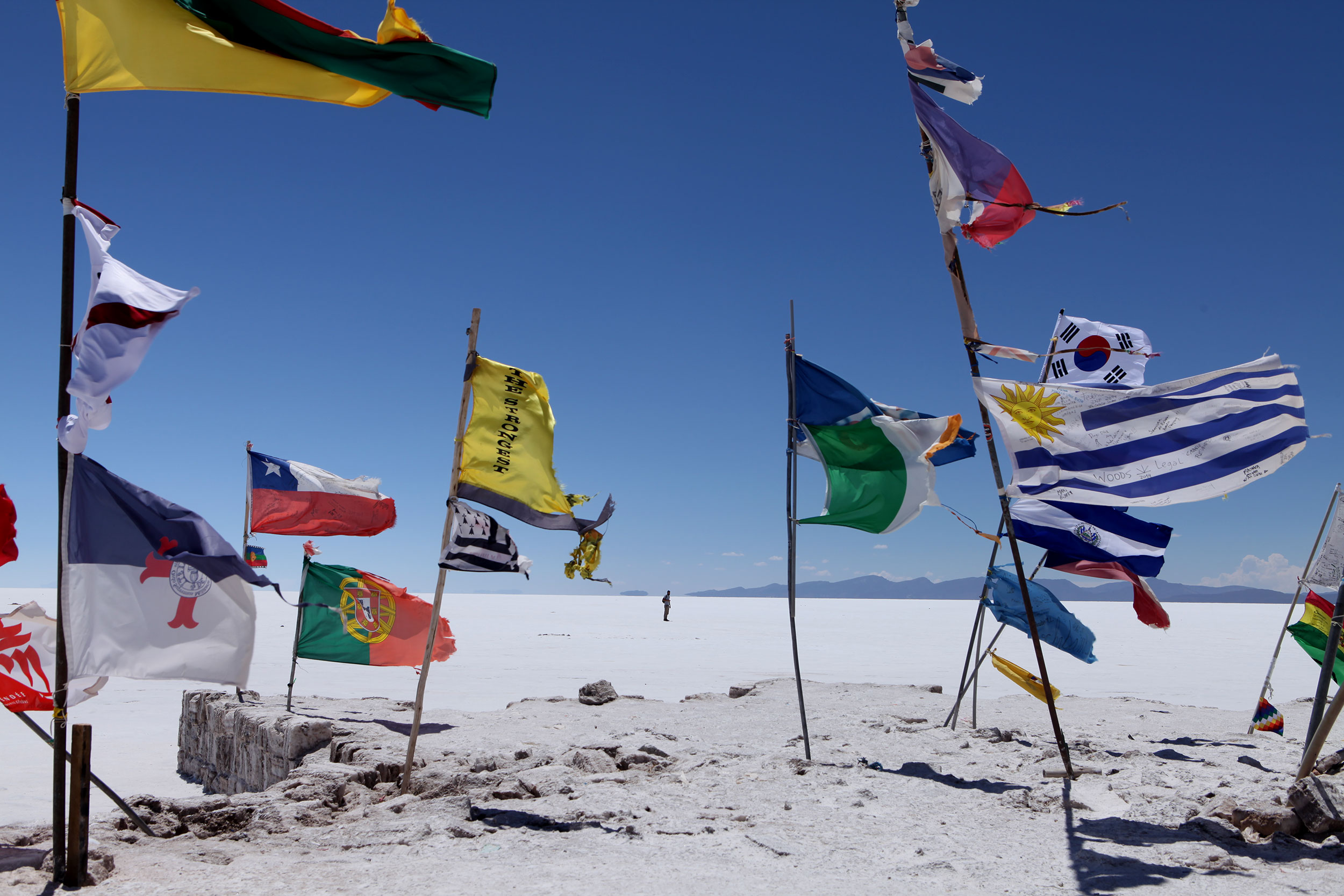
If you visit the Salar de Uyuni I would suggest bringing a flag to add to the collection near the buildings where most of the tours stop for lunch. The fluttering colors are gorgeous against the the duo-chromatic surroundings. Photo: Alex Washburn
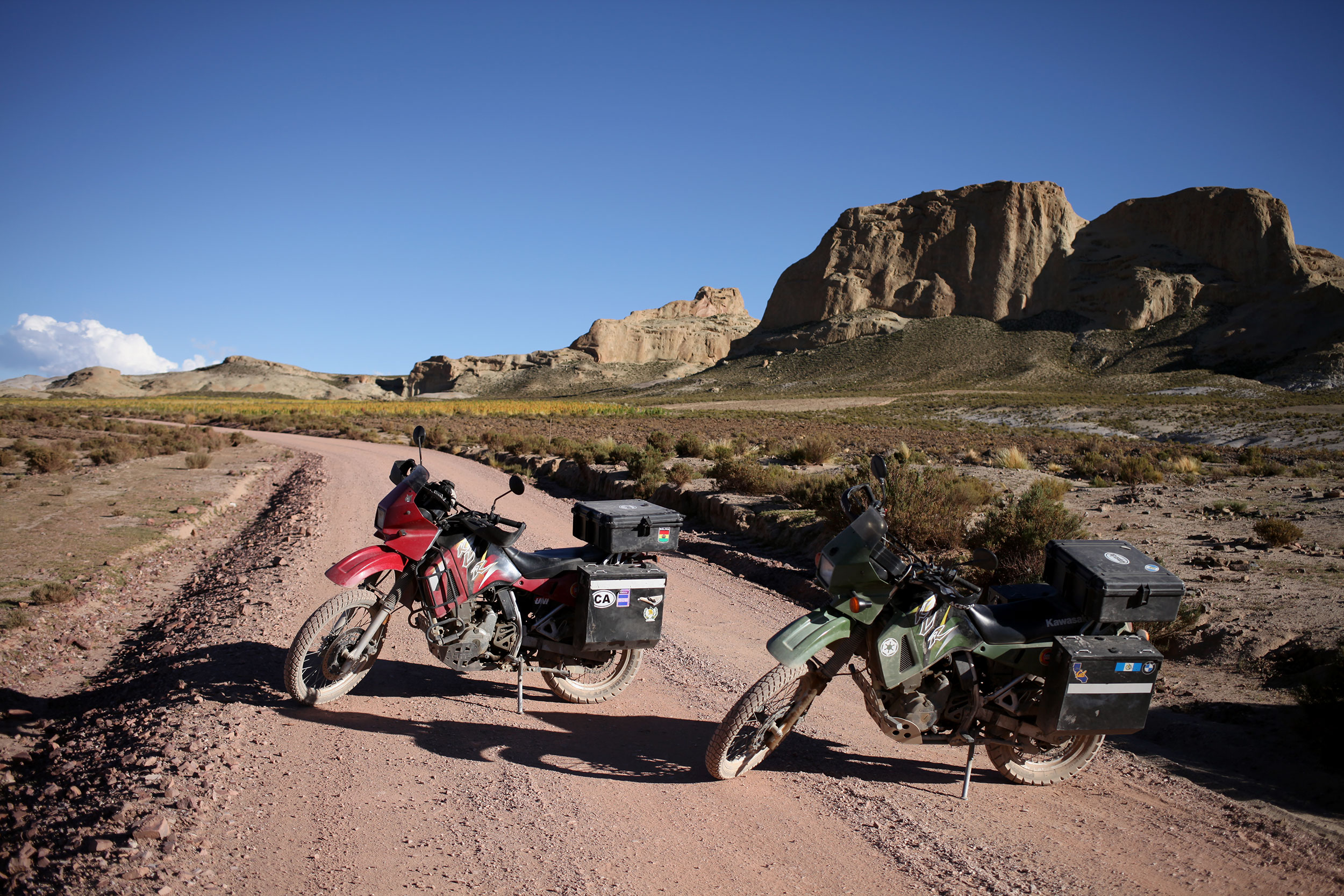
After touring the Salar de Uyuni we were ready to pack up and head south once again. Here is a photo from the road between Uyuni and Tupiza which will be covered in depth in the next blog. Photo: Alex Washburn
The Bolivian Death Road
Posted on March 9, 2014
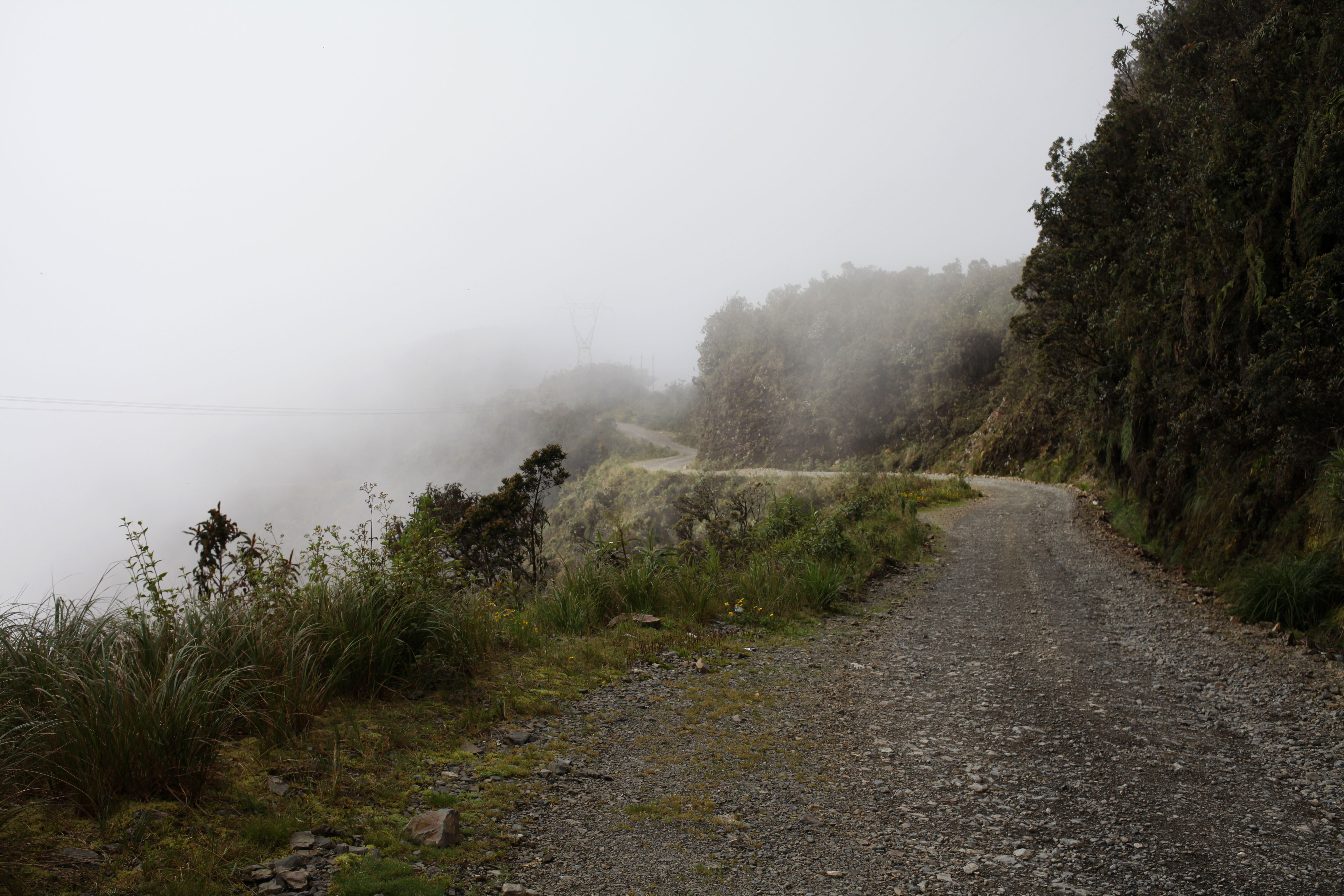
The view from the top of the Bolivian Death Road. Photo: Alex Washburn
The Bolivian Death Road lives large in the minds of ADV riders. It was crowned the world’s deadliest road in 1995 and the nearly two decades since hasn’t tamed the curvy unpaved beast.
When we first left the United States, riding the Bolivian Death Road aka Camino de la Muerte aka North Yungas Road wasn’t on our itinerary, but somewhere along the way Nathaniel decided he wanted to do it. Somewhere along the way he got sucked into the macho idea of riding the death road and the fact that all the other boys are doing it.
I agreed to go, with some reservations, although I wouldn’t say I was afraid. However, I probably wouldn’t have gone out of my way to do it if I was on my own.

Our couple photo on the Bolivian Death road. Photo: Alex Washburn
We woke up early in La Paz and pulled on our riding suits before heading out into the crisp morning. The start of the death road is approximately an hour ride outside of the Bolivian capital and a giant yellow sign greets you on an uneven gravel turn out just off highway three.
We parked our bikes and then walked over to a bench-sign combo that gives a brief history of Bolivia’s most infamous 60km stretch of gravel. I learned standing there that the road was constructed by prisoner’s of war, it is often foggy along the route, and that ever since it earned the title of the world’s deadliest road it has been a huge tourist attraction (especially for mountain bikers).
The sign also spells out the rules of driving the death road. Because of its form you must keep to the left hand side of the road and vehicles moving up the hill have the right of way. Accidents usually happen when two cars meet at a narrow point and the uphill vehicle must back up- tires can easily slip over the edge of the cliff.
(According to wikipedia several hundred people die on the road every year, but I think those numbers are grossly inflated.)
We couldn’t see very far down the path because of the fog drifting around and after taking the obligatory photos of the sign and the entry point we hopped back on the bikes and headed off into the mist.
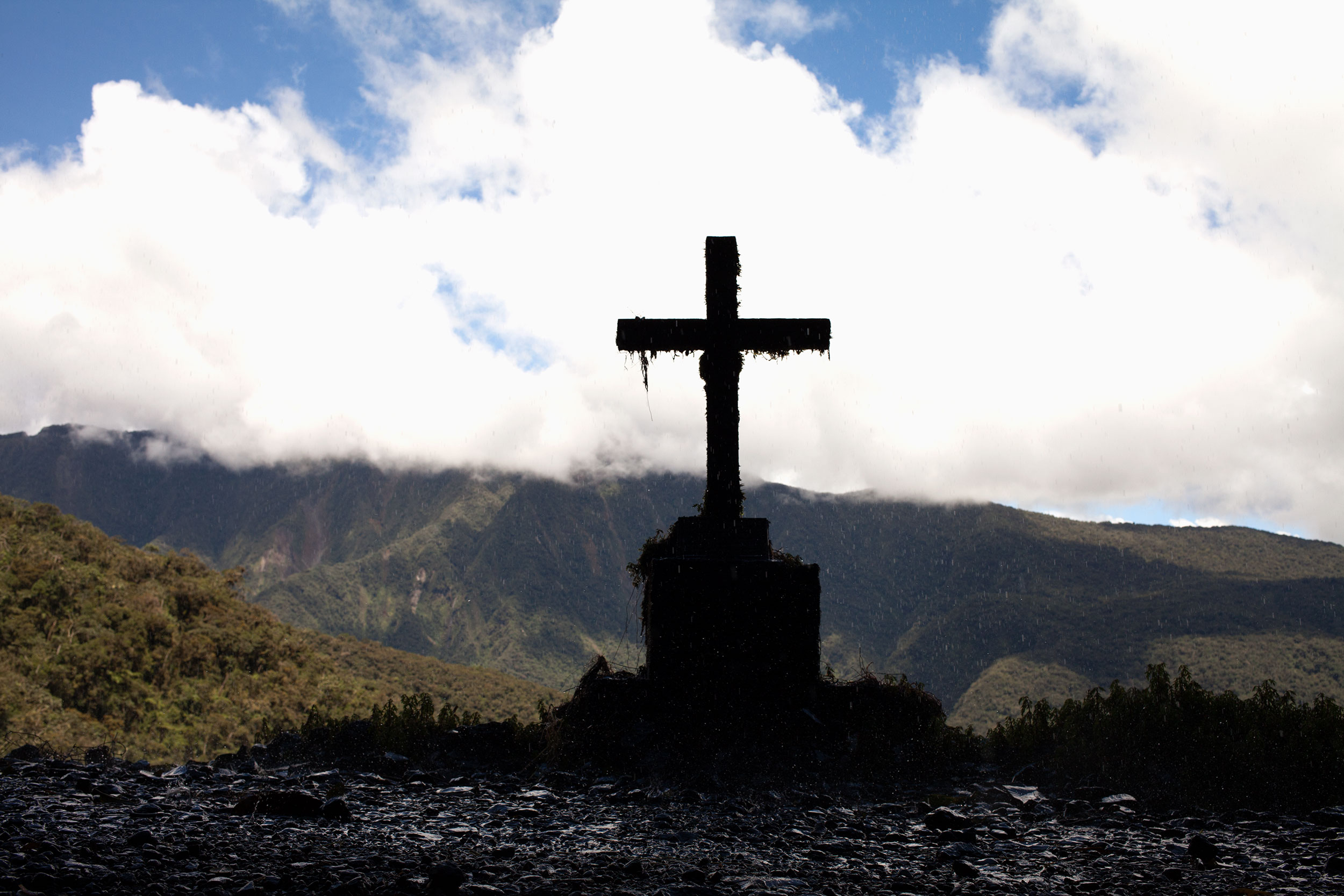
A cross marks where people have died on the Bolivian Death Road near a series of small waterfalls. Photo: Alex Washburn
Most of the death road was not technically difficult riding, but the idea that around any blind turn could be a truck keeps you on your toes. Thankfully, we only met one vehicle going the opposite direction and it was on a portion of road where I could safely stop and let him pass.
For us, the most memorable part of the road was the portion where you ride on very uneven wet rocks beneath several small waterfalls (getting wet) and pass a solemn grey cross marking where people have died. The section is roughly 300m long and it is a narrow piece of work with a sheer mossy rock wall on one side and a lush green cliff dropping off the other into only god knows where.
The camino de la muerte was not nearly as tough as I thought it would be and if I had to make a list of the top 5 rides of the trip so far it would be on it.
Check it out:
Leaving Cusco
Posted on March 2, 2014
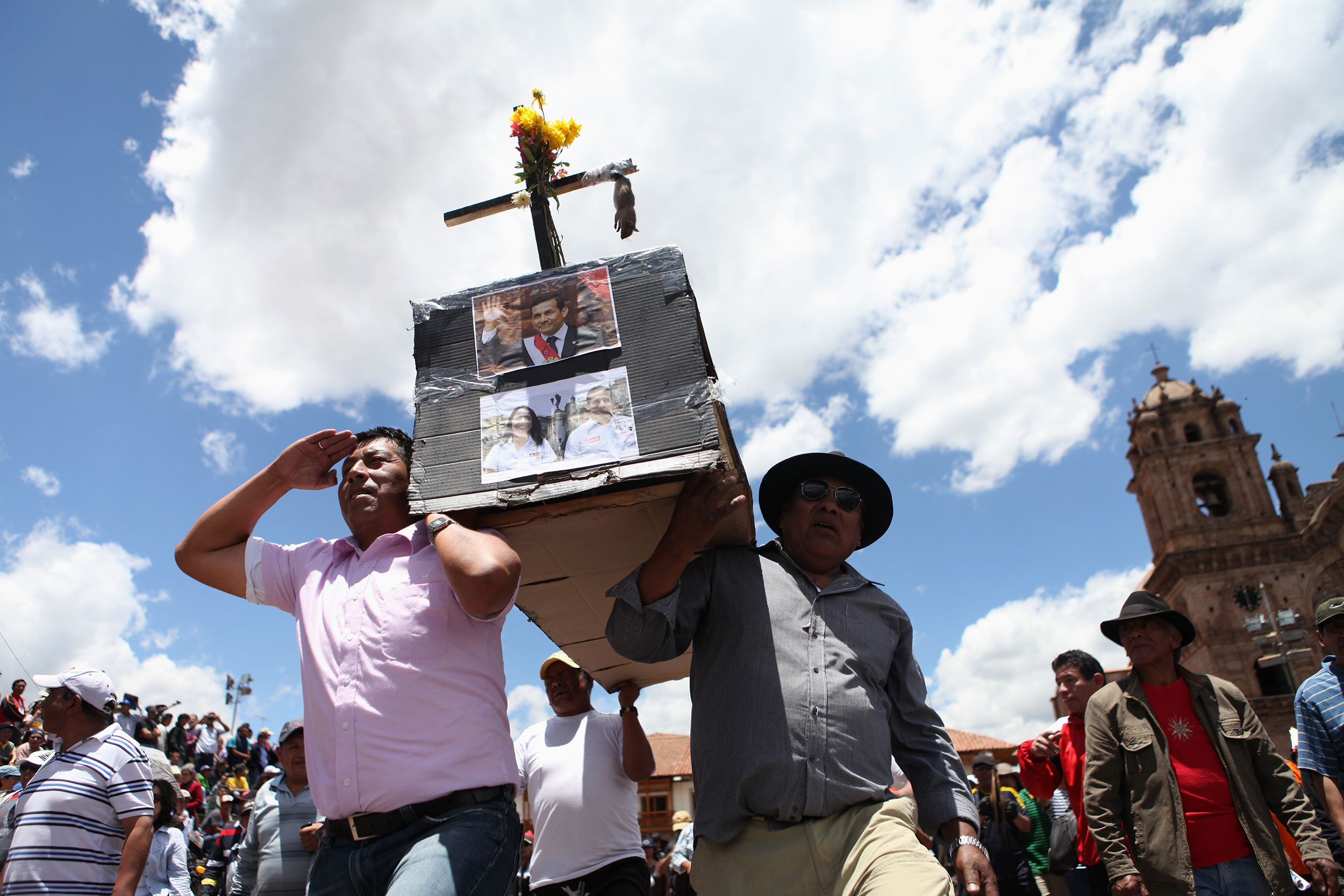
Protestors carry a faux coffin adorned with Peruvian President Ollanta Humala’s name, photos and a dead rat in the Plaza De Armas of Cusco, Peru before setting it on fire on Tuesday, Feb. 25, 2014. Thousands of gathered from various regions of Peru to protest corruption within the Peruvian government and prevented traffic from flowing through the city. Photo: Alex Washburn
The day after Machu Picchu we leisurely packed our bags and had breakfast before asking the woman at the front desk of our hotel to please open the garage so we could be on our way. She said something to me that I didn’t quite understand, but I was so focused on hitting the road that I didn’t bother to clarify it.
As we rolled out of the garage onto a nearly empty street and on to Cusco’s Plaza de Armas it quickly became apparent that something was going on. There were no cars in the plaza and a few groups of police in riot gear stood in the shade at various locations.
I found this interesting as I slowly puttered behind Nathaniel, however things only got stranger as we moved our way through town. Avendia del Sol, like Plaza de Armas had no vehicles moving on it aside from a few other random motorcyclists and there were a lot of people walking freely in the street. As Nathaniel drove past a large group of men walking in the same direction we were heading one of them threw a rock at him, although I am certain by how casually it was thrown it was not meant to hurt him.
At the end of Avenida Del Sol we pulled into a gas station next to a huge roundabout where people were gathering en mass. The gas station attendants told us that we would have to wait till the protestors in the street moved on before they would serve us – it was at that moment a large white truck driving way too fast whipped around the circle and was met with a volley of rocks from the protestors. It was then we realized how serious things could be getting and I asked the gas station attendants what was going on.
They informed me that it was the first day of a two day protest that stretched throughout the region, though mainly focused in Cusco. People were protesting a variety of things including inflated government salaries, gas prices and false promises made by President Ollanta Humala.
It was because of these various grievances that people had called for a strike of all motorized transport – to prevent the use of gasoline.
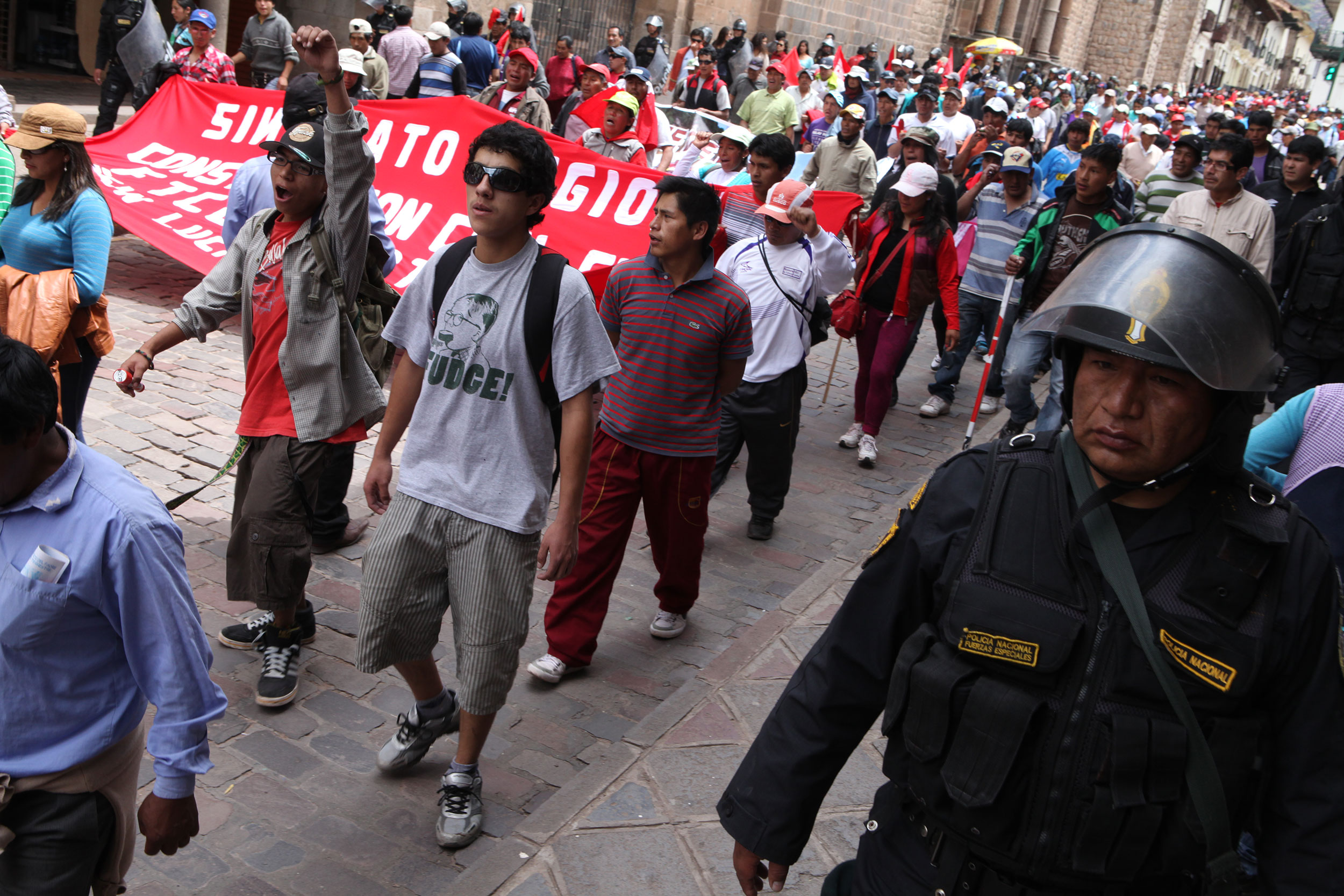
Protestors march through Cusco, Peru on Tuesday, Feb. 25, 2014. Thousands of people gathered from various regions of Peru to protest corruption within the Peruvian government and prevented traffic from flowing through the city. Police presence was heavy although the protest remained largely peaceful. Photo: Alex Washburn
After a few minutes the gas station attendants motioned for Nathaniel and I to go to the pump furthest from the street so we could fill up. They told us that they didn’t think we would be able to leave the city and they seemed frightened by what was going on.
Wanting a second opinion we exited the station and approached a group of police officers to ask them what they thought. It was at this point that the photojournalist in me started having an all out fight with the Autopista End part of me – Photojournalist Alex loves photographing protests. I knew we really had to be getting out of Cusco, on the other hand the idea of skipping this protest was getting more and more painful by the moment.
The police officers, probably not wanting to alarm us tourists, told us we would have no problem getting out of the city, although it would be easier if we waited till the afternoon to do so. The idea of sitting around in our gear for hours and hours was really unappealing to us so we continued on our way down the main road out of town till we saw a wall of people blocking the way. We parked about 6 blocks away and watched as several other motorcyclists and cars approached the people and quickly turned around and gave up.
Nathaniel and I discussed our options and decided the best thing for us to do would be to go back to the hotel, stow away the bikes and hit the streets to document was going on. Latin American governments don’t have a great track record when it comes to human rights violations and protests so if anything illegal happened I would feel guilty not being present to document it.
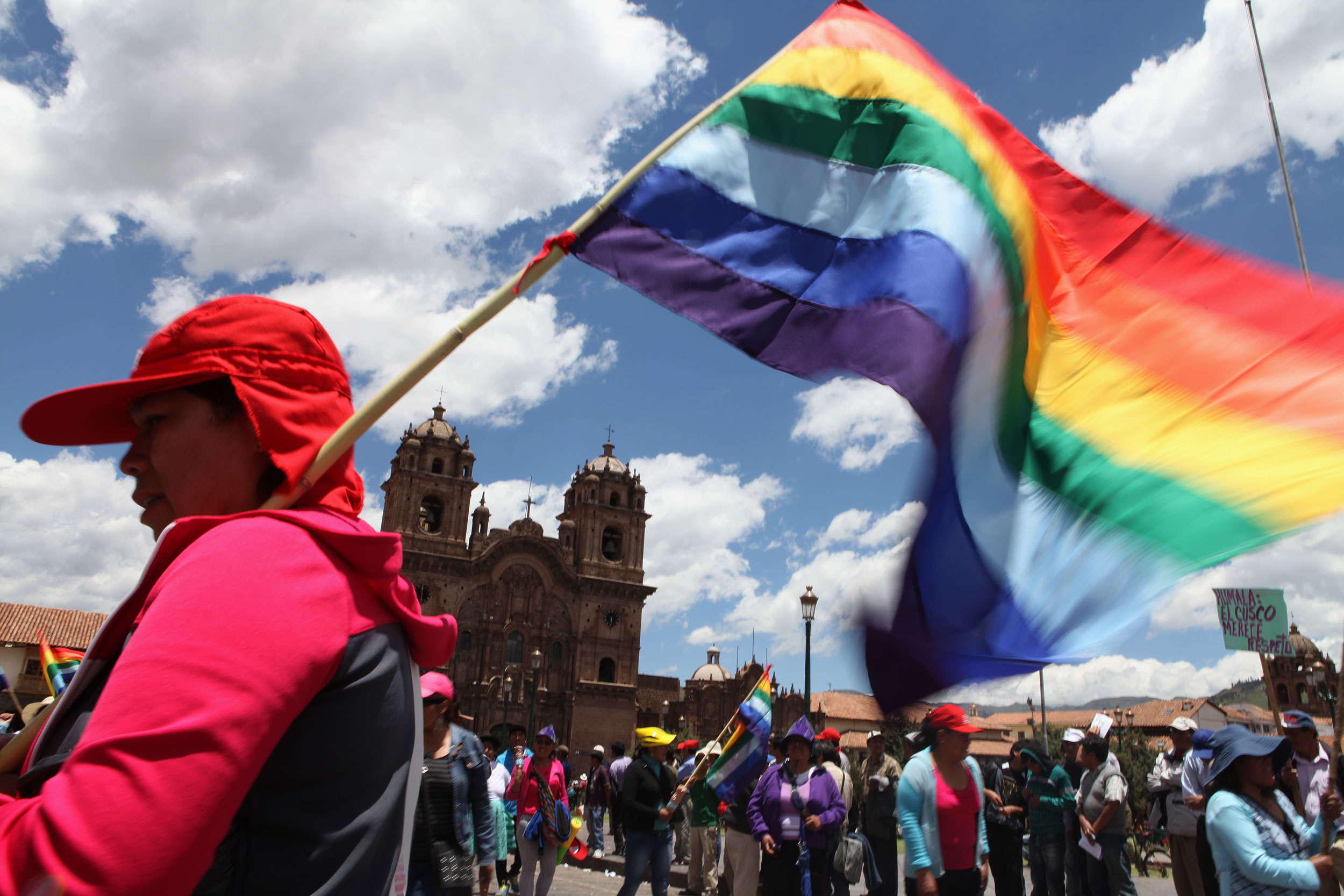
A protestor carrying the city flag of Cusco participates in a demonstration in Plaza De Armas of Cusco, Peru on Tuesday, Feb. 25, 2014. Photo: Alex Washburn
In the time it took us to leave our hotel and then turn around to head back to it the protest had picked up steam. There was no confusion as to what was going on now that Avenida Del Sol was similarly blocked with a wall of people waiting to stop any motorists from heading into the city center.
We stopped a safe distance from the protestors puzzled about what to do. They certainly hadn’t blocked EVERY street that could lead us back to the hotel, however riding blindly on the steep cobblestone streets of Cusco was another unappealing option (remember what happened to Nathaniel’s ankle).
We hadn’t been stopped for a full minute before two men on a small motorcycle pulled up next to us. The guy on the back was filming with an old fashioned camcorder so I asked them if they were with the television news.
The driver of the motorcycle cheerfully answered that they were and I told him I was a photojournalist from the United States. He got an absolute kick out of that and asked where we were going. I told him we were trying to get back to our hotel and described to him where it was.
He thought a moment and said they were also trying to get back to Plaza De Armas and told us he would lead us back to our hotel. “Follow me!” – and he was off.
We wound around through some small neighborhoods around the city center full of kids enjoying the traffic free streets with spontaneous soccer and volleyball games and in about 10 minutes we were back to our hotel without having encountered another blockade.
I thanked the moto-journalists profusely and with a grin and wave they were off to continue their work. I was absolutely brimming with happiness being part of the journalism community at that moment- we have a strong sense of camaraderie that transcends borders.

Police monitor protestors as they march through Cusco, Peru on Tuesday, Feb. 25, 2014. Photo: Alex Washburn
The hotel staff smiled when I came back in the front door and I joked with them about what was going on outside. We were given the same hotel room we had spent nearly a week in and were soon walking towards Plaza De Armas (the focus of the protest) me carrying a 5D Mark II and Nathaniel with his Go-Pro and Canon G12.
I was right in my assumption that the protestors would ignore our presence as long as we were not violating the motor vehicle ban. Nathaniel and I both agreed that at no time did we feel like we were in danger. This video our motorcycles friends produced shows us riding through Cusco during the protest, check 38 seconds into the video: http://www.youtube.com/watch?v=RbwUKMoiTik
Photographing the protest was really fun for me because I haven’t had the opportunity to shoot an event like that in a long time and it is one of my favorite things to photograph. I love covering protests because the energy is high, you have to be alert at all times and people are usually so involved in what they are doing photographers can be truly invisible as they do their work.
Even the most laid back of subjects tend to be a little self aware in front of a camera, but that is hardly ever an issue during events like this.
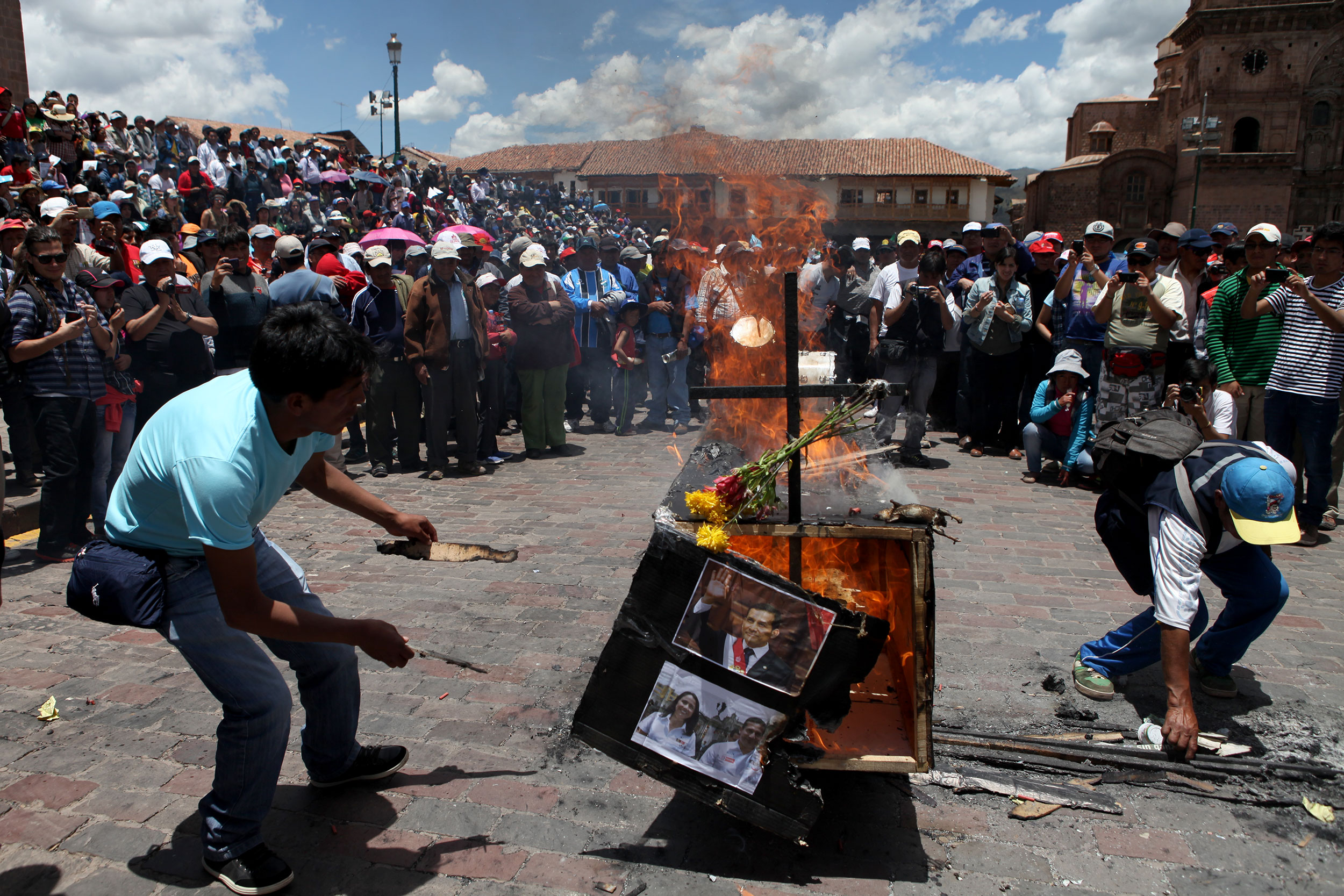
Protestors burn a coffin adorned with Peruvian President Ollanta Humala’s name and photos in the Plaza De Armas of Cusco on Tuesday, Feb. 25, 2014. People gathered from various regions of Peru to protest corruption within the Peruvian government and prevented traffic from flowing through the city and greater Cusco region. Photo: Alex Washburn
I spent the next several hours photographing the protest and seeing if they AP was in need of any photos of the protest. Spoiler: They didn’t need the photos, however the Photo Director for the region told me he liked my work and to feel free to contact them again if I came upon anything else I felt was newsworthy.
With that bit of encouragement Nathaniel and I set off to get something to eat and re-prepare to leave Cusco the next morning. We ended up spending twice as much time as we wanted to in Cusco and even though we knew the blockades would still be up the following day we decided to roll the dice and make it happen.
I feel the need to paraphrase the day we actually left Cusco because this blog is getting really long and I don’t want to bore everyone to death who is still reading.
As we prepared to pass the first blockade out of the city some older gentleman told us to tell the protestors we were tourists and they would let us through. As Americans we are particularly nervous about volunteering that information (with all our gear on it’s hard to tell we are foreign), although the advice turned out to be invaluable for the next 8 hours.
The first blockade began hurling rocks and other things at me as I approached so I turned on my turn signal well in advance, stopped about 15 feet from them and motioned for someone to come up and talk to me. A man in a brightly colored sweater raised his arms in an effort to calm people as he walked up to me. He asked me one question – Are you tourists? When I said yes he started yelling at the crowd to let us through and that we were tourists. People kept shouting at us from all directions, but they stopped throwing things and let us through.
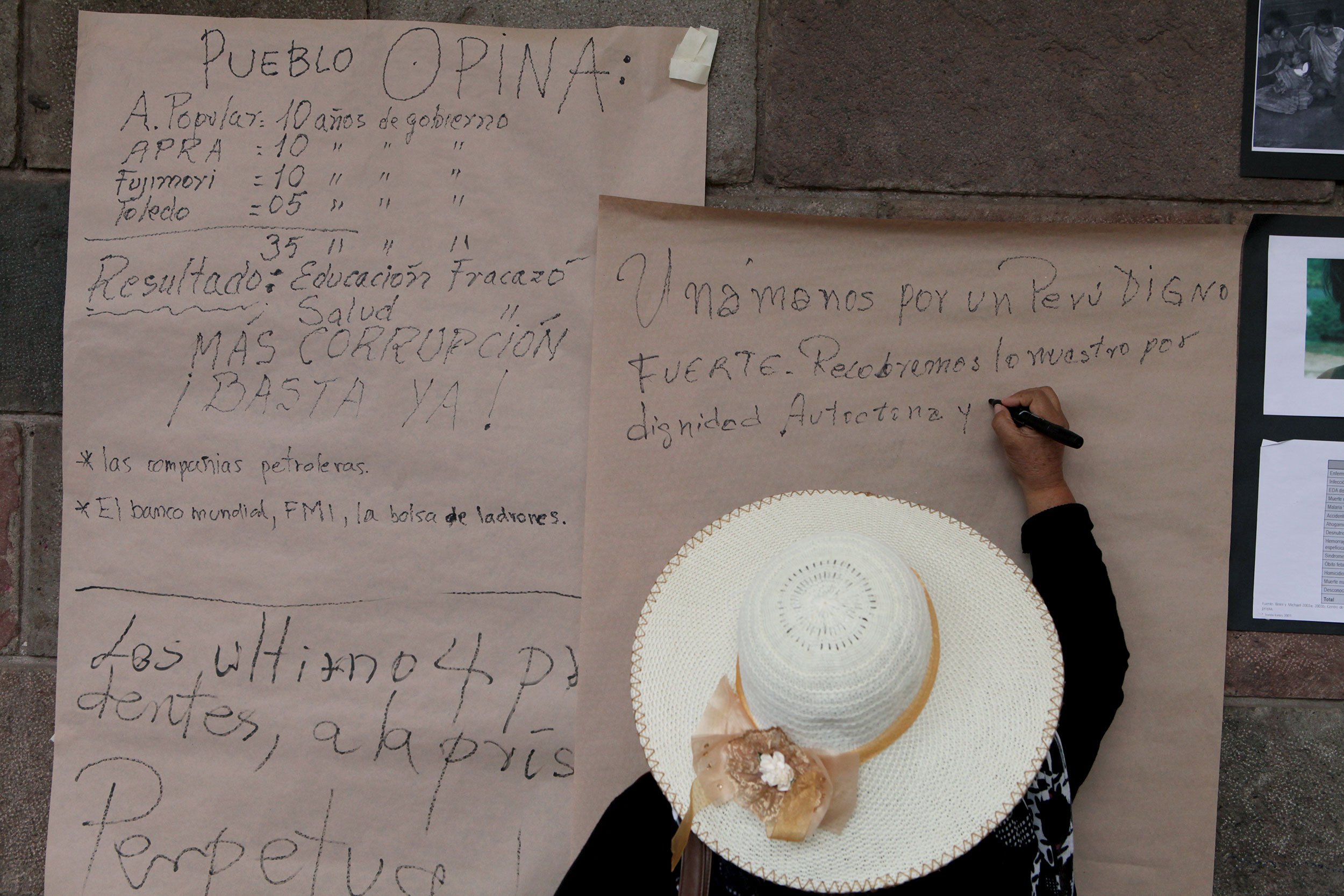
A woman ads her own opinions to a growing list of complaints during a protest against the Peruvian government in Plaza De Armas of Cusco Peru on Tuesday, Feb. 25, 2014. Photo: Alex Washburn
After some advice from the police just past the barricade we attempted to take the smaller streets to get out of the city. We spent nearly three hours backtracking, winding through neighborhoods and crossing pedestrian walkways in the most absurd places trying to get past all the barricades. I personally did not want to deal with having things thrown at me a dozen or so times and explaining over and over that we were extranjeros and in no way apart of the problem.
Then it began to rain… a blessing and a curse. My gloves and riding pants are not fully water proof so as I started to get colder and wetter people began to thin out and we ventured back to the main road out of town.
When we finally escaped Cusco the highway (beautifully paved by the way) was full of rocks, broken glass, piles of cacti, barbed wire, trees, burning tires, bits of cars and everything else people could get their hands on to slow or stop the flow of traffic.
There were at least 5 places the highway was totally blocked and I had to ask the people manning the blockades for permission to pass through. Although one group of people asked for money as we passed (we said no) everyone was perfectly willing to let us through when we identified as being non-Peruvians.
At one blockade they were having a meeting and I fell over as I tried to ride my motorcycle over the pile of trees they had laid across the road. As soon as I hit the ground 4 or 5 men from the group were helping me pick the bike up and lifted it over the barricade they had built.
After that – they helped Nathaniel to roll his bike safely over the trees and one of them gave me a good old fashioned “you be careful out there young lady” talking before we continued onward. By 4:30 we had only gone 80 miles and I was shaking with the cold. We stopped at a hotel for the night, giving up on the day, however with some really great stories about that one time we escaped Cusco in the middle of a protest…
The End.
 Where the Autopista Ends