Where the Autopista Ends
Two motorcycle bloggers in the San Francisco Bay Area.
The Bolivian Death Road
Posted on March 9, 2014
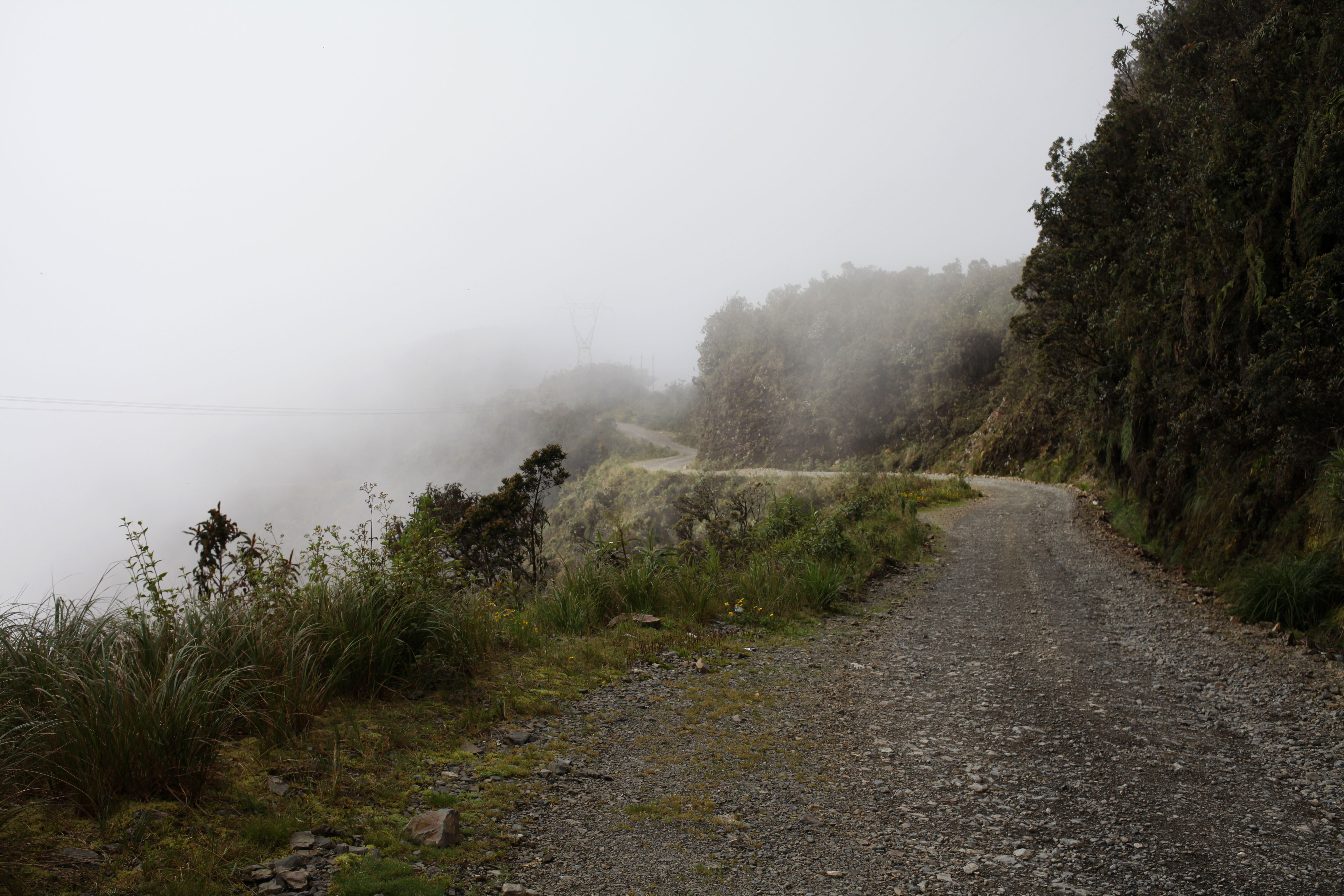
The view from the top of the Bolivian Death Road. Photo: Alex Washburn
The Bolivian Death Road lives large in the minds of ADV riders. It was crowned the world’s deadliest road in 1995 and the nearly two decades since hasn’t tamed the curvy unpaved beast.
When we first left the United States, riding the Bolivian Death Road aka Camino de la Muerte aka North Yungas Road wasn’t on our itinerary, but somewhere along the way Nathaniel decided he wanted to do it. Somewhere along the way he got sucked into the macho idea of riding the death road and the fact that all the other boys are doing it.
I agreed to go, with some reservations, although I wouldn’t say I was afraid. However, I probably wouldn’t have gone out of my way to do it if I was on my own.

Our couple photo on the Bolivian Death road. Photo: Alex Washburn
We woke up early in La Paz and pulled on our riding suits before heading out into the crisp morning. The start of the death road is approximately an hour ride outside of the Bolivian capital and a giant yellow sign greets you on an uneven gravel turn out just off highway three.
We parked our bikes and then walked over to a bench-sign combo that gives a brief history of Bolivia’s most infamous 60km stretch of gravel. I learned standing there that the road was constructed by prisoner’s of war, it is often foggy along the route, and that ever since it earned the title of the world’s deadliest road it has been a huge tourist attraction (especially for mountain bikers).
The sign also spells out the rules of driving the death road. Because of its form you must keep to the left hand side of the road and vehicles moving up the hill have the right of way. Accidents usually happen when two cars meet at a narrow point and the uphill vehicle must back up- tires can easily slip over the edge of the cliff.
(According to wikipedia several hundred people die on the road every year, but I think those numbers are grossly inflated.)
We couldn’t see very far down the path because of the fog drifting around and after taking the obligatory photos of the sign and the entry point we hopped back on the bikes and headed off into the mist.
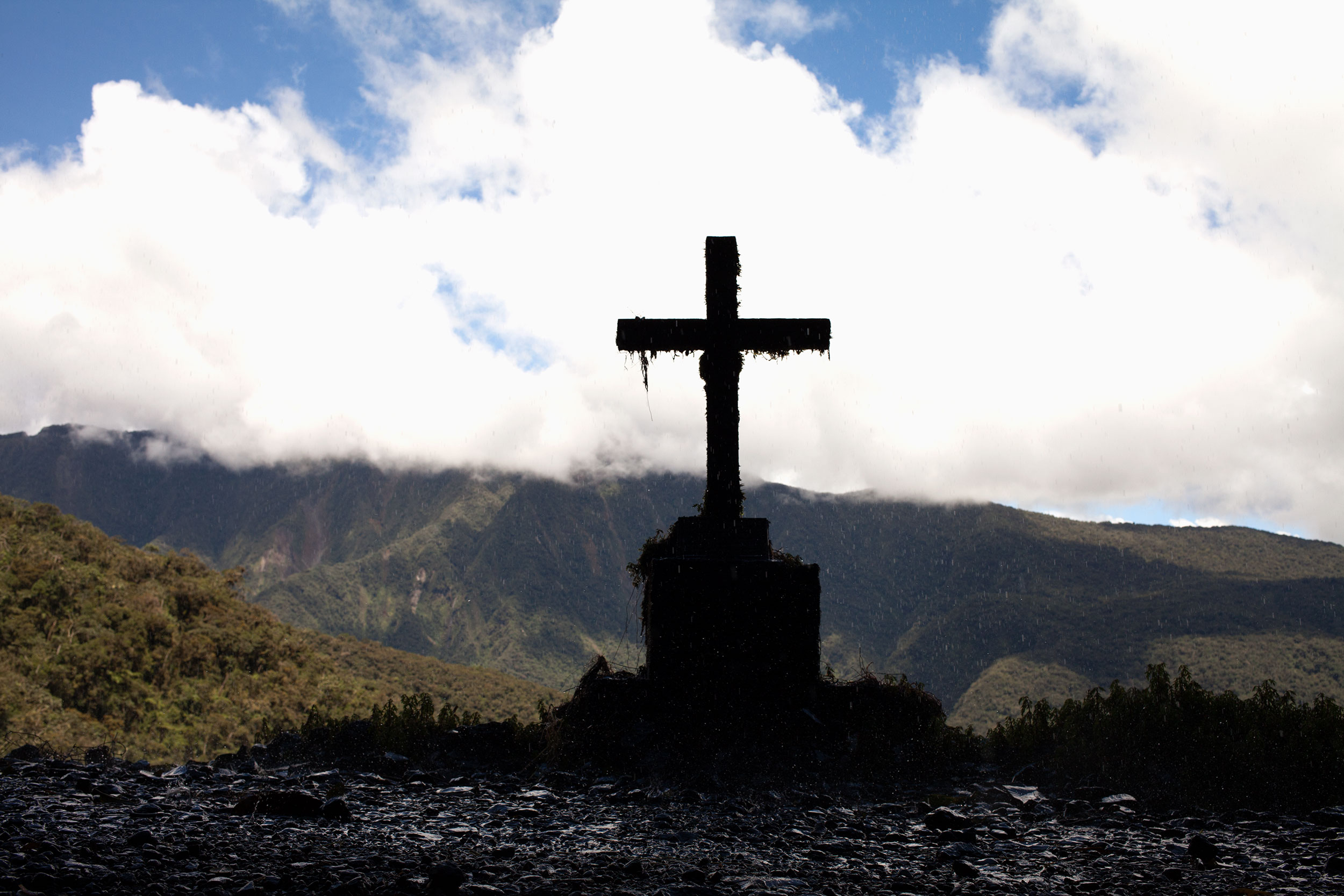
A cross marks where people have died on the Bolivian Death Road near a series of small waterfalls. Photo: Alex Washburn
Most of the death road was not technically difficult riding, but the idea that around any blind turn could be a truck keeps you on your toes. Thankfully, we only met one vehicle going the opposite direction and it was on a portion of road where I could safely stop and let him pass.
For us, the most memorable part of the road was the portion where you ride on very uneven wet rocks beneath several small waterfalls (getting wet) and pass a solemn grey cross marking where people have died. The section is roughly 300m long and it is a narrow piece of work with a sheer mossy rock wall on one side and a lush green cliff dropping off the other into only god knows where.
The camino de la muerte was not nearly as tough as I thought it would be and if I had to make a list of the top 5 rides of the trip so far it would be on it.
Check it out:
Cusco Cuzco Qosqo
Posted on February 25, 2014
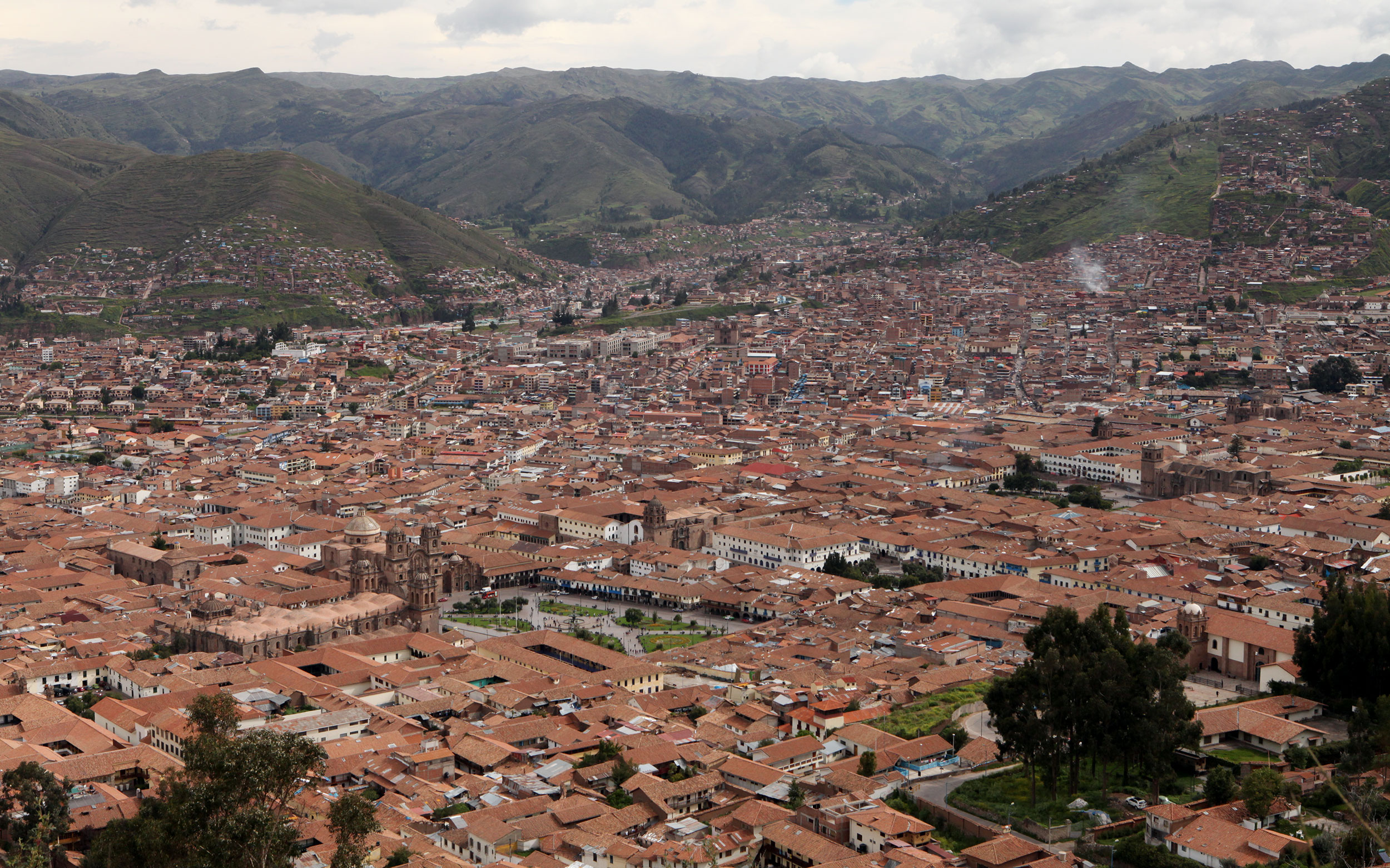
Cusco as viewed from Christo Blanco. Photo: Alex Washburn
I actually finished this blog, looked at it and realized the only people who would want to read it would be our parents. So, I deleted 1,500 words and am going to try again.
Cusco handed it to us the first day we were here – it was one of those days where the travel beats you into the ground and you have to decide wether to fight back or just give up and cry.
The first thing I noticed as we caught our initial glimpse of Cusco (not unlike the image above) was that it was much smaller than Lima. Lima traffic has a mind of it’s own and it wants to kill you. Looking down on the terra cotta colored roofs sprinkled with plazas and green spaces I breathed a sigh of relief that it wouldn’t be a similar situation as I had a beast of a headache.
Altitude sickness, in all its various fun forms, usually takes a few hours to kick in. The time gap between arriving to a certain altitude and feeling like shit can vary, but we’d been riding at high elevations all day and symptoms of altitude sickness usually don’t occur until after four hours after rising above 2,500 meters. Cusco city sits at 3,400 meters (11,200 feet).
By the time I sat down to ask the staff of our first choice hostel about parking availability I was in so much pain I could barely speak Spanish. I was to find out after several minutes of discussion that the hostel was too expensive AND wouldn’t let us park in their entryway (this was the first time of the trip we’ve been denied this).
I consider the hostel being un-cooperative our first incident in Cusco. Nathaniel couldn’t find street parking (the streets are narrow, cobblestone that still try to accommodate buses) as I talked to the hostel and had to loop around the block again. The second incident happened as Nathaniel went to back into a parking spot and a Taxi quickly half pulled in behind him and tried to make him give up the spot.


I walked up to the guys window and told him he was parking. The taxi driver told me Nathaniel should park down the street and I told him No, he was not going to loop around in that traffic. We went back and forth and our voices got loud, as I was hysterically running all the grammar errors I was making through my head. My Spanish starts to break down when I am tired, emotional or otherwise distracted and this was a perfect example of that.
He got out of the cab and tried to plead with Nathaniel directly and I gleefully informed him Nathaniel did NOT speak Spanish and he was going to finish parking. As the guy got back into his car I stepped into the street so that he couldn’t pull the cab forward. I was on the verge of loosing my temper, I could barely see straight and I decided if he wanted the parking spot he’d have to hit me.
It was an intense few minutes and the taxi was livid as Nathaniel finished parking and we went inside another hotel to ask about parking (he still had enough room to parallel park and did as we were inside).
The guy at the front desk was really nice although they didn’t have anywhere we could put the bikes. He gave us a city map and he pointed out a few places that might be able to help us, and off we went again into the cobblestone streets at a snails pace through the slow (though non-murderous) traffic.
We spent another 30 minutes winding around the city looking for hotels with parking and we were coming up totally empty handed (we are never above leaving the bikes on the street, but even that wasn’t an option in these narrow lanes). I was also getting more and more nervous because riding a motorcycle on cobblestone is the WORST. I take turns at a crawl because I’m afraid of hitting a big rock in the middle of a turn and falling over.
We started down yet another one way narrow cobblestoned street that feeds directly into Cusco’s Plaza De Armas. As I straightened up after the turn I noticed a strange drainage space in the road and I kept to the left of it. It would not be fun to get out of on a motorcycle I thought to myself as I slowly turned right into Plaza De Armas.
I heard an engine rev somewhere, however I didn’t think it was Nathaniel or incident number 3. As I rolled through the Plaza he didn’t appear behind me so I pulled over and stopped… waiting…

We went back to examine the scene of the accident a few days later. Photo: Alex Washburn
Nathaniel: I didn’t notice that there was a large storm drain in the middle of the road, and all of the sudden panic gripped me as I was smack dab in the center of the drain, riding down the street. With cars behind me, I looked to see the drain end, not in a ramp up, but in a gutter, that I couldn’t make out how much of a gap there was between street and grate.
Thinking my only option was the pop up out of the drain, I rev’d my engine and got my first tire up over the lip, but as soon as my back tire hit the cobblestone it started to slip, and I lost control.
Over I went, with my leg getting trapped under the side of my pannier. I tried to move my leg and it was pinned, and I had no leverage with the bike on top on me. But as our adventure has shown me, people will come in a time of need and before I knew it the bike was being lifted enough so I could swing my leg out.
I helped the strangers get the bike back on two wheels, and gingerly put weight on my swelling ankle. The car behind me started honking, and one of the women that had come to my aid yelled at them in Spanish, what I can assume were curse words at them being impatient with the current situation.
Alex and I have revisited the street, and hind sight being 20/20, my motorcycle novice showed in my split second judgement to hop the curb. At the end of the street I could have slowed and eased the wheel over the grating with no issue.
All being said, I walked away with a sprained ankle that healed in a couple of days. Chalk this one up to the learning curve of riding, where experience simply adds to your knowledge.
______________________________________________________________________________
Once Nathaniel appeared and I got a brief recap, we got directions from a cop, and took our first right out of the Plaza and parked a few blocks away when we saw a collection of hotels and hostels. Nathaniel slowly eased off his bike and tested his left leg. It would hold his weight and he could walk on it, but it was obvious our plan of hiking Machu Pichu the next day was not going to happen.
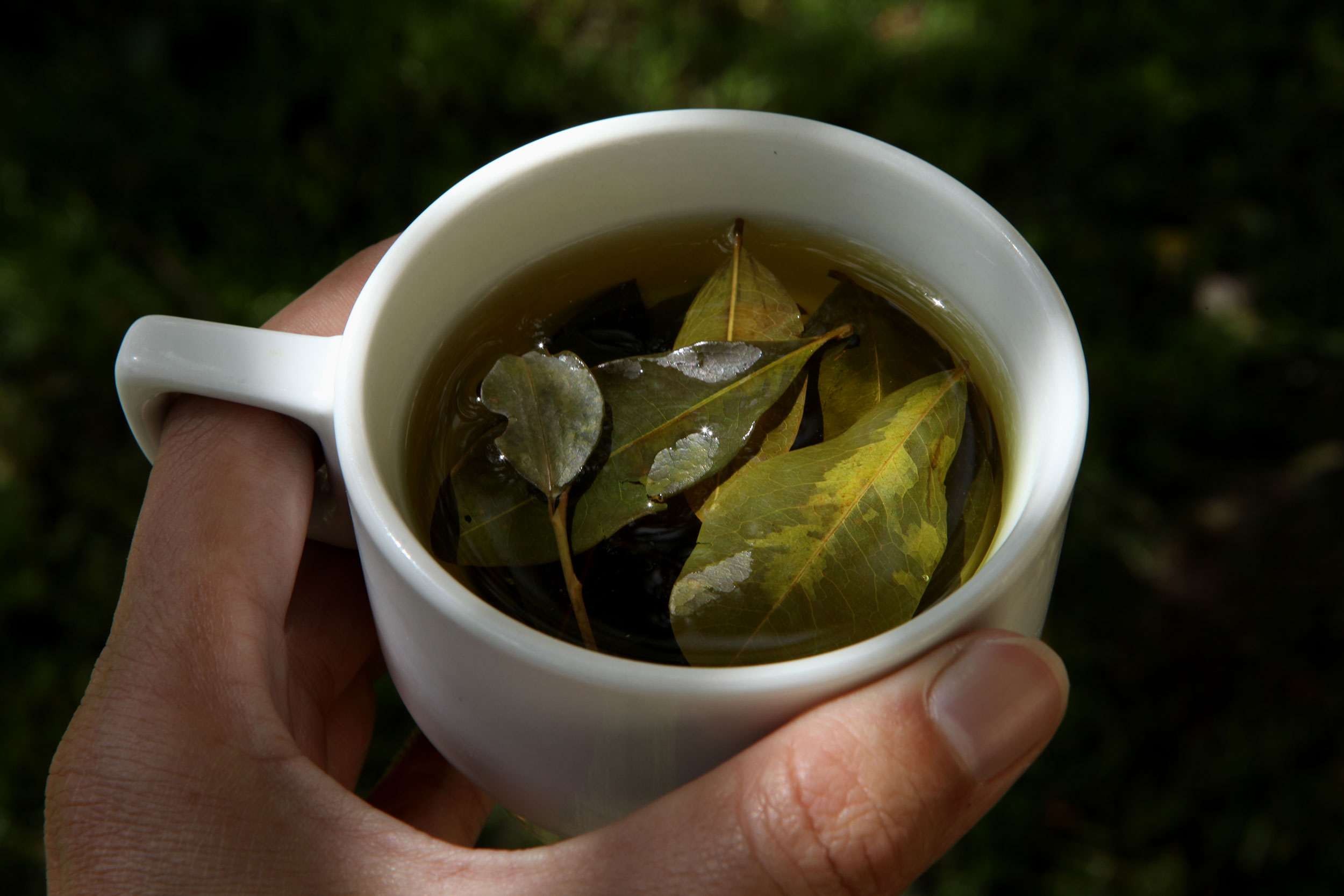
Coca tea besides being tasty can help with altitude sickness. Almost every corner store will sell it and almost every hotel will give it out free. Photo: Alex Washburn
After checking with the hotels on that block (none of them had the right combination of price and parking) we went to a internet cafe to try and look up a suitable place and it had the slowest connection speed I’ve seen in at least 10 years. It was awful and we gave up.
My head was killing me by now, and with Nathaniel’s foot, we really needed to find a hotel. I left Nathaniel on the street with his bike and scouted a few more hotels alone before finding Hotel Cahuide. It looked a little old fashioned, but it had parking, wifi and hot water. I told the woman at the desk I would be right back and I went to get Nathaniel.
After we arrived Nathaniel had to limp up several sets of stairs before collapsing onto his bed so we could take stock of his leg situation. It was swollen, with lots of good bruises to come in the next couple of days, but nothing was broken. Now that we had secured a place to sleep, I could deal with my headache.
I messaged Ariel Zambelich to ask her if she had the same problem in Cusco, she recently came to Peru for a Wired assignment and I figured she could give me some advice.
Ariel told we about the magic of coca tea and candy! I immediately crawled out of bed, put on my shoes and stumbled across the street to find them. Altitude sickness feels like the worst hangover you’ve ever had and not everyone gets it. The mild symptoms can include: lethargy, lack of coordination, insomnia, appetite loss, dizziness, nausea, vomiting and HEADACHES.
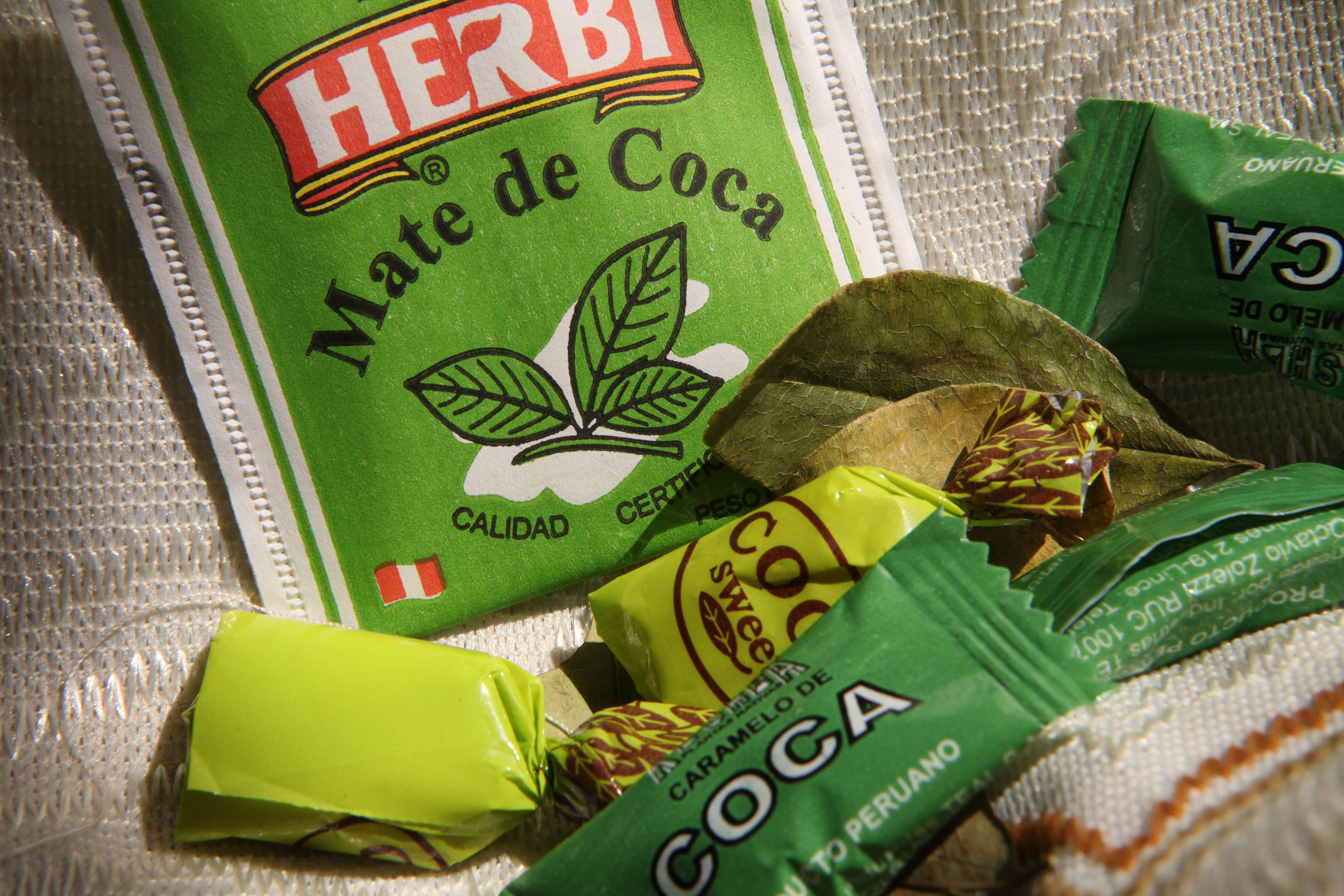
More things to help you with the altitude: Coca tea bags and candy. Photo: Alex Washburn
I laid their feeling myself breathe praying for sleep or death to take me and I finally gave up. I laced up my shoes and slowly pulled on my motorcycle jacket as I tearfully told Nathaniel I had to go get medicine and I left.
If you have a medical problem of some kind in Cusco I recommend going to Clinica Peruano Suiza (a 5 soles cab ride from el centro). The front desk staff of my hotel called ahead so that someone was waiting for me at the door when I showed up to the typically sterile building. I felt like I was moving underwater as I explained to the front desk why I was there. They soon had me in front of a doctor who told me my blood oxygen levels were fine but she prescribed me some amazing pain killers.
Within an hour of taking the pain meds I was picking up a pizza and hailing a cab back to our hotel.


The next day I explored Cusco on my own as Nathaniel camped out at the hotel. By the second full day in Cusco his leg was feeling well enough to walk around a little and do a bus sightseeing tour of Cusco (20 soles). When his leg was feeling A LOT better our third full day in Cusco we booked our tickets to Machu Pichu which we ended up doing yesterday.
I needed to catch you all up on where we are at but expect a Machu Michu blog soon – with video!
The Colombians
Posted on January 25, 2014
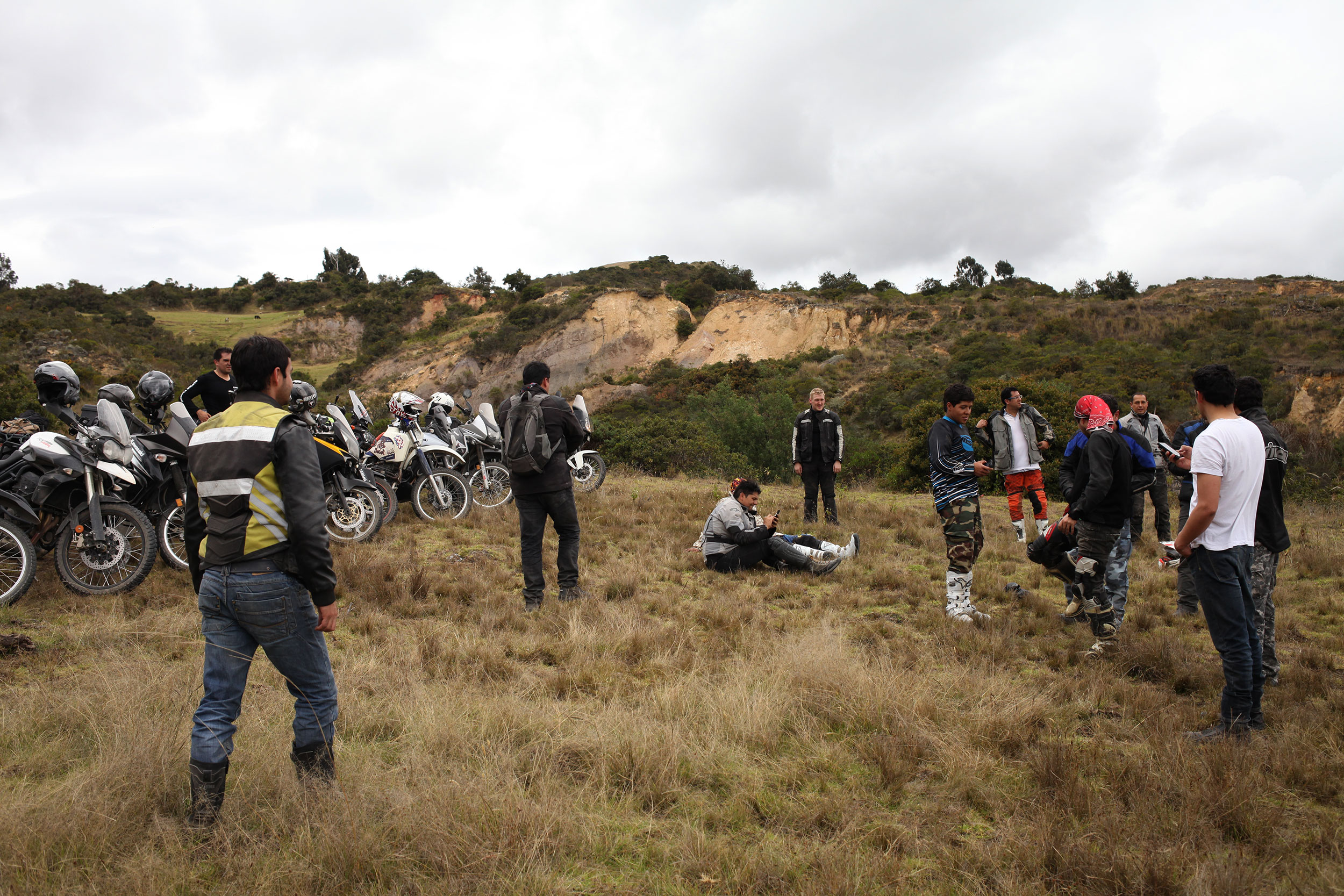
Our group of riders stands at the top of a hill in ‘Tatacoita’ as our new friends called it. Photo: Alex Washburn
Our motorcycles tend to have a cult following in the United States and I quickly learned many months ago that KLR love stretches across borders, languages and hemispheres.
I was never afraid of what would happen to Nathaniel and I once we rode off into the sunrise from Oakley California towards I-5 and turned south. But, I did spend a lot of time worrying about how to properly prepare for the trip e-mailing people like Wes Siler (of Ride Apart), Brian Frank (fellow photojournalist and motorcycle enthusiast) and Alex Chacon (of Expedition South).
Wes, Brian and Alex were all awesome (none of them told me we were idiots!) but in my preparation obsessed craze I found several KLR owner groups on Facebook. The most lively seemed to be TEAM KLR COLOMBIA so I sent them a join request which they quickly accepted.

Nathaniel stands amongst the Colombian riders as they chat in Spanish. He can’t hold a conversation in Spanish or form full sentences but he is understanding a surprising amount at this point in the trip. Photo: Alex Washburn
TEAM KLR COLOMBIA was really helpful in answering a few questions for us along our route south and I announced on their wall when we had arrived to Bogota and asked if anyone wanted to ride with us to the Tatacoa desert last Saturday. People responded saying there was already a ride planned for Tatacoita on Sunday so Nathaniel and I quickly decided we should hang out in Bogota an extra day so that we could ride with them.
I should at this point mention that adding ‘ita’ or ‘ito’ to many spanish words miniaturizes whatever you are talking about or can be used to create a pet name. So, when the riders called the desert Tatacoita I just assumed they were speaking about it with love, it never crossed my mind they would be going to a different desert than the one we wanted to ride too…
The night before the ride we tried to go to bed early because we wanted to have our panniers packed and be ready to roll out the hostel door by 6:30am. It said on the motorcycle invite to meet at 7:30am so after getting direction clarification from the girl at our hostel we decided we should leave an hour early. Our hostel was on Calle 9 and the group was meeting at Calle 193!
With almost a two-hundred blocks to ride in a foreign capital we of course left 30 minutes late on two empty tanks of gas. Once we got on the main road heading north out of town we started driving aggressively (speeding) and were pulled over by the cops with just 10 minutes to spare. Luckily for us they weren’t interested in how fast we were going but instead wanted to give us a sobriety test. They were testing all the motorcyclists coming out of town and had already loaded one bike onto their tow truck.
Thankfully we got gas and arrived to MAKRO supermarket on Calle 193 only 5 minutes late. As we pulled up, I saw a line of bikes parked waiting and smile spread across my face so big I’m surprised it could fit under my helmet! I had been waiting months for this!
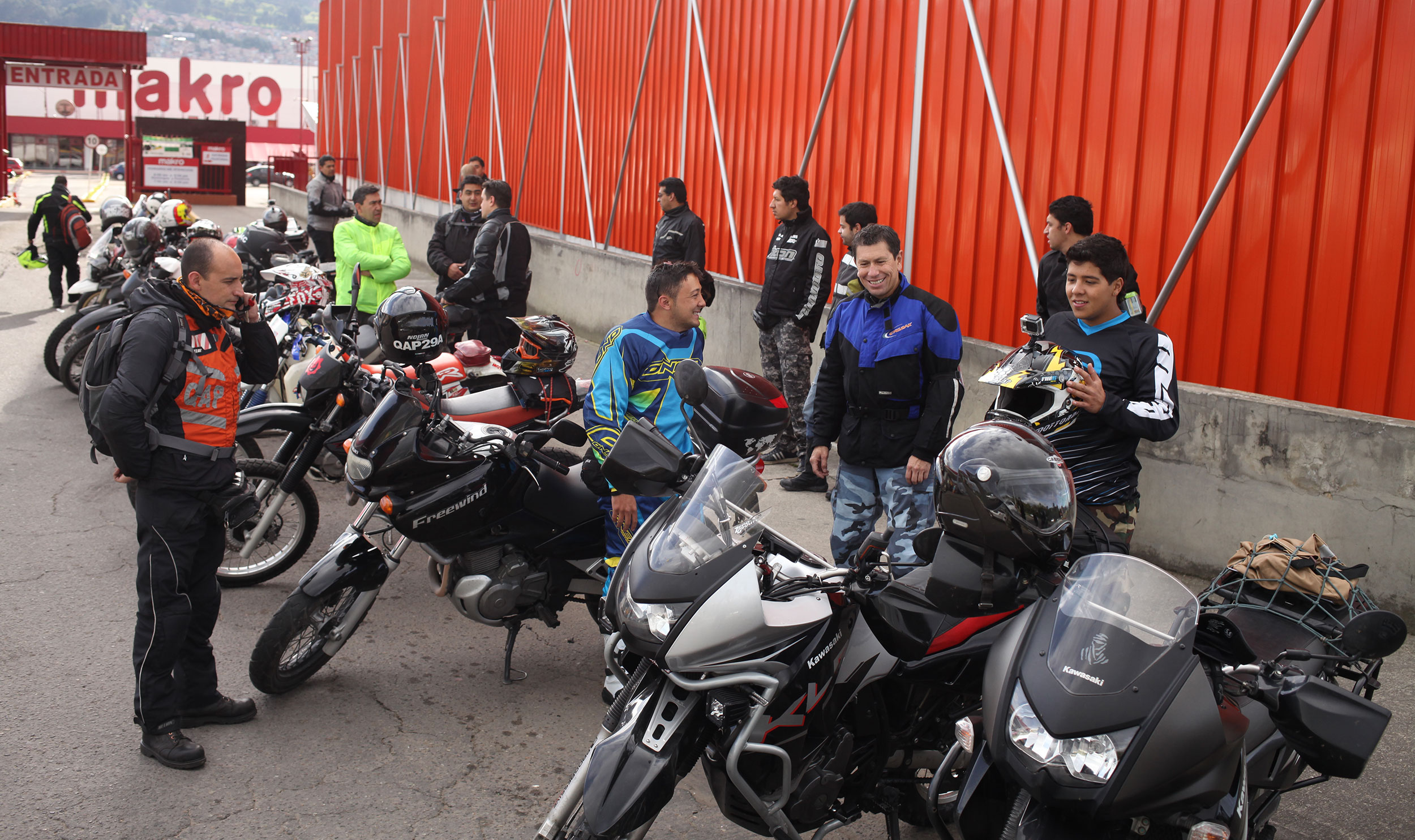
Everyone re-positioned their bikes for a photo opportunity and the organizer of the group gave directions about how they planned on keeping us together and safe during the ride. Photo: Alex Washburn
As soon as we pulled up a local named Hernando came up to us smiling and introduced himself. He was really excited when we told him how we heard about the group and that we had ridden our KLRs all the way from the US. He took a lot of photos of us while we were there and he introduced us to some of the other guys.
One thing about the group was that although it had been organized through the KLR page, it was the most diverse group of bikes I have ever seen riding together. Usually in the United States Harley guys ride with Harley guys, the BMW guys ride with other BMW guys and so on. This group had KTMs, Kawasakis, BMWs, Suzukis, Yamahas, Hondas, at least one Triumph and we were later joined by a quad. I was just so impressed that this group meets up and welcomes everyone from the GS 1200 riders to 125 cc dirt bikes. They are just guys with motorcycles that want to ride and they show equal acceptance to everyone on two wheels.
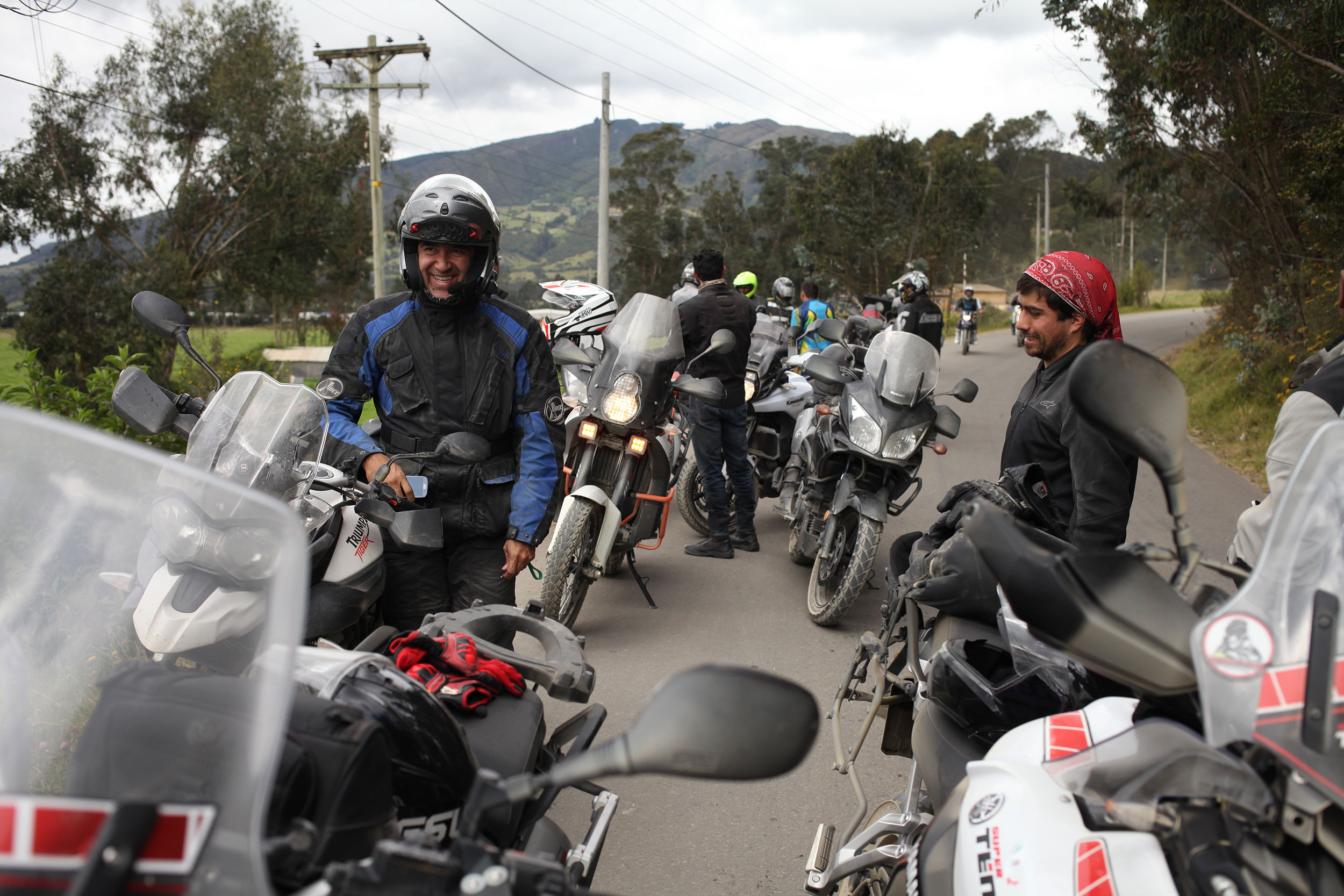
One of the small dirt bikes got a flat so we waited for them to put enough air in the tire to get it to the next town. Photo: Alex Washburn
I keep using the word guys because I was the only female out of 19 riders.
We lined the bikes up against an orange wall for a photo opportunity, took a group photo and got directions from the ride organizer about staying safe and how they were going to keep us together. At that point we all got on our bikes, rolled up to the exit of the parking lot, waited for some people to make a few tire pressure adjustments and headed north.
We had realized at this point we were going to a DIFFERENT desert than the one we had wanted to visit, nevertheless we had waited too long to meet them to not do the ride to ‘Tatacoita’. We were only disappointed that we had all of our gear packed on the bikes. It’s easily an extra 80 lbs. and we were going to be doing off road riding with them, something Nathaniel and I hadn’t truly tackled yet.
Our KLRs are considered dual sports, which means they aren’t the best at off-roading or the best at long distance cruising, but they are good enough at both to be perfect for our trip, they are a jack of all trades. Obviously we couldn’t keep up with the the 1200cc bikes on the open highway, but the organizers were really excellent at keeping everyone together. We waited at the highway exit for the little dirt bikes to catch up and for the quad rider to join us before winding through a small town and hitting our first dirt road.
The Colombians (all great riders) were going 40 and 50 mph over the gravel and I tried my best to keep up, however riding that fast on loose material just freaks me out.
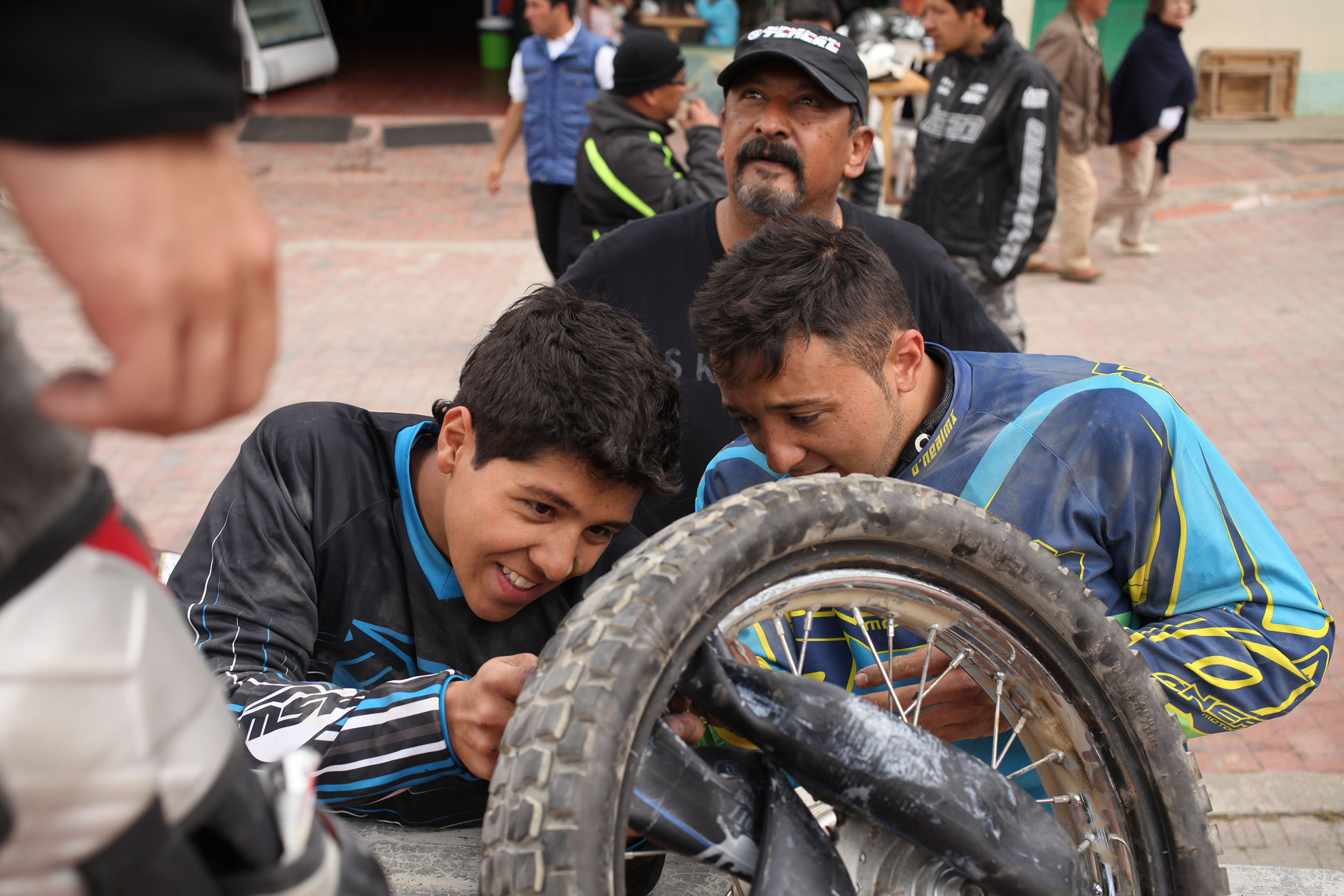
One of the smaller dirt bikes got a flat and everyone wanted to help… since that’s impossible most of us stood around talking while they worked. Photo: Alex Washburn
Just before we exited the gravel for pavement again one of the little dirt bikes got a flat tire so the rest of us waited on the side of the road for them to pump his tire full of enough air to get to our breakfast spot where they could properly fix it. Every time we stopped people were whipping out their phones to take pictures of each other so my camera wasn’t out of place.
We got to the little breakfast place in a tiny town I do not know the name of and the Colombian posse went to work. Some people immediately began searching for bricks to use as a center stand while other people began unpacking the tools they thought might be useful to fix the tire. Through the whole ordeal people were teasing the young kid who had the flat, though it was all good-natured, like big brothers teasing a younger one taking up a new hobby.
As Nathaniel and I talked with people (at least half of them spoke English to some degree) I told myself that everything would be okay if the road stayed like it had been. I hate gravel, but it’s not hard to ride on and I was sure if I just gritted my teeth and said a prayer or two I could try and keep up more than I had been.
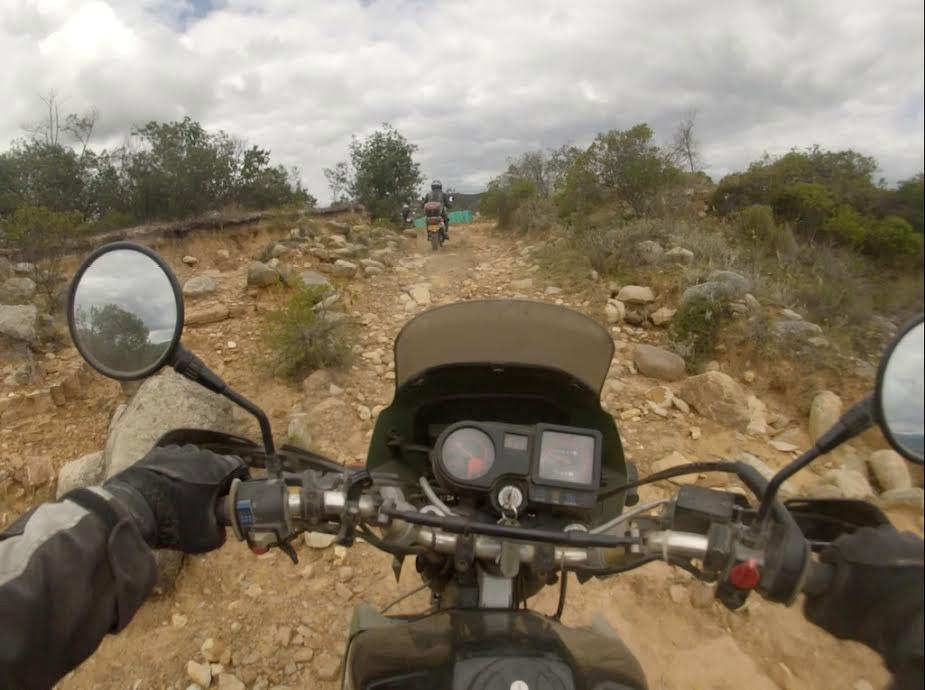
On the road with the Colombians. Photo: Nathaniel Chaney
What. A. Joke.
As they were about half done fixing the tire on the little dirt bike someone noticed one of the other KLRs had a flat front tire. A mechanic nearby was open so Nathaniel dug the extra front tube he carries out of his pannier and gave it to Miguel so that he could replace it to get the group on the road quicker. We lost a lot of riding time hanging out waiting for the tires to be fixed (the grease we carry also came in handy), still it was a lot of fun to soak up the atmosphere and bond with people.
Once we were mounted up and moving again, they took us (VERY QUICKLY) down another gravel road and then we all pulled over as a few of the bikes and a quad scouted ahead of us up a somewhat steep hill. One bike came back and told us the route had been approved so up we went one by one to where we re-grouped at the top.
Next up for us was a decent dirt path and some nice hills that we both really enjoyed. Puttering along on those I could keep up much better than on the gravel, however the texture of the road started to get a little insane in places. There were big loose rocks in the road, but worst of all people had filled in places that get muddy in the rainy season with what looked like bricks (just big loose bricks) and sharp looking shards of roof tile.
(Keep in mind through all of this Nathaniel and I haven’t done true off roading and our panniers and top boxes are loaded with all of our gear.)
I felt fairly confidant over most of the places with brick and tile because I could weave around the worse bits, still there was this one spot about 10 ft. long in the pathway that I couldn’t see a way around. I didn’t want to ride straight over a pile of loose bricks! I panicked and killed the bike in the middle of the bricks. I was stuck with my tire wedged against one of them and I couldn’t get enough momentum to climb over it. One of the other riders helped me move some of the debris out of the way, which I was really embarrassed about. He didn’t seem frustrated and told me to just relax and it would be okay.
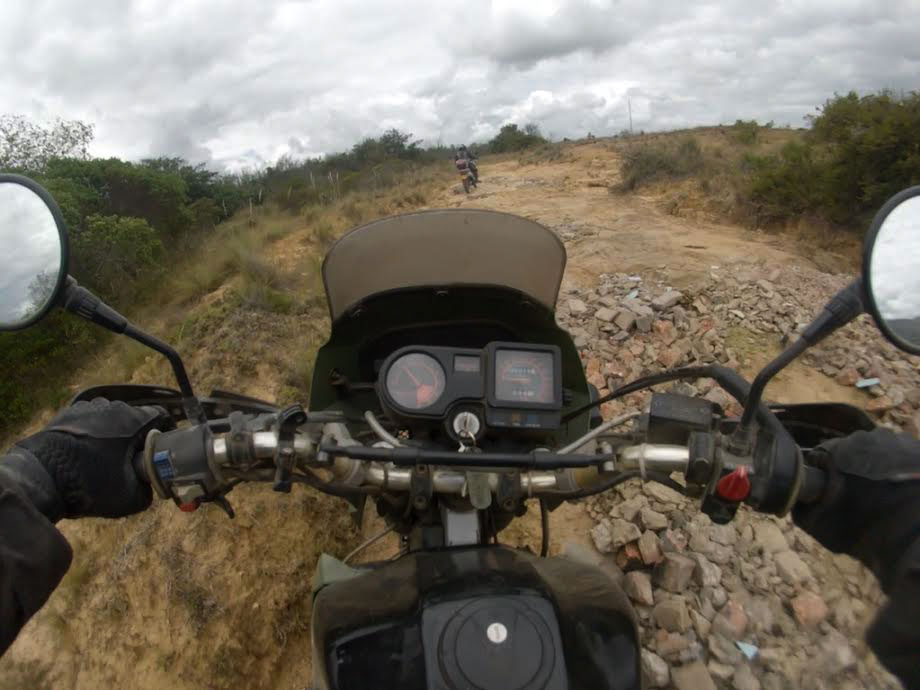
Here is an example of some of the material we went over during the ‘easy’ part of our ride with the Colombians. Photo: Nathaniel Chaney
Meanwhile the group of motorcyclists was waiting up ahead out of sight and they started teasing Nathaniel about having abandoned me. One of the guys that wasn’t comfortable in english made a joke and as everyone else cracked up someone translated the joke for him in a very serious voice: Well, now that we’ve got you out here we need to have a talk…
Colombians are very aware of their country’s reputation in the United States and many of the Colombians we met were comfortable with openly talking about it or even yes- making jokes about it.
By the time we caught up to the rest of the group the scouts decided we should turn around because the path had disappeared. In my mind I was like “SWEET, now everyone gets to watch we ride down that same part again like a dork!”
One of the riders leaned over and asked me if I had fallen. I told him No – that I had just gotten a little afraid because I wasn’t used to that kind of riding. He nodded in acknowledgement and sat back up on his bike.
*Sighing* I turned my bike around and filed into the middle of the line weaving its way back down the hill. Some of the better riders on true dirt bikes went off the path completely, however some of the men rolled their bikes into a little ditch next to where I had gotten stuck and walked their bikes past it.
I was relieved to see them do that and followed their example.
We went over some more pleasant rolling hills till we came to a gate that marked the start of some sort of park. We all parked and pulled out our wallets to pay the $1,000 peso (50 cents) entry fee. As they all pulled out their phones to take more pictures of their bikes I turned to one of the group leaders and told him:
“¡Ustedes toman mas fotos de sus motos que sus novias!”
He couldn’t hear me so I repeated myself loud enough for more people to hear me and they cracked up in agreement telling me yes it was true – they do take more pictures of their bikes than their girlfriends.
It was time to get back on the bikes and then the road started to get really intense.
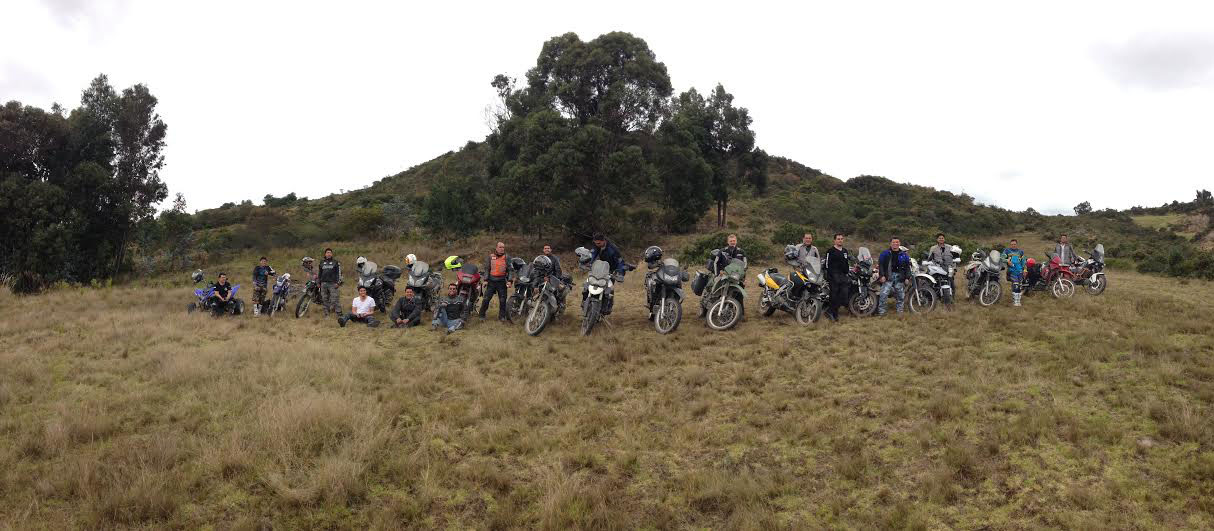
At the top of the BIG hill one of the group leaders called out “Okay – who has an iPhone to do a pano?!” Photo: Alex Washburn
It started easy enough with a slow climb up a small hill that had some ruts in it, yet few rocks.
On one of the hills one of the guys went over so the rest of us paused while they helped him get upright again. I was ashamed to secretly admit to myself that I was both glad he was okay and glad that I wasn’t the first to fall. Nathaniel soon went over as well and I took another deep breath knowing the inevitable would soon come.
Eventually we came to a steep gravel decline that turned immediately left at the bottom becoming a gravel climb with a hairpin turn to the right half way up to the top. I got almost to the hairpin turn, however the rider in front of me had slowed down so much… I lost my momentum and over I went into the gravel. I turned my bike off and thanked the guys that helped me pick the bike up. They held it stable on the incline as I got back on and put it into first – I pulled away from them trying to gain enough speed before I reached the turn, but couldn’t quite get going enough… I fell over again not 10 feet further up the hill and the same guys helped me pick the bike back up again.
I apologized profusely, though they were the epitome of caballeros. They told me not to worry, breathe and it would be okay. Calm down they said – don’t worry!
The three of us made it up to flat grass field at the top without further incident and I announced to everyone after Nathaniel asked what happened that I had fallen DOS VECES. One of them asked me if the bike was okay and I responded in Spanish: “Oh of course, the KLRs are mules!” They seemed really surprised that I was still stoked about EVERYTHING.
And why wouldn’t I be? I wasn’t doing very well on the terrain, nevertheless I was riding around the Colombian countryside with a whole group of locals and my boyfriend. We were exactly where we wanted to be at that moment and it was glorious.
The weather was perfect and we were enjoying the freedom of it all.
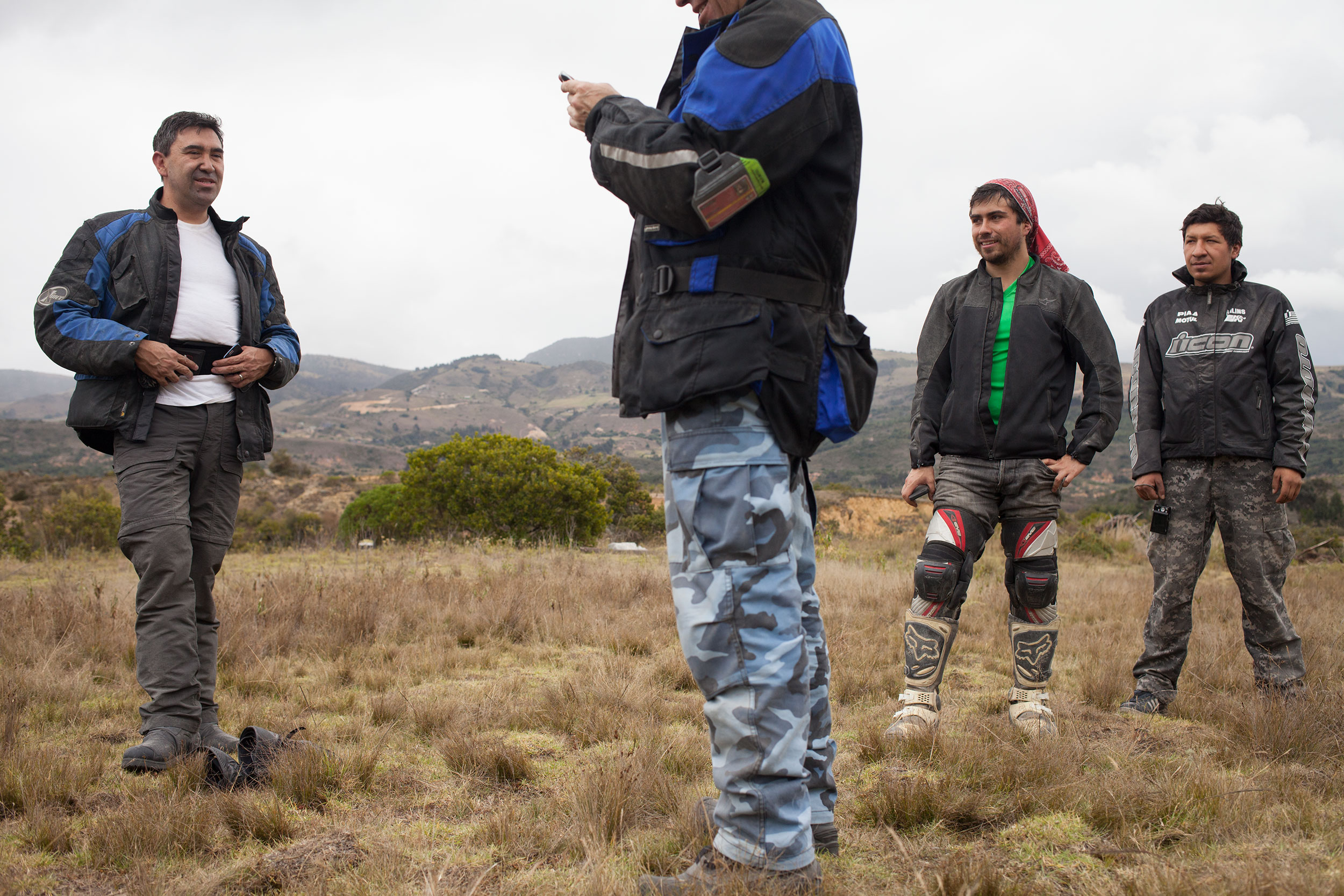
At the top of our biggest hill everyone took photos and relaxed. Photo: Alex Washburn
It was a really friendly joking group in general. The organizer of the ride came over to me and patted me on the shoulder saying loud enough for everyone to hear his joke “It’s okay, today is your baptism!”
They laughed.
“¡Si – de acuerdo! Después de Colombia estoy preparada por todo!”
More Laughter.
After everyone took their photos at the top it was time to head back down and Nathaniel decided to follow behind me in case I needed help again. I gave the rider in front of me a lot of room as I started back down the hill of doom, but I slowed myself too quickly on the gravel.
I felt my back tire start to slide out from under me as I fell again in almost exactly the same spot I had fallen the second time I was going UP the hill. I turned my bike off and stood up quickly as Nathaniel tried to park his bike on the steep decline. He and another guy once again helped me pick the bike up and I got back on (probably cursing).
I started down the hill again and not a minute later hit a rock or something that forced my steering column violently to the left and threw me to the ground. I felt my leg get smashed between my bike and the rocks as I fell onto my elbow with most of my body weight.
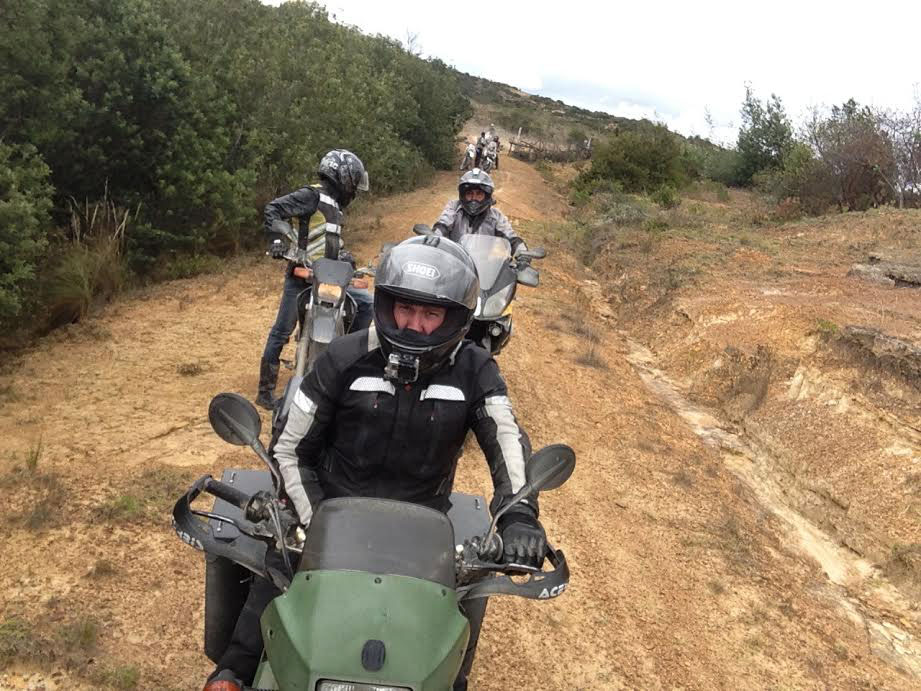
I shot an iPhone photo of Nathaniel over my shoulder as we waited to move onto the next section of trail. Photo: Alex Washburn
I’m not sure what I was thinking about as I indulged in a few seconds of self pity laying there like a child but I’m sure they were all adult words. It hurt – but I was mostly worried about looking like a loser in front of all our cool new friends.
I sat up and started tossing the shards of broken mirror off the path as I heard Nathaniel coming up behind me. With the boxes on it I can’t pick the bike up by myself so I had to wait till he got there anyway – that part was not self indulgent.
We caught back up to the group (they weren’t that far) and I announced as cheerily as possible that I had fallen DOS VECES again. A few guys came and looked at my bike and I showed them how I had broken my mirror. One of them took some phone photos of me as I gave him a thumbs up.
I knew that they could forgive me for slowing them down (especially since I was such an anomaly), but they wouldn’t be able to forgive a bad attitude.
We left the park (spoiler alert – I didn’t fall again) and stopped one more time at a small store a few miles away. We all grabbed cokes and cookies and had our last conversations of the day as people started to slip off into the afternoon. A lot of people came to say goodbye to us and a few hugged us as we put our helmets on to ride back to Bogota.
People exited the highway in small groups and finally one last rider honked and waved and it was just Nathaniel and I navigating our way through the streets back to the hostel all alone.
My ankle and shins are now some really awesome swollen shades of blue and I have a few inches of skin missing from my forearm, still the day we got to go off roading with the Colombians is going to be one of my favorite memories of the trip.
Perfecto.
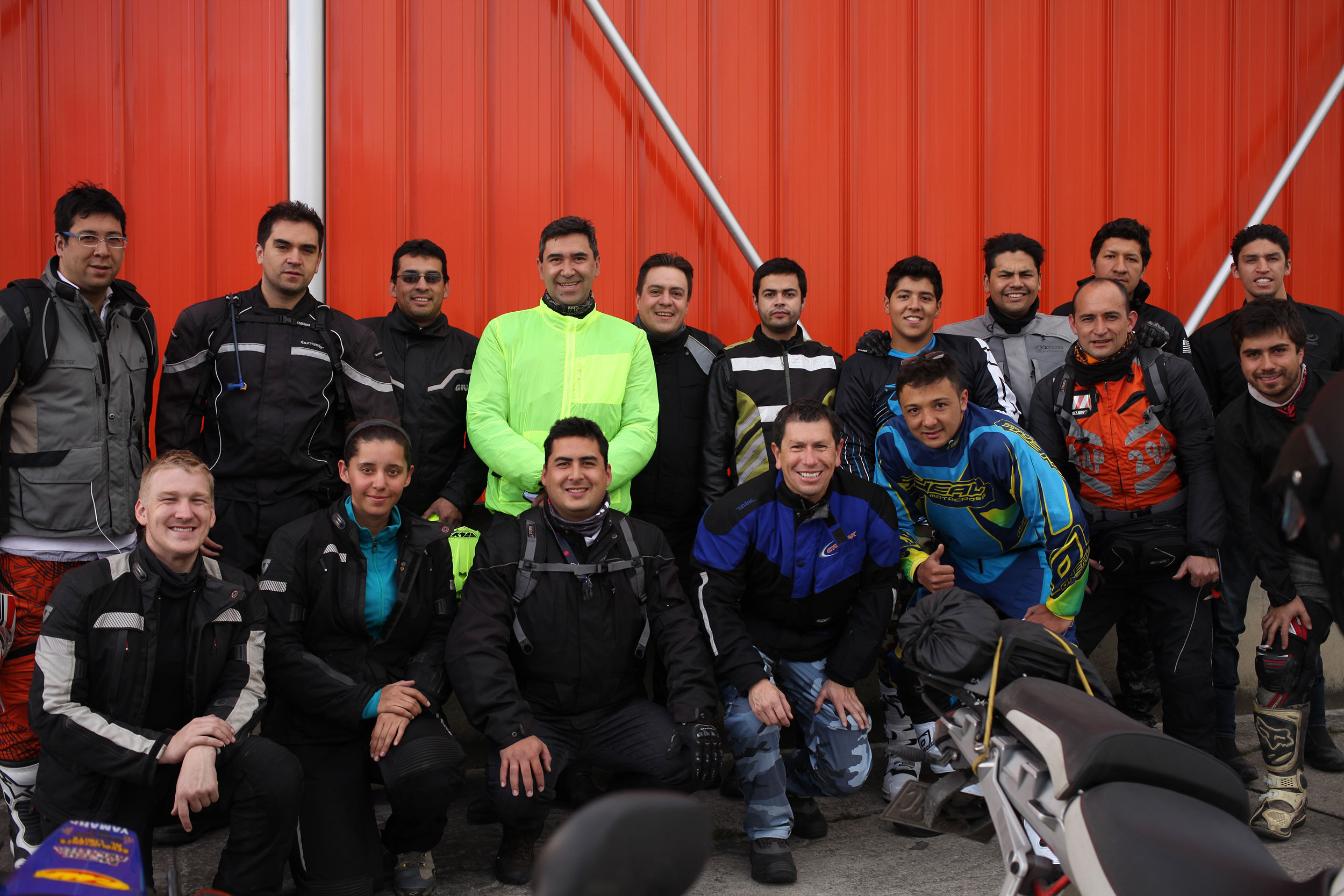
Hernando indulged me and took a photo of the group with my camera too. Photo: Hernando Herrera R.
Bogota
Posted on January 23, 2014
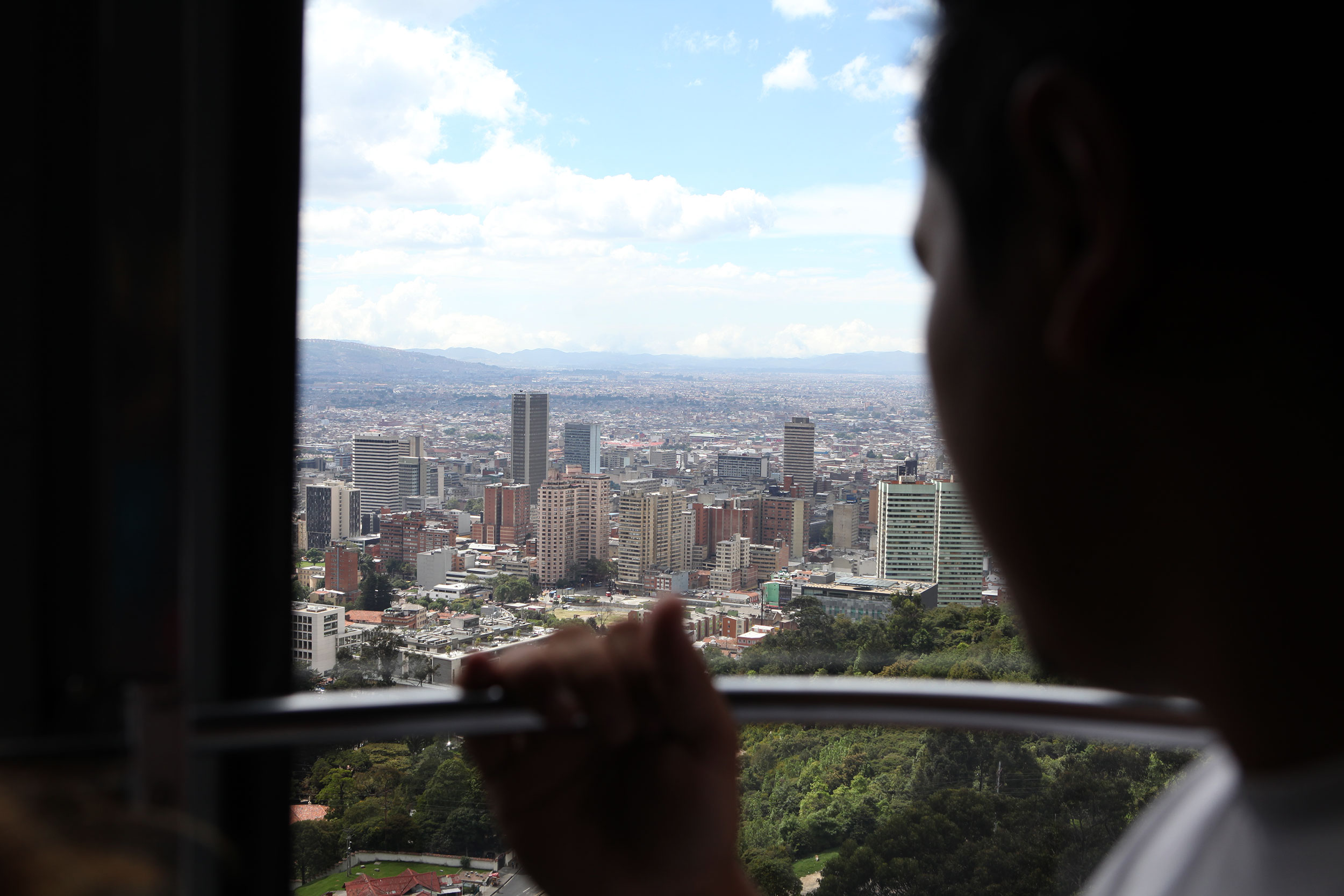
A man looks out over Bogota Colombia from the Transferico cable car that gives tourists and locals a view of the city from the top of a nearby mountain. Photo: Alex Washburn
Riding into Bogota, the capital of Columbia, was nothing like I expected. A few days earlier we had cruised into Bucaramanga, which you enter via mountain roads that give a view of the entire city as you crest them. This is what I expected when coming into Bogota, a city of 6.73 million people, but as Alex and I entered the city the limits, the city only slowly grew up around us.
In what reminded us of LA, and to a lesser extent Sacramento, Bogota is expansive, a main city built years ago that was expanded in the following decades. LA is 503 square miles, and Bogota is 613, which should give you an idea of how far it stretches. In a normal city the streets from north to south and east to west will be labeled Calle and Carrera, think street and avenue, and wont normally go past twenty or thirty. At the beginning of where Alex and I started we were at Calle 222, and we needed to get to Calle 9.

A group of tourists checks out a display at the Museo de Oro (Gold Museum) in downtown Bogota. Photo: Alex Washburn
Bogota brings together quaint neighborhoods, dirty trash heaps, museums, universities, street vendors, and churches in a way few other capital cities we have visited do. In La Candelaria, where our hostel was located (side-note: Musicology Hostel is one of the best hostels we have stayed at on this trip. The staff are friendly, the vibe is chill, and you can park a motorcycle in the entrance!) is the historic old town, full of churches and museums. It has a smaller town feel, until you ascend the church on Monserrate and get a full view of the city and how far it reaches.
While there could be many associations with Bogota, the City of Museums should be one. Within a six block radius of our hostel, there were at least five museums, and probably more that I am not aware of. There is the Military Museum, the Botero Museum, but the most prominent would be the Gold museum, which show cases gold workings from all over Colombia and easily has over 6,000 pieces on display. It can get a little overwhelming by the end and there are three sold floors of exhibits to peruse, though I was told Pablo Escobar’s gold Harley Davidson would be there and was slightly disappointed when I didn’t see it.
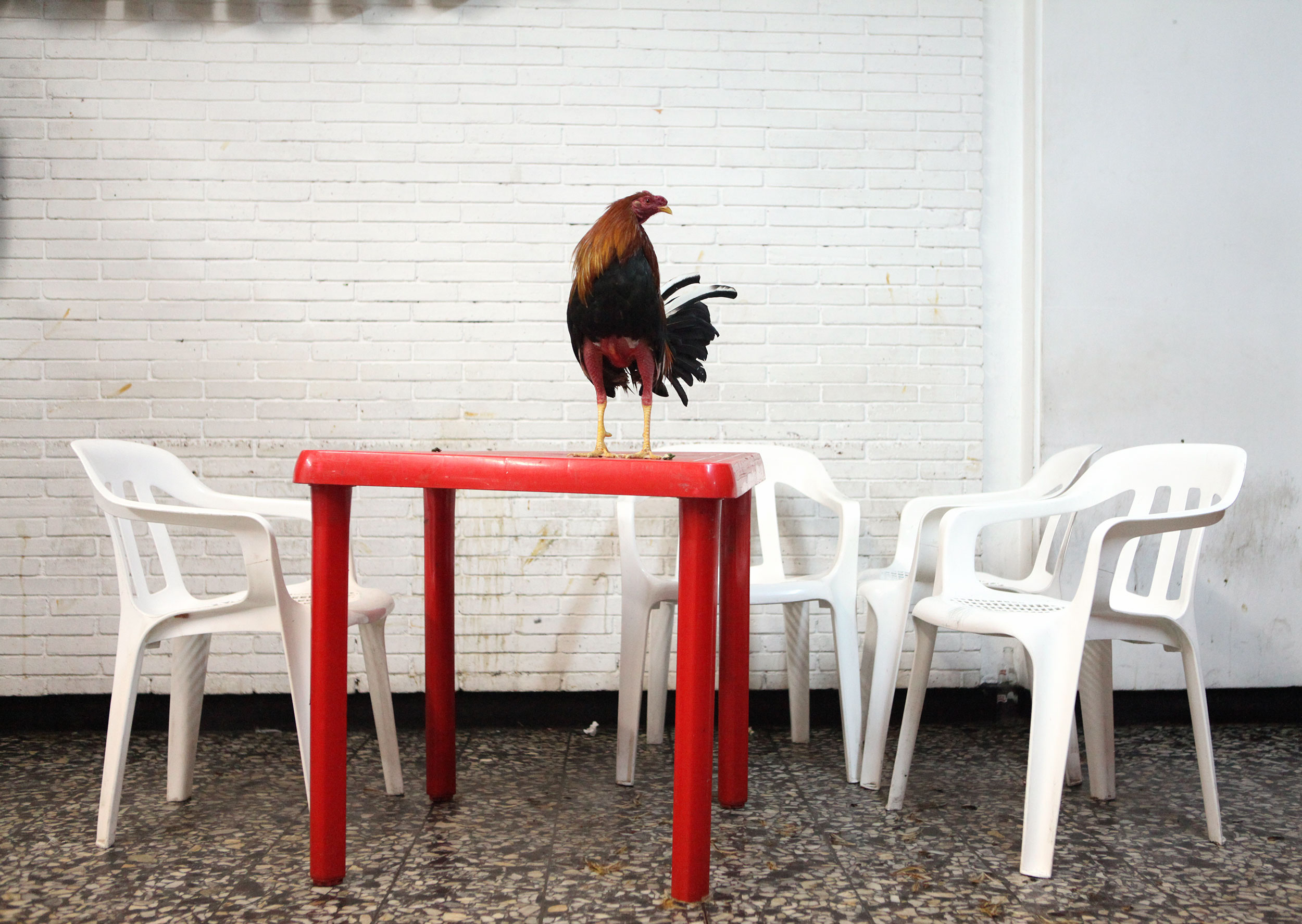
Alex being a photojournalist wanted to go to Club Gallistico and take photos. Club Gallistico is one of the oldest cockfighting establishments in the city and she’ll be doing a full post for that on her personal photoblog. Here a rooster waits to have fighting spurs attached to his feet. Photo: Alex Washburn
Bogota is located in a high plateau situated in the Andes mountain range, which means that it was a bit on the cold side even though it is middle of summer in South America. What helped to take the chill off was a local dish to the region, hot chocolate with cheese and bread with butter. We were a bit confused on how to eat the dish and ended up just dipping the cheese in the hot chocolate and nibbling on it only to find out later that you’re supposed to mix the cheese in and let it melt a little while you eat the bread and then drink the chocolate with the melted cheese inside of it.
As Alex mentioned in her previous post, there is a plethora of street food in Bogota, and many restaurants serving up traditional favorites such as Ajiaco (Colombian chicken soup) and tamals (think Mexican Tamales, but cooked in plantain leaves and considerably bigger with a softer form of masa). We weren’t left wanting once again for restaurants, but it is still hard to find good places among all the mediocrity, however asking locals and police officers never fails to produce results.
Bogota is so expansive you couldn’t ever explore all of it, from the historic downtown, to the more modern financial district (that has a building that at night would put Las Vegas to shame), to the outskirts with its apartments and neighborhoods. Alex and I enjoyed our time in Bogota, and thought it was the city that most surprised us thus far on the trip. Sure it is big and loud, like most capital cities, but there are treasures to be had if you put in the time to find them — and have a really great hostel to stay at!
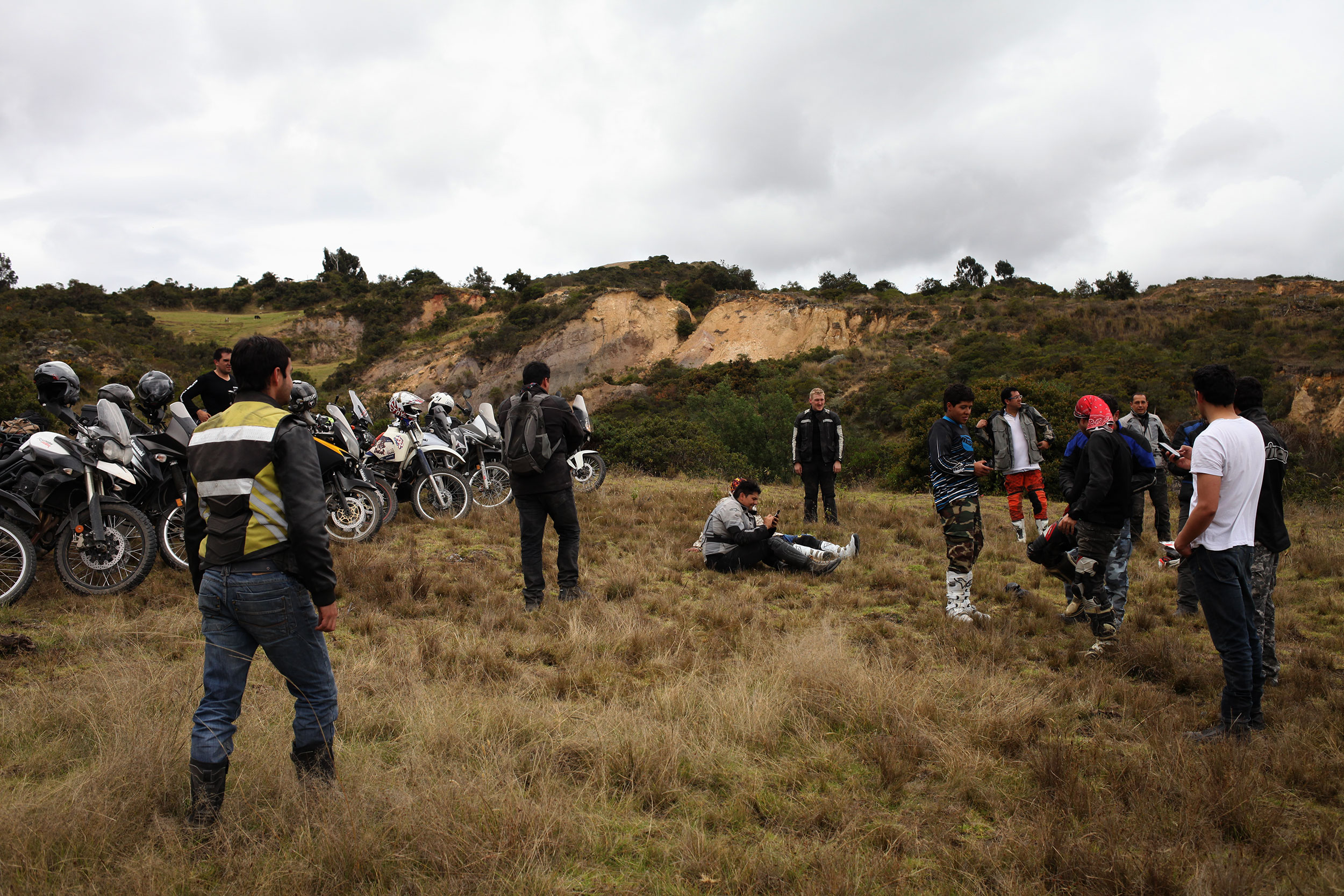
Our last full day in Bogota we met up with a group of Colombian motorcyclists and went off-roading just outside of Bogota. Alex has a ton of bruises from the adventure (full post on the ride tomorrow). Photo: Alex Washburn
A.T.T.C.C.
Posted on January 17, 2014
A.T.T.C.C. is A Tale of Two Colonial Cities. Colombia has two well known towns that are colonial to the bone, both well preserved since their founding and now a days keeping up appearances for tourists. The older of the two is Villa de Leyva founded in 1572 and the baby brother is Barichara founded in 1705. Both are promoted by Lonely Planet and as they are within driving distance (and on our way to Bogota) we decided to do a back to back comparison.
Barichara
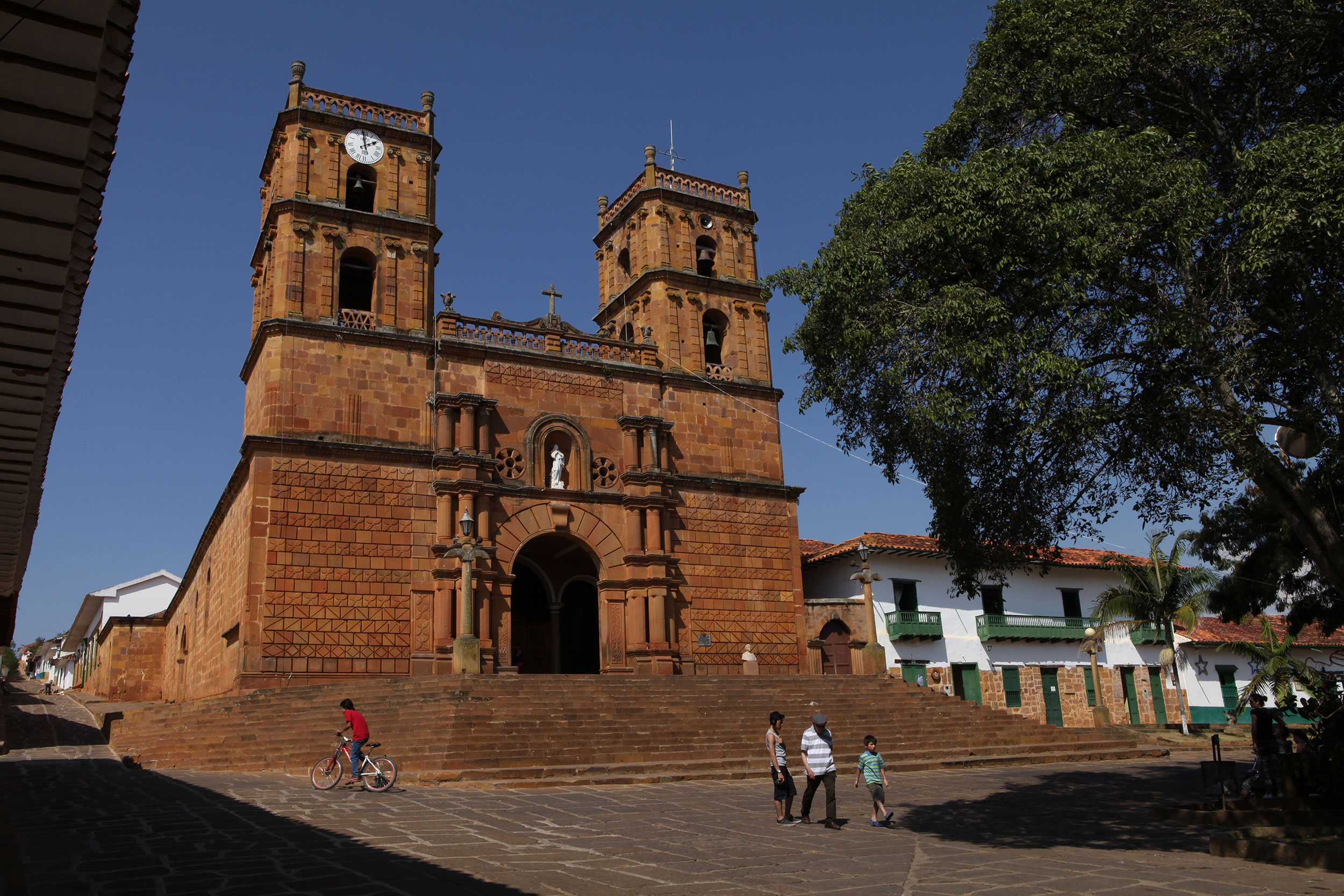
The Cathedral of Barichara dates back to 1705 and seems to dwarf the tiny puebla on the hillside. Photo: Alex Washburn
Barichara is located in the hills above San Gil, sitting atop a plateau that overlooks a dry valley below with a river running through. The landscape between San Gil and Barichara is pastoral bliss and once your in the town, it reminds one of the hills in Tuscany (our what I imagine they are like). The streets are cobblestone, but they have been cemented together, and though most likely slick when wet, it makes driving around on a motorcycle pleasant.
There is the sense that this isn’t just a tourist trap, but a real town nestled in the Colombian countryside. There are not an overwhelming amount of restaurants or knickknack shops, though there are more than enough cafes for some reason (this also is the case in Villa de Leyva). However, you see tons of locals on the streets, or sitting on stoups at night enjoying the country living.
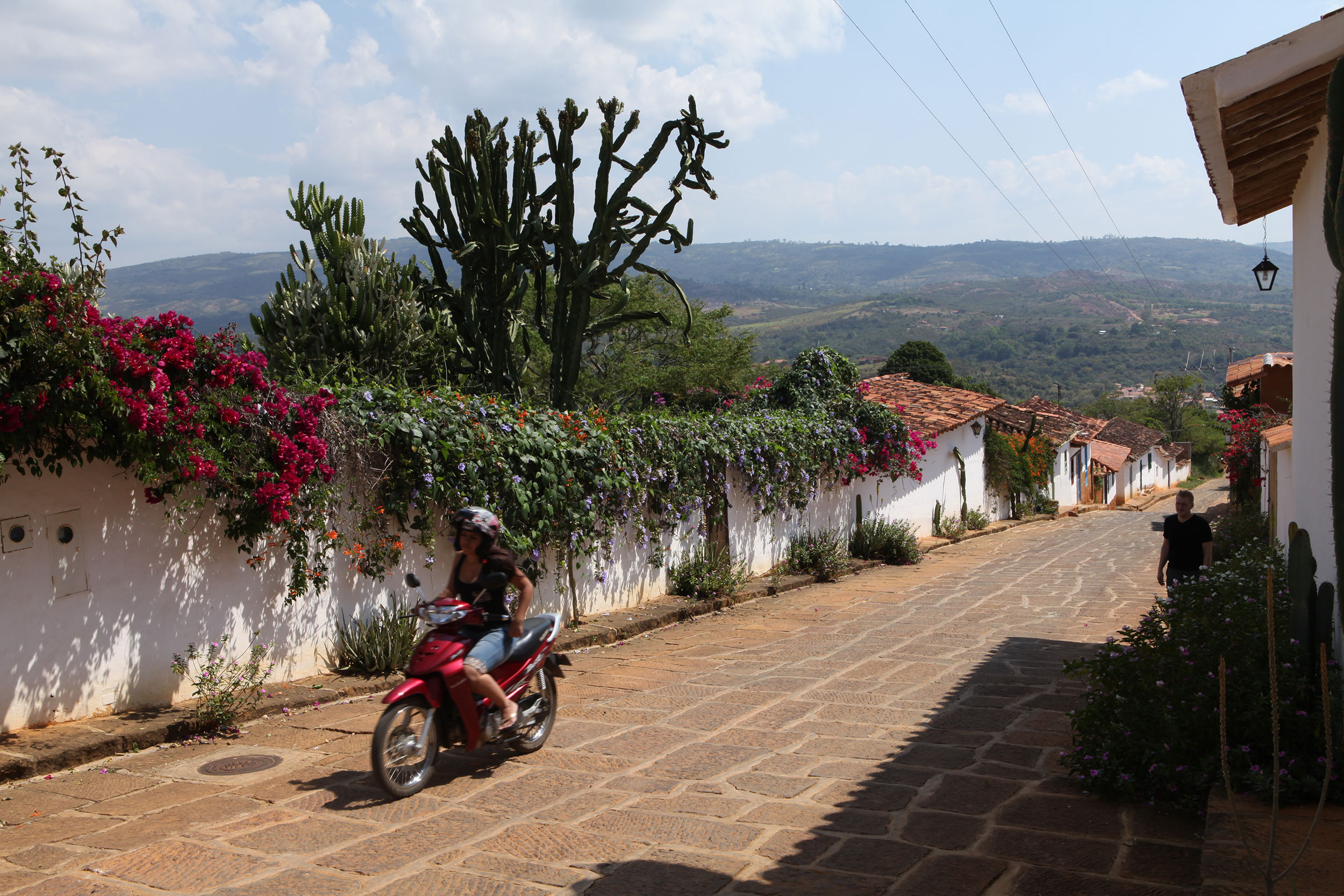
In Barichara you are always either walking up or down a hill. It creates lovely views from every street! Photo: Alex Washburn
Barichara is built on a hill and as you climb your way to the top the views of the surrounding valley only intensify, no matter which street you look down. The citizens and local government has done a great job of keeping up the facades of the houses and there is a cohesive feeling between the buildings that you would expect from a great colonial town.
There are three churches in town, the largest being Catedral de la Inmaculada Concepción, which is located in the main square of town. A couple of look out points on the west side gives great views of the valley, and the whole town can be traversed in under an hour at a lazy pace leaving plenty of time to sip a lemonada at one of the many mentioned cafes.
Sleepy, quite, and what you would want in a little getaway, though the lack of restaurants may leave you a little hungry at dinner time.
Villa de Leyva

The Plaza Mayor in Valle De Leyva is one of the biggest plazas in the Americas. It’s a huge open cobblestone square with a small fountain in the middle and a handful of eateries on its edges. Photo: Alex Washburn
On a dusty road off of Highway-62, between San Gil and Bogota, in a high valley lies Villa de Leyva. The valley, unlike the aird environment of Barichara, is lush and the ride reminded Alex of the hills in Switzerland. The whole town revolves around the Plaza Mayor, which is one of the largest in the Americas and does feel impressive when you stand in the middle.
White washed walls prevail throughout the town, and like Barichara, the architecture is consistent throughout. Villa de Leyva does have a feeling of being more developed, many cafes and trinket shops along with jewelry stores and clothing shops line the inner streets and near the outskirts there are shops where locals would do their shopping.
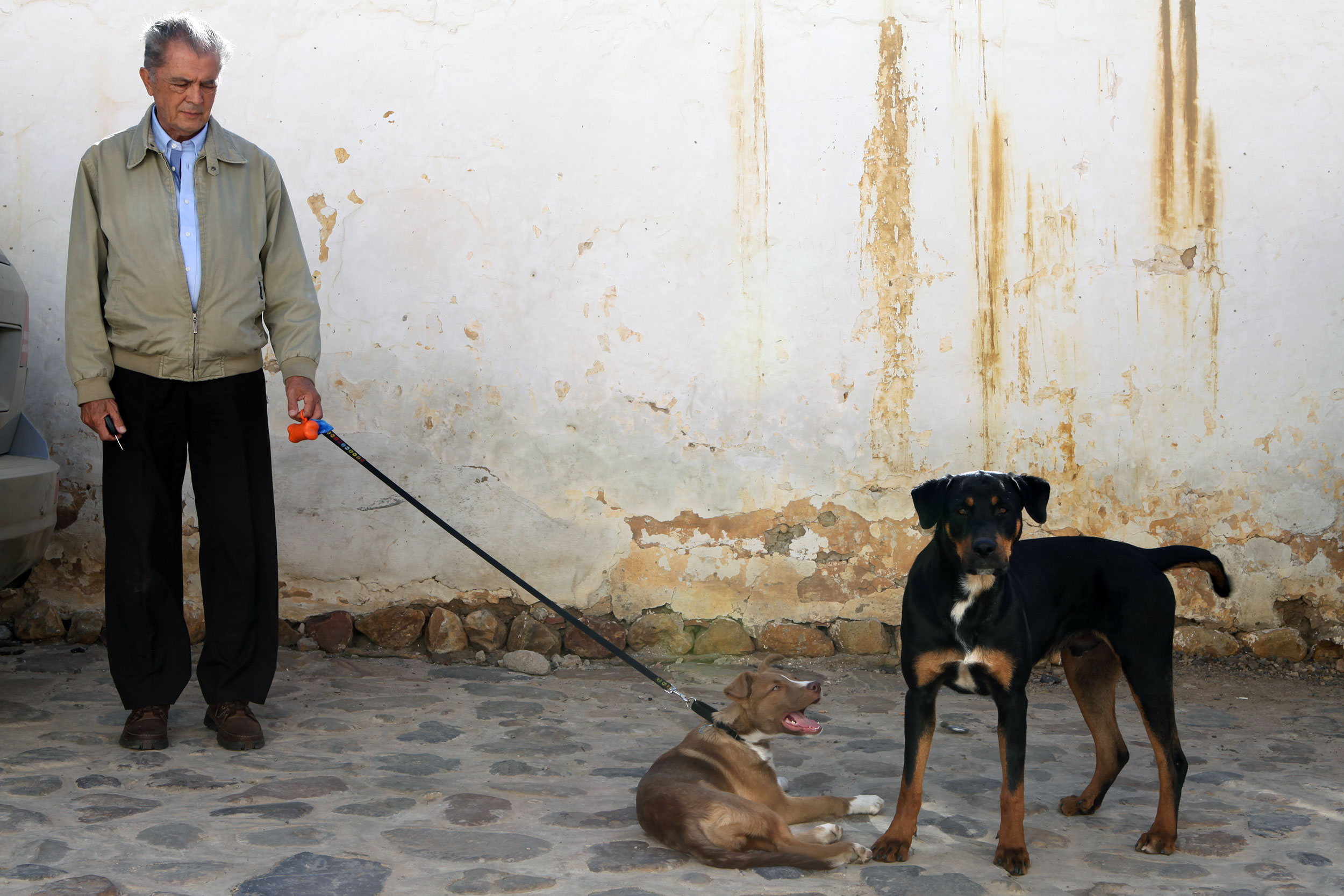
Villa De Leyva is full of people walking their dogs (some on leashes some not). It further adds to the quiet no-hurry atmosphere. Photo: Alex Washburn
The streets are cobblestone too, however laid in the traditional style, which makes driving a motorcycle on them…interesting. Upon entering town, Alex and I ended up going down a one way, the wrong way, and were told by cops to turned around. This is easier said than done on cobblestone, and an elderly gentleman came running up and helped pull us both backwards so we could turn around.
The town is about twice as big as Barichara, but there aren’t any more restaurants as one might expect. As in most smaller towns, stores tend to close early, and that might leave you without many options for dinner if you don’t plan ahead.
Lush, cobbley, and far from the bright lights of Bogota, it is a great escape from the larger cities, though the high altitude may have you reaching for a jacket instead of the sunscreen.
Both towns have hits and misses, Alex prefers Villa de Layva and I was more partial to Barichara. The best advice would be to hit up one or the other that fits best into your itinerary and then know that you got most of the experience of the other.
 Where the Autopista Ends