Where the Autopista Ends
Two motorcycle bloggers in the San Francisco Bay Area.
Getting Caught Up
Posted on March 24, 2014
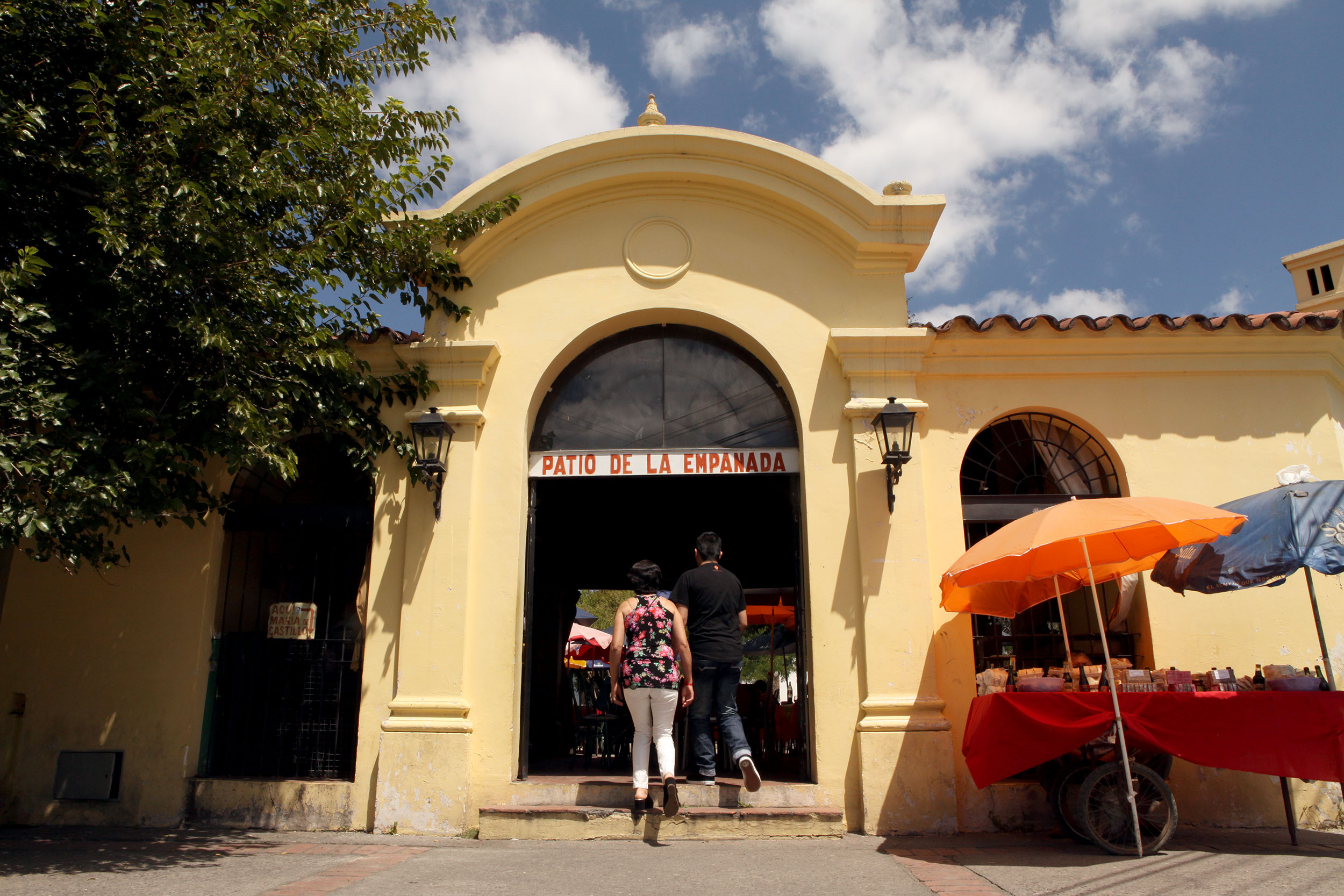
It’s not that Patio de Empanada is the ONLY thing to see in Salta… It was just the only thing I was really excited about. Photo: Alex Washburn
The days since Salta Argentina have been busy with riding and motorcycle repairs, so I will do a brief recap to get us all caught up and then Alex will be posting a blog soon about new adventures.
After our day of motorcycle maintenance in Tupiza, which also included paying our Argentinian reciprocity fee ($160) and printing out the receipt, we were off to the border to cross into Argentina. What we didn’t know was that this was going to be the longest border crossing of the trip. While many of the borders in Central America were long due to copious amounts of paperwork or bureaucracy, this border crossing was long simply due to the amount of people and the lack of employees.
We got to the border at 11am, and wouldn’t be done till close to 4:30. The main hold up was getting stamped out of Bolivia and into Argentina. Both lines were over two hours of waiting, in the sun for the majority of the time. The climax of the day was Alex and I yelling at people that were trying to cut in line and getting one of them sent to the very back. We both don’t mind waiting if everyone is waiting the same amount of time, but there is a special place in hell for people who think that line cutting is ok. Yeah I’m talking to you guy with the faux-hawk and nerd glasses!
Knowing halfway through the process that we were not going to making our goal of Salta by nightfall we decided that we would just drive as far as we could, hoping that we might make it to Jujuy. At dusk (considering we never know what time it is in a new country), I pulled over to the side of the road to point out the giant sundial on the side of the road, that marked the tropic of Capricorn (the southern most latitude where the sun is directly overhead at noon).
Having just passed a fancy looking hotel and being out in the middle of nowhere, we decided to see how much the hotel cost and make a judgement of weather or not to keep going. The hotel ended up being the most expensive of the trip, but Alex and I were beat and it was legitimately a distinct building having been constructed in the early 1900’s.
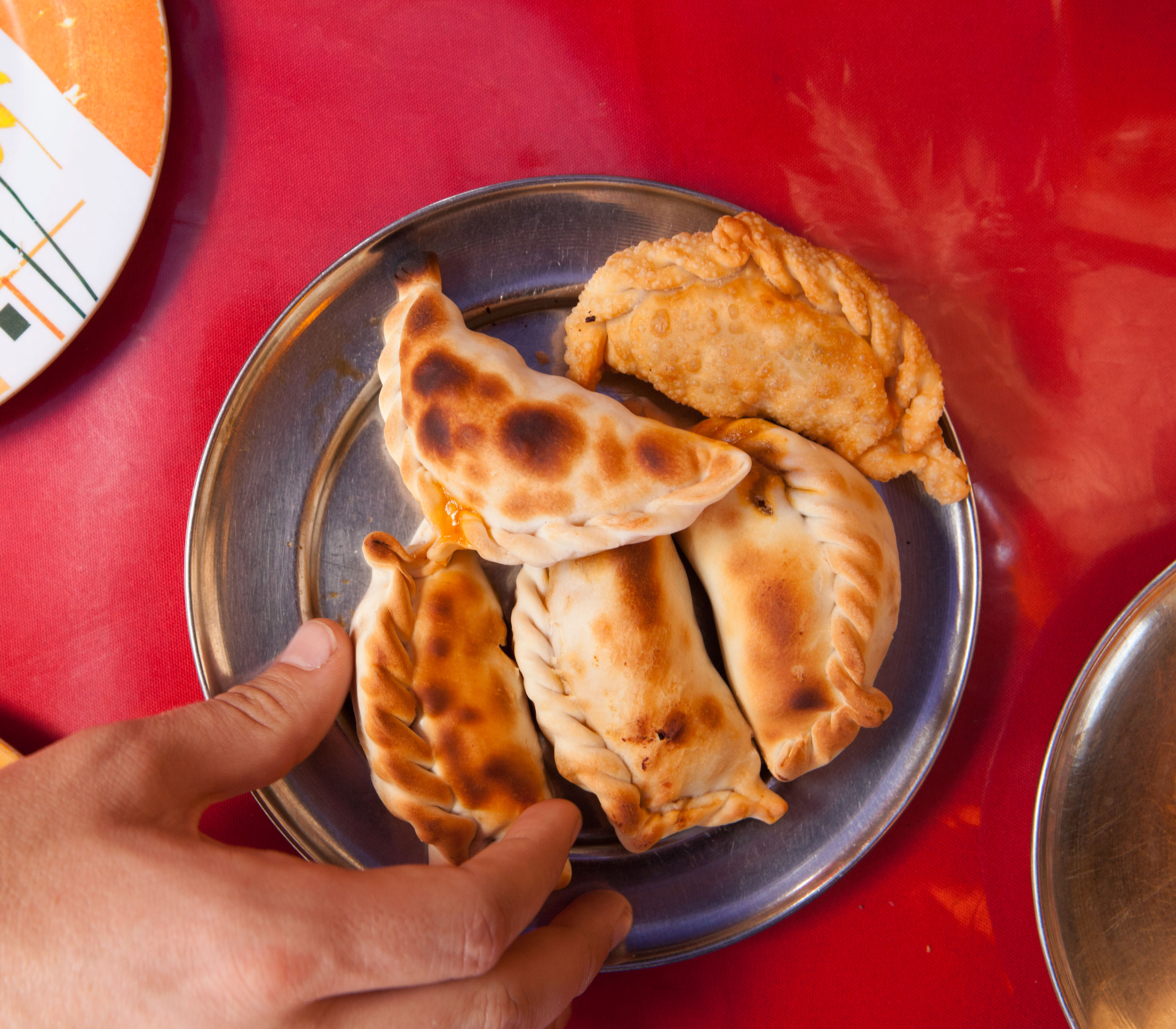
Salta Argentina claims to be the inventor of the empanada. Patio de empanada pits over half a dozen empanada places against each-other and the result is glorious. Photo: Alex Washburn
The next day it was up and off to Salta where I needed to get my fork seals replaced. We got into town and found the shop we were going to take the bike to, and it was closed. A man passing by informed us that it was siesta time and that the shop would reopen at 4:30. We went and got sometime to eat as we waited, and later found out that the entire city shut down between two and four-thirty and that restaurants wouldn’t even start serving food until eight at night.
Got the bike delivered and were told they wouldn’t be able to get to it until Monday as Saturday they were busy and they weren’t open Sunday. The meant we were stuck in Salta for three extra days we weren’t planning on. Not the biggest deal, but Salta isn’t the best city to be stuck in and they were uneventful days.
One of its claims to the fame is that they say they invented the empanada and so Alex found a market that only served the doughy pastry. We went and enjoyed many different verities of empanada, but the best one we had in my opinion was at a restaurant on the main square of town.
Monday came and we picked up the bike in the afternoon and prepared to leave the next day. That night was the most intense lightening and thunder storm we both have ever experienced, with one waking me up that sounded like a car explosion. The torrents of rain that accompanied the thunder was enough to saturate the ground and caused our bikes to fall over in the patio of the hostel.
We packed and prepared for a long day in the rain, but were lucky that it must have rained itself out as we slowly made our way out of Salta and on to the open road.
The Road Less Traveled…
Posted on March 17, 2014
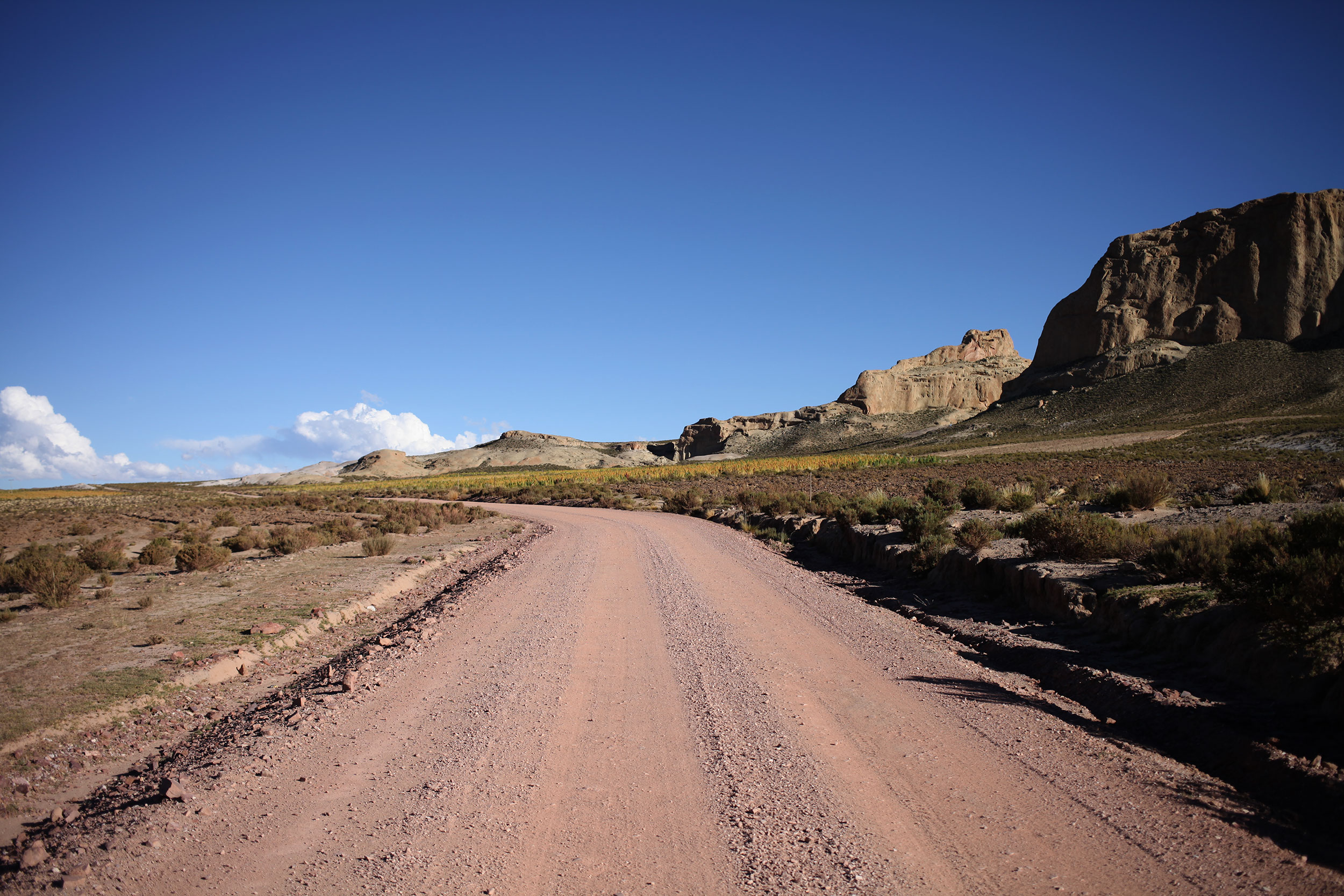
The road from Uyuni to Tupiza Bolivia was deceptively vicious. 120+ miles of gravel, sand, undulating ripples and very few people. Photo: Alex Washburn
For a reason…
In Bolivia I started asking the owners of hotels (using Alex translate their responses) how long it would take to get to the next stopping town we had decided on. Why? Because in Bolivia there can literally be nothing for miles and miles and I wanted to make sure that we made it to the next destination without running out of gas or having to drive long distances at night.
I accomplished only one of these goals when we set out from Uyuni to Tupiza after our day in the salt flats. I had asked the owner of our hostel the night before how long it would take to get to Tupiza, as we were planning on crossing the border to Argentina the next day. She responded that the road between the two cities was bad, mostly gravel, and that it might be better to back-track to Potosi and then head down from there as it would take 4 hours from Uyuni straight. A total of over 600km (roughly 372 miles) for the back-track, when the road that went straight there was only around 200km (or 130 miles).
Alex and I had been told by Google maps not to take certain sections of road and to instead do these long loops, but as of yet, we had’t encountered anything the bikes (or us) couldn’t handle. The worst was the road between La
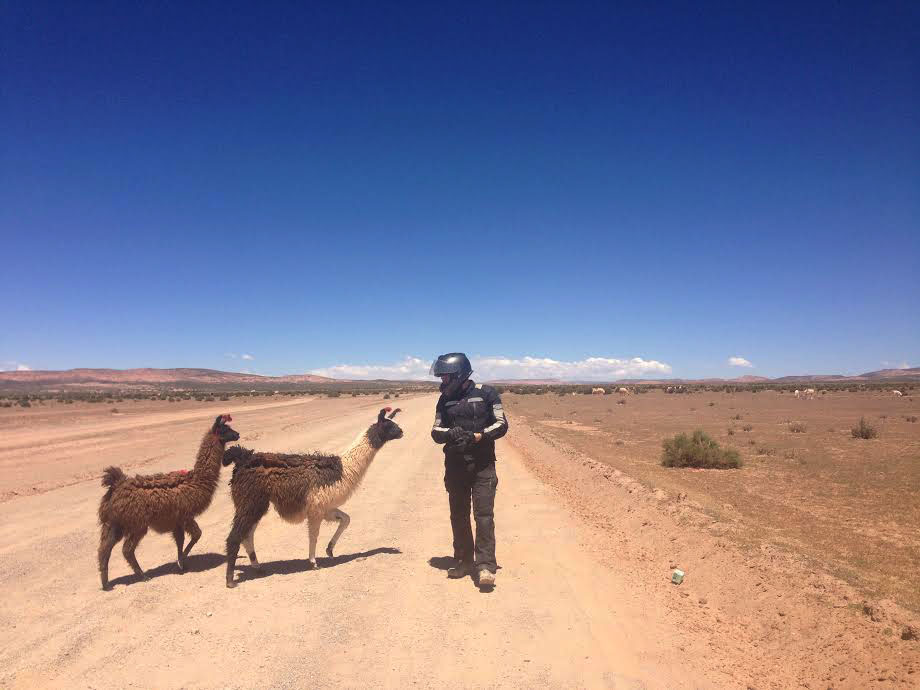
I was laughing so hard when these lamas started following Nathaniel that tears were running down my face. I quickly pulled out my iPhone to take pictures. Photo: Alex Washburn
The next day we got up, got packed, didn’t take showers because the element in the water heater was broken, and headed out after having some breakfast (our last meal until 9:30 that night) and spending a half an hour looking for gas, in a town that isn’t any bigger than a four or five street grid.
By the time we got onto “highway”-21 it must have been close to 10:30, not the earliest start to the day we’ve had on the trip. Highway-21 was never asphalt, not even in Uyuni, and about ten minutes in I gave up on it ever being asphalt for the entire length of the drive.
The first half was boring landscape you can’t be excited about going ten to fifteen miles an hour through. Llamas littered the sides of the road, while bumps caused by rains, that make the road resemble monster truck tire tracks, made for a slow bumpy ride. Stopping for a moment to wait for Alex to catch up to me, and checking what appeared to be an oil leak on my front left fork, I stood up to see a mama llama and her baby starring at me.
Not knowing if they wanted to attacked or were simply curious, I backed away from them slowly and raised up on the balls of my feet and put my arms above my head (what I was taught to do in cub-scouts if you come face to face with a mountain lion) making myself as big as I could. All the mama did was look at me, blink, and continue forward as I retreated to where Alex had stopped some twenty feet back.
All in all they were just friendly, curious llamas not accustomed to seeing stupid motorcycle riders, in full gear, stopping on the side of the road. The mama even ended up nuzzling Alex’s hands as she tried and succeeded to pet her. Seeing as we still had an entire days worth of riding ahead of us we pushed on from the llamas, as they lost interest in us and went back to grazing.
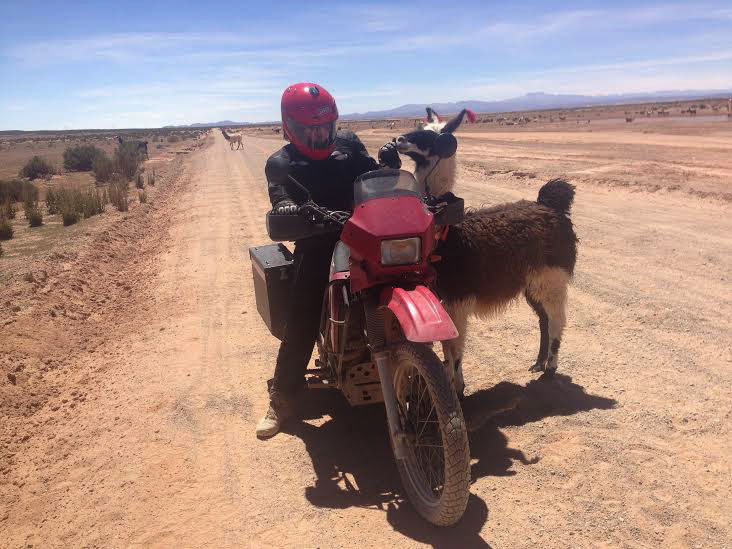
Alex makes friends with the rural lama. Photo: Nathaniel Chaney
Thinking the road couldn’t get any worse, it showed me a thing or two, by giving us sand on top of monster truck bumps, which helps to destabilize you better than anything we have encountered thus far (I almost tipped over more than half a dozen times that day, but was able to keep the bike up luckily). I went around one corner and couldn’t see Alex in my rear-view mirrors so I stopped to let her catch up.
However, after a minute of not seeing anything I knew something had to be wrong, so I flipped around and rode back around the corner to see Alex sitting on the side of the road, her bike smack dab in the middle of the sand on its side. I made sure she was okay before anything else, she replied that the sand was soft and she wasn’t going very fast when she fell, so we both went to lift the bike back onto two wheels.
It was at this moment that Alex realized that a cable was hanging loose, and upon further inspection, it had been held on by one of the sub-frame bolts. We don’t know how long she had been riding without it, but for those that don’t know the KLR, the back and front of the bike are held together by, you guessed it, the sub-frame bolts. There was no way she was going to be able to go another 100 miles on one sub-frame bolt without risking snapping the other and literally having her bike come apart into two halves.
There was a small cropping of buildings that some people might call a town only a couple minutes away, so we decided to get off the road and figure out a plan. Supposedly, according to locals, there was a larger town about ten miles away (though when your only going 15-miles an hour that can be almost an hour of riding) that we might be able to find a replacement at. However, I had read forums before we left where people had snapped sub-frame bolts and had a hard time finding replacements.
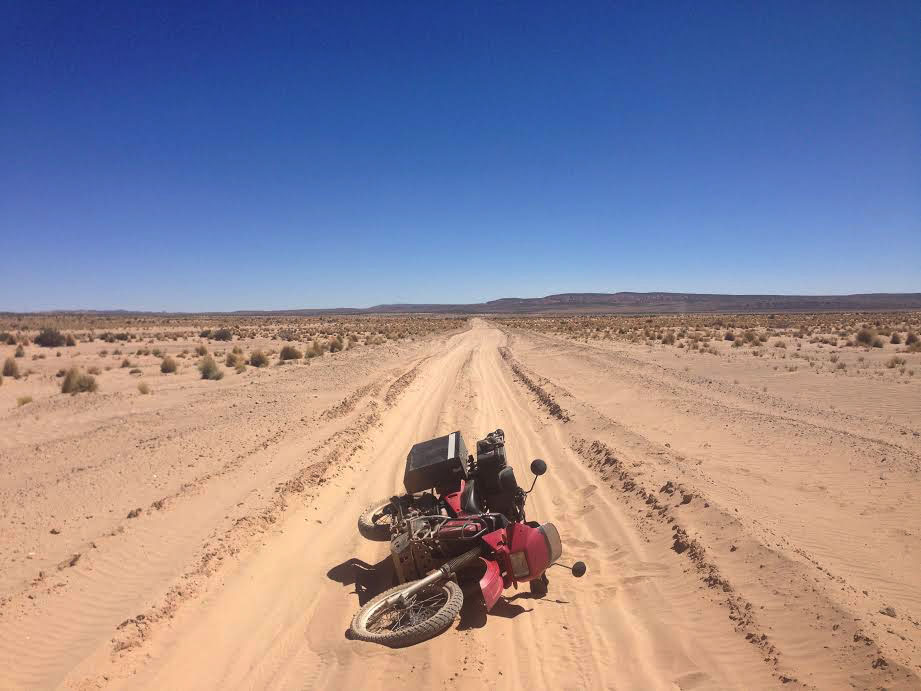
I can’t pick my motorcycle up without Nathaniel’s help while it has all my gear on it. Without the boxes I can pick it up but it’s still difficult. Photo: Alex Washburn
I’ll spare the details of the next 100 miles, and nearly 7 more hours of driving that occurred other than the important details. No more tip-overs by either driver, getting to the halfway point at 4:30pm, driving the last 40 miles in the dark, still on gravely dirt roads (they did get better in the second half, though still quite rocky), in the middle of the mountains with no ambient light say for headlights, smell of gas on my bike (to be covered later).
All in all, what the lady said would take us 4 hours took us ten plus hours to drive, the last three in the pitch black. Although, after driving the road all day and seeing how the Land Cruisers blast through it like they are training for the next Dakar we can totally understand why a local would think the trip only takes 4 hours.
Finally making it to Tupiza, we found an awesome hotel with parking and a restaurant right next store that was still open, again small miracles.
Even though we wanted to get to the border the next day, one of our bike gurus (Chuck Squatrigila) suggested we take a half day and check every bolt for looseness on the bike. It was a good thing he did. My bike was now leaking quit a bit from the left fork, but there was no mechanic in town who could do the repair, and it was looking like Salta, Argentina was the place to get it repaired. Though one mechanic in town told us it would be fine to drive on asphalt for another 1,000 miles (I don’t know if I believe that).
We found several loose bolts on both bikes, and the connections to my battery were loose (I lost electricity while parking that day, which made me think that might be the case). The big find on my bike was that gas smell I mentioned earlier, ended up being a hairline crack in my tank that was leaking a small amount of gas. Not to worry, Alex and I had prepared for everything (thanks to the help of many people) and we pulled out the tube of JB Powerweld, followed the instructions, and epoxied the crack right up. We checked to make sure it stuck and there were no leaks in the morning, good to go.
It was the hardest day of riding of the trip, but we both felt accomplished for tackling it and making it through, though I think are guardian angels took a couple blows that day.
Big Pictures Salar de Uyuni
Posted on March 13, 2014
We visited the world’s largest salt flat – Salar de Uyuni a few days ago before making a big push toward the Argentinian border.
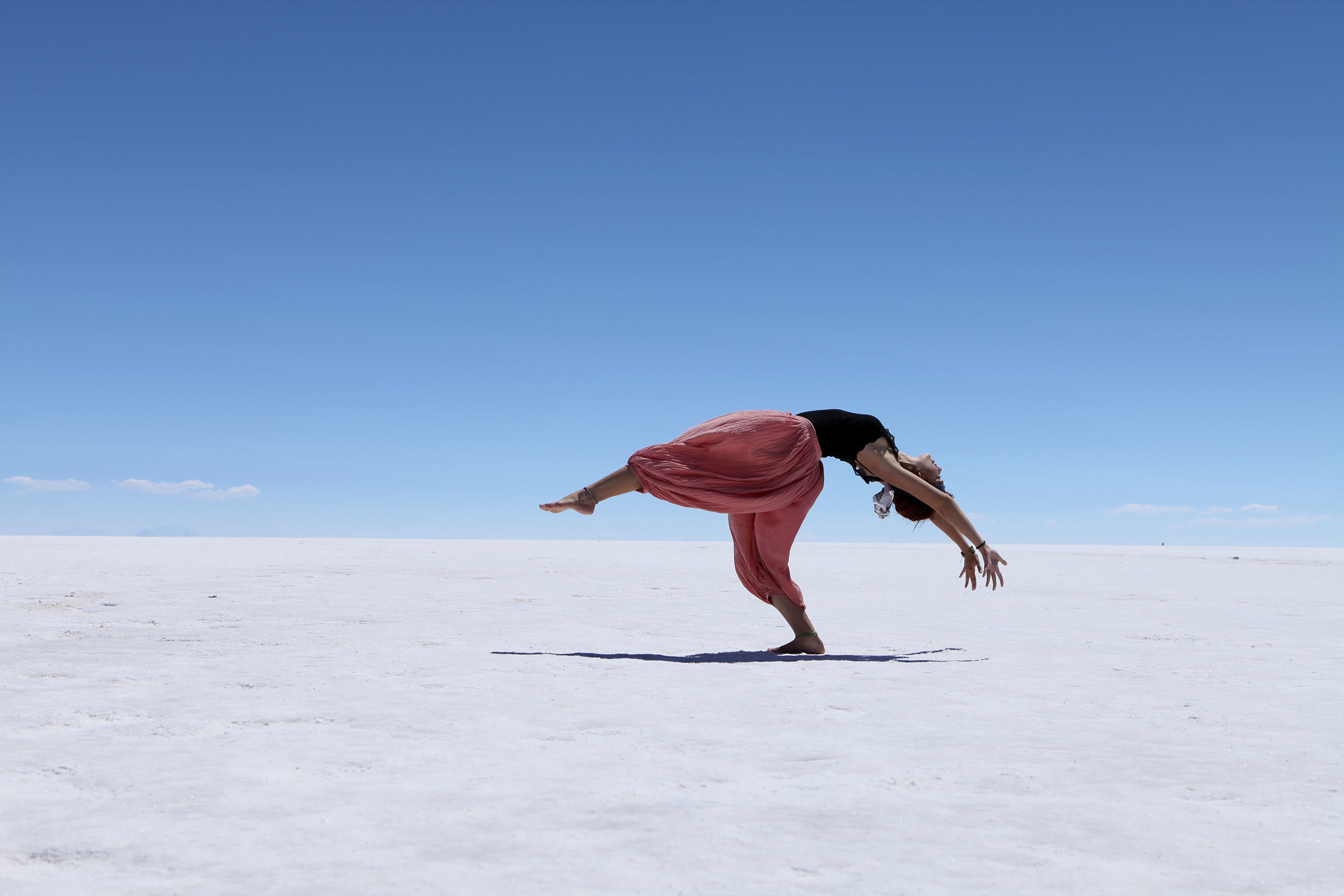
A Brazilian girl dances for her boyfriend’s camera on the Salar de Uyuni. Tourists usually bring props to play with the strange perspective the salt flat creates so I found this especially ethereal. Photo: Alex Washburn
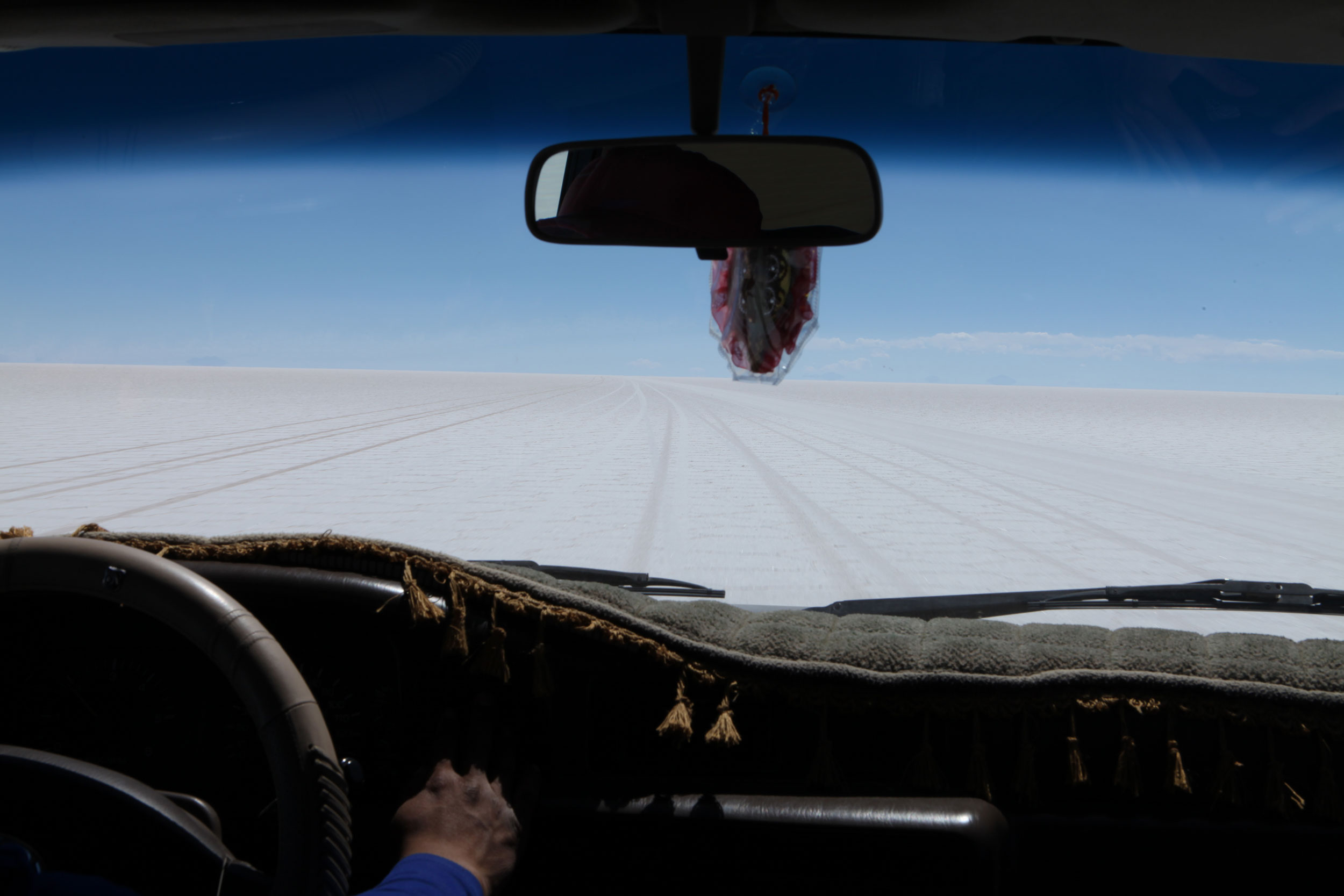
Driving through the Salar de Uyuni is a strange experience. White hard packed salt stretches for miles in every direction and the local guides navigate across the expanse of nothingness using the surrounding mountains as navigational markers. Once we got out onto the salt flat we were glad we hadn’t driven out there alone. Photo: Alex Washburn
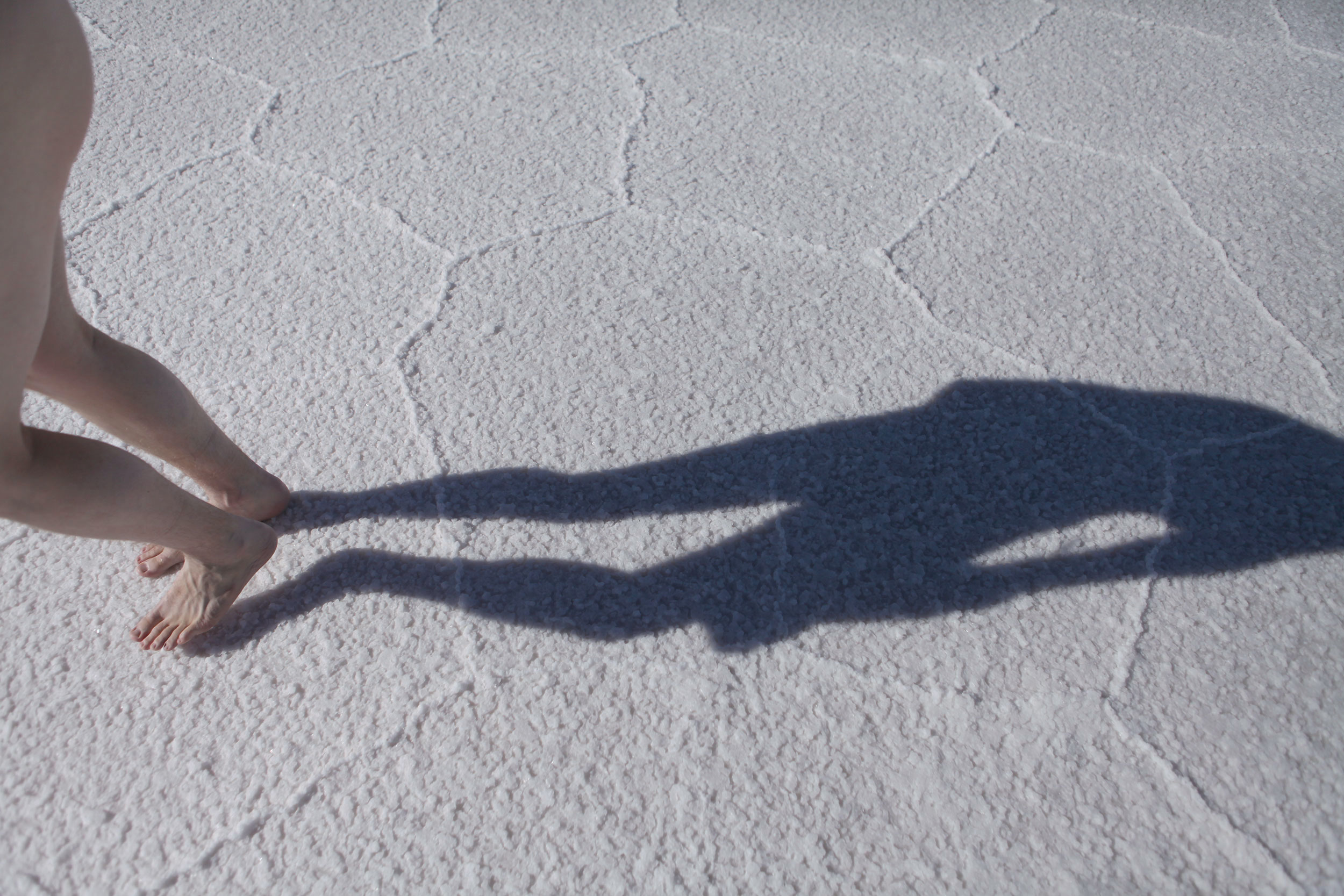
Nathaniel decided before we had made it out onto the Salar de Uyuni that he wanted a photo for instagram of himself standing out in the middle of the salt flat ‘sin ropa’. The other people in our SUV thought this was hysterical. Nathaniel was the only person in our car of 8 who did not speak Spanish so this was his bonding moment with the others. Photo: Alex Washburn
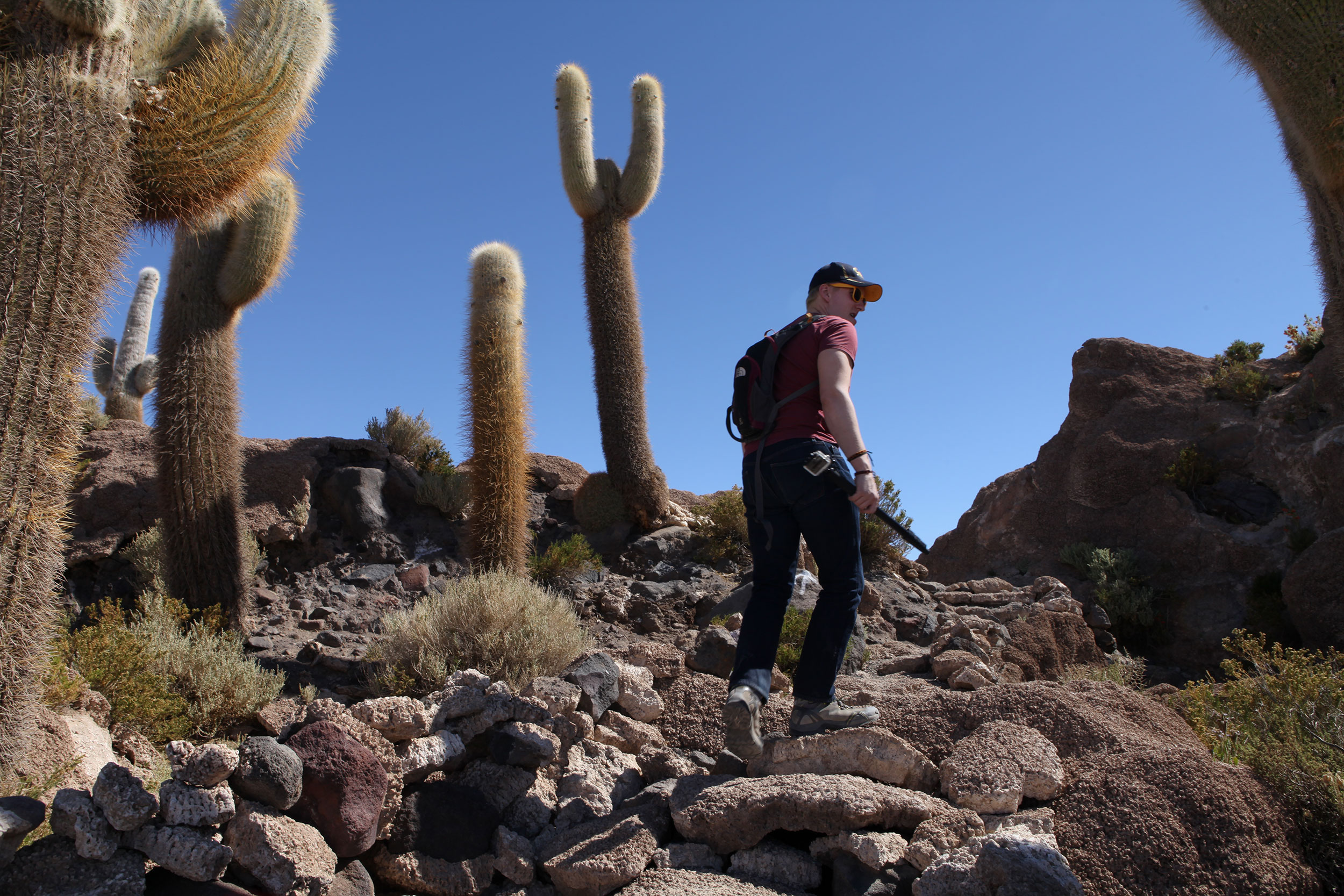
There are two ‘islands’ on the Salar de Uyuni. We paid our 30 Bolivianos to walk around the Isla Incahuasi and the desert flora made a strange contrast to the smooth expanse of white surrounding it. Photo: Alex Washburn
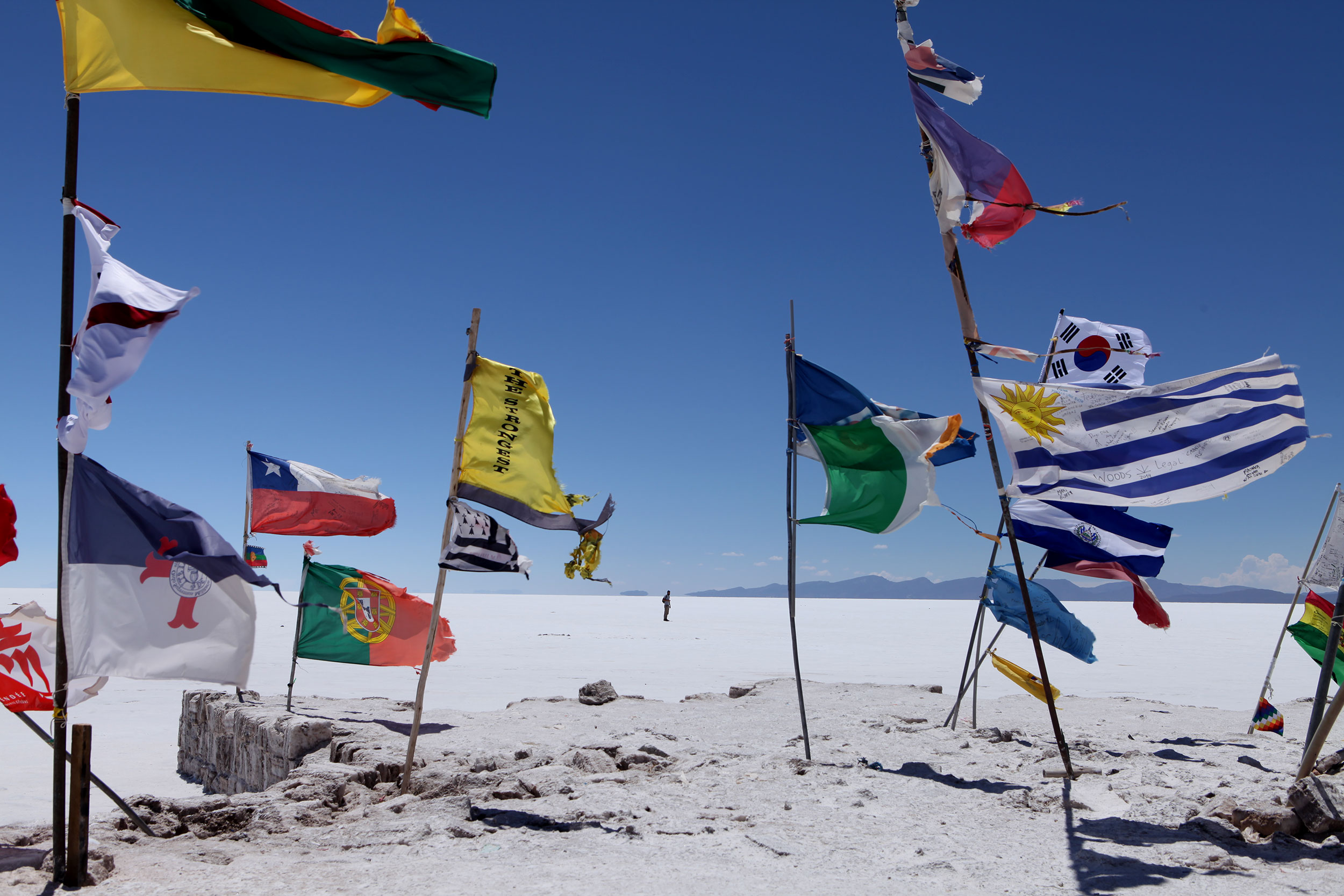
If you visit the Salar de Uyuni I would suggest bringing a flag to add to the collection near the buildings where most of the tours stop for lunch. The fluttering colors are gorgeous against the the duo-chromatic surroundings. Photo: Alex Washburn
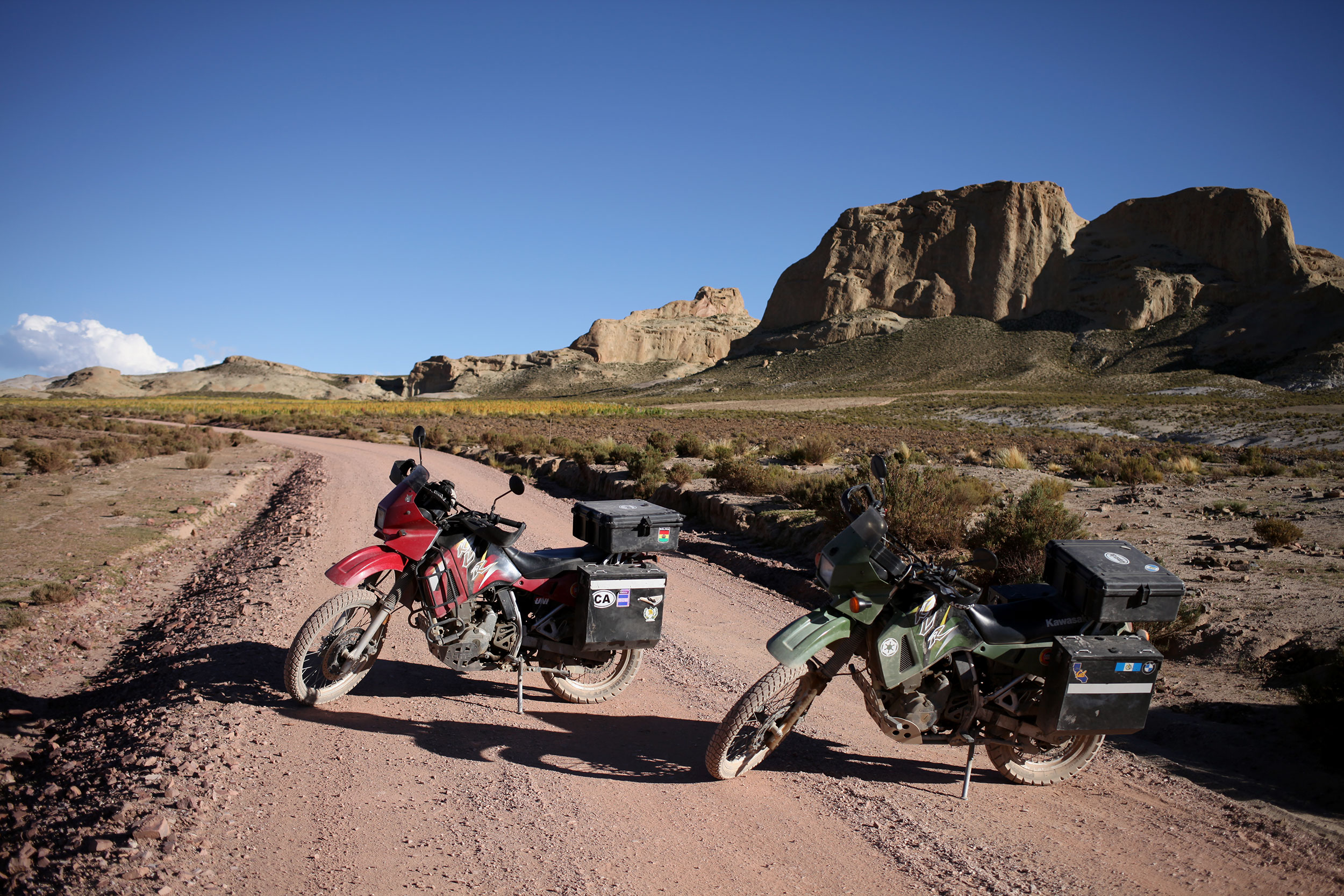
After touring the Salar de Uyuni we were ready to pack up and head south once again. Here is a photo from the road between Uyuni and Tupiza which will be covered in depth in the next blog. Photo: Alex Washburn
The Bolivian Death Road
Posted on March 9, 2014
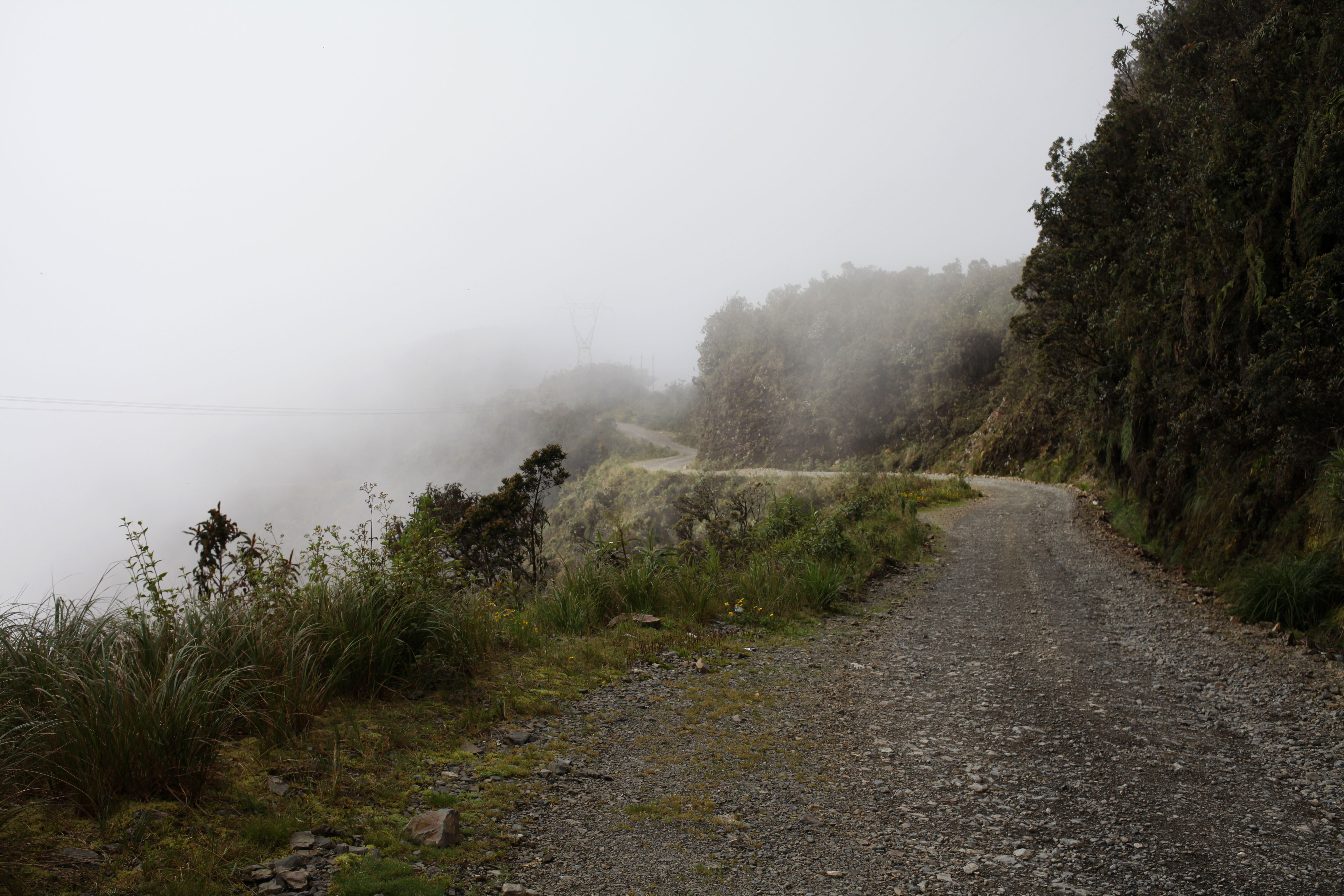
The view from the top of the Bolivian Death Road. Photo: Alex Washburn
The Bolivian Death Road lives large in the minds of ADV riders. It was crowned the world’s deadliest road in 1995 and the nearly two decades since hasn’t tamed the curvy unpaved beast.
When we first left the United States, riding the Bolivian Death Road aka Camino de la Muerte aka North Yungas Road wasn’t on our itinerary, but somewhere along the way Nathaniel decided he wanted to do it. Somewhere along the way he got sucked into the macho idea of riding the death road and the fact that all the other boys are doing it.
I agreed to go, with some reservations, although I wouldn’t say I was afraid. However, I probably wouldn’t have gone out of my way to do it if I was on my own.

Our couple photo on the Bolivian Death road. Photo: Alex Washburn
We woke up early in La Paz and pulled on our riding suits before heading out into the crisp morning. The start of the death road is approximately an hour ride outside of the Bolivian capital and a giant yellow sign greets you on an uneven gravel turn out just off highway three.
We parked our bikes and then walked over to a bench-sign combo that gives a brief history of Bolivia’s most infamous 60km stretch of gravel. I learned standing there that the road was constructed by prisoner’s of war, it is often foggy along the route, and that ever since it earned the title of the world’s deadliest road it has been a huge tourist attraction (especially for mountain bikers).
The sign also spells out the rules of driving the death road. Because of its form you must keep to the left hand side of the road and vehicles moving up the hill have the right of way. Accidents usually happen when two cars meet at a narrow point and the uphill vehicle must back up- tires can easily slip over the edge of the cliff.
(According to wikipedia several hundred people die on the road every year, but I think those numbers are grossly inflated.)
We couldn’t see very far down the path because of the fog drifting around and after taking the obligatory photos of the sign and the entry point we hopped back on the bikes and headed off into the mist.
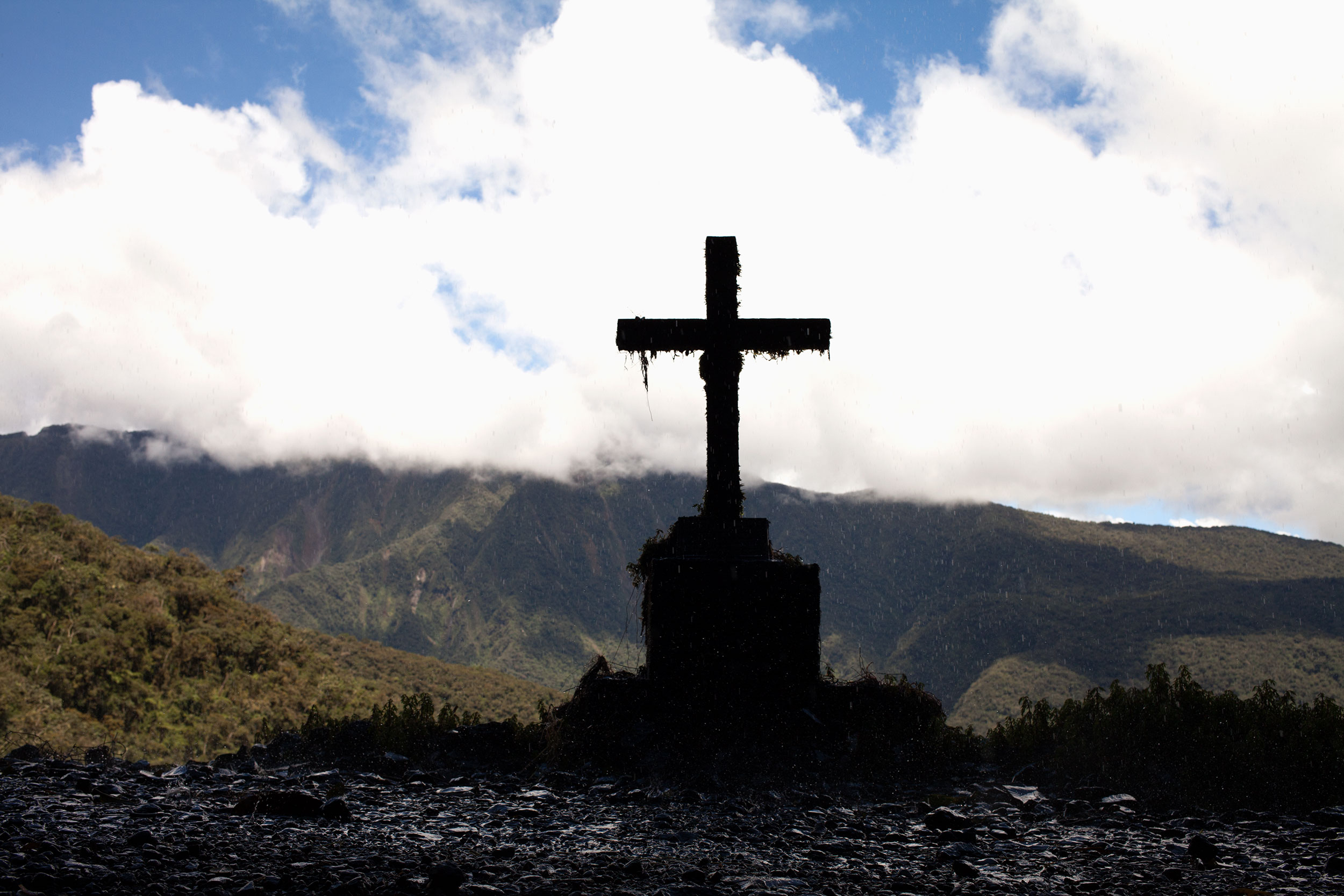
A cross marks where people have died on the Bolivian Death Road near a series of small waterfalls. Photo: Alex Washburn
Most of the death road was not technically difficult riding, but the idea that around any blind turn could be a truck keeps you on your toes. Thankfully, we only met one vehicle going the opposite direction and it was on a portion of road where I could safely stop and let him pass.
For us, the most memorable part of the road was the portion where you ride on very uneven wet rocks beneath several small waterfalls (getting wet) and pass a solemn grey cross marking where people have died. The section is roughly 300m long and it is a narrow piece of work with a sheer mossy rock wall on one side and a lush green cliff dropping off the other into only god knows where.
The camino de la muerte was not nearly as tough as I thought it would be and if I had to make a list of the top 5 rides of the trip so far it would be on it.
Check it out:
Leaving Cusco
Posted on March 2, 2014
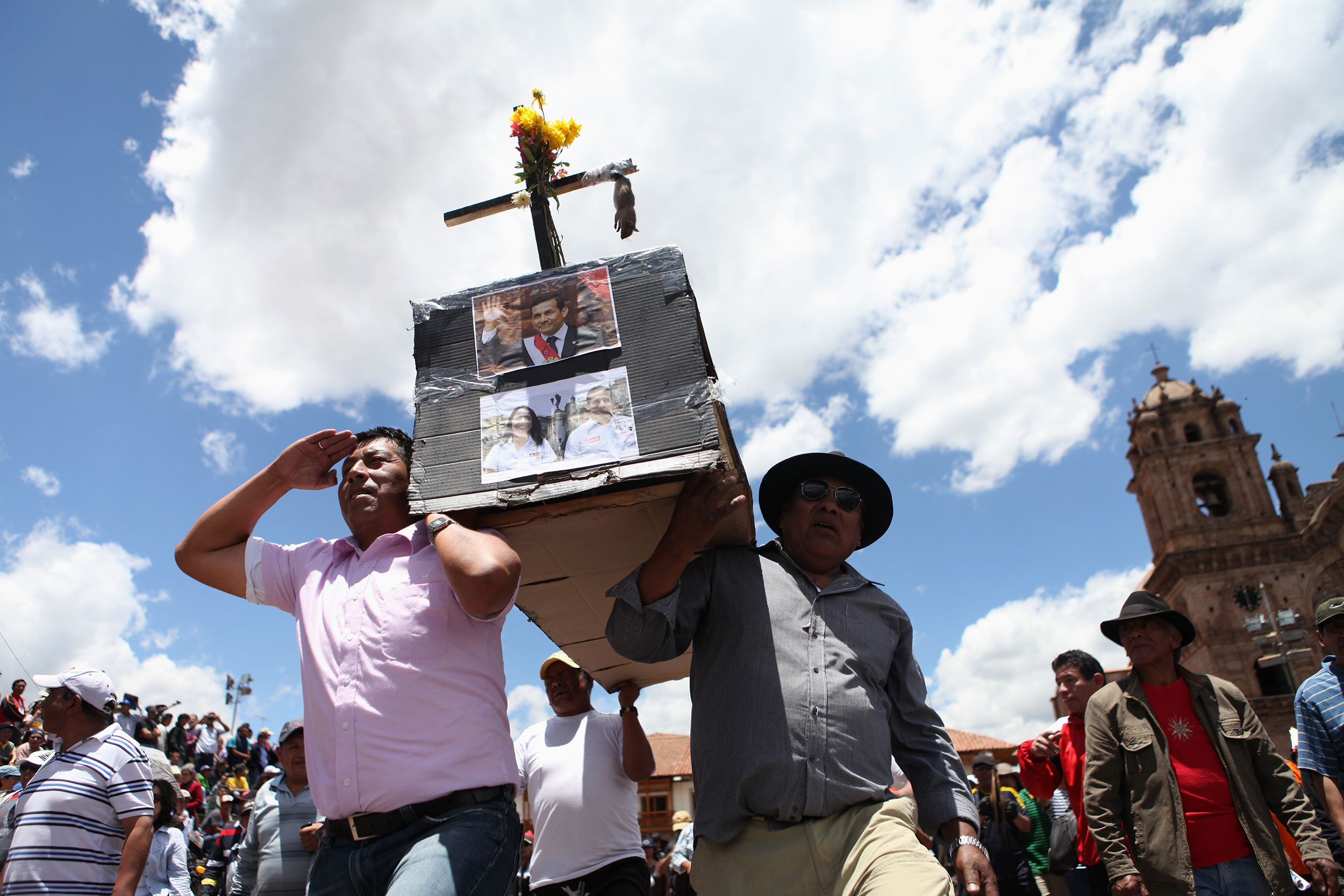
Protestors carry a faux coffin adorned with Peruvian President Ollanta Humala’s name, photos and a dead rat in the Plaza De Armas of Cusco, Peru before setting it on fire on Tuesday, Feb. 25, 2014. Thousands of gathered from various regions of Peru to protest corruption within the Peruvian government and prevented traffic from flowing through the city. Photo: Alex Washburn
The day after Machu Picchu we leisurely packed our bags and had breakfast before asking the woman at the front desk of our hotel to please open the garage so we could be on our way. She said something to me that I didn’t quite understand, but I was so focused on hitting the road that I didn’t bother to clarify it.
As we rolled out of the garage onto a nearly empty street and on to Cusco’s Plaza de Armas it quickly became apparent that something was going on. There were no cars in the plaza and a few groups of police in riot gear stood in the shade at various locations.
I found this interesting as I slowly puttered behind Nathaniel, however things only got stranger as we moved our way through town. Avendia del Sol, like Plaza de Armas had no vehicles moving on it aside from a few other random motorcyclists and there were a lot of people walking freely in the street. As Nathaniel drove past a large group of men walking in the same direction we were heading one of them threw a rock at him, although I am certain by how casually it was thrown it was not meant to hurt him.
At the end of Avenida Del Sol we pulled into a gas station next to a huge roundabout where people were gathering en mass. The gas station attendants told us that we would have to wait till the protestors in the street moved on before they would serve us – it was at that moment a large white truck driving way too fast whipped around the circle and was met with a volley of rocks from the protestors. It was then we realized how serious things could be getting and I asked the gas station attendants what was going on.
They informed me that it was the first day of a two day protest that stretched throughout the region, though mainly focused in Cusco. People were protesting a variety of things including inflated government salaries, gas prices and false promises made by President Ollanta Humala.
It was because of these various grievances that people had called for a strike of all motorized transport – to prevent the use of gasoline.
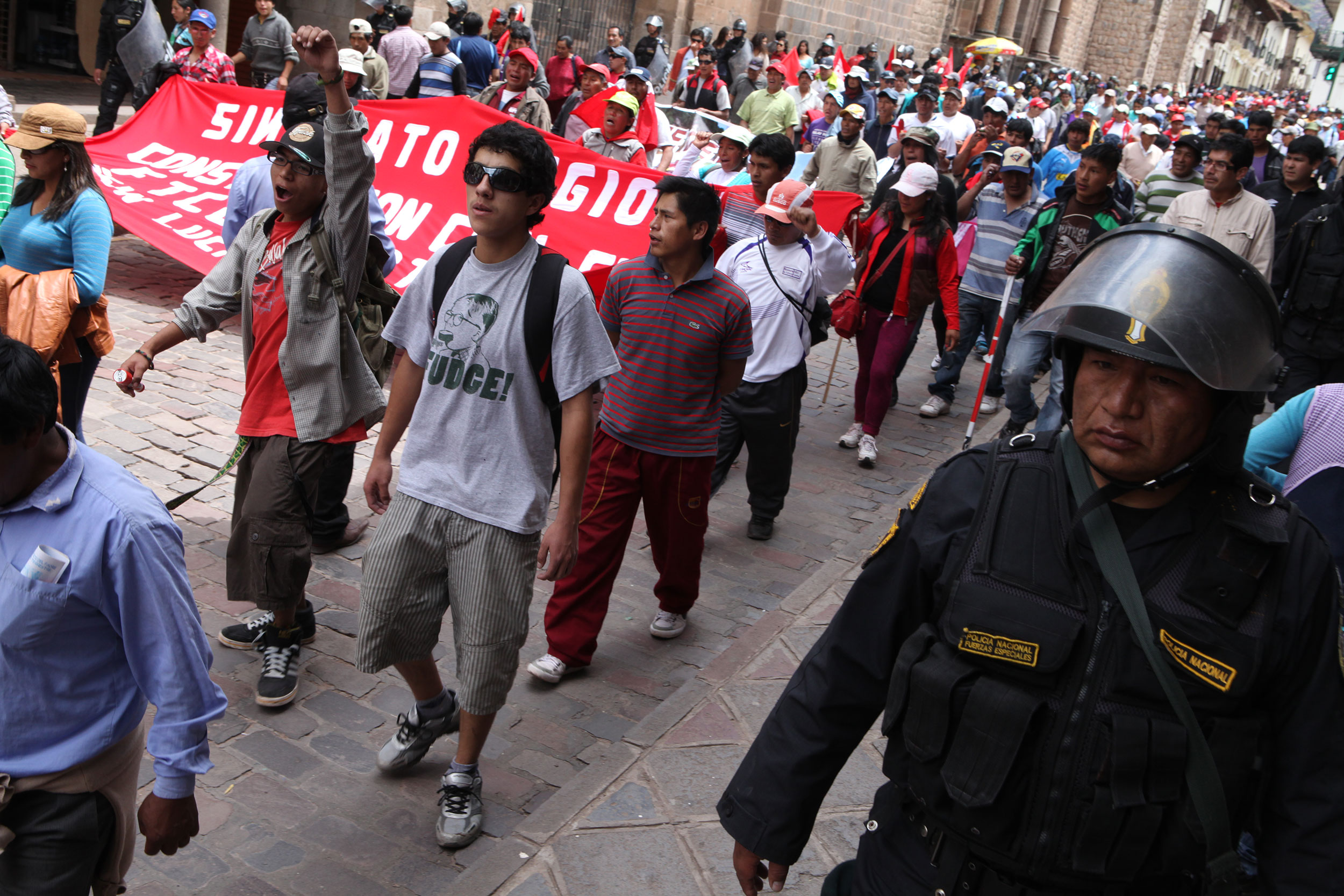
Protestors march through Cusco, Peru on Tuesday, Feb. 25, 2014. Thousands of people gathered from various regions of Peru to protest corruption within the Peruvian government and prevented traffic from flowing through the city. Police presence was heavy although the protest remained largely peaceful. Photo: Alex Washburn
After a few minutes the gas station attendants motioned for Nathaniel and I to go to the pump furthest from the street so we could fill up. They told us that they didn’t think we would be able to leave the city and they seemed frightened by what was going on.
Wanting a second opinion we exited the station and approached a group of police officers to ask them what they thought. It was at this point that the photojournalist in me started having an all out fight with the Autopista End part of me – Photojournalist Alex loves photographing protests. I knew we really had to be getting out of Cusco, on the other hand the idea of skipping this protest was getting more and more painful by the moment.
The police officers, probably not wanting to alarm us tourists, told us we would have no problem getting out of the city, although it would be easier if we waited till the afternoon to do so. The idea of sitting around in our gear for hours and hours was really unappealing to us so we continued on our way down the main road out of town till we saw a wall of people blocking the way. We parked about 6 blocks away and watched as several other motorcyclists and cars approached the people and quickly turned around and gave up.
Nathaniel and I discussed our options and decided the best thing for us to do would be to go back to the hotel, stow away the bikes and hit the streets to document was going on. Latin American governments don’t have a great track record when it comes to human rights violations and protests so if anything illegal happened I would feel guilty not being present to document it.
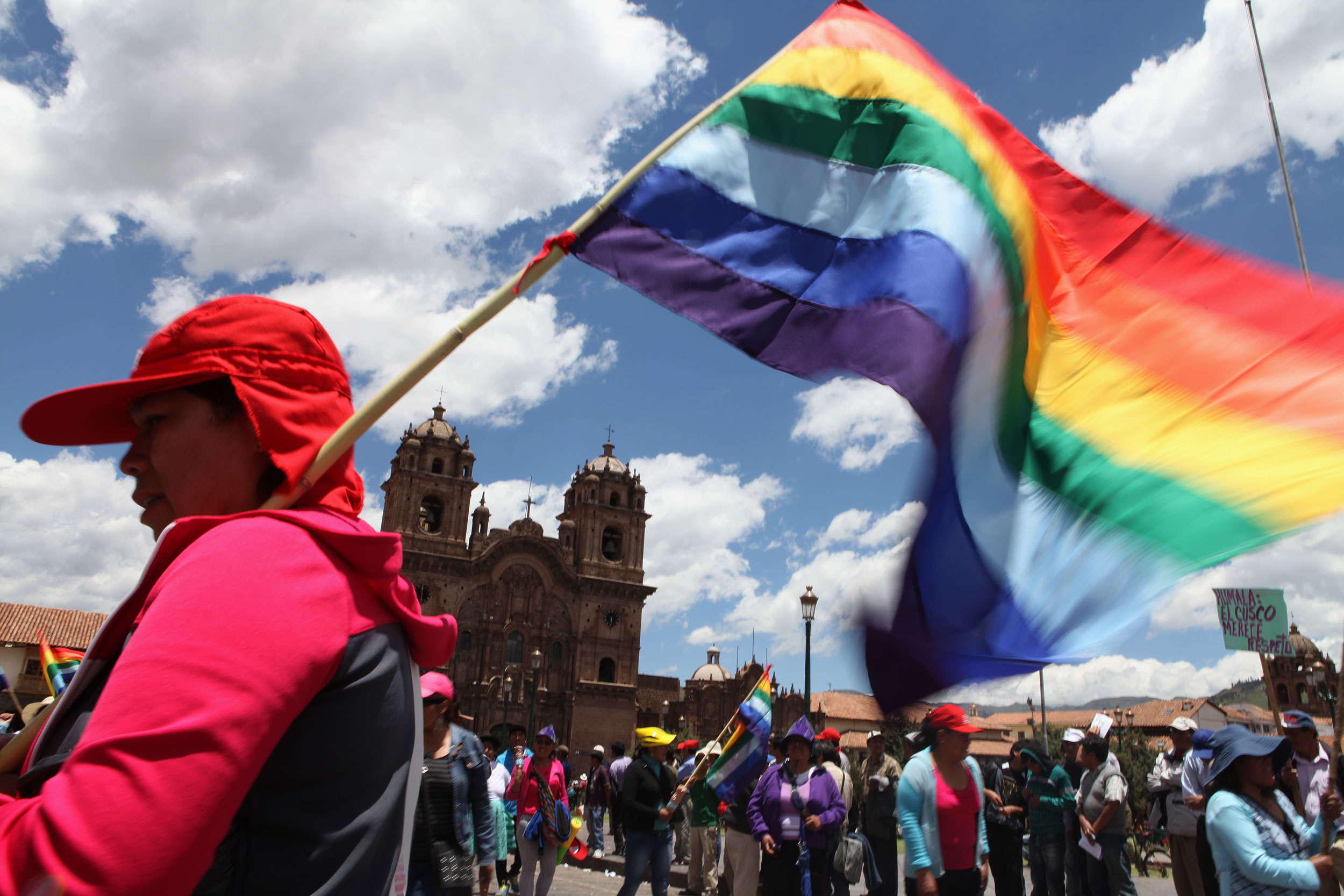
A protestor carrying the city flag of Cusco participates in a demonstration in Plaza De Armas of Cusco, Peru on Tuesday, Feb. 25, 2014. Photo: Alex Washburn
In the time it took us to leave our hotel and then turn around to head back to it the protest had picked up steam. There was no confusion as to what was going on now that Avenida Del Sol was similarly blocked with a wall of people waiting to stop any motorists from heading into the city center.
We stopped a safe distance from the protestors puzzled about what to do. They certainly hadn’t blocked EVERY street that could lead us back to the hotel, however riding blindly on the steep cobblestone streets of Cusco was another unappealing option (remember what happened to Nathaniel’s ankle).
We hadn’t been stopped for a full minute before two men on a small motorcycle pulled up next to us. The guy on the back was filming with an old fashioned camcorder so I asked them if they were with the television news.
The driver of the motorcycle cheerfully answered that they were and I told him I was a photojournalist from the United States. He got an absolute kick out of that and asked where we were going. I told him we were trying to get back to our hotel and described to him where it was.
He thought a moment and said they were also trying to get back to Plaza De Armas and told us he would lead us back to our hotel. “Follow me!” – and he was off.
We wound around through some small neighborhoods around the city center full of kids enjoying the traffic free streets with spontaneous soccer and volleyball games and in about 10 minutes we were back to our hotel without having encountered another blockade.
I thanked the moto-journalists profusely and with a grin and wave they were off to continue their work. I was absolutely brimming with happiness being part of the journalism community at that moment- we have a strong sense of camaraderie that transcends borders.

Police monitor protestors as they march through Cusco, Peru on Tuesday, Feb. 25, 2014. Photo: Alex Washburn
The hotel staff smiled when I came back in the front door and I joked with them about what was going on outside. We were given the same hotel room we had spent nearly a week in and were soon walking towards Plaza De Armas (the focus of the protest) me carrying a 5D Mark II and Nathaniel with his Go-Pro and Canon G12.
I was right in my assumption that the protestors would ignore our presence as long as we were not violating the motor vehicle ban. Nathaniel and I both agreed that at no time did we feel like we were in danger. This video our motorcycles friends produced shows us riding through Cusco during the protest, check 38 seconds into the video: http://www.youtube.com/watch?v=RbwUKMoiTik
Photographing the protest was really fun for me because I haven’t had the opportunity to shoot an event like that in a long time and it is one of my favorite things to photograph. I love covering protests because the energy is high, you have to be alert at all times and people are usually so involved in what they are doing photographers can be truly invisible as they do their work.
Even the most laid back of subjects tend to be a little self aware in front of a camera, but that is hardly ever an issue during events like this.
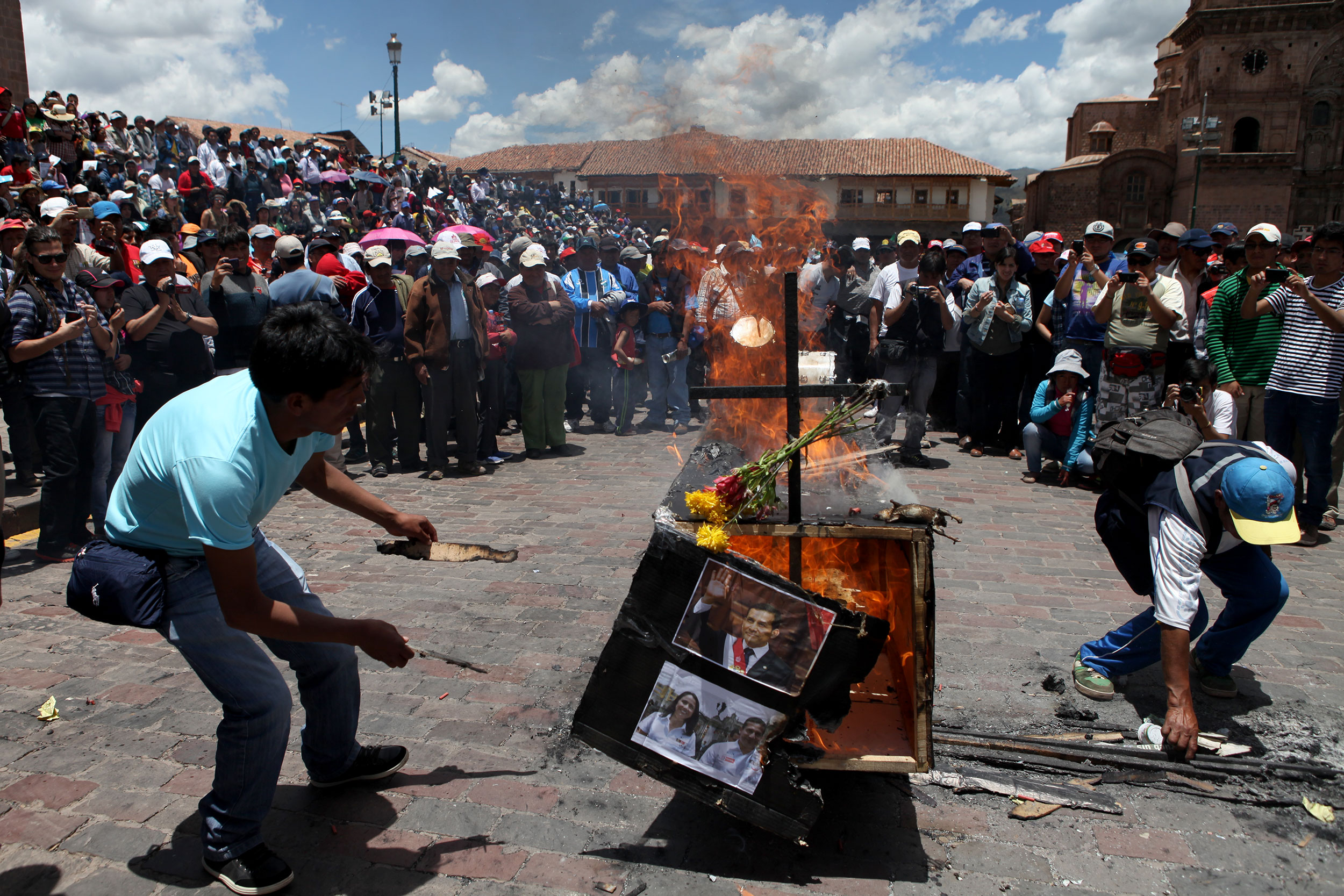
Protestors burn a coffin adorned with Peruvian President Ollanta Humala’s name and photos in the Plaza De Armas of Cusco on Tuesday, Feb. 25, 2014. People gathered from various regions of Peru to protest corruption within the Peruvian government and prevented traffic from flowing through the city and greater Cusco region. Photo: Alex Washburn
I spent the next several hours photographing the protest and seeing if they AP was in need of any photos of the protest. Spoiler: They didn’t need the photos, however the Photo Director for the region told me he liked my work and to feel free to contact them again if I came upon anything else I felt was newsworthy.
With that bit of encouragement Nathaniel and I set off to get something to eat and re-prepare to leave Cusco the next morning. We ended up spending twice as much time as we wanted to in Cusco and even though we knew the blockades would still be up the following day we decided to roll the dice and make it happen.
I feel the need to paraphrase the day we actually left Cusco because this blog is getting really long and I don’t want to bore everyone to death who is still reading.
As we prepared to pass the first blockade out of the city some older gentleman told us to tell the protestors we were tourists and they would let us through. As Americans we are particularly nervous about volunteering that information (with all our gear on it’s hard to tell we are foreign), although the advice turned out to be invaluable for the next 8 hours.
The first blockade began hurling rocks and other things at me as I approached so I turned on my turn signal well in advance, stopped about 15 feet from them and motioned for someone to come up and talk to me. A man in a brightly colored sweater raised his arms in an effort to calm people as he walked up to me. He asked me one question – Are you tourists? When I said yes he started yelling at the crowd to let us through and that we were tourists. People kept shouting at us from all directions, but they stopped throwing things and let us through.
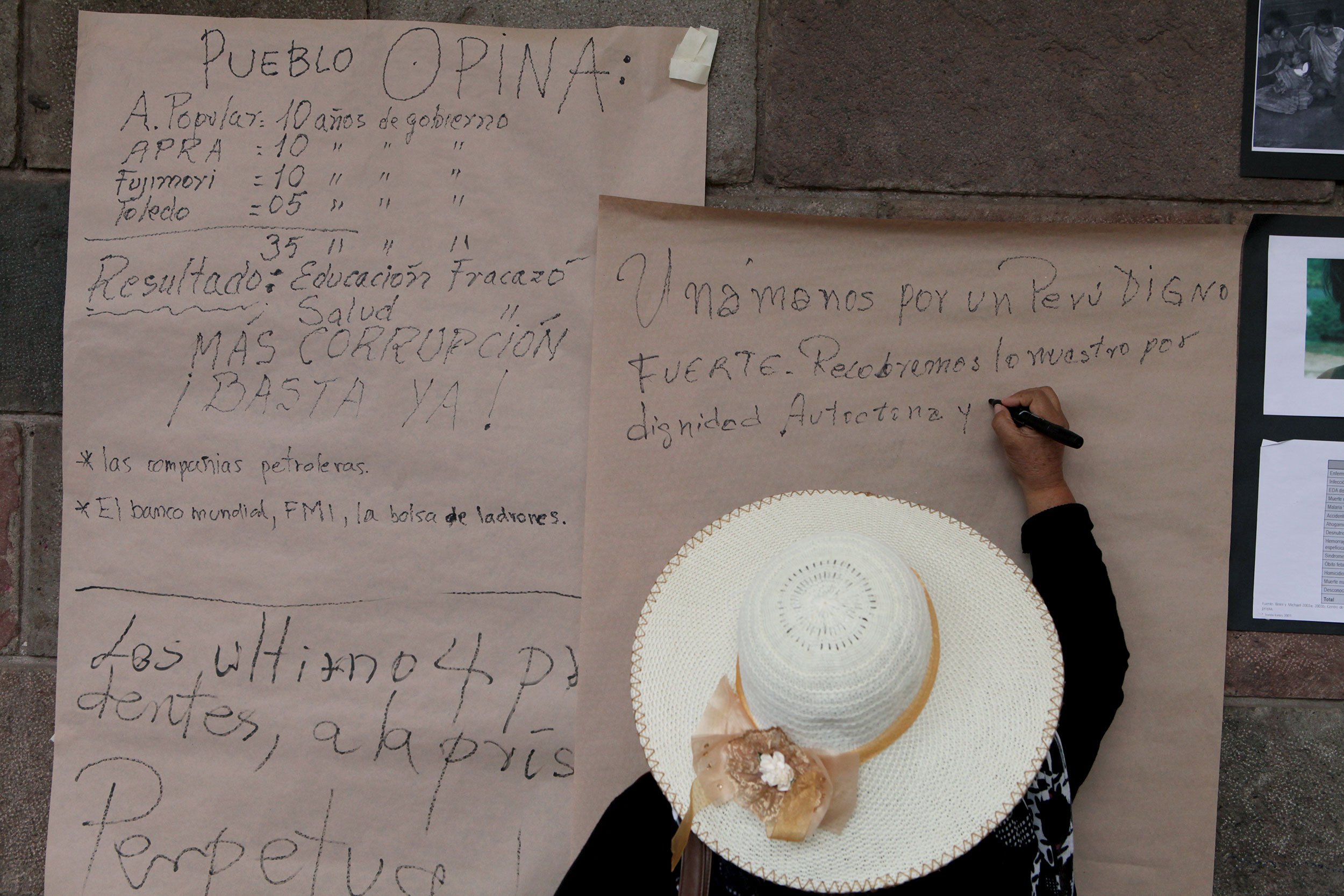
A woman ads her own opinions to a growing list of complaints during a protest against the Peruvian government in Plaza De Armas of Cusco Peru on Tuesday, Feb. 25, 2014. Photo: Alex Washburn
After some advice from the police just past the barricade we attempted to take the smaller streets to get out of the city. We spent nearly three hours backtracking, winding through neighborhoods and crossing pedestrian walkways in the most absurd places trying to get past all the barricades. I personally did not want to deal with having things thrown at me a dozen or so times and explaining over and over that we were extranjeros and in no way apart of the problem.
Then it began to rain… a blessing and a curse. My gloves and riding pants are not fully water proof so as I started to get colder and wetter people began to thin out and we ventured back to the main road out of town.
When we finally escaped Cusco the highway (beautifully paved by the way) was full of rocks, broken glass, piles of cacti, barbed wire, trees, burning tires, bits of cars and everything else people could get their hands on to slow or stop the flow of traffic.
There were at least 5 places the highway was totally blocked and I had to ask the people manning the blockades for permission to pass through. Although one group of people asked for money as we passed (we said no) everyone was perfectly willing to let us through when we identified as being non-Peruvians.
At one blockade they were having a meeting and I fell over as I tried to ride my motorcycle over the pile of trees they had laid across the road. As soon as I hit the ground 4 or 5 men from the group were helping me pick the bike up and lifted it over the barricade they had built.
After that – they helped Nathaniel to roll his bike safely over the trees and one of them gave me a good old fashioned “you be careful out there young lady” talking before we continued onward. By 4:30 we had only gone 80 miles and I was shaking with the cold. We stopped at a hotel for the night, giving up on the day, however with some really great stories about that one time we escaped Cusco in the middle of a protest…
The End.
 Where the Autopista Ends