Adventures in Colombia
Posted on January 14, 2014

Jesse was the last of our group to roll his bike out of our Cartagena Hostel and onto the street as we got ready to leave. Photo: Alex Washburn
Our first full day in Colombia (and our FOUR YEAR anniversary!) was spent running all over Cartagena trying to legally enter the country with our motorcycles. Six o’clock came early, and Alex rolled over in her bed and gave her cheeriest “Good Morning Jesse!”, as he we sleeping in the bunk underneath me. He didn’t loose a step and replied back with his patented “Hey Buddy!”, as we all got up and got ready to get the bikes off the boat.

Alex nervously balances her bike on the floating dock that carried our six bikes from the Stahlratte to land in Cartagena. Photo: Nathaniel Chaney
All disasters avoided, we got the bikes on land, and Nico realized he had forgotten his keys back at the hostel. No big deal, Ken borrowed a rope from the crew, tied it around the GS1200 and off we went to Aduana (customs), no passports, no insurances, not legally in the country, just seven bikes, one being towed.
To condense the next seven hours, the fixer that the boat hired to help us through costumes was late, so we went back and forth from the hostel and didn’t get to leave Aduana until 12:30 (supposedly when lunch was happening), this confirmed to Alex and I that we can do the boarders just fine on our own. A quick stop back at the docks to get the rest of our panniers and gear and then off to buy insurance. It was a full day of bureaucracy (and here we thought it was going to be easy).
Finally done with our list of chores, we headed back to the hostel through the gritty grueling Cartagena traffic. Ken and Diana ride two up on a GS1200, and with all the gear they are as big as some of the taxis we have seen. A taxi kept trying to edge into Ken’s lane and and Ken finally showed him what he thought about that by landing his size 13 boot into the cabs door. Jesse and I looked on thinking that we might have a brawl on our hands in the middle of the street, our ragtag ‘biker gang’ versus the taxis of Cartagena. Luckily it didn’t come to that and we all got back to the hostel without harm, no worse for the wear.
Our last day in Cartagena we all went on a walking tour of the city, before Jesse and I split off to do some motorcycle supply shopping. The rest of the day was filled with bike maintenance, chain cleaning, and laughs, with a little bitter sweet realization that we would be parting ways soon. A fellow traveler had shown the group a picture of a BLT earlier in the day, and Alex spearheaded our last meal together. We had a BLT party, real comfort food for a group of weary road warriors.
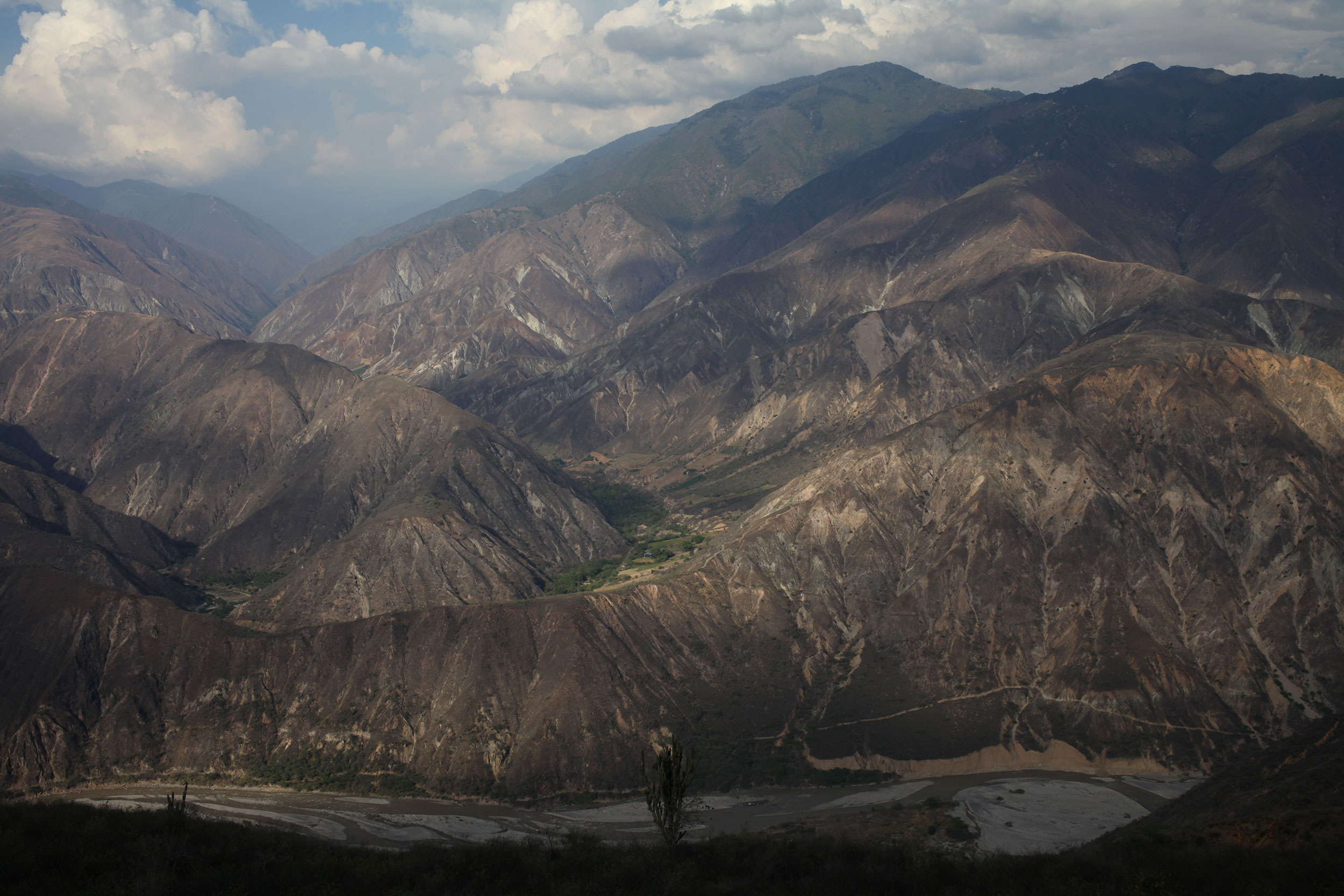
The mountains between Bucaramanga and San Gil Colombia are beautiful and the asphalt is perfect. Photo: Alex Washburn
The next day saw bags packed, bikes loaded, and handshakes all around. We all had to get out of Cartagena, so five bikes, minus Nico, rode through the packed streets desperately trying to escape the city before the heat got out of control and the traffic started. Accomplishing neither of these goals, we finally got out one very long hour later.
After escaping the city limits of Cartagena we stopped at a roadside restaurant for one last meal together before the 5 remaining bikes split into two.
Ken, Diana, and Taylor were off to Medellín, but Jesse mentioned he was up for taking the alternate route with us to Bucaramanga (an Instagram follower mentioned that the roads around Bucaramanga have some of the best scenery in Colombia, but more on that later) and we soon split off, Jesse leading the way as he has GPS.
Two long days of riding followed, as our trio headed to Bucaramanga. The landscape was unimpressive compared to what we have ridden through in the past, and some close calls with gas (literally drove through a town where all the gas is sold by people from gallon jugs) were the mainstays of the riding. The one noteworthy part of the ride was that Alex and I have now earned our truck passing badges, as we passed at least a hundred trucks on our way to the city.
Jesse commented, in between drags off his cigarette, that:
“You know when you think about it — a lot of what we are doing is legitimately dangerous”
To us it is just another day on the road.
We finally made it to Bucaramanga just as the last rays of light crested the mountains and found a safe place for the bikes and ourselves. Exhausted from days ride, we grabbed a quick bite and then headed to bed (Alex and I without showers- oh our poor dorm mates). The next day Alex and I were headed for San Gil and Jesse was rolling out to a hostel owned by some friends he met in Medellín. We shook hands with our final travel companion and watched him take off on his DR650.
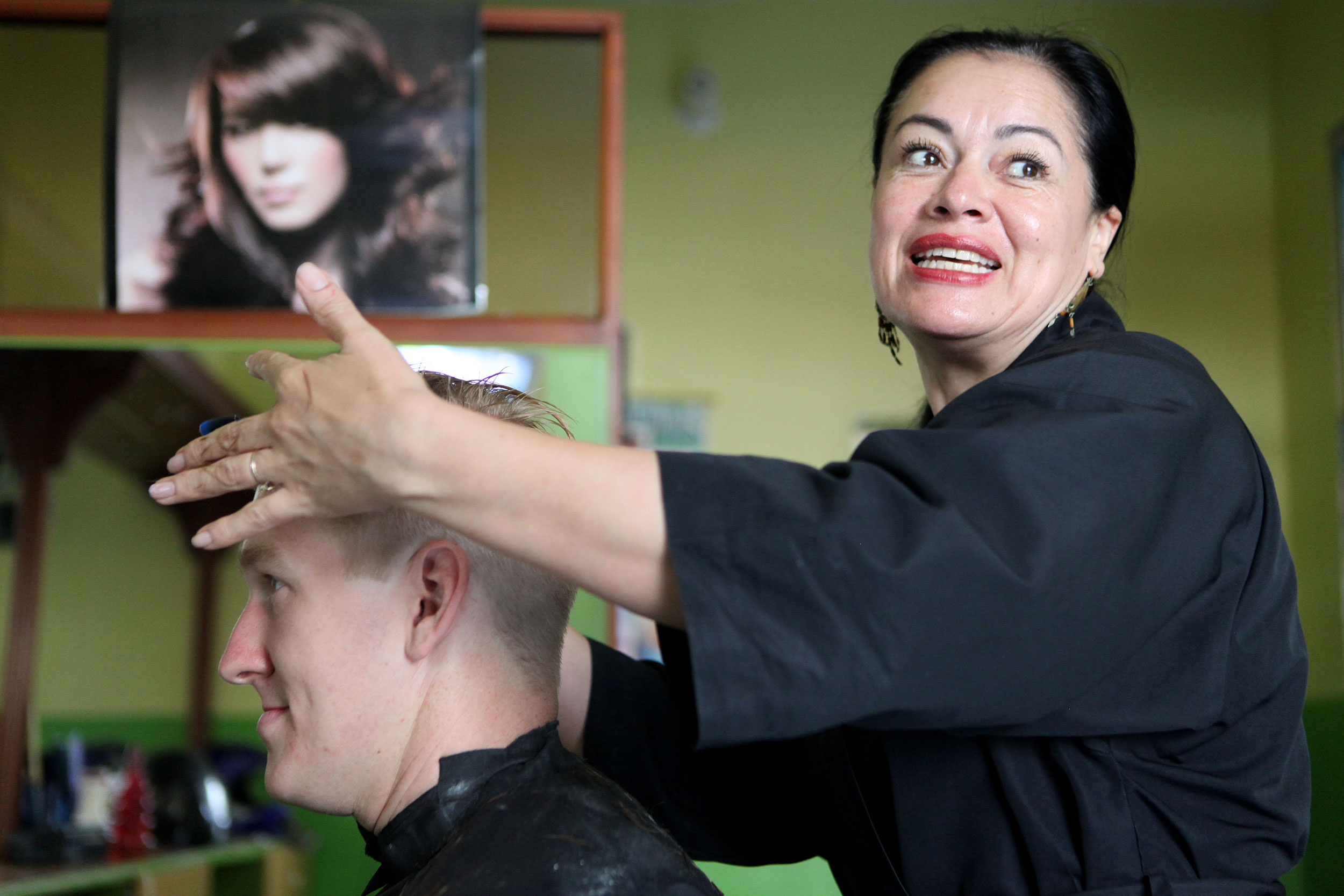
Nathaniel had been wanting a haircut for weeks and we finally made it happen in San Gil. Photo: Alex Washburn
Not knowing what to expect heading to San Gil, and only knowing it by suggestion, we headed into a deep valley. Expecting to see trees and foliage we were shocked when the landscape turned arid, spotted with cactus that reminded us of Mexico.
Then we were suddenly in the middle of what I can only describe as the Grand Canyon of Colombia. We climbed and climbed, zigzagging through the canyon, trying to avoid the trucks as we took in the picturesque scenery. Alex and I both agree that it ended up being one of the top five rides of the trip thus far, so we are very thankful for the suggestion that came from our instagram follower!
Now in San Gil, recharging the batteries and getting ready for more adventures and friends to come.
To everyone we have meet along the way, we are richer for it.
Viva La Stahlratte!
Posted on January 8, 2014
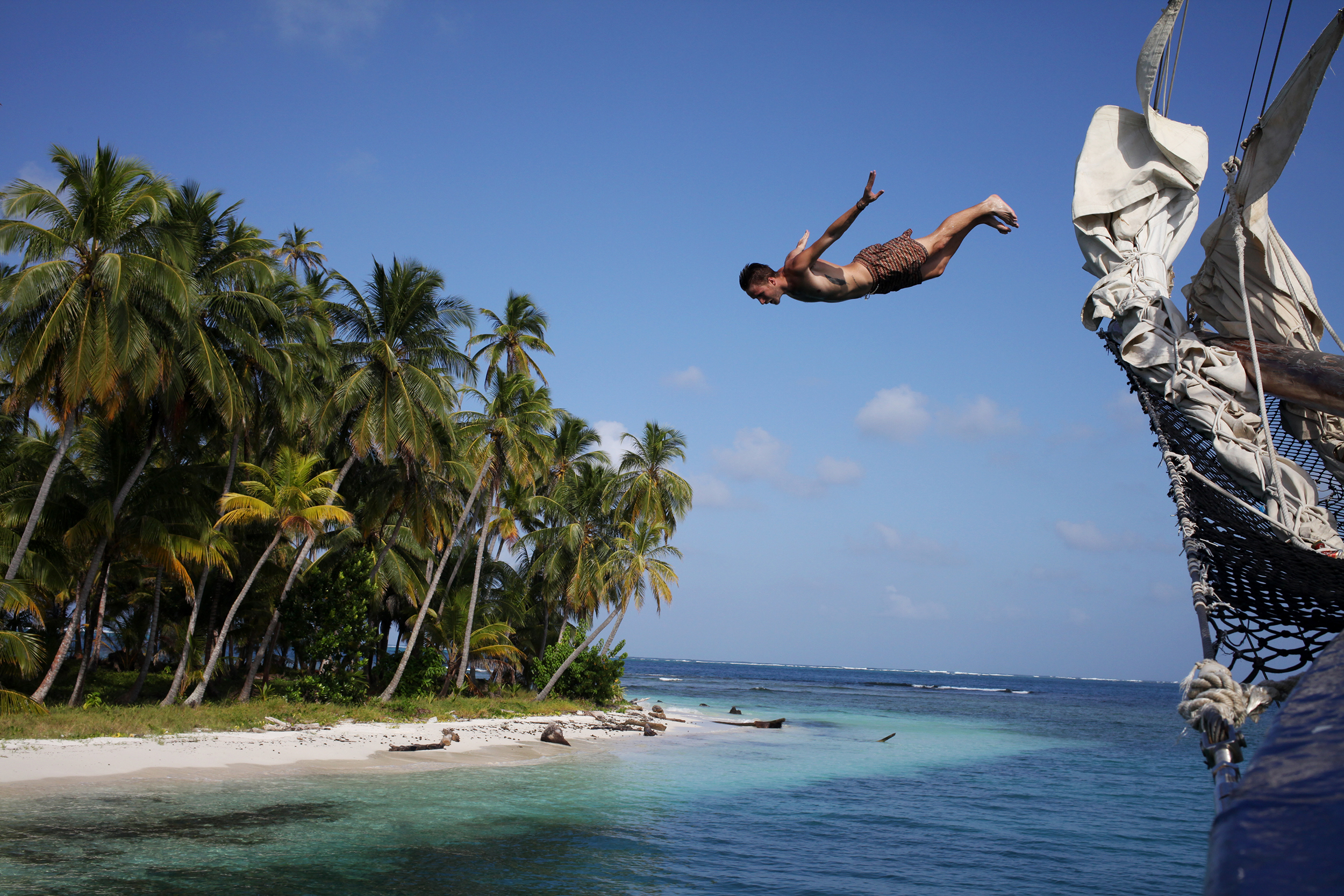
A frenchman jumps off the bow of the Stahlratte into the Caribbean Sea. Photo: Alex Washburn
Panama City seems like a hundred years ago and the adventures we’ve had over the past few days started off so quietly as we met some fellow motorcycle riders and prepared to sail from Panama to Colombia.
January 2nd Nathaniel and I sat in the front office of Panama House Hostel waiting for the proprietor to scan some documents for us as someone motioned outside telling us another motorcyclist had arrived. Jesse swaggered off his Suzuki 650 and immediately lit a cigarette already wearing sunglasses – we’d spend the next week with each other so we exchanged polite greetings and started feeling each other out. He had a very strange accent (Ottowa Valley Twang) but he seemed like the sort of person you could easily spend a few days on a boat with.
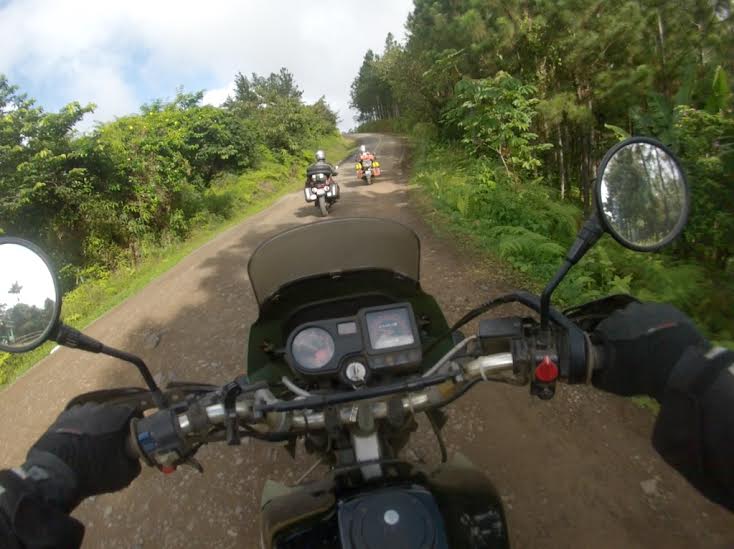
Riding the last leg of our journey to meet the Stahlratte. Photo: Nathaniel Chaney
Later in the morning (it was still quite early) Nathaniel, Jesse and I were relaxing in the back patio when a friendly Canadian voice called out “Oh these look like some motorcycle riders here!” and in strolled Ken. At just over 50 years old with grey hair, a serious tan and standing over 6’4” in his motorcycle boots he was not the most likely person we expected to join our party. His wife was out front and at barely 5 feet tall they make quite the pair riding two up on his 1200GS BMW motorcycle.
Eventually Taylor (of Seattle Washington) would arrive on his 650GS and our interesting mix of motorcycle riders was almost complete; Jesse informed us that “Nico” would meet us the next morning. The rest of the night was spent on pre-trip chores like doing laundry and charging camera batteries before we all headed to bed early preparing ourselves to ride out at 6am the next morning.
Somehow we were all out of bed packing before 5:30 am and as I rolled my bike to the front of the hostel I saw a thin guy with dreads sitting in front next to a Honda cruiser. It was Nico, a Chilean who is now in the process of riding his bike to Chile from Delaware before he goes back to work in Bakersfield California (don’t ask).
After squaring away some leisurely last minute details we started the bikes up and headed out of Panama City with Ken at the front (he had the best GPS) and me at the back (I prefer to ride slowly). Our trip to meet the Stahlratte was mostly uneventful, we got turned around a few times and wasted perhaps 10 minutes going down a gravel road (we called it the goat trail) before we turned around, and finally arrived to a national park entrance within two hours of leaving the hostel that was the last leg of the journey to the docks.
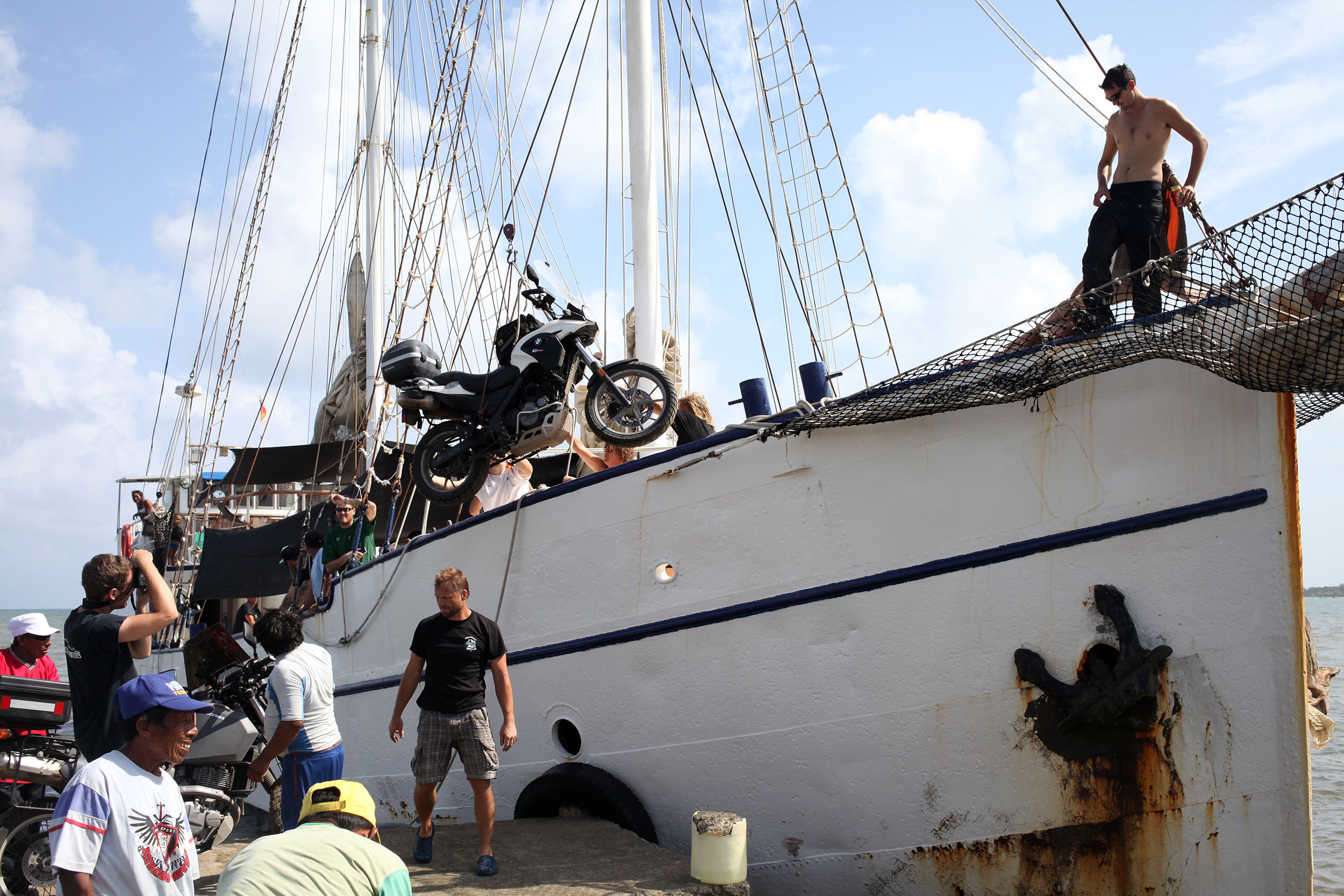
Taylor’s 650GS BMW was the first bike that was loaded onto the Stahlratte. Photo: Alex Washburn
At the park entrance we paid our entry fees and then rode another twenty minutes to the beach where we could load the bikes (and ourselves) onto the ship that would take us to Colombia. The ride through that park — I don’t even know the name — of was intense.
The road was mostly well paved but full of blind hair pin turns, steep hills, and washouts. It was a gorgeous ride, but I was so stressed out about you know- not dying that I couldn’t enjoy it very much.
We arrived to a cement dock, rolled up onto it one by one and parked. All of us: Ken, Diana, Nico, Taylor, Jesse, Nathaniel and I were grinning ear to ear standing out on that dock as the 105 year old Stahlratte floated just out of reach in the warm blue salty water.
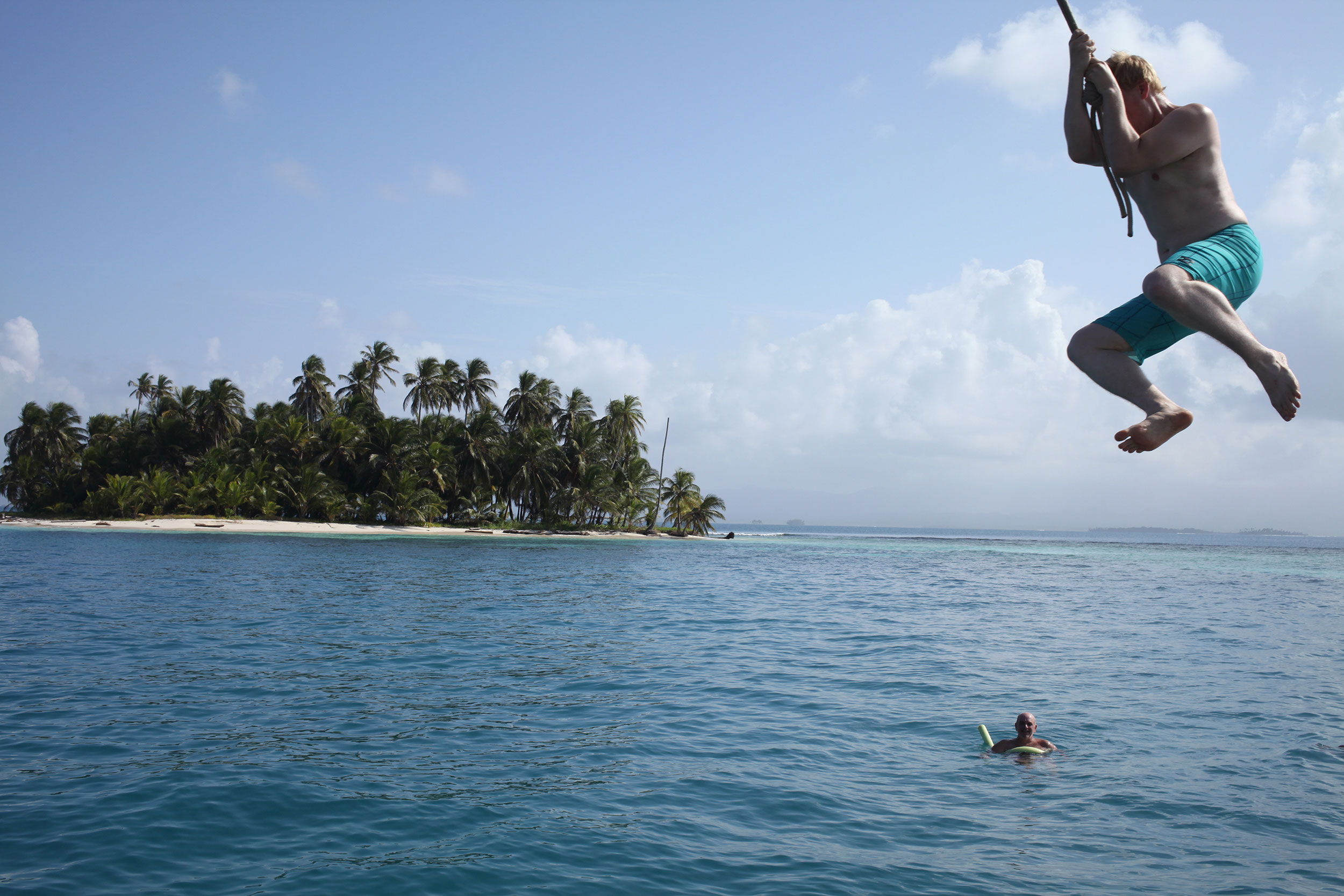
Nathaniel uses the Stahlratte’s rope swing to jump into the ocean. Photo: Alex Washburn
Captain Ludwig (wearing pants for the only time during our three day trip) told us to take the Panniers off our bikes as an army of locals began tying ropes to our motorcycles so that they could be hoisted onto the ship. The Stahlratte approached and we all held our breaths as each bike was lifted into the air and over the edge of the boat. It is a scary sight to watch a 1200GS BMW lifted over salt water by a few ropes even if it isn’t yours.
A few bikers were already on the ship as the bikes started going into the air and Jesse monitored the proceedings already shirtless from the bow of the ship gesturing with his beer can to punctuate his remarks.
The cruise to the San Blas Islands was about three hours and we spent the next day and a half swimming, swinging into the ocean on a rope, exploring the tiny islands near us and eating good food. There was also the serious business of sun tanning and beer drinking to be handled while we were there and by the end of our first day on the island Jesse had managed to pass out in perhaps the most picturesque place a person could safely pass out in.
It would be easy to make this trip sound glamorous, however most of it was actually pretty unpleasant and in the words of Jesse “a bunch of fucking bullshit eh?” The boat ride to Colombia was essentially a perfect three day metaphor for travel as a whole.
Our first day on the boat was actually perfect. The adventure of riding a few hours through a foreign country to winch our motorcycles onto an antique sailing vessel was rewarded by motoring through calm waters to a beautiful chain of islands with every comfort you could reasonably require (wifi not being a reasonable request).
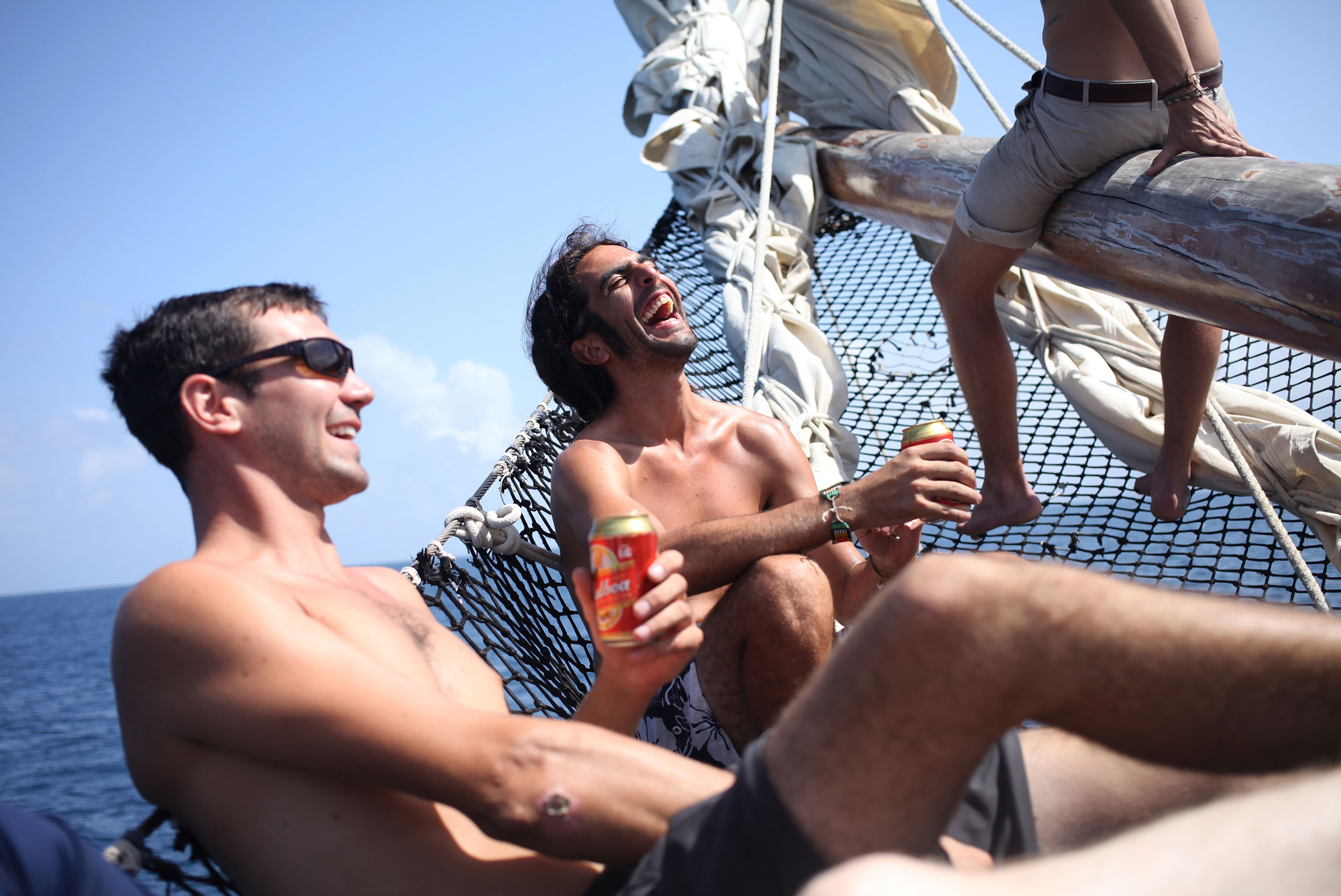
Jesse and Nico laugh at the bow of the ship as we motor out to the San Blas Islands. Photo: Alex Washburn
We dropped anchor next to one of the many tiny San Blas Islands and spent the day doing every postcard worthy time wasting activity possible. It was seriously gorgeous and perfect and we capped the day off with bbq beef and chicken skewers on a tiny island with good conversation around a bonfire as the sun sunk out of the sky.
After the bbq on the beach Nathaniel and I easily fell asleep below deck with the fan running on the most comfortable bed we’d had in over a week, it felt like paradise but the feeling was short lived. At some point in the night I woke up choking – the air was thick and humid and it was completely dark. I could feel sweat sliding off my arms as I reached for my cell phone and I realized that our precious fan was no longer on.
Using my iPhone as a flashlight (and waking Nathaniel up in the process) I inspected the fan and realized power to the entire ship had been turned off. I felt like I couldn’t breathe and without saying goodbye I stumbled out of the room through the hull of the ship to the stairs that would lead me above deck.
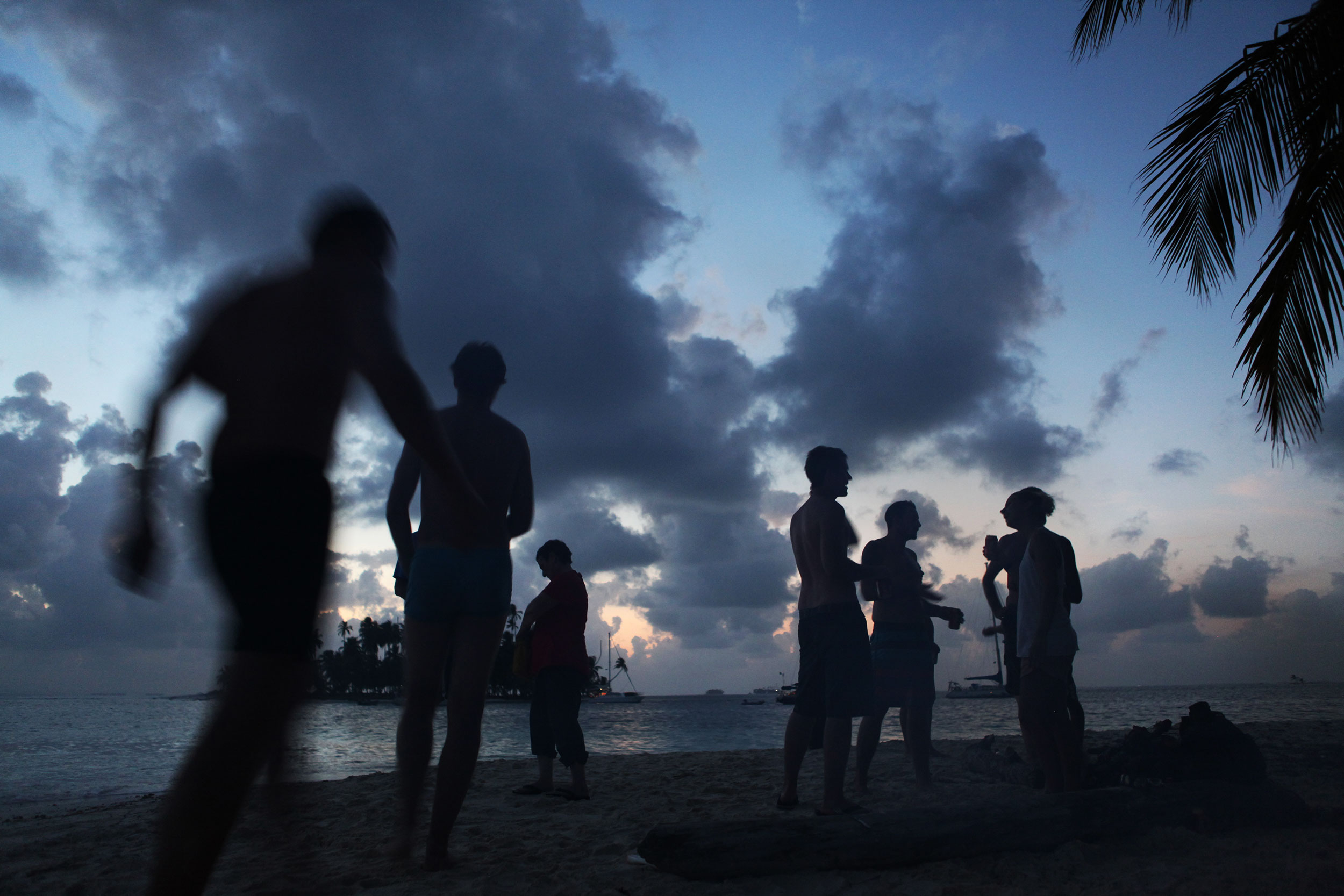
Passengers of the Stahlratte make conversation on the beach before heading back to the boat for the night. Photo: Alex Washburn
I felt my way up the stairs and a figure passed in front of me as I got to the top. It was Taylor heading back down the stairs.
“Dude, it’s so hot I can’t breathe.” -Me
“I know that’s why I came up but it’s starting to rain. I’m going back down.” -Taylor
He padded down the stairs and I was suddenly alone on the deck of the ship. I stumbled over to a flat spot where I could sit down and the air felt amazing. The boat rocked softly in the water and apart from the occasional creaky boat sounds it was totally quiet. I decided there was no way I was going below deck before the power came on and I went to look for a folded hammock I had seen on deck earlier in the day.
It was quite a feat getting it hung up in the dark armed only with my iPhone but I collapsed into it sometime around 5 am and wrapped the sides of it around me like a burrito as I watched the stars winking at me from above the crows nest and tangle of ropes necessary on such a large boat.
I wasn’t alone for long – Jesse came stumbling through the dark and after giving me his “Hey Buddy!” catchphrase collapsed onto the metal floor clutching a bottle of water. He muttered some curse words and a general complaint about paying $1,000 dollars to sleep on a metal floor before he was asleep.
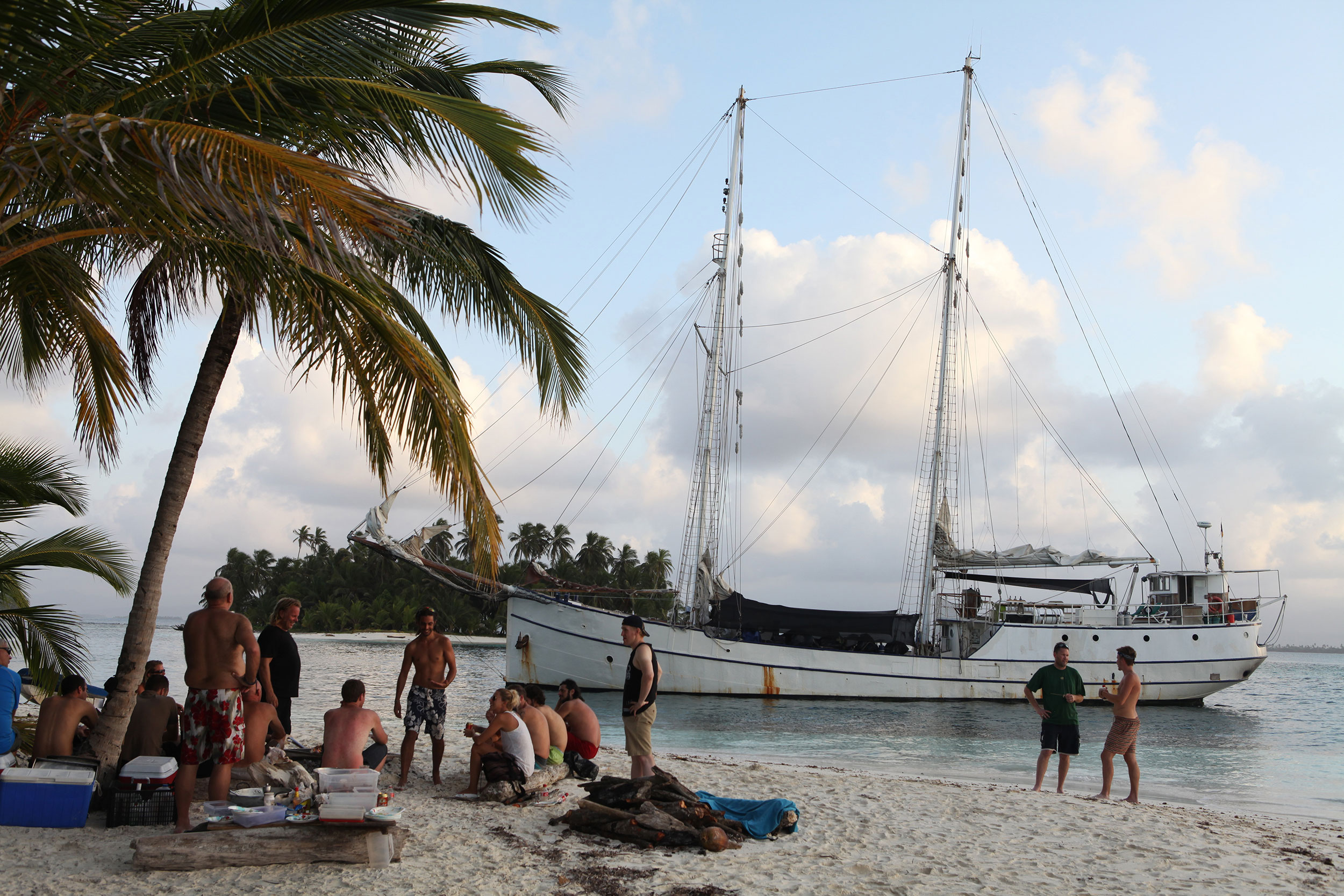
We prepare for our BBQ on one of the San Blas Islands. Photo: Alex Washburn
The second day on the boat was spent anchored next to the tiny island and people really did spend the day with every post card worthy time wasting activity possible in such a small space. I was a little burnt from the day before so I used my trusty hammock as shade near the front of the boat and laid in the netting suspended about twenty feet above the water.
Nathaniel went swimming with some of the other guys and caught a giant starfish for me at my request.
But – as all real travelers know, you pay for those perfect experiences in blood, sweat, tears and occasionally a lot of vomit.
Perfection can get boring so I we went to bed early knowing the boat was going to set sail for Cartagena at 5am the next morning.
As the engine rumbled to life in the pre-dawn light I sat up in bed (thanking god the fan was on still), popped a few dramamine and went back to sleep. Nathaniel got up around 7:30 and and at the urging of Taylor I got up around 8:30 for breakfast…
Seasickness I now know has a lot in common with a hangover – it might not hit you until you stand up. I wobbled through the boat as we rolled over the swells and barely made it to the side of the boat in time to vomit bile into the waves.
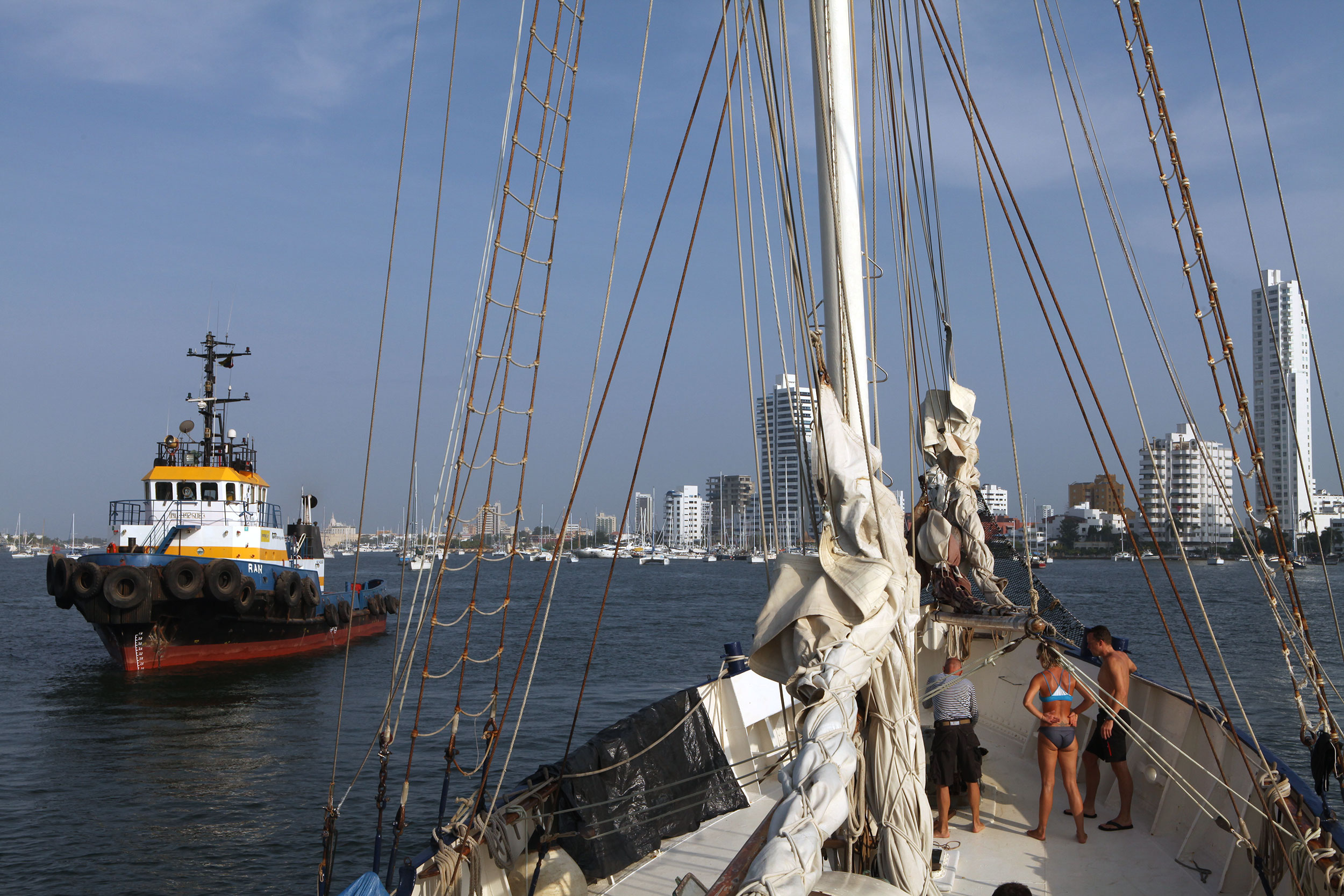
The Stahlratte pulls into Cartagena Colombia. Photo : Alex Washburn
I kept trying to eat more dramamine, but I couldn’t keep it down. Nathaniel disappeared somewhere and I took his place laying flat on my back on the wooden bench in the kitchen and I didn’t feel sick…
I realized that as long as I laid there I didn’t need to throw up. I sat up long enough to take some more pills and then laid back down.
After a few hours I tried to move back to our room, but couldn’t make it all the way across the ship before I was puking (once again) into a cup I carried with me. I finished vomiting at the edge of the bed and then ran back upstairs collapsing once again onto the wooden bench where the world was okay.
This bench was so terribly uncomfortable a child couldn’t properly lay down on it but I spent the next ten hours of my life laying there sipping water and eating saltine crackers or bread (you can eat them laying down) at random intervals.
Once in a while Nathaniel or someone else would come through for a snack and I would talk to them getting regular updates on the other people sick aboard the ship (I was apparently lucky to not be vomiting blood). As long as I stayed on the bench I had absolutely zero nausea, it was magic and as uncomfortable as I was I was thrilled to have found peace.
Around six o’clock that night I rummaged through the kitchen for a black trash bag (insurance) and then made a break for our room. I made my way as fast as I could across the rolling ship down the stairs and collapsed onto the bed… waiting to see if I was okay.
I had managed to swallow enough dramamine that I was okay – and able to sleep. I spent the rest of the night in the sweaty darkness tangled with that bag. I didn’t moved until we were pulling into the harbor of Cartagena the next morning… where our adventures with Aduana would soon begin.
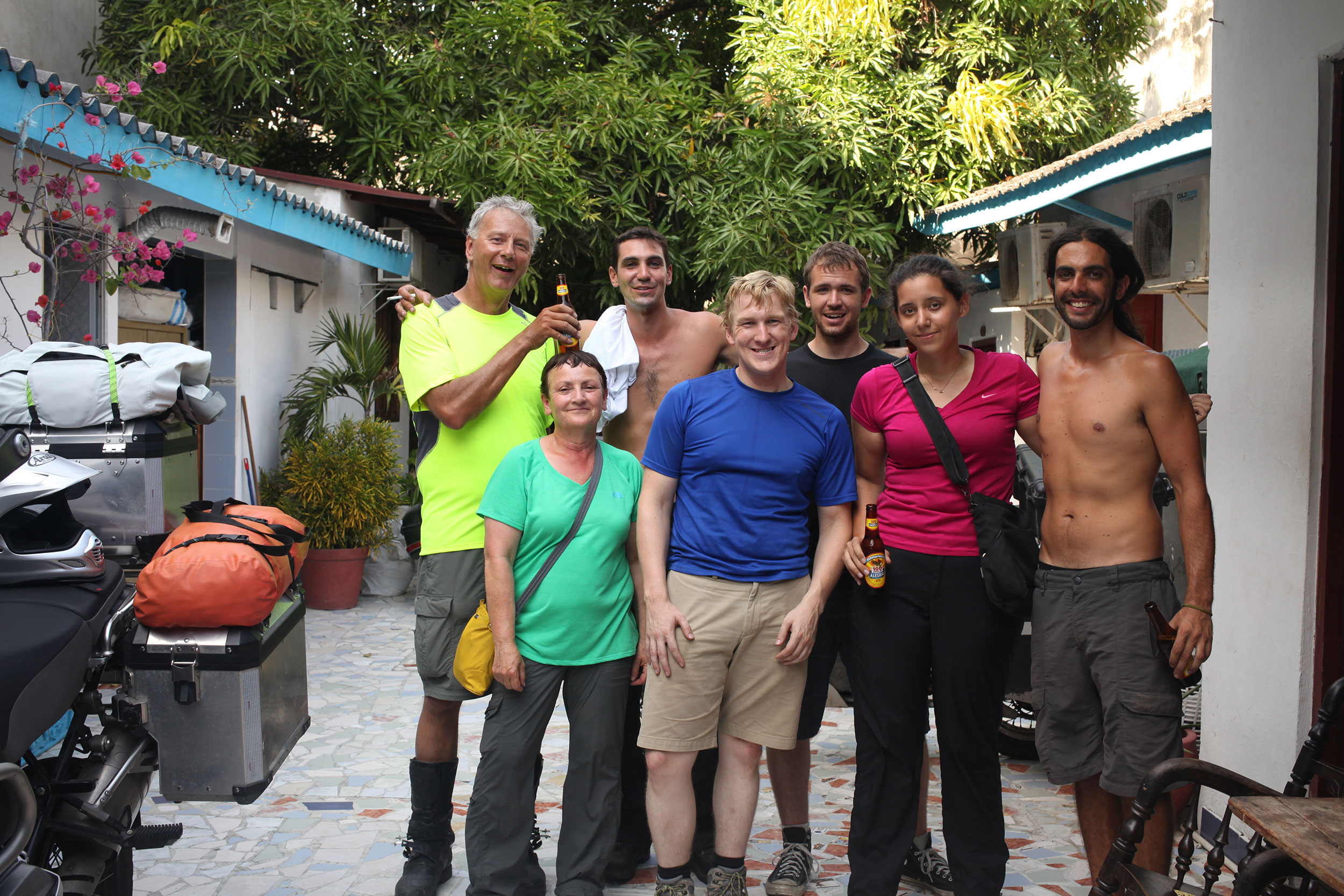
Ken, Diana, Jesse, Taylor, Nico, Nathaniel and I pose for a photo after victoriously getting our bikes through Aduana and the Colombian insurance office (it took all day). Photo: Alex Washburn
Costa Rica is Over
Posted on January 2, 2014
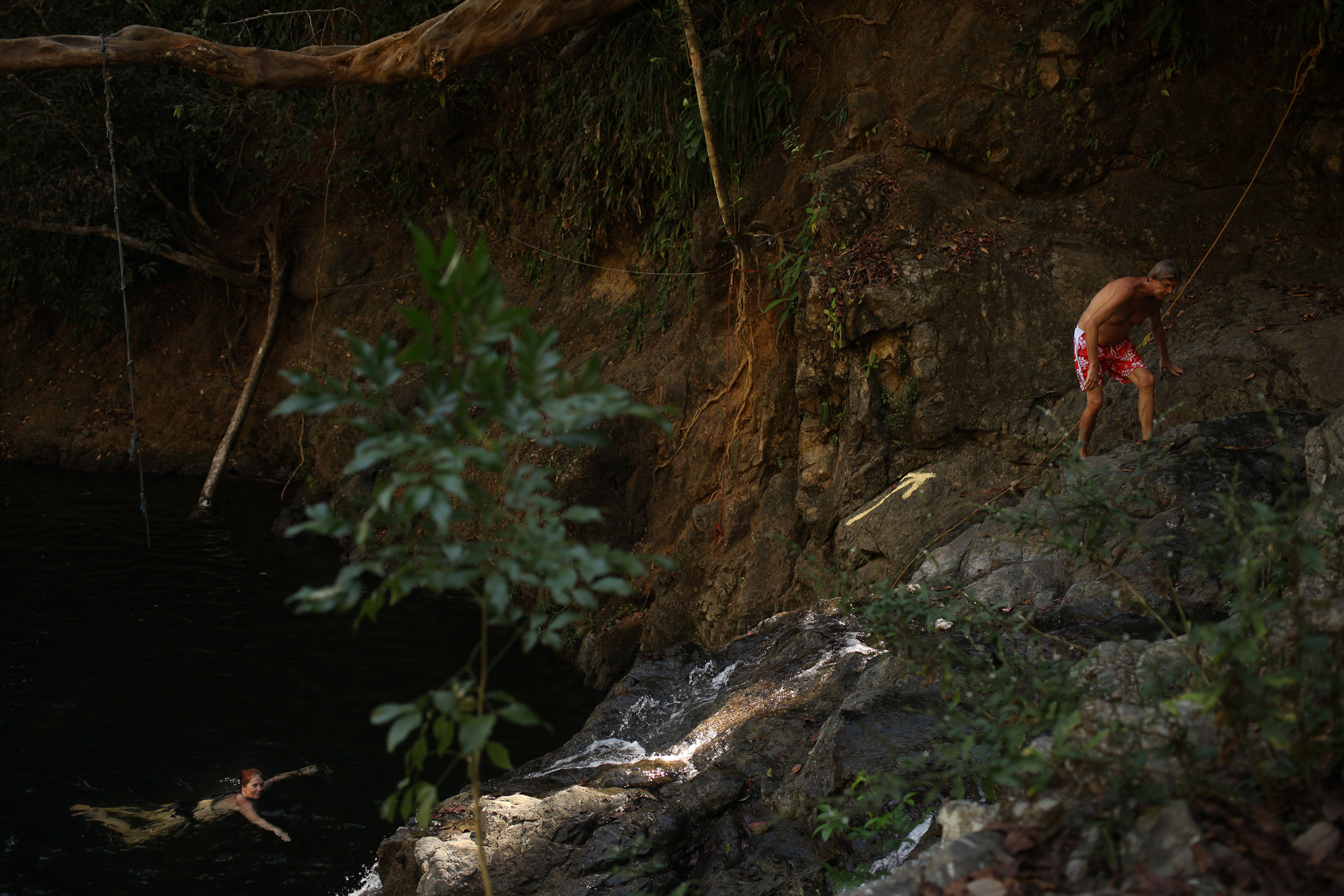
A swimming hole at the top of Montezuma’s waterfall. Photo: Alex Washburn
Before going on this trip, Nathaniel went to Costa Rica with a group of friends in July. This, unbeknownst to him, was the perfect time to go, it was low season.
Costa Rica is on most lists for Best Places to Retire Abroad, but these lists need to be updated as the time of cheap living has passed. Alex and I knew that it would be high-season, but were not prepared for how expensive everything would be.
We got a taste for it in San Jose, when every meal came with a 10% gratuity for staff and 13% tax, so every meal tag was instantly increased by 26%. Hamburgers at a local chain (much like a Mel’s) cost twenty dollars, which for our budgets was breaking the bank.
Getting into the tourist towns didn’t help at all. There are deals to be had at hostels, and we were able to find deals most places we went, but the food killed us at every turn. There is no real street food scene, so no relief there, and every meal ended up being as much, if not more, then it would cost in the US.
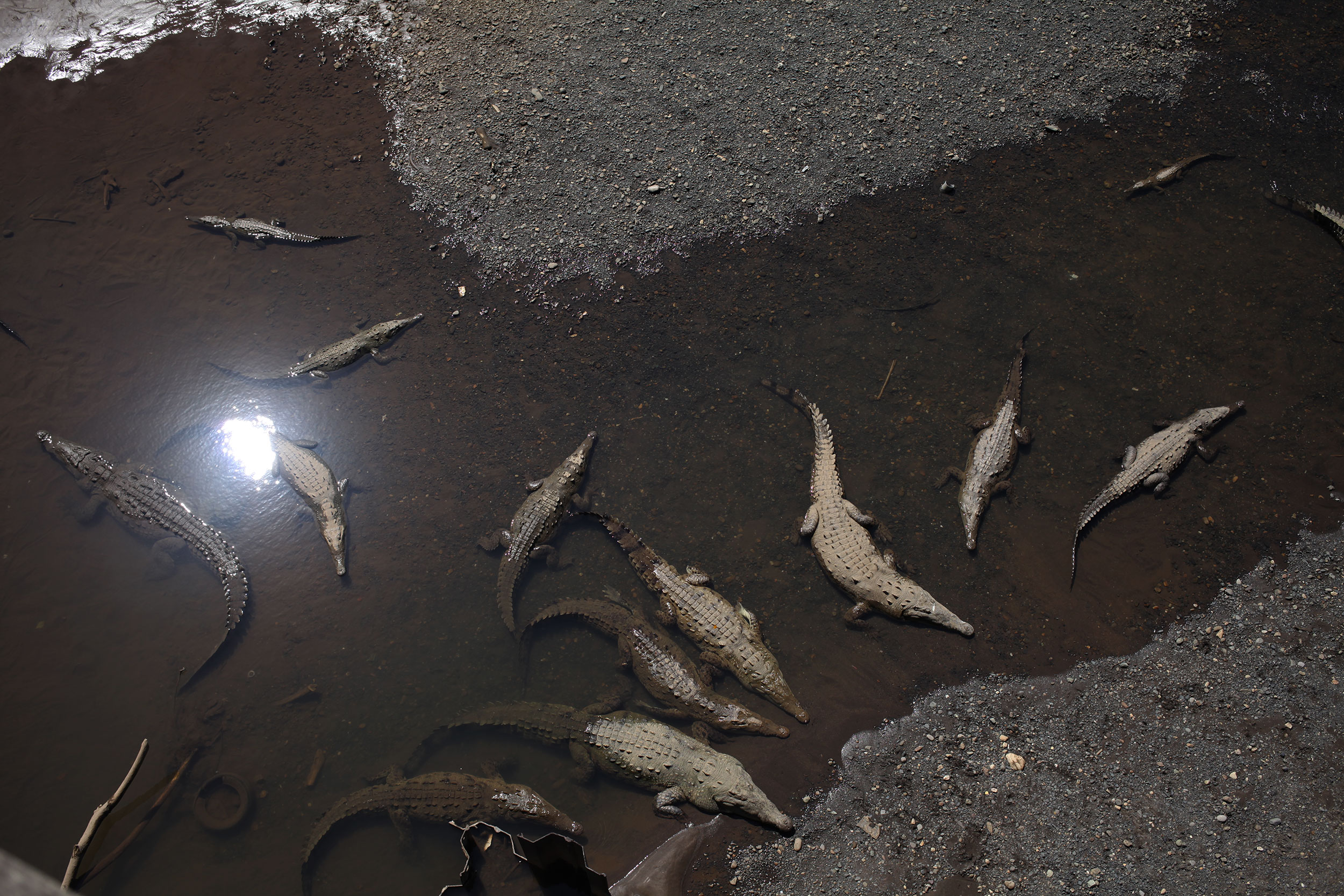
Crocodiles in Costa Rica. Photo: Alex Washburn
I may not seem that steep to others, but for people who are on a budget for six months, these differences in prices are not affordable. Be adventurous and pick a better spot, or go in the low-season to avoided being overcharged at every turn.
Once we crossed the border to Panama, the prices have eased, though we are looking forward to Columbia. After the boarder crossing (not the worst yet) we high-tailed it to Santiago. The middle between Panama Border and Panama City. Santiago is the Las Vegas of Panama, with several big Casinos and a lot of Love Hotels, the best being the “Beverly Hills Gardens”…Classic.
The next day it was back on the bikes, and off to Panama City. Had enough time to explore the Panama Canal and old town. For me, the Panama Canal is one of the places I remember learning about in history class in high school, and never thinking I would ever visit it. It is still impressive, even after 100 years.
We are staying in a hostel with all of the bikers getting on the boat tomorrow and enjoying our time recounting stories on the road. Tomorrow we head for the Caribbean coast and our ship for Columbia. A new year and a new continent is ours to explore, here is to more adventures to come!
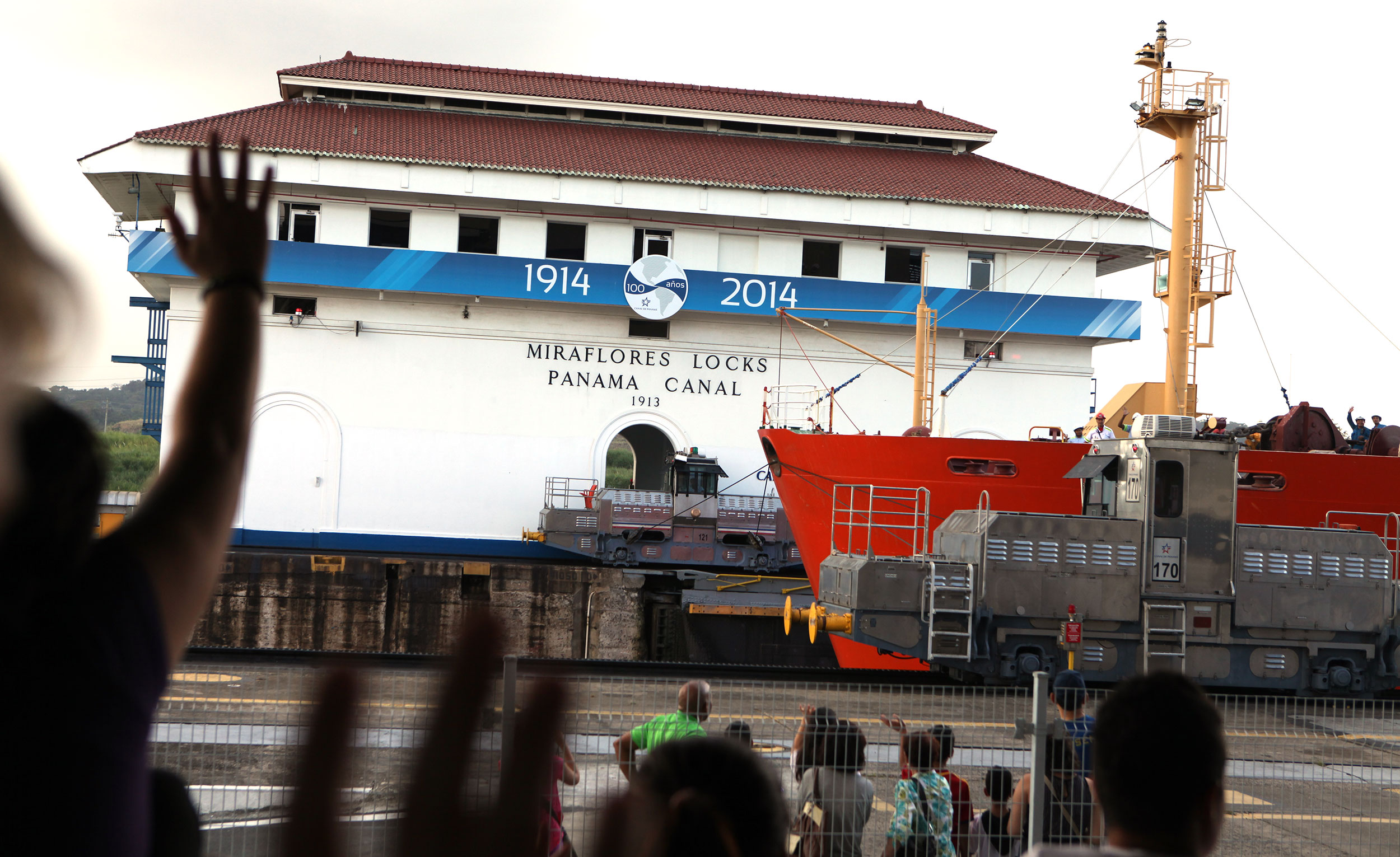
Tourists wave to a ship as it passes through the Miraflores Locks in the Panama Canal. Photo: Alex Washburn
Pura Vida
Posted on December 25, 2013
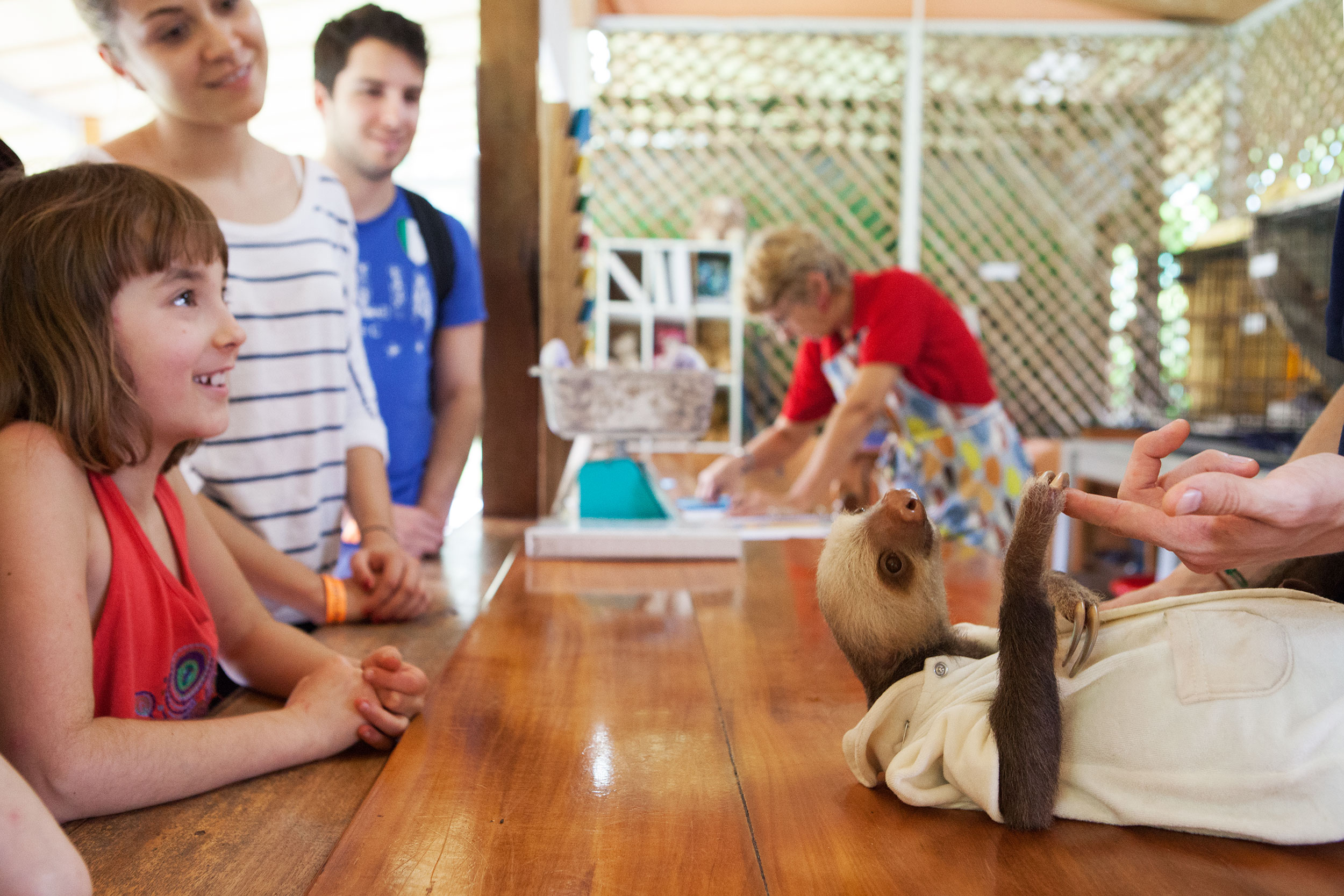
As some of you may or may not know, part of the reason we were so rushed to get to Costa Rica is that Nathaniel’s Dad (Dave) flew down on December 18th to spend a little over a week with us touring around. As such, Alex went to the sloth sanctuary on December 17th, as it is on the other side of Costa Rica (three hours from San Jose in Limón). The complete insanity of that trip can not be captured in this post, further details to follow. Here, A baby two toed sloth wows visitors at the Sloth Sanctuary just south of Limon Costa Rica. She had a skin infection so they shaved her and put her in a onesie to keep warm. Photo: Alex Washburn

In San Jose we took the bikes into the Kawasaki dealership to have some basic maintenance done (chains cleaned, oil change, new clutch cable for Alex, replace Honda 50cc ignition coil on Nathaniel’s bike since Farmersville). It was on the way back from the dealership Alex’s bike blew the main fuse again. Replaced it and blew it instantly. Internet searches, e-mails/calls to gurus, and stripping the bike down yielded only knowing that there must be a short somewhere on the bike (Duh!). The mechanics from the dealership were dispatched over in the morning and finally found the short on the front turn signal. Bikes were nice and shinny for two whole hours before getting put back in the dirt. Photo: Alex Washburn
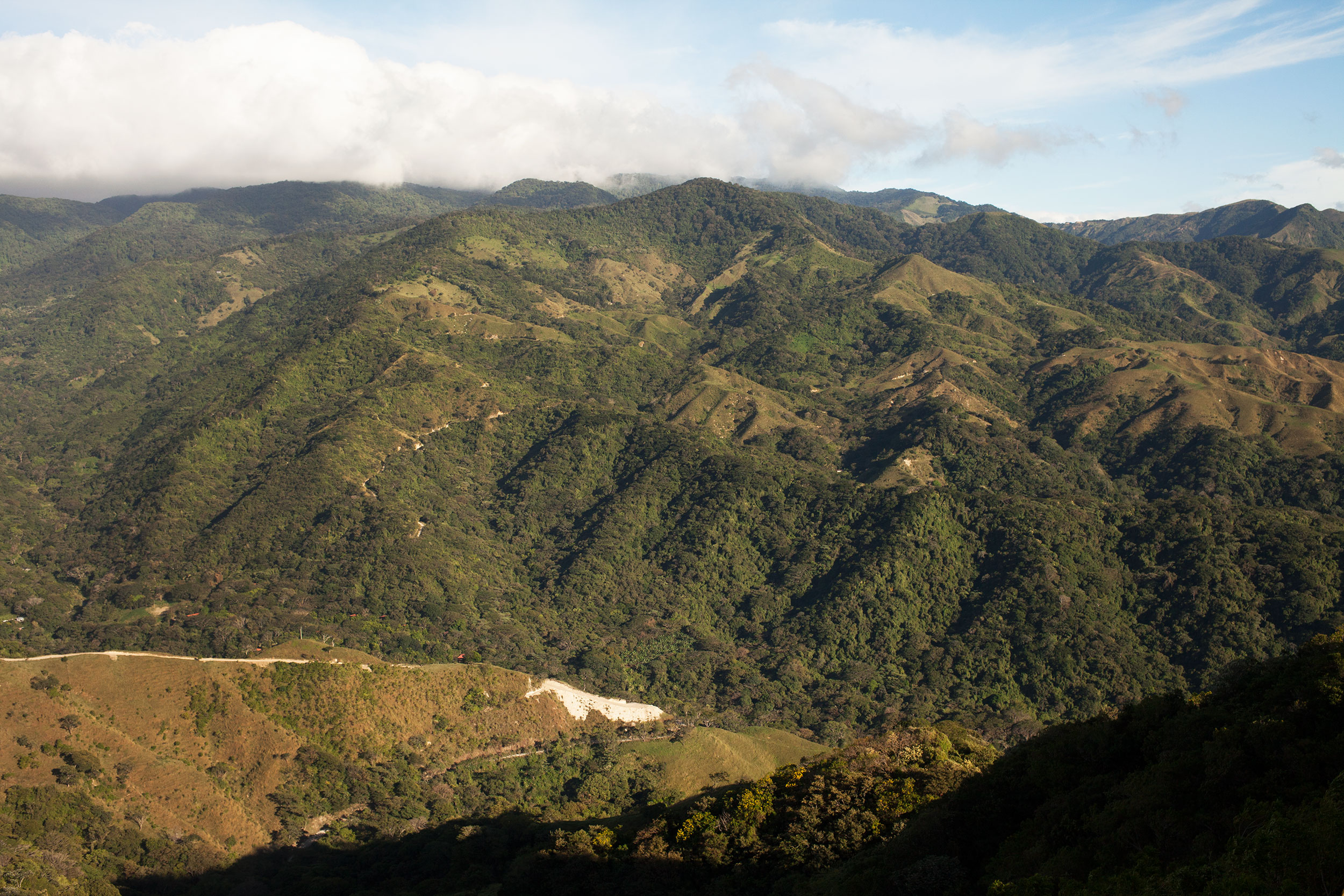
The first real day on the road with Dave we were traveling from San Jose to Monteverde to go to the cloud forest. Most of the trip was paved road, however, the turn off to Monteverde was 12 miles of loose gravel and rock on a vertical climb to get to the top. Windy, dusty, and beautiful, the views from Monteverde do not disappoint, as you can see all the way to the ocean. Photo: Alex Washburn
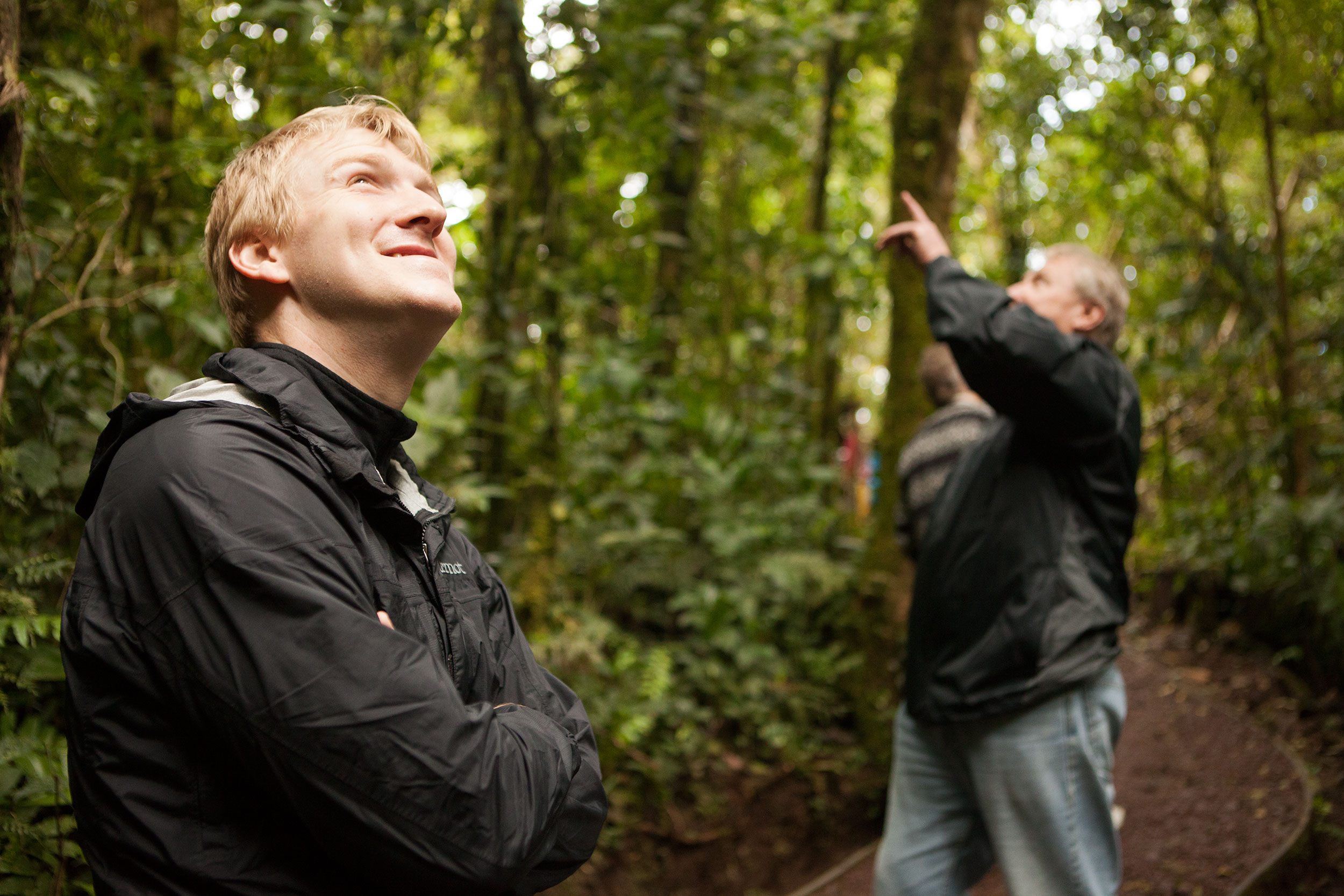
On the one full day we had in Monteverde we left early in the morning for a hike around the cloud forest (the place where clouds are literally born, from the warm weather on the pacific mixing with the cold air from the Caribbean). The biodiversity of Costa Rica is truly stunning as we saw sloths, quetzals, spiders, snakes, anteaters, coatimundi, and many varieties of hummingbirds. Our tour guide Bernal was one of the best we have had on this trip, animated and clearly loving being able to hike for a living. Photo: Alex Washburn

A violet Sabrewing Hummingbird hovers near a feeder at Monteverde Cloud Forest. Photo: Alex Washburn
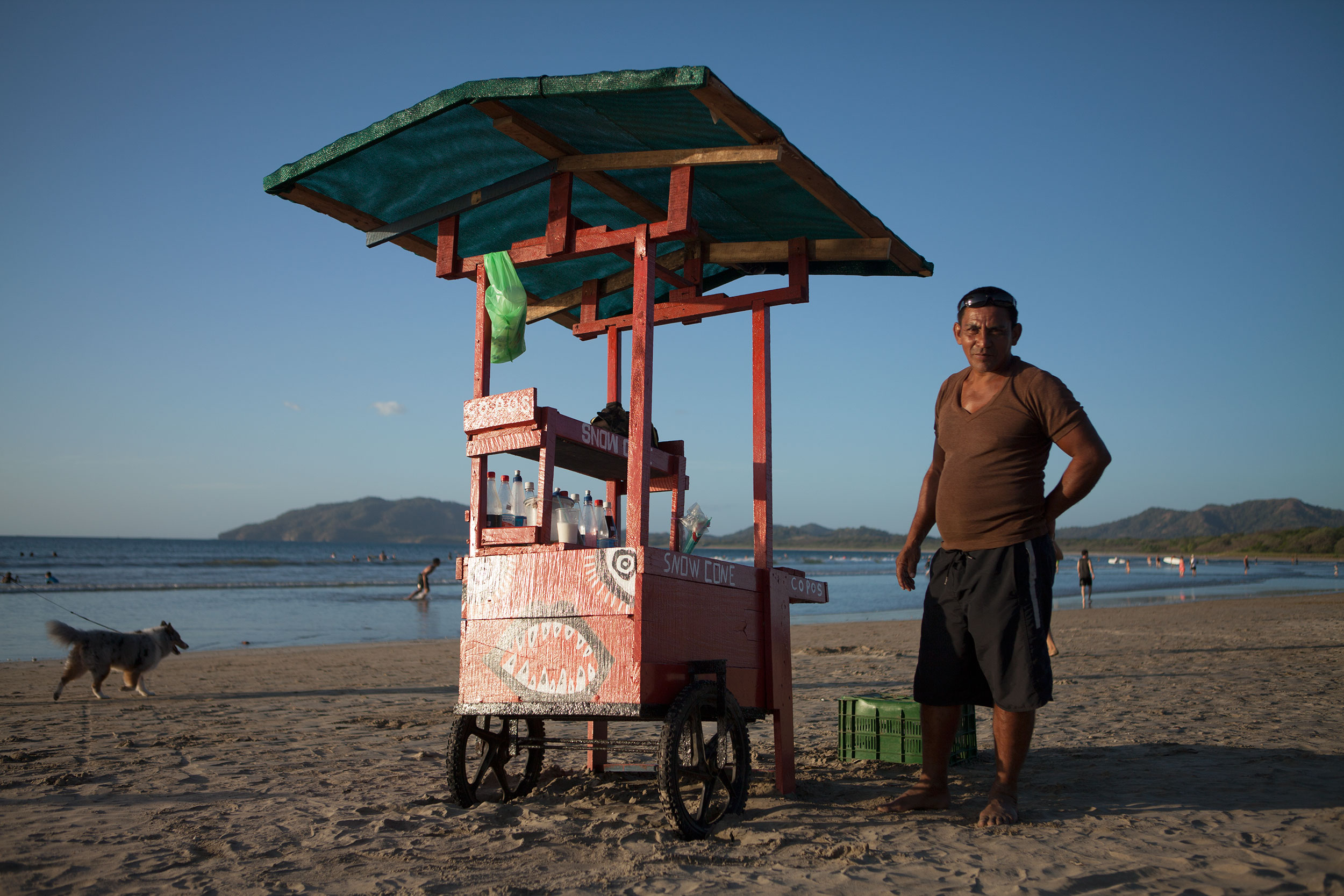
Tamarindo was the greatest little surf spot nobody had ever heard of…fifty-years ago. Now-a-days it is chuck full of boutiques, surf shops, and ex-pats all looking for a piece of the tourist dollar. As it is ‘high season’ in Costa Rica (from December to April), all the menus have been swapped and hotel rates lifted, making Costa Rica the most expensive country, by far, we have visited in Central America and often putting meals at or above American prices. The town itself is a small main street that hugs the coast and then splinters into dirt roads that go off into neighborhoods. The less adventurous traveler may enjoy Tamarindo for its faux third-world atmosphere and pervasive English, but veteran travelers can find less touristy spots with better surf elsewhere. The street food scene (usually budget friendly) is also pretty weak – this Snow Cone vendor was one of only three good finds Alex made in two days. Photo: Alex Washburn
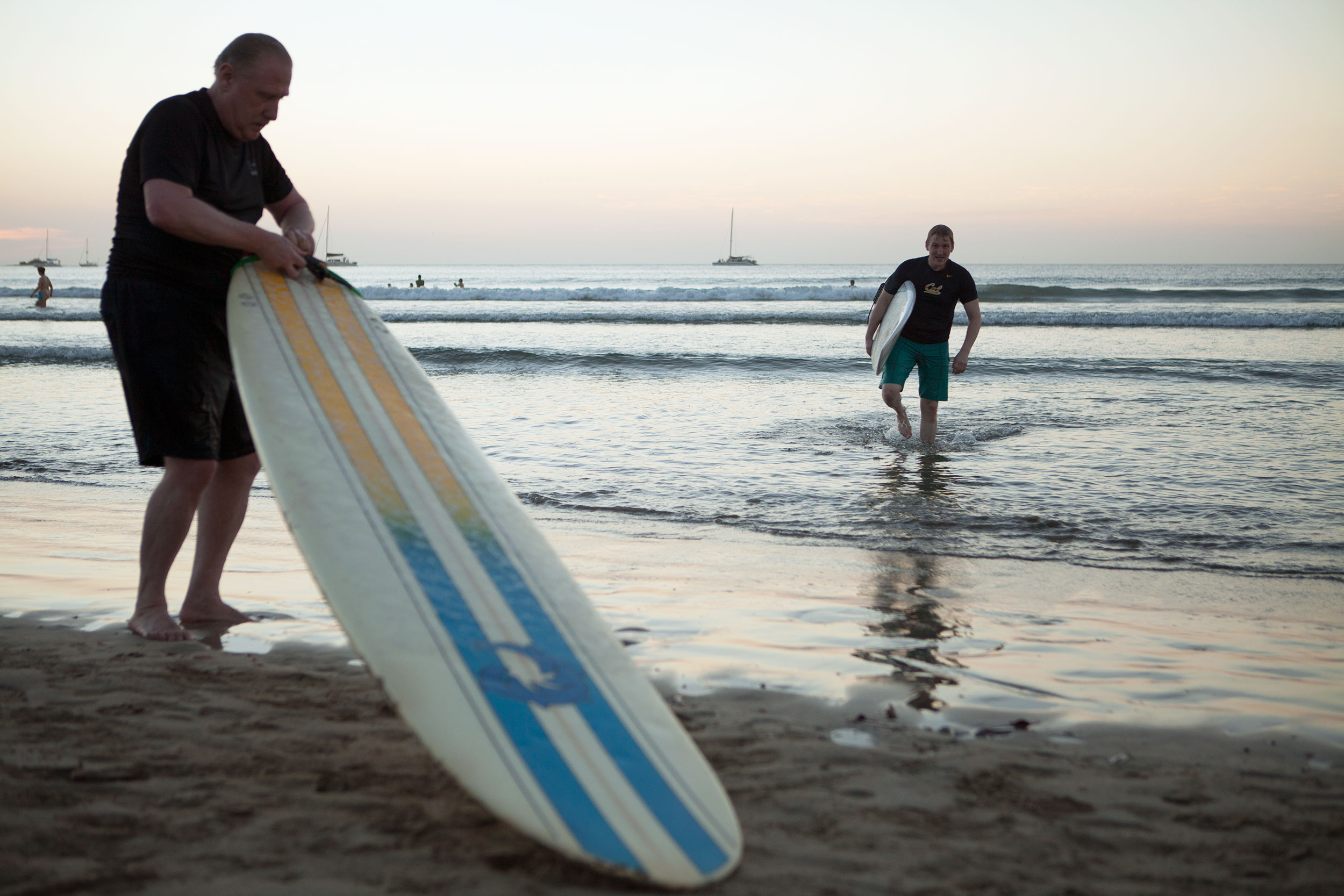
The waves in Tamarindo are great for beginners, and there are plenty of them that rove in packs known as Surf Schools, that take up all available ocean on the central beach. Most of these schools focus on the mechanics of catching waves and little to no effort on teaching people about how to maneuver the board in water. Subsequently you see lazy-ass Americans being pulled through the water while laying on their boards, lined up perfectly to catch a wave, and then being shoved off by the instructor and all they have to do is stand up (which most do not accomplish). Regardless – having lived in Santa Cruz for close to two decades Dave and Nathaniel were excited to get in the water. Photo: Alex Washburn
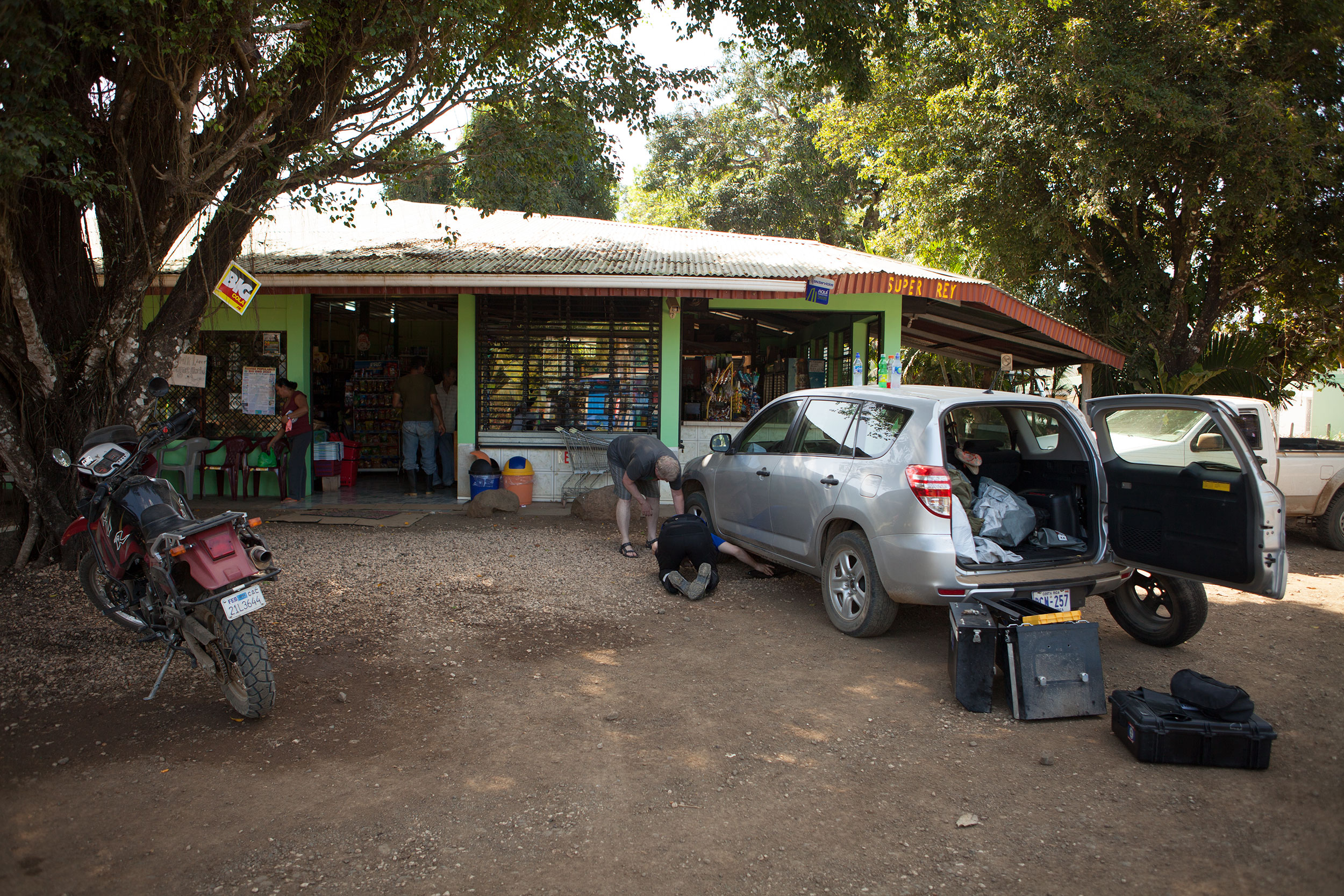
There could be a reason that the GPS told us to go around the peninsula and take a ferry to Montezuma instead of driving there from Tamarindo. On a path that is not serviceable in the rainy season, Dave in his Rav4 and we on the bikes, set out on our way to Montezuma (maybe this was a little revenge for us), along the only main highway that connects the peninsula with he mainland. Once we got to the junction of 18 and 21, we shut the GPS off and traveled on into the green wilderness. (Here Dave and Nathaniel are fixing Dave’s flat tire) Photo: Alex Washburn
As David would say four hours later “I wanted some adventure, but this may be too much.”

What awaited us on road 162 was the most challenging day of riding yet on this trip, some of which neither of us think we could have done two months ago. Fifty-miles of mountains on gravel/rock roads, seven river crossings (including one with 3 feet of water where the motorcycles had to cross), two broken down motorcyclists needing rides, a flat tire on the Rav4 (lucky we had a spare and were right next to a tire repair shop, out in the middle of nowhere), and eight hours later we arrived in Montezuma, a trip which everyone said should only take five. We earned our off-road badges yesterday and the victory dinner couldn’t have tasted better. This is a photo of us next to the final river crossing (the first was the biggest). Photo: David Chaney
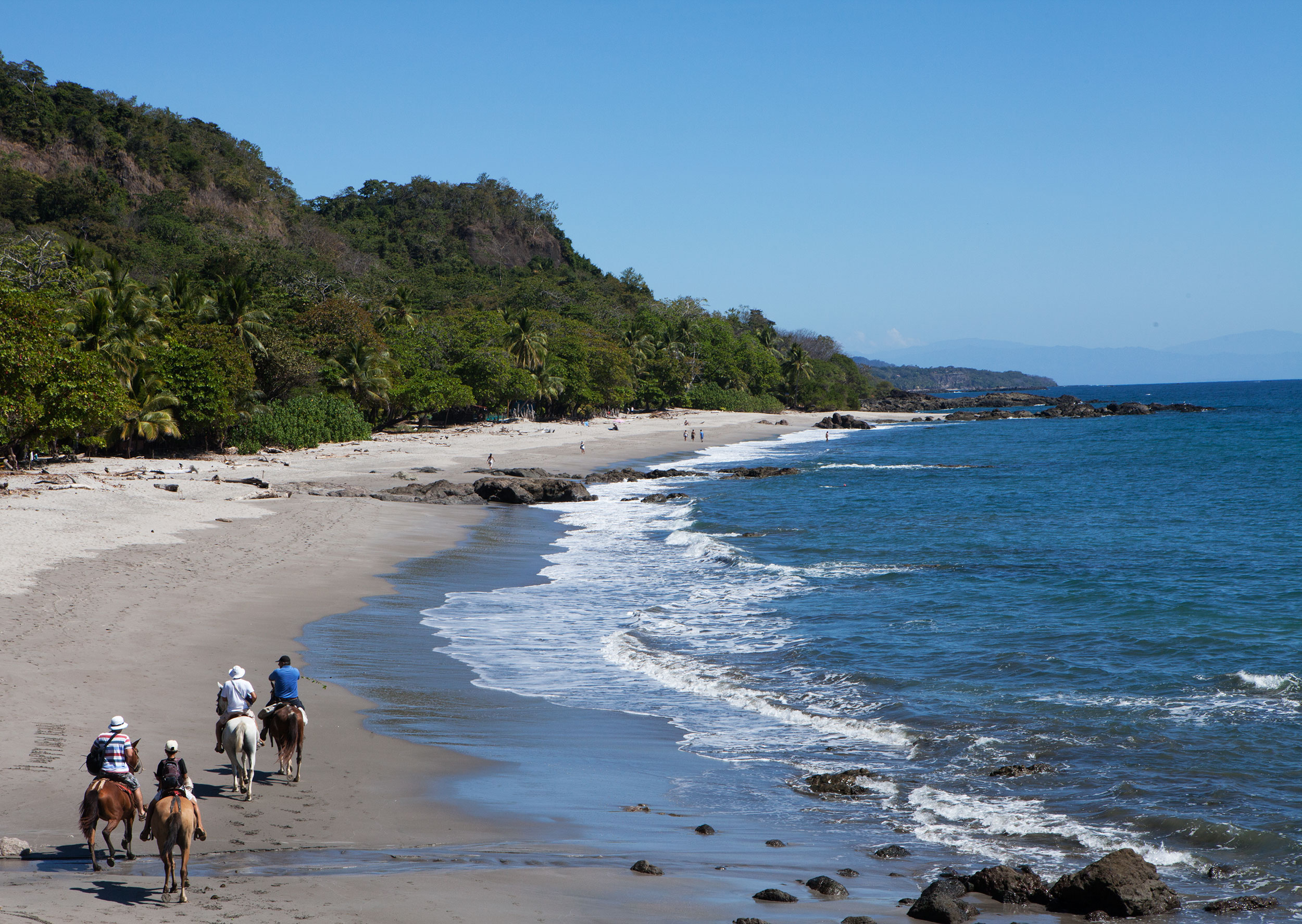
After our hours of hard riding we were rewarded with Montezuma.Montezuma is the beach town you wished Tamarindo was. Maybe because it is on the tip and only really accessible by ferry, or that there are several towns within driving distance that off equal fare, there is a lazy, laid-back vibe in this ocean town. Beach side accommodations can be found on the cheap, and the water is the bluest yet in Costa Rica, however best part yet might just be hanging out in a hammock on the balcony of the hostel and watching the waves roll in with a slight breeze on your face. Photo: Alex Washburn
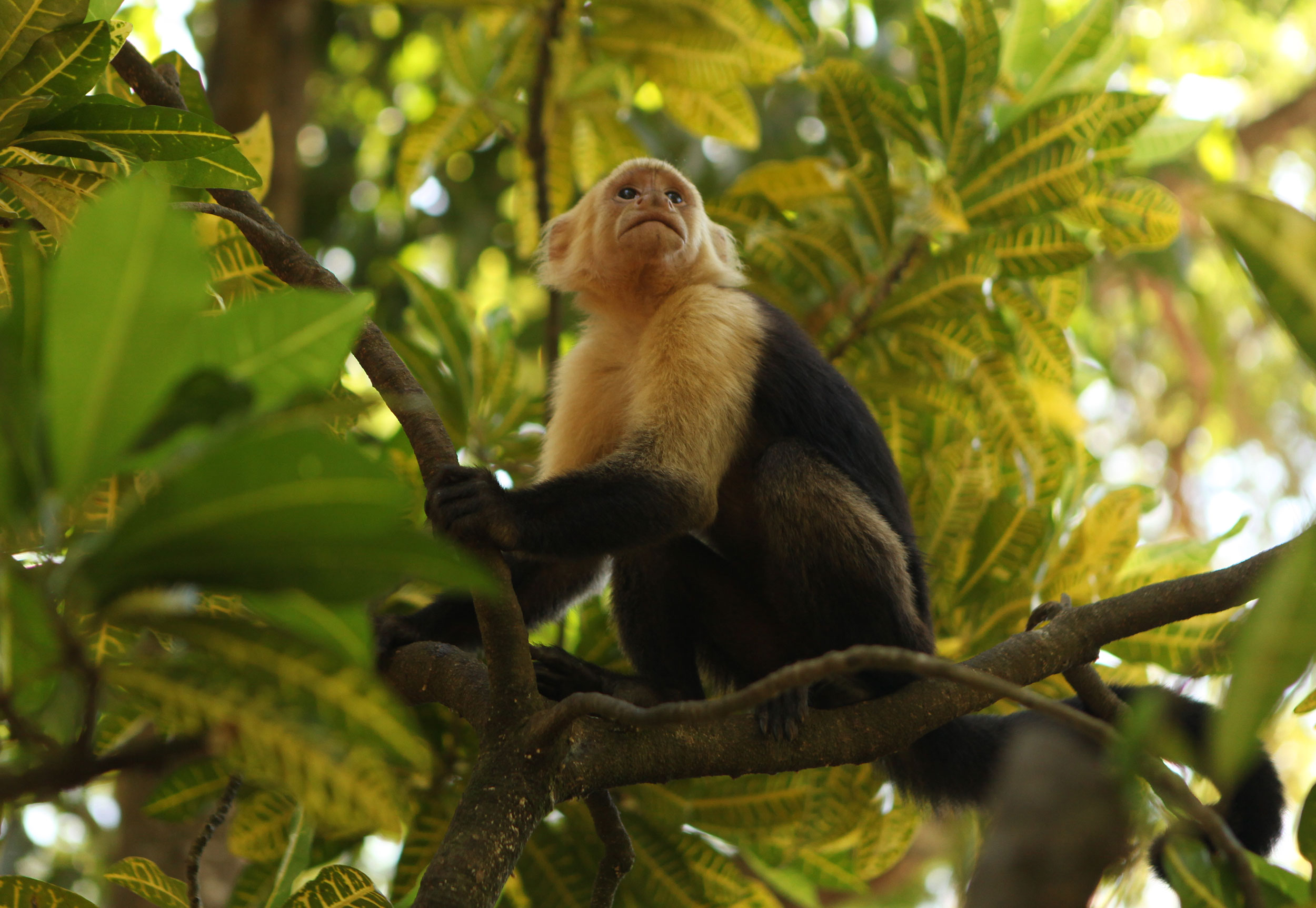
Montezuma may not have the wildlife of Monteverde but it can still surprise you. Here, a White-faced monkey looks to steal any food it can from tourists. These little bastards are everywhere, and while tourists may ooo and aww over their cuteness, we are sure locals perceive them the way Americans do raccoon, a nuisance to be dealt with. Photo: Alex Washburn
Life on the road
Posted on December 16, 2013
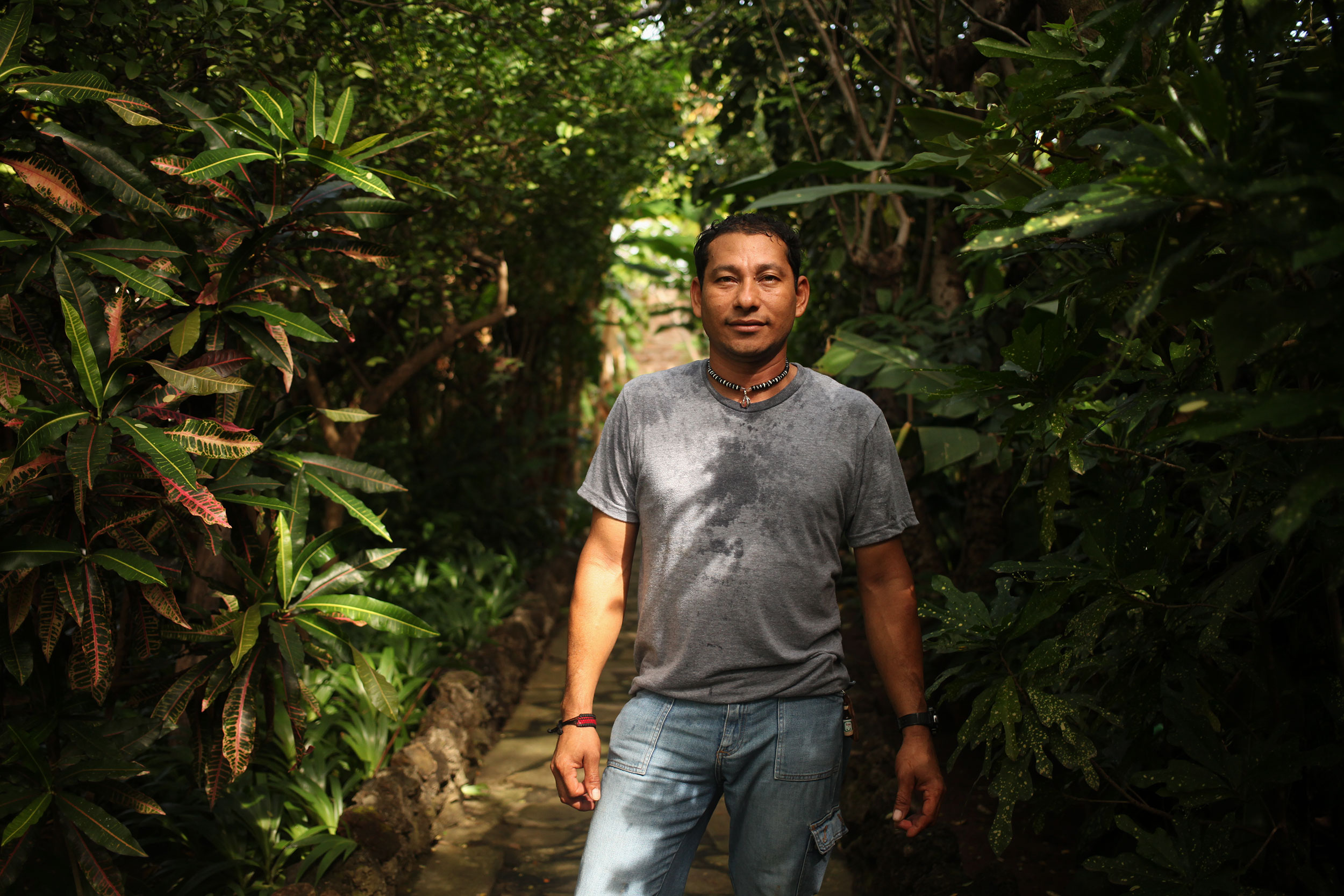
Giovanni the Handyman at our hotel poses for a portrait before we leave. Photo: Alex Washburn
With only a few days left in Nicaragua, Alex and I were reviewing the timeline before we battled our way through another border and on into Costa Rica. We decided that we wanted to spend a half day in Granada before moving on to the border.
Granada is a lake town that sits on the edge of Lago Nicaragua, with views of Concepción Volcan in the distance. We would have pictures of all of this, but there was another unfortunate motorcycle hiccup. As we pulled the motorcycles into our hotel in Granada (Hotel Casa Barcelona, a hotel that promotes jobs for local women to become independent bread winners) Alex felt/heard a snapping sensation in her clutch cable, lo and behold we could see that of the nine or ten strands of cable, all but three had snapped.
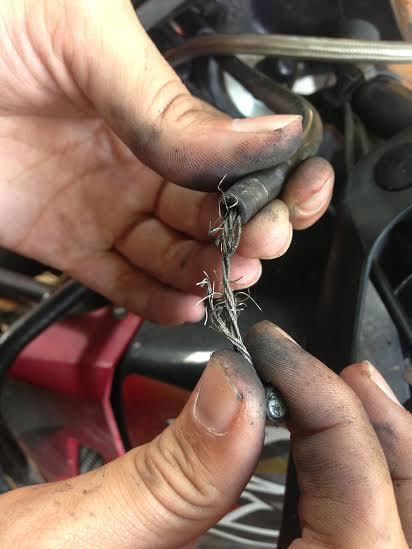
Alex shows off the damage after pulling the frayed clutch cable out of her bike. Photo: Alex Washburn
Before I could protest, Alex was out of the hotel lobby and into the courtyard, borrowing a pair of pliers from the hotel handyman (Giovanni, he will be in the story later) and beginning to rip into the clutch lever. The only conversation we had on the subject, was whether we thought the bike could make it in its current state to the shop we are going to in Costa Rica. Upon further review we both decided it would be foolish to continue without some sort of repair.
In about thirty minutes we had dissembled the clutch lever and removed the clutch cable. Alex held it out to the two handymen that were working on staining a table in the courtyard where our bikes were. Giovanni came over to inspect the cable, and Alex asked where we might be able to obtain another one.
By now it was 4:00, and the main concern was that if we didn’t find a replacement, most of the shops would not be open on Sunday and it might mean a delay of several days to get it repaired. Giovanni said he knew of a shop and suddenly we were in his car racing through Granada.
It was at this time that the sky’s let loose the rain they has been threatening all day and monsoon style downpour drenched the tiny town as Alex and Giovanni sprinted into the shop. The full cable assemblies they had in stock were too short by only a couple of inches, so we ended up getting a long replacement cable to feed into the tubing of the original.
Back to the hotel we went, the rain went just as quickly as it came, and though the bikes were wet, it didn’t slow the installation. Giovanni provided a helping hand in getting the new cable threaded and hooking the clutch lever back up. Next we needed to attach it to the motor. Here we ran into some problems because the washer and bolt that came with the replacement cable were too big to fit into the housing on the motor.
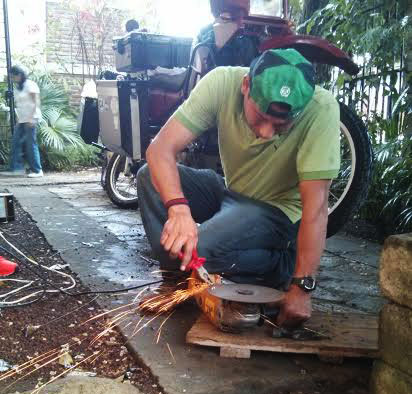
Giovanni shapes the nut to cap the end of Alex’s new clutch cable. Photo: Nathaniel Chaney
Also, as in Honduras, when we needed help, the right people seemed to show up. We are grateful that Giovanni was so willing to help two strangers and are still amazed at the kindness of strangers here in Central America.
The following day came early and it was time to see if the cable would hold and what the border had in store for us. The border crossing wasn’t the worst in terms of harassment, but was the most extensive in paperwork and general futility. All told it took five hours.
Nicaragua had the most amount of work to exit a country yet. Most countries are glad to let you go with a stamp and some well wishes as you become the next country’s problem. However, Nicaragua required we have an official (who is wandering around the immigration area) inspect the bikes, then we had to get a stamp from a second of official in a booth, before tracking down a police officer (who also is just wandering around) to sign our forms. It took two hours just to get all the paperwork filled out and signed just to exit Nicaragua. For comparison, exiting Honduras took all of twenty minutes.
Next it was on to Costa Rica. Instead of describing the whole procedure, we have drawn this diagram:
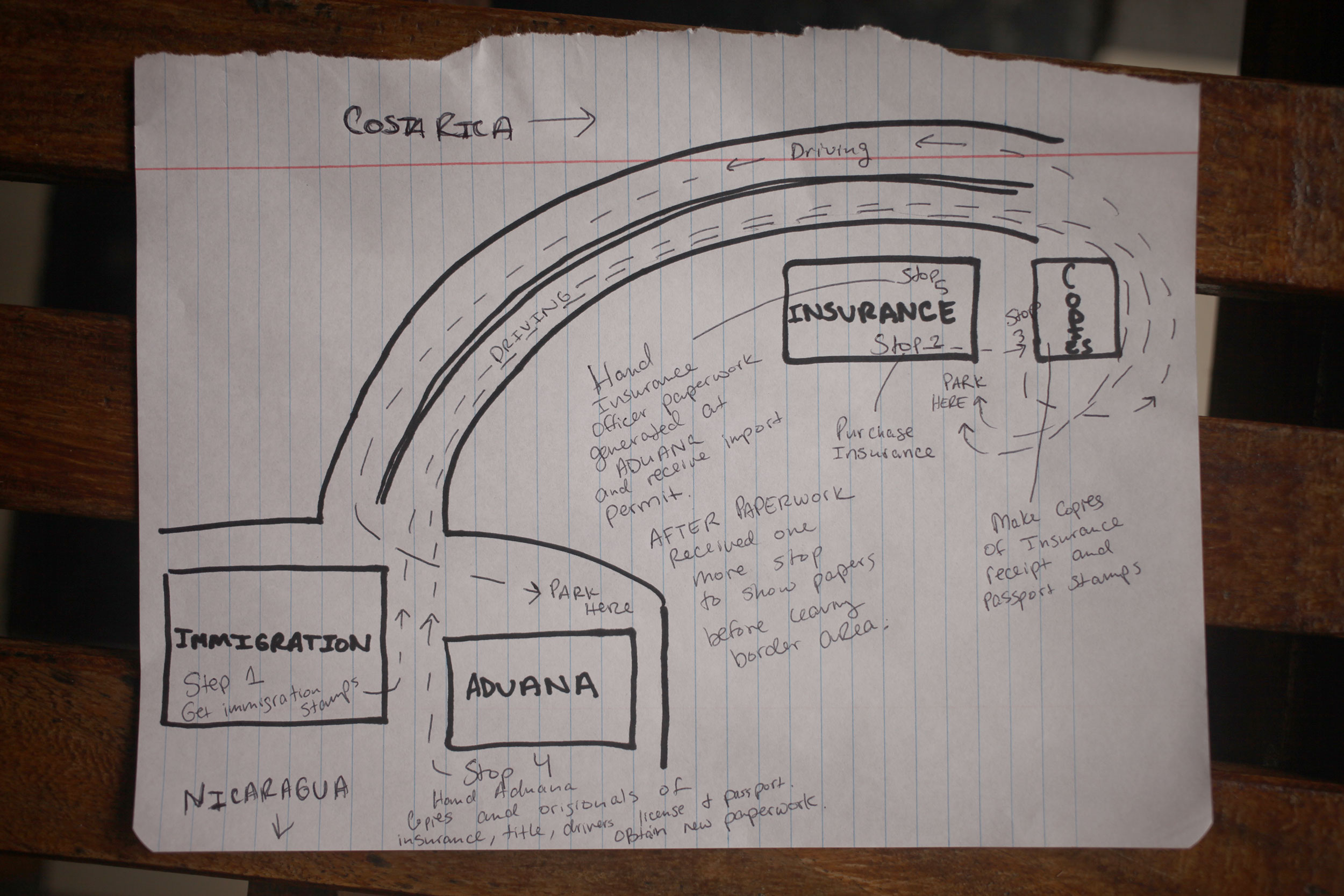
Here is our 5 step process to get into Costa Rica. Photo: Alex Washburn
After five hours of border crossing hi jinks, which included the insurance agency typing Alex’s VIN wrong three times, we made it into the countryside and all the way to Liberia Canton for a victory dinner. Country number seven is ours for the taking, and we are off to San Jose for our appointment to have some much needed maintenance done to the bikes.
 Where the Autopista Ends