Where the Autopista Ends
Two motorcycle bloggers in the San Francisco Bay Area.
Adventures in Colombia
Posted on January 14, 2014

Jesse was the last of our group to roll his bike out of our Cartagena Hostel and onto the street as we got ready to leave. Photo: Alex Washburn
Our first full day in Colombia (and our FOUR YEAR anniversary!) was spent running all over Cartagena trying to legally enter the country with our motorcycles. Six o’clock came early, and Alex rolled over in her bed and gave her cheeriest “Good Morning Jesse!”, as he we sleeping in the bunk underneath me. He didn’t loose a step and replied back with his patented “Hey Buddy!”, as we all got up and got ready to get the bikes off the boat.

Alex nervously balances her bike on the floating dock that carried our six bikes from the Stahlratte to land in Cartagena. Photo: Nathaniel Chaney
All disasters avoided, we got the bikes on land, and Nico realized he had forgotten his keys back at the hostel. No big deal, Ken borrowed a rope from the crew, tied it around the GS1200 and off we went to Aduana (customs), no passports, no insurances, not legally in the country, just seven bikes, one being towed.
To condense the next seven hours, the fixer that the boat hired to help us through costumes was late, so we went back and forth from the hostel and didn’t get to leave Aduana until 12:30 (supposedly when lunch was happening), this confirmed to Alex and I that we can do the boarders just fine on our own. A quick stop back at the docks to get the rest of our panniers and gear and then off to buy insurance. It was a full day of bureaucracy (and here we thought it was going to be easy).
Finally done with our list of chores, we headed back to the hostel through the gritty grueling Cartagena traffic. Ken and Diana ride two up on a GS1200, and with all the gear they are as big as some of the taxis we have seen. A taxi kept trying to edge into Ken’s lane and and Ken finally showed him what he thought about that by landing his size 13 boot into the cabs door. Jesse and I looked on thinking that we might have a brawl on our hands in the middle of the street, our ragtag ‘biker gang’ versus the taxis of Cartagena. Luckily it didn’t come to that and we all got back to the hostel without harm, no worse for the wear.
Our last day in Cartagena we all went on a walking tour of the city, before Jesse and I split off to do some motorcycle supply shopping. The rest of the day was filled with bike maintenance, chain cleaning, and laughs, with a little bitter sweet realization that we would be parting ways soon. A fellow traveler had shown the group a picture of a BLT earlier in the day, and Alex spearheaded our last meal together. We had a BLT party, real comfort food for a group of weary road warriors.
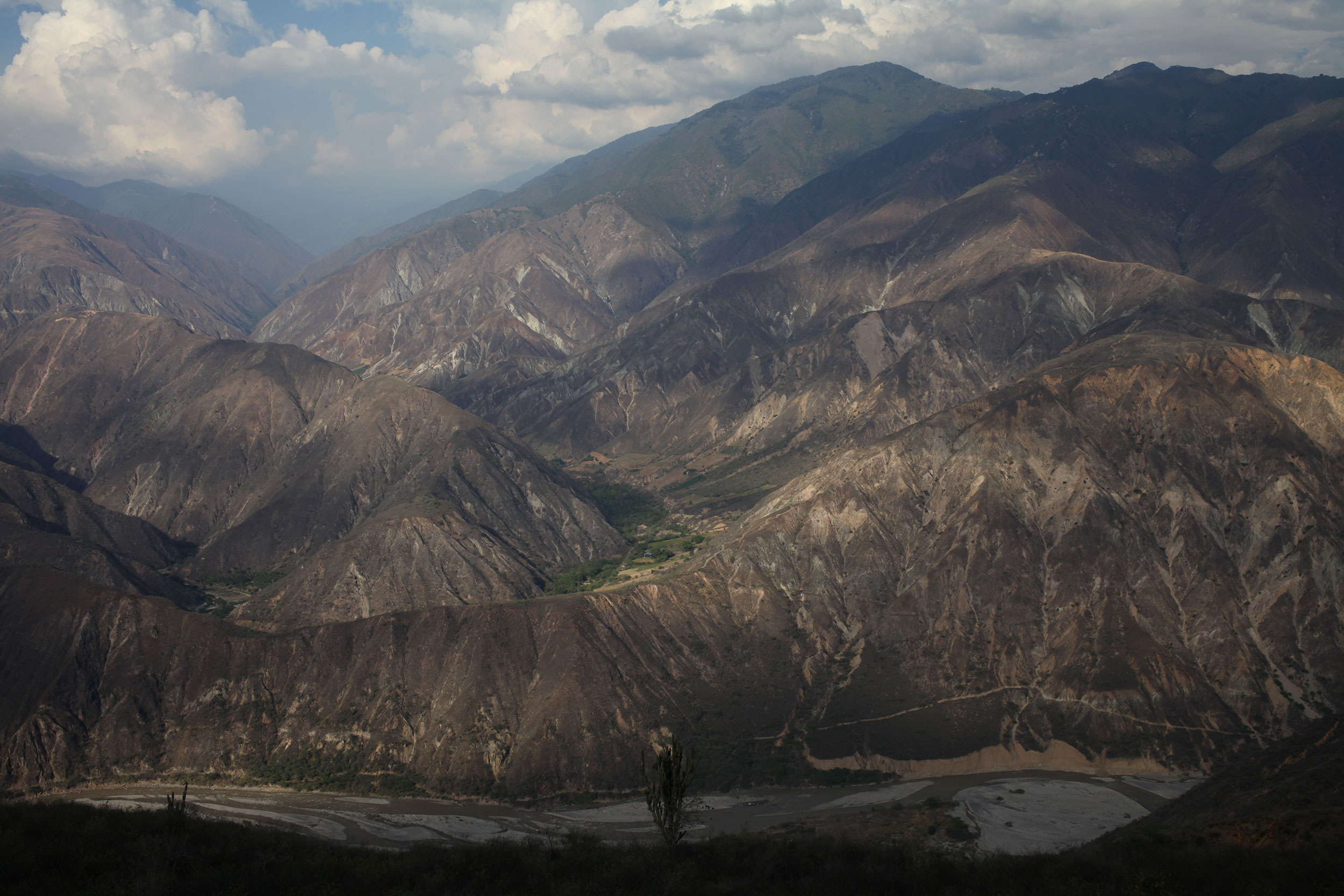
The mountains between Bucaramanga and San Gil Colombia are beautiful and the asphalt is perfect. Photo: Alex Washburn
The next day saw bags packed, bikes loaded, and handshakes all around. We all had to get out of Cartagena, so five bikes, minus Nico, rode through the packed streets desperately trying to escape the city before the heat got out of control and the traffic started. Accomplishing neither of these goals, we finally got out one very long hour later.
After escaping the city limits of Cartagena we stopped at a roadside restaurant for one last meal together before the 5 remaining bikes split into two.
Ken, Diana, and Taylor were off to Medellín, but Jesse mentioned he was up for taking the alternate route with us to Bucaramanga (an Instagram follower mentioned that the roads around Bucaramanga have some of the best scenery in Colombia, but more on that later) and we soon split off, Jesse leading the way as he has GPS.
Two long days of riding followed, as our trio headed to Bucaramanga. The landscape was unimpressive compared to what we have ridden through in the past, and some close calls with gas (literally drove through a town where all the gas is sold by people from gallon jugs) were the mainstays of the riding. The one noteworthy part of the ride was that Alex and I have now earned our truck passing badges, as we passed at least a hundred trucks on our way to the city.
Jesse commented, in between drags off his cigarette, that:
“You know when you think about it — a lot of what we are doing is legitimately dangerous”
To us it is just another day on the road.
We finally made it to Bucaramanga just as the last rays of light crested the mountains and found a safe place for the bikes and ourselves. Exhausted from days ride, we grabbed a quick bite and then headed to bed (Alex and I without showers- oh our poor dorm mates). The next day Alex and I were headed for San Gil and Jesse was rolling out to a hostel owned by some friends he met in Medellín. We shook hands with our final travel companion and watched him take off on his DR650.
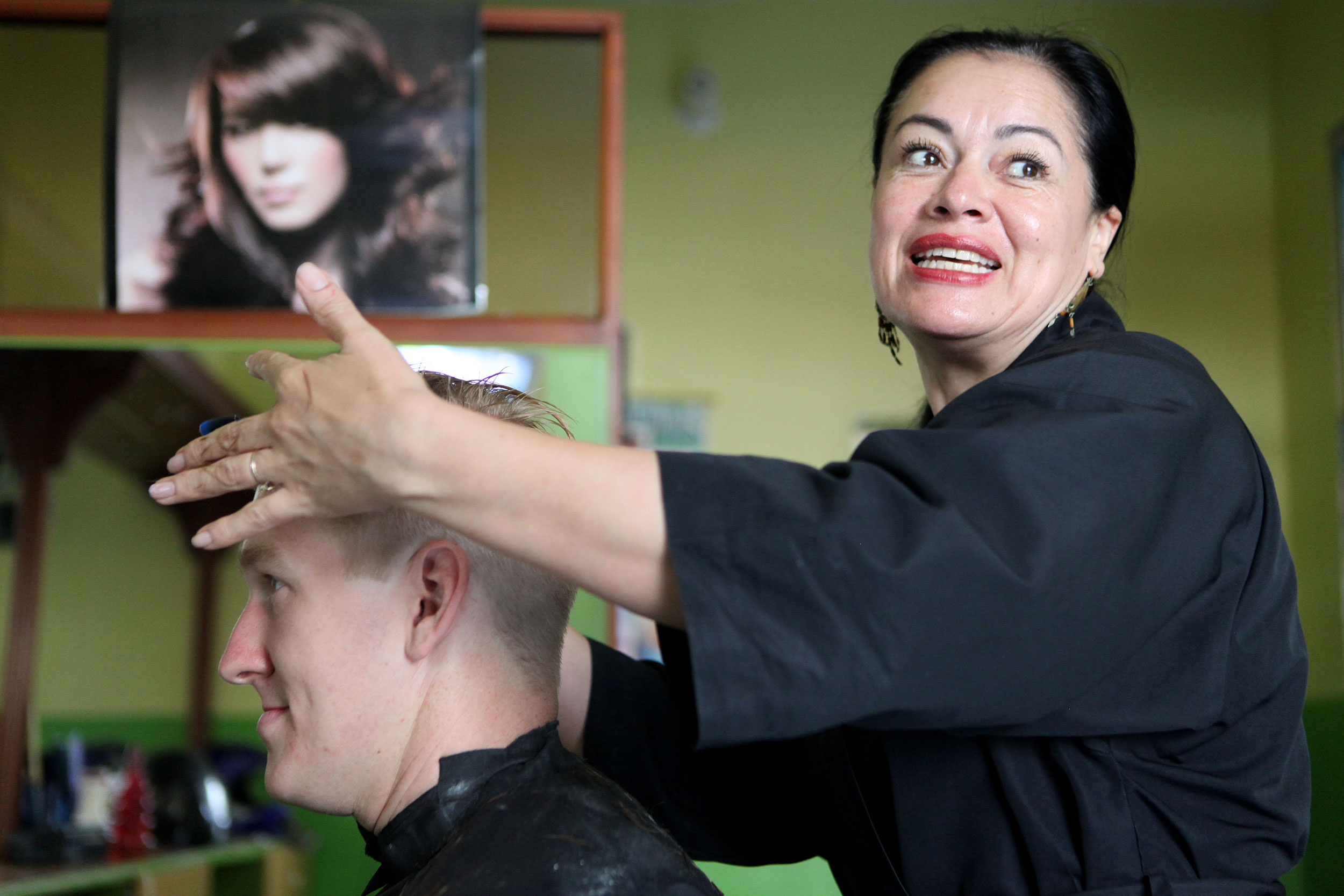
Nathaniel had been wanting a haircut for weeks and we finally made it happen in San Gil. Photo: Alex Washburn
Not knowing what to expect heading to San Gil, and only knowing it by suggestion, we headed into a deep valley. Expecting to see trees and foliage we were shocked when the landscape turned arid, spotted with cactus that reminded us of Mexico.
Then we were suddenly in the middle of what I can only describe as the Grand Canyon of Colombia. We climbed and climbed, zigzagging through the canyon, trying to avoid the trucks as we took in the picturesque scenery. Alex and I both agree that it ended up being one of the top five rides of the trip thus far, so we are very thankful for the suggestion that came from our instagram follower!
Now in San Gil, recharging the batteries and getting ready for more adventures and friends to come.
To everyone we have meet along the way, we are richer for it.
Pura Vida
Posted on December 25, 2013
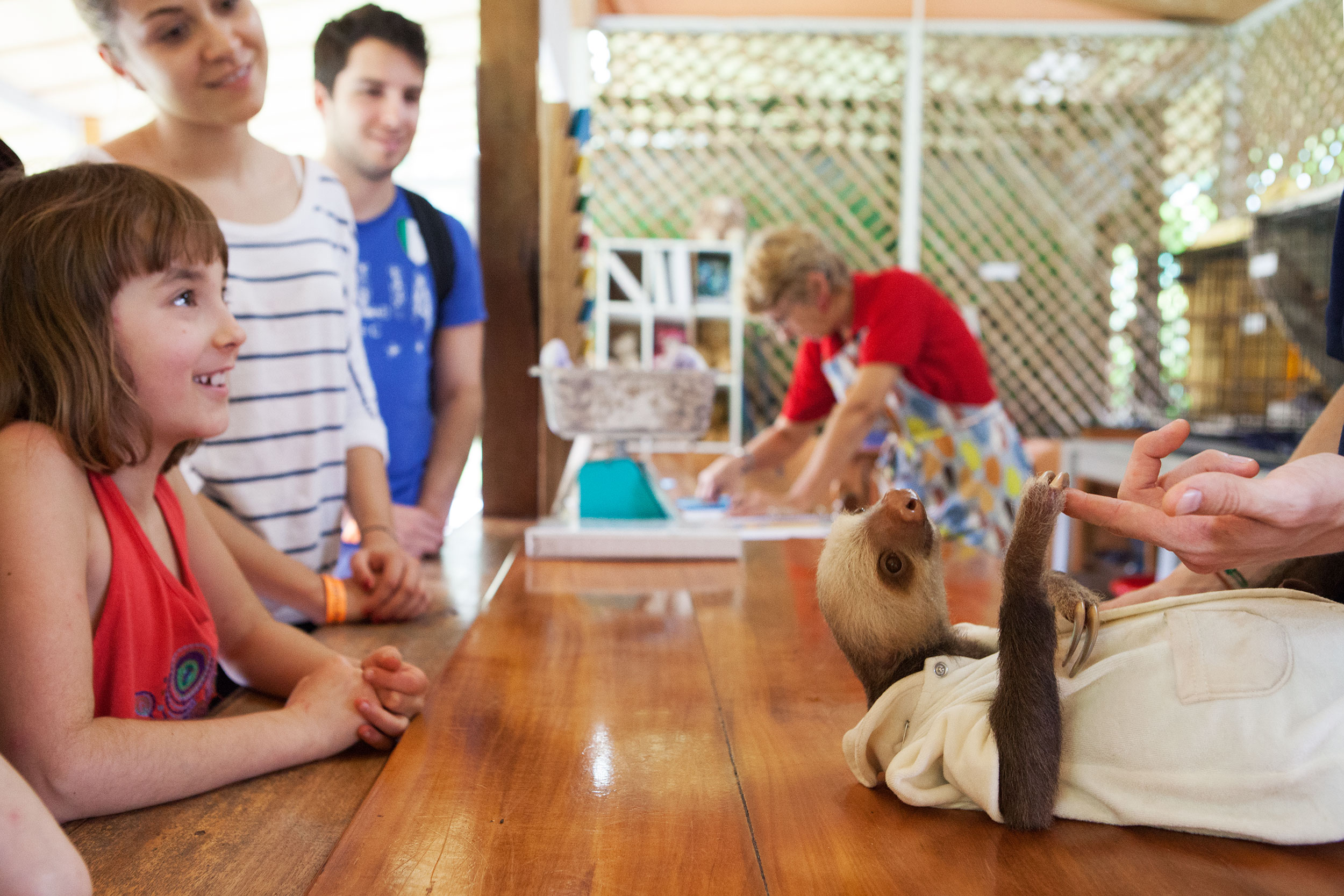
As some of you may or may not know, part of the reason we were so rushed to get to Costa Rica is that Nathaniel’s Dad (Dave) flew down on December 18th to spend a little over a week with us touring around. As such, Alex went to the sloth sanctuary on December 17th, as it is on the other side of Costa Rica (three hours from San Jose in Limón). The complete insanity of that trip can not be captured in this post, further details to follow. Here, A baby two toed sloth wows visitors at the Sloth Sanctuary just south of Limon Costa Rica. She had a skin infection so they shaved her and put her in a onesie to keep warm. Photo: Alex Washburn

In San Jose we took the bikes into the Kawasaki dealership to have some basic maintenance done (chains cleaned, oil change, new clutch cable for Alex, replace Honda 50cc ignition coil on Nathaniel’s bike since Farmersville). It was on the way back from the dealership Alex’s bike blew the main fuse again. Replaced it and blew it instantly. Internet searches, e-mails/calls to gurus, and stripping the bike down yielded only knowing that there must be a short somewhere on the bike (Duh!). The mechanics from the dealership were dispatched over in the morning and finally found the short on the front turn signal. Bikes were nice and shinny for two whole hours before getting put back in the dirt. Photo: Alex Washburn
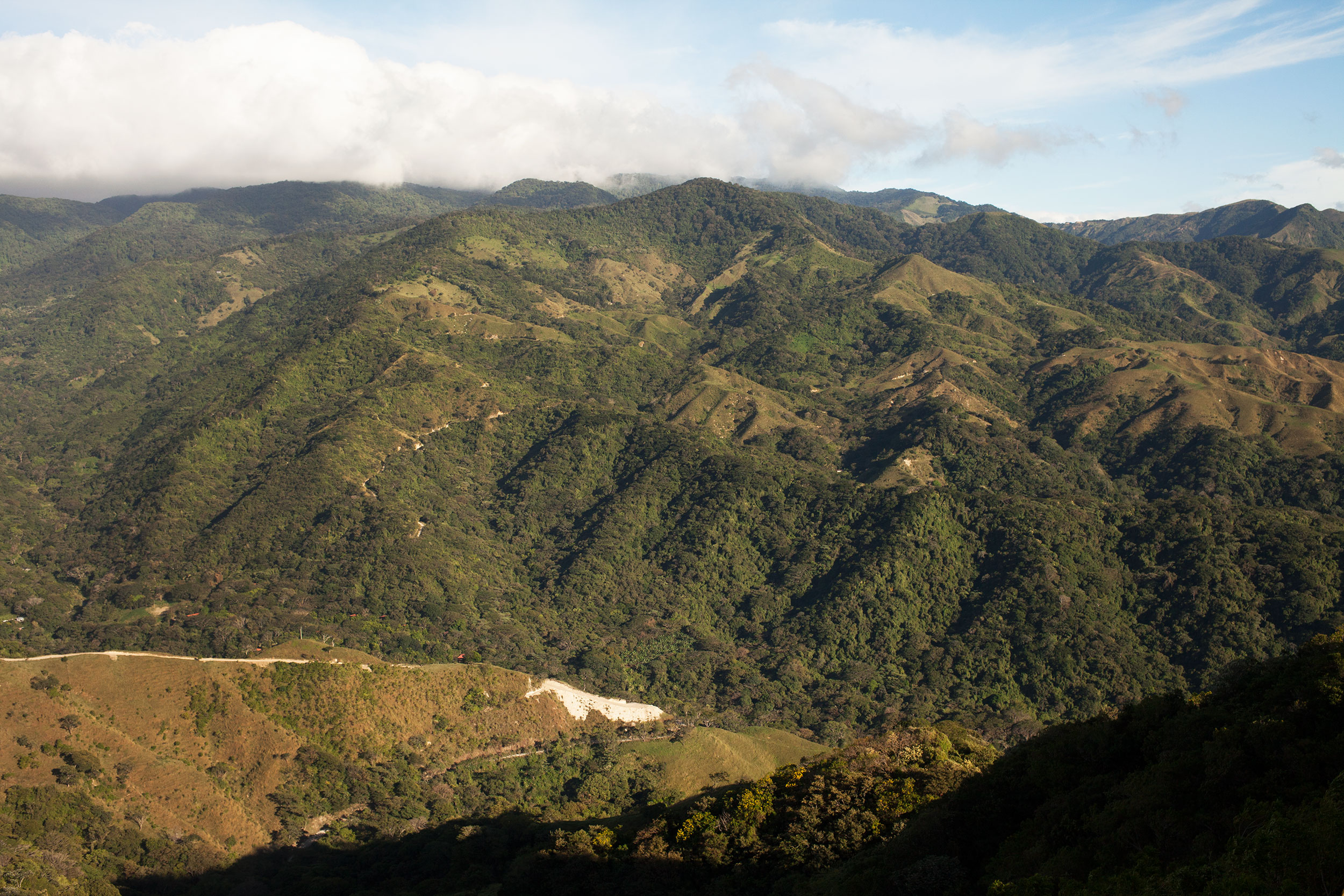
The first real day on the road with Dave we were traveling from San Jose to Monteverde to go to the cloud forest. Most of the trip was paved road, however, the turn off to Monteverde was 12 miles of loose gravel and rock on a vertical climb to get to the top. Windy, dusty, and beautiful, the views from Monteverde do not disappoint, as you can see all the way to the ocean. Photo: Alex Washburn
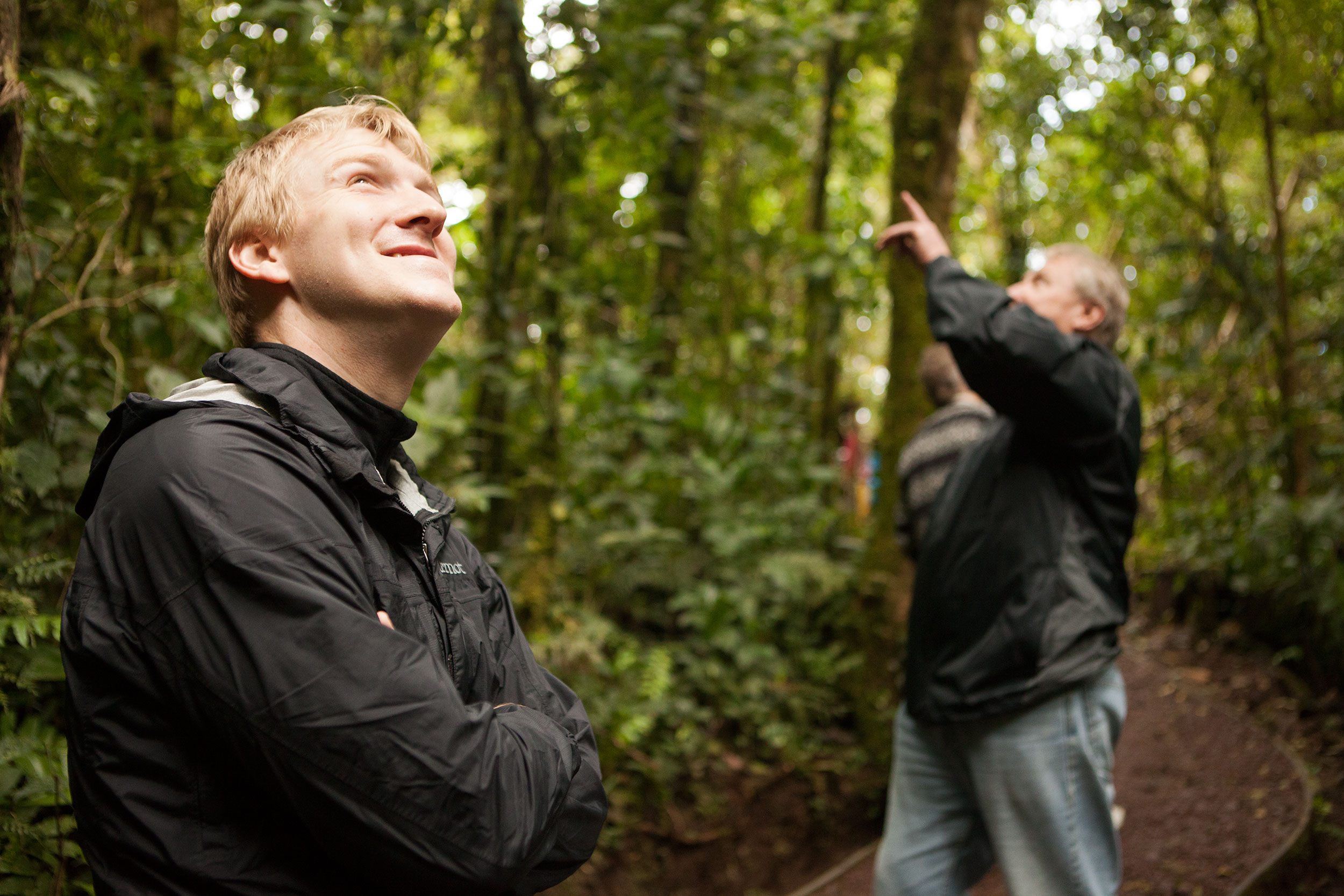
On the one full day we had in Monteverde we left early in the morning for a hike around the cloud forest (the place where clouds are literally born, from the warm weather on the pacific mixing with the cold air from the Caribbean). The biodiversity of Costa Rica is truly stunning as we saw sloths, quetzals, spiders, snakes, anteaters, coatimundi, and many varieties of hummingbirds. Our tour guide Bernal was one of the best we have had on this trip, animated and clearly loving being able to hike for a living. Photo: Alex Washburn

A violet Sabrewing Hummingbird hovers near a feeder at Monteverde Cloud Forest. Photo: Alex Washburn
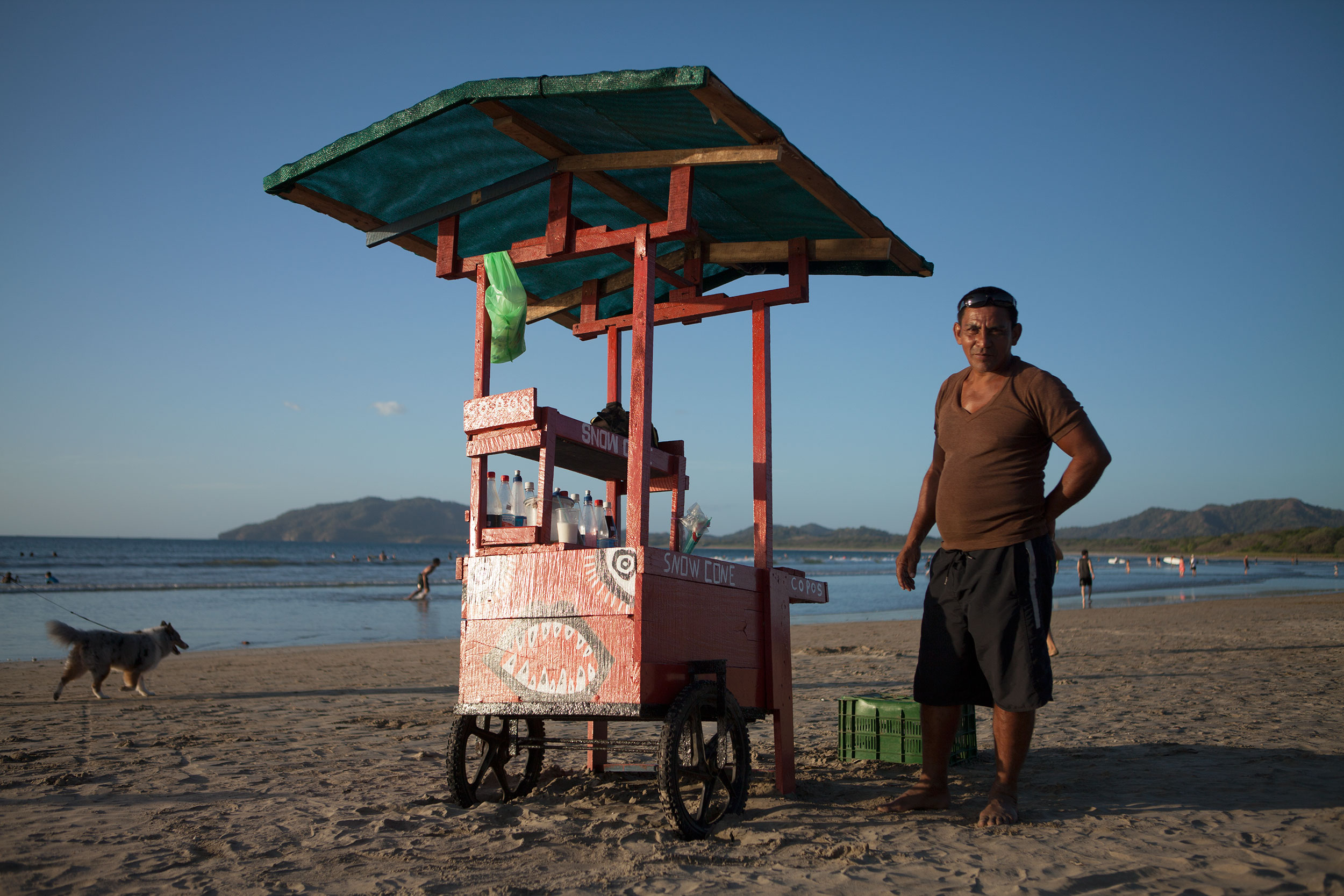
Tamarindo was the greatest little surf spot nobody had ever heard of…fifty-years ago. Now-a-days it is chuck full of boutiques, surf shops, and ex-pats all looking for a piece of the tourist dollar. As it is ‘high season’ in Costa Rica (from December to April), all the menus have been swapped and hotel rates lifted, making Costa Rica the most expensive country, by far, we have visited in Central America and often putting meals at or above American prices. The town itself is a small main street that hugs the coast and then splinters into dirt roads that go off into neighborhoods. The less adventurous traveler may enjoy Tamarindo for its faux third-world atmosphere and pervasive English, but veteran travelers can find less touristy spots with better surf elsewhere. The street food scene (usually budget friendly) is also pretty weak – this Snow Cone vendor was one of only three good finds Alex made in two days. Photo: Alex Washburn
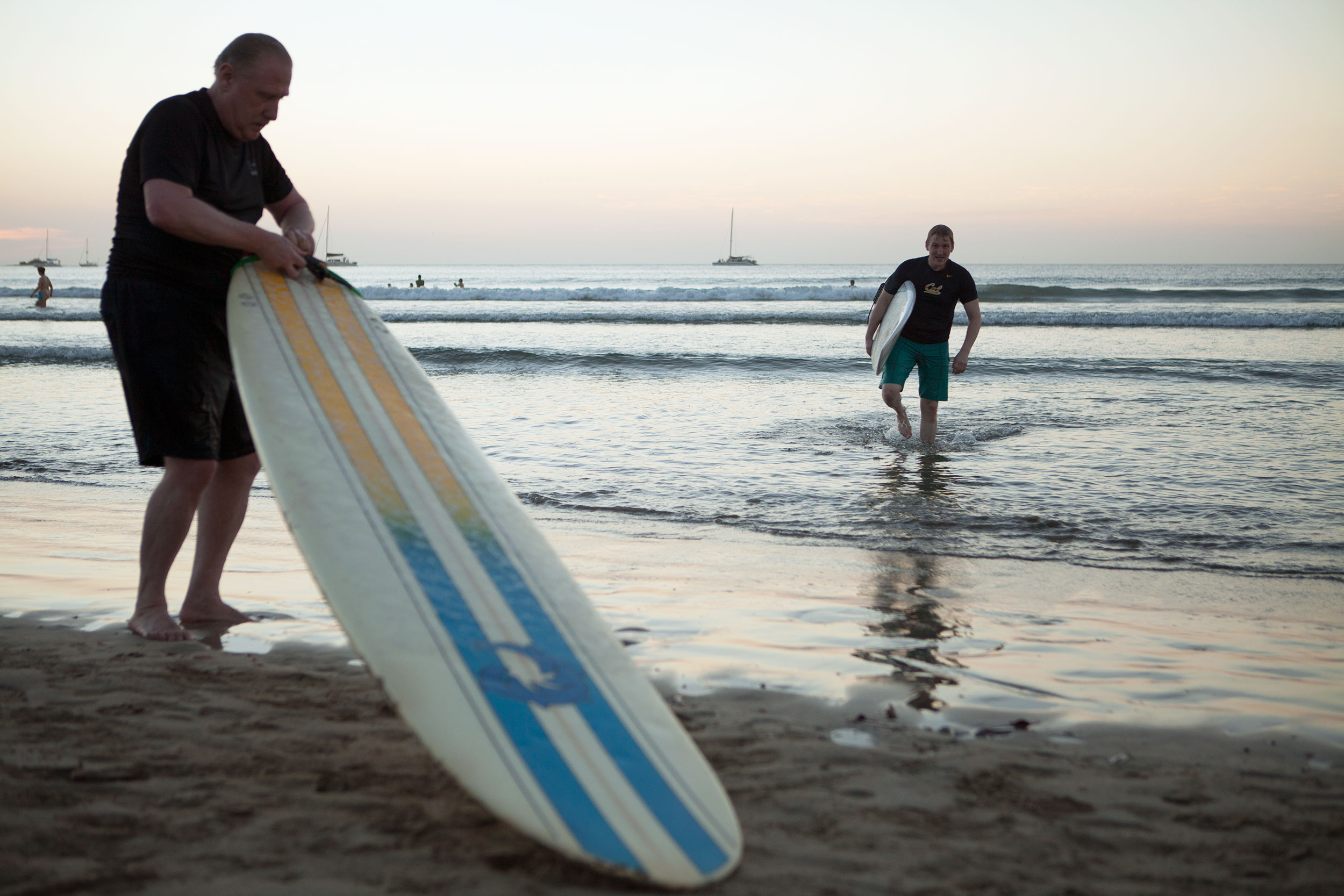
The waves in Tamarindo are great for beginners, and there are plenty of them that rove in packs known as Surf Schools, that take up all available ocean on the central beach. Most of these schools focus on the mechanics of catching waves and little to no effort on teaching people about how to maneuver the board in water. Subsequently you see lazy-ass Americans being pulled through the water while laying on their boards, lined up perfectly to catch a wave, and then being shoved off by the instructor and all they have to do is stand up (which most do not accomplish). Regardless – having lived in Santa Cruz for close to two decades Dave and Nathaniel were excited to get in the water. Photo: Alex Washburn
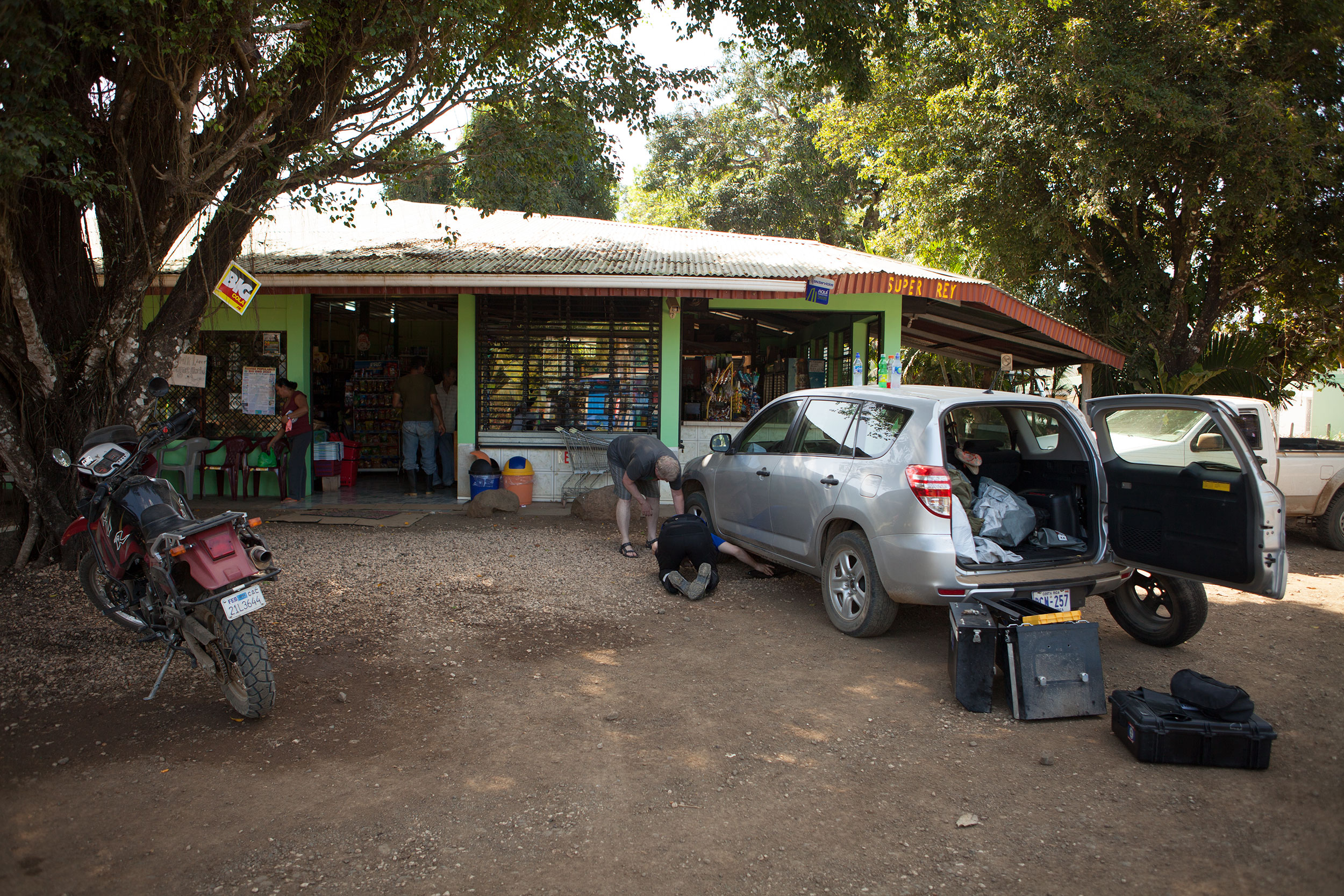
There could be a reason that the GPS told us to go around the peninsula and take a ferry to Montezuma instead of driving there from Tamarindo. On a path that is not serviceable in the rainy season, Dave in his Rav4 and we on the bikes, set out on our way to Montezuma (maybe this was a little revenge for us), along the only main highway that connects the peninsula with he mainland. Once we got to the junction of 18 and 21, we shut the GPS off and traveled on into the green wilderness. (Here Dave and Nathaniel are fixing Dave’s flat tire) Photo: Alex Washburn
As David would say four hours later “I wanted some adventure, but this may be too much.”

What awaited us on road 162 was the most challenging day of riding yet on this trip, some of which neither of us think we could have done two months ago. Fifty-miles of mountains on gravel/rock roads, seven river crossings (including one with 3 feet of water where the motorcycles had to cross), two broken down motorcyclists needing rides, a flat tire on the Rav4 (lucky we had a spare and were right next to a tire repair shop, out in the middle of nowhere), and eight hours later we arrived in Montezuma, a trip which everyone said should only take five. We earned our off-road badges yesterday and the victory dinner couldn’t have tasted better. This is a photo of us next to the final river crossing (the first was the biggest). Photo: David Chaney
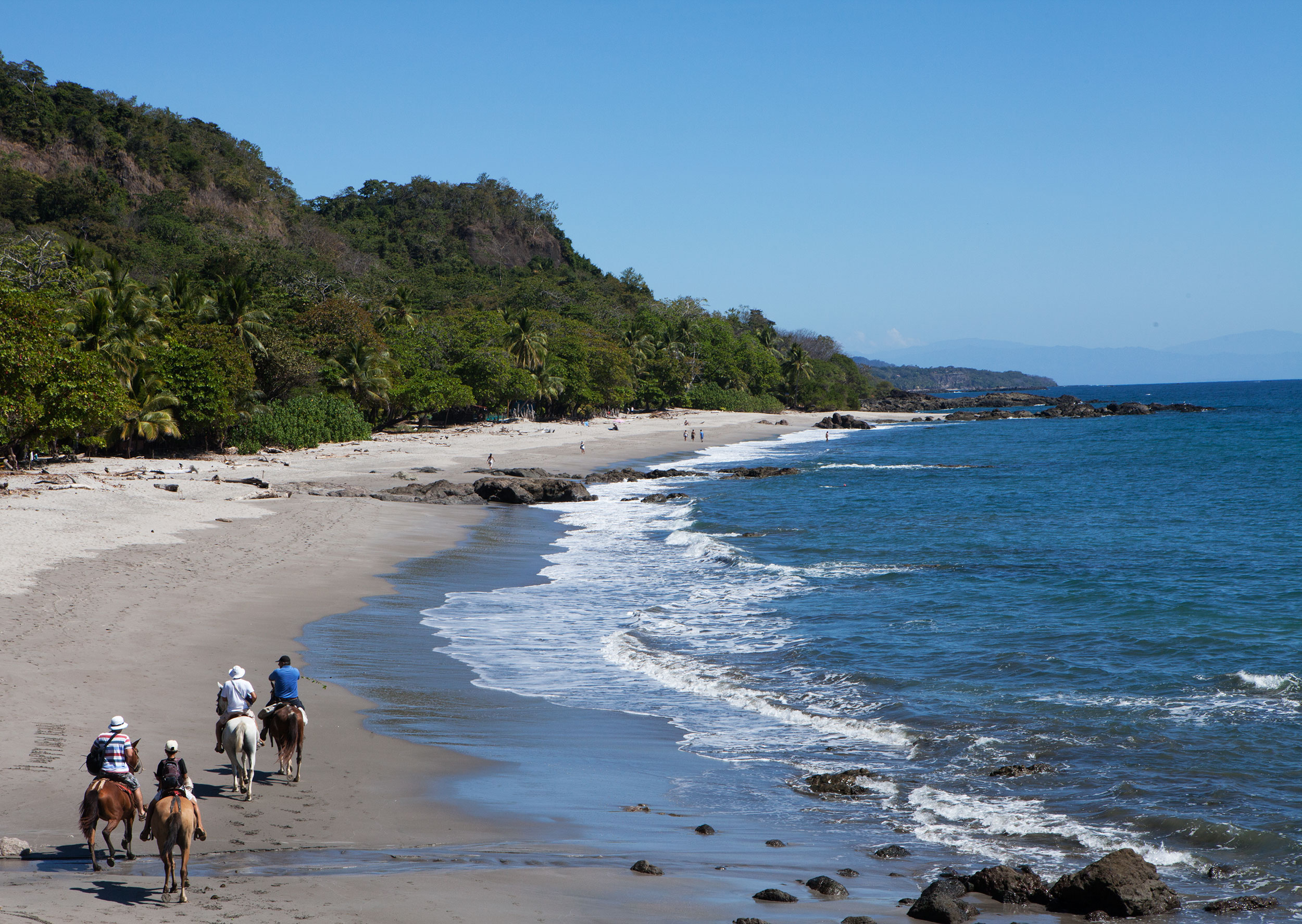
After our hours of hard riding we were rewarded with Montezuma.Montezuma is the beach town you wished Tamarindo was. Maybe because it is on the tip and only really accessible by ferry, or that there are several towns within driving distance that off equal fare, there is a lazy, laid-back vibe in this ocean town. Beach side accommodations can be found on the cheap, and the water is the bluest yet in Costa Rica, however best part yet might just be hanging out in a hammock on the balcony of the hostel and watching the waves roll in with a slight breeze on your face. Photo: Alex Washburn
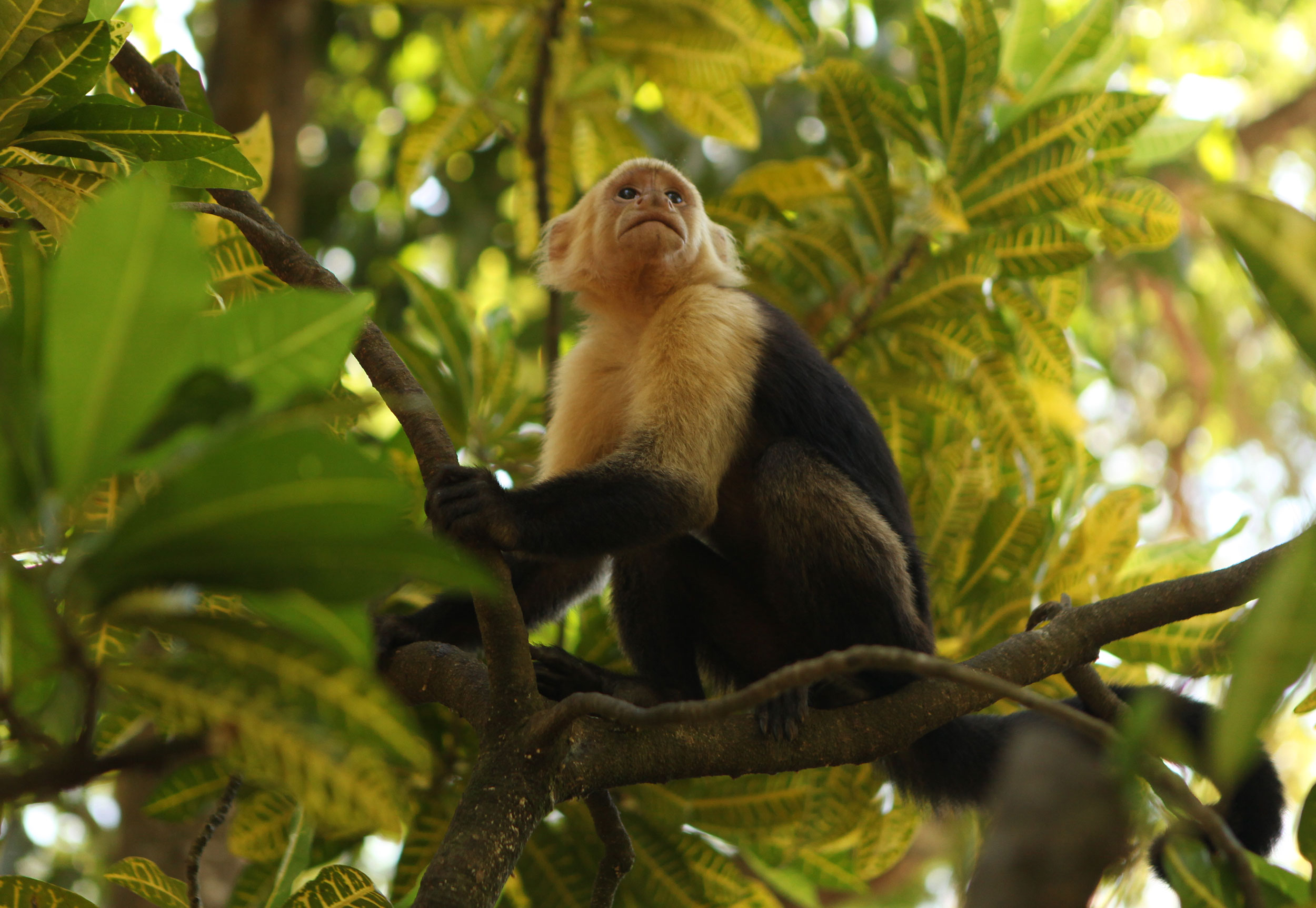
Montezuma may not have the wildlife of Monteverde but it can still surprise you. Here, a White-faced monkey looks to steal any food it can from tourists. These little bastards are everywhere, and while tourists may ooo and aww over their cuteness, we are sure locals perceive them the way Americans do raccoon, a nuisance to be dealt with. Photo: Alex Washburn
Life on the road
Posted on December 16, 2013
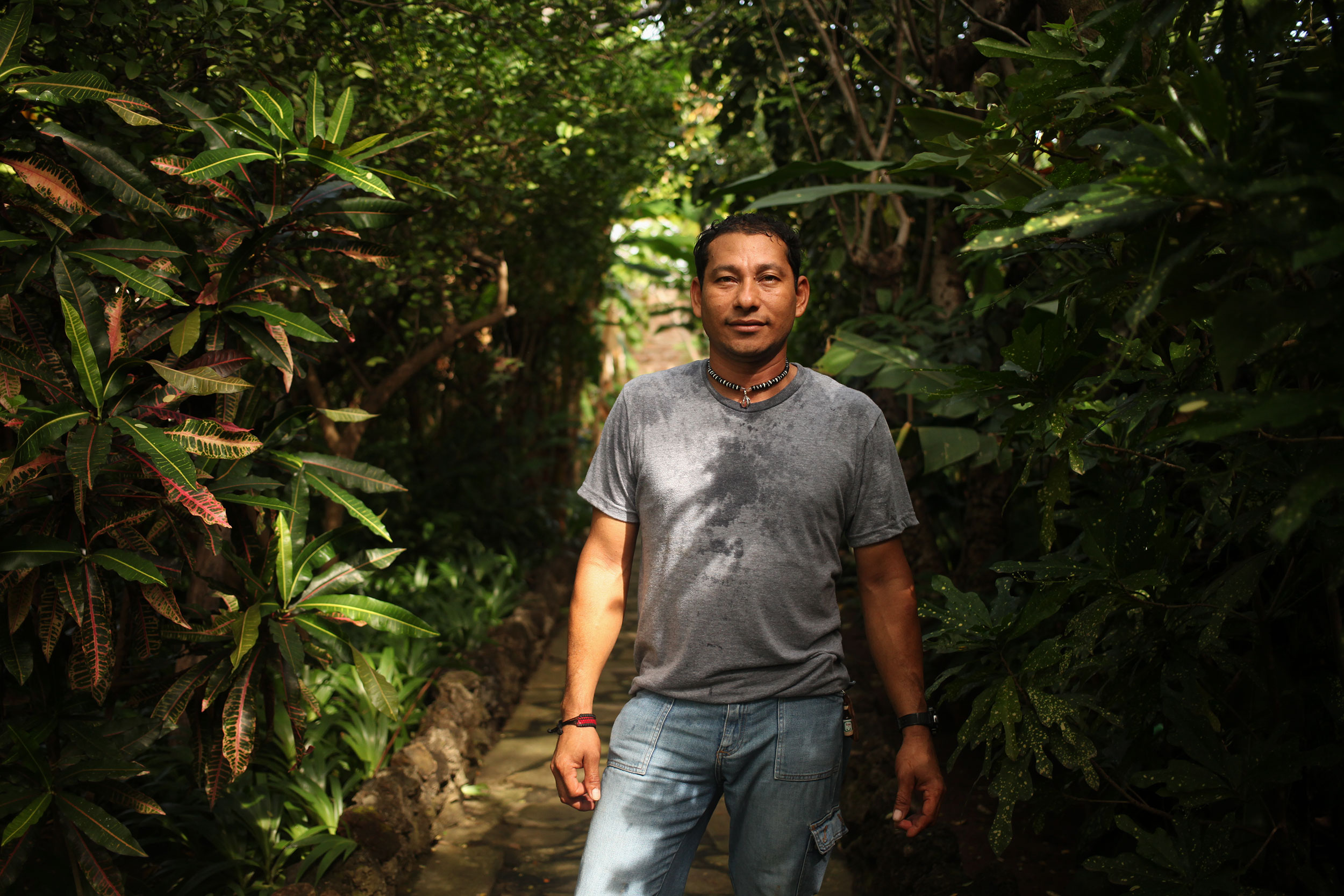
Giovanni the Handyman at our hotel poses for a portrait before we leave. Photo: Alex Washburn
With only a few days left in Nicaragua, Alex and I were reviewing the timeline before we battled our way through another border and on into Costa Rica. We decided that we wanted to spend a half day in Granada before moving on to the border.
Granada is a lake town that sits on the edge of Lago Nicaragua, with views of Concepción Volcan in the distance. We would have pictures of all of this, but there was another unfortunate motorcycle hiccup. As we pulled the motorcycles into our hotel in Granada (Hotel Casa Barcelona, a hotel that promotes jobs for local women to become independent bread winners) Alex felt/heard a snapping sensation in her clutch cable, lo and behold we could see that of the nine or ten strands of cable, all but three had snapped.
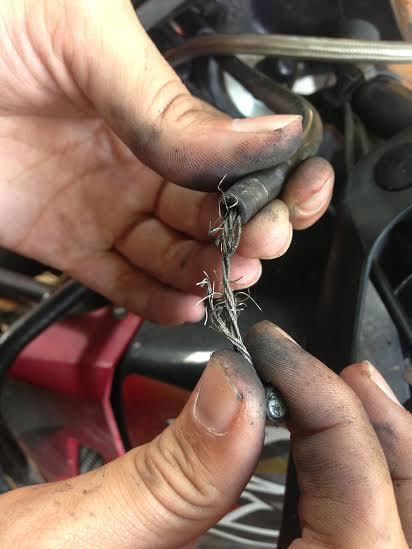
Alex shows off the damage after pulling the frayed clutch cable out of her bike. Photo: Alex Washburn
Before I could protest, Alex was out of the hotel lobby and into the courtyard, borrowing a pair of pliers from the hotel handyman (Giovanni, he will be in the story later) and beginning to rip into the clutch lever. The only conversation we had on the subject, was whether we thought the bike could make it in its current state to the shop we are going to in Costa Rica. Upon further review we both decided it would be foolish to continue without some sort of repair.
In about thirty minutes we had dissembled the clutch lever and removed the clutch cable. Alex held it out to the two handymen that were working on staining a table in the courtyard where our bikes were. Giovanni came over to inspect the cable, and Alex asked where we might be able to obtain another one.
By now it was 4:00, and the main concern was that if we didn’t find a replacement, most of the shops would not be open on Sunday and it might mean a delay of several days to get it repaired. Giovanni said he knew of a shop and suddenly we were in his car racing through Granada.
It was at this time that the sky’s let loose the rain they has been threatening all day and monsoon style downpour drenched the tiny town as Alex and Giovanni sprinted into the shop. The full cable assemblies they had in stock were too short by only a couple of inches, so we ended up getting a long replacement cable to feed into the tubing of the original.
Back to the hotel we went, the rain went just as quickly as it came, and though the bikes were wet, it didn’t slow the installation. Giovanni provided a helping hand in getting the new cable threaded and hooking the clutch lever back up. Next we needed to attach it to the motor. Here we ran into some problems because the washer and bolt that came with the replacement cable were too big to fit into the housing on the motor.
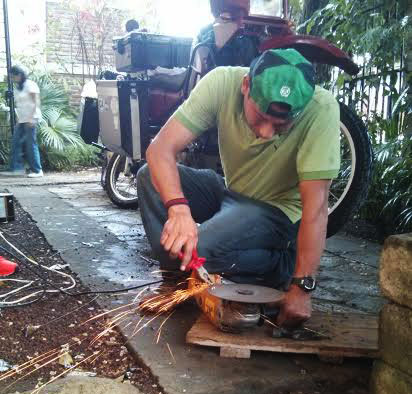
Giovanni shapes the nut to cap the end of Alex’s new clutch cable. Photo: Nathaniel Chaney
Also, as in Honduras, when we needed help, the right people seemed to show up. We are grateful that Giovanni was so willing to help two strangers and are still amazed at the kindness of strangers here in Central America.
The following day came early and it was time to see if the cable would hold and what the border had in store for us. The border crossing wasn’t the worst in terms of harassment, but was the most extensive in paperwork and general futility. All told it took five hours.
Nicaragua had the most amount of work to exit a country yet. Most countries are glad to let you go with a stamp and some well wishes as you become the next country’s problem. However, Nicaragua required we have an official (who is wandering around the immigration area) inspect the bikes, then we had to get a stamp from a second of official in a booth, before tracking down a police officer (who also is just wandering around) to sign our forms. It took two hours just to get all the paperwork filled out and signed just to exit Nicaragua. For comparison, exiting Honduras took all of twenty minutes.
Next it was on to Costa Rica. Instead of describing the whole procedure, we have drawn this diagram:
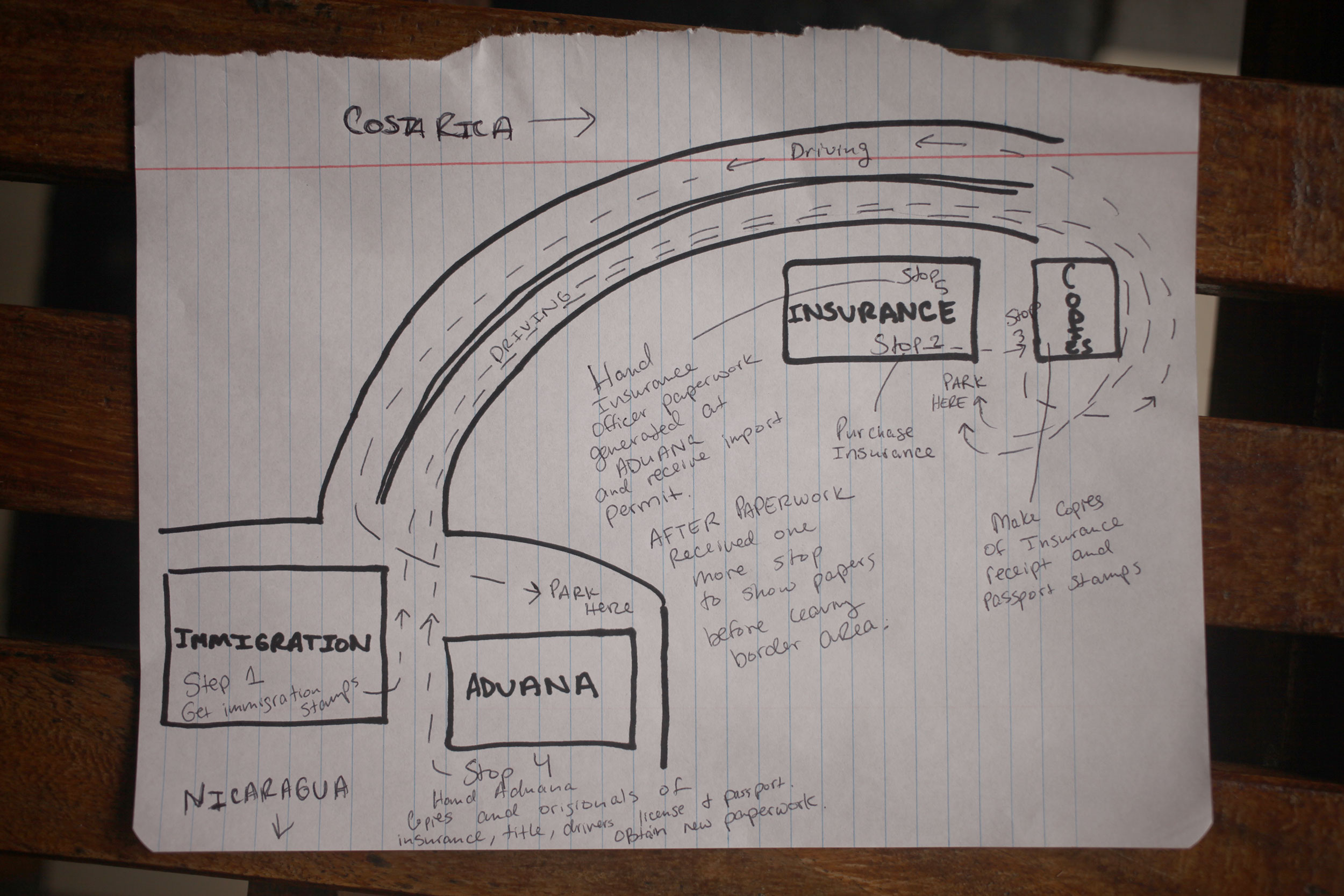
Here is our 5 step process to get into Costa Rica. Photo: Alex Washburn
After five hours of border crossing hi jinks, which included the insurance agency typing Alex’s VIN wrong three times, we made it into the countryside and all the way to Liberia Canton for a victory dinner. Country number seven is ours for the taking, and we are off to San Jose for our appointment to have some much needed maintenance done to the bikes.
Motociclistas Sin Fronteras
Posted on December 4, 2013
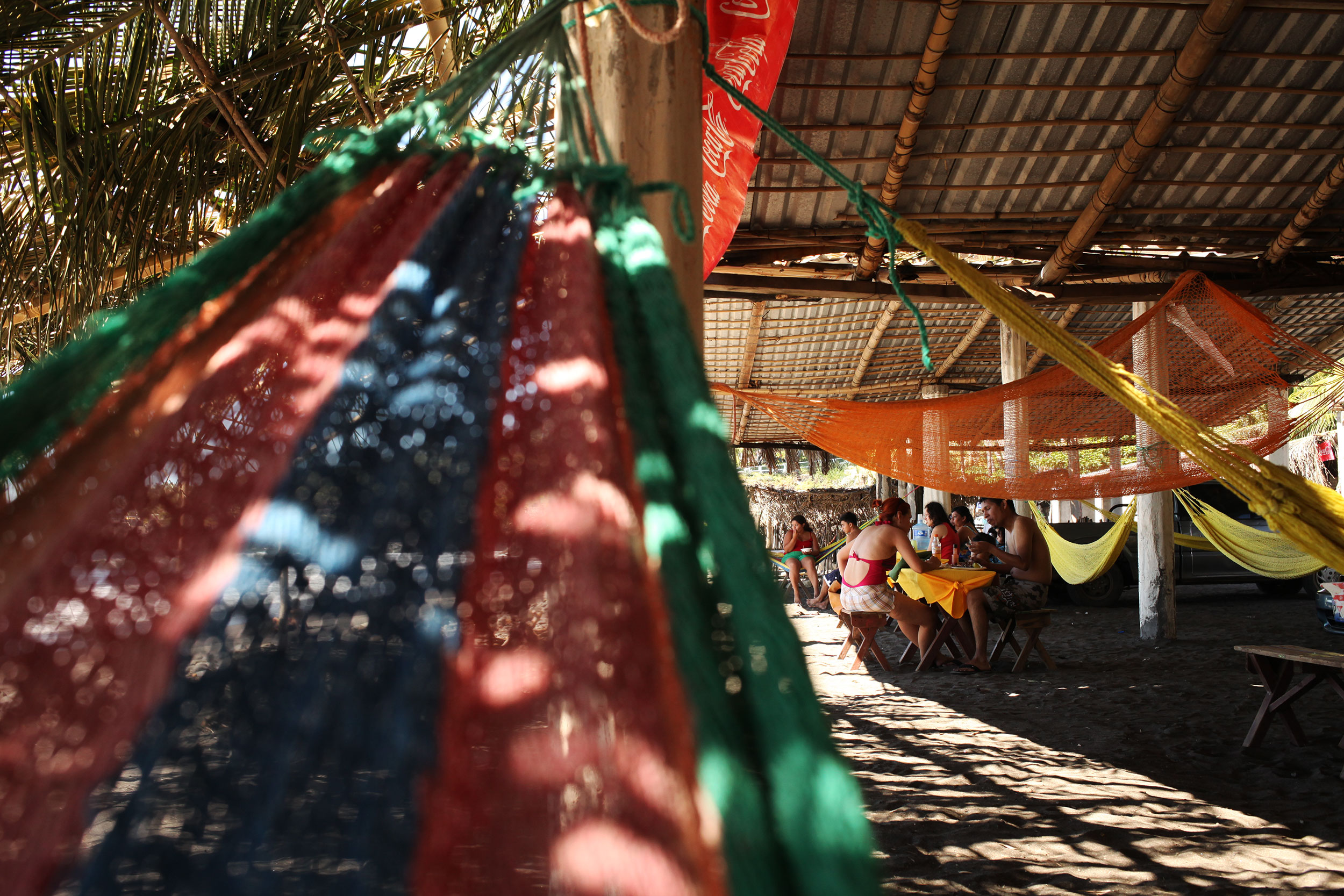
Families relax near the beach in Sunzal El Salvador. Photo: Alex Washburn
The days since we left Antigua have been intense and it’s going to be hard for me to focus on the key events so bear with me. We usually attempt to focus our blogs on a collection of days that are related but the past week has been a total hodge podg of experiences.
Also, my brain has been hyper-focused on trip related issues so I don’t have very many photos from the past few days.
After Antigua we cruised south to a small town closer to the border called Chiquimulila. We stayed one night there before hitting the road for the El Salvador border, however I was not mentally prepared to deal with the ‘fixers’.
In our previous border crossings people haven’t been annoyingly persistent in their attempts to solicit us and it lulled me into believing all people would be so agreeable.
As we approached the El Salvadorian border we saw the first of the trucks. Central American countries have few crossings where the semis can get through and the line of rumbling smoking beasts can stretch for miles leading up to a border. As a motorcyclist or regular car you should just go around them if there is space. They aren’t dealing with the same officials or paperwork as tourists so you aren’t ‘cutting’ anybody.
As we approached the first trucks we swung ourselves into the opposite lane and kept going as a collection of guys with scooters tried to flag us down near the end of the line.
Four men on two scooters then proceeded to follow us weaving in and out of the trucks and trying to motion us through the trucks for the next several miles (see video).
It can get pretty overwhelming to be honest and as Nathaniel and I arrived to the custom office and began parking I totally lost my temper and screamed at them. I’m not fluent enough in Spanish for cursing to happen as an accident (I did not curse at them), but I definitely didn’t plan to yell at them.
I DON’T NEED YOUR HELP. LEAVE ME ALONE.
One of them men jumped backwards and seemed really surprised at my outburst while his partner trailed us for another 10 minutes before finally giving up.
Without any hiccups the crossing took about two hours. It was mostly boring and hot, though not very difficult, although I sometimes get mentally tired constantly dealing with official documents in Spanish.
Something very important about crossing borders with a vehicle in Latin America is that you need originals of your passport, drivers license, title, registration and several copies of all of them before you even think about visiting Aduana (customs).
We left the border and made for Sunzal El Salvador. The coastal road to get there was equal to many sections of Highway 1 in California and we found a place to stay a few hundred feet from the beach for $20 a night, we have now driven from the Pacific Ocean to the Caribbean and back!
We only arrived about an hour before sundown so I asked Nathaniel if we could crash for two nights in Sunzal as the idea of two border crossings in two days (we were on a mission to get to Honduras) made my head hurt.
We spent a very lazy day in Sunzal eating fish papusas, Nathaniel swimming in the ocean (he is Aquaman), and laying on hammocks before getting up early and heading out for the next border. Because of some ATM issues (sometimes finding money in Latin America can be difficult when your off the beaten path) we couldn’t cross the border December 2nd as intended and had to stay in a border town called Santa Rosa de Lima.
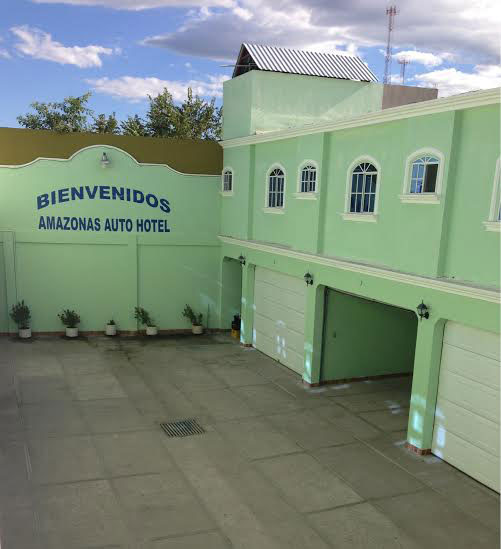
A closed garage door means a room is Occupied. Photo: Alex Washburn
I asked the man how much per night and was okay with the $35 price tag because it meant our bikes would be totally safe for the night as there weren’t any real other viable options in this border town. Once we went up to our room we realized we had accidentally booked ourselves into an infamous ‘Love Hotel‘.
A Love Hotel is basically a place where you can pull your car into a garage, close the door, pay for the room (3 hour minimum) and leave all without ever talking to someone face to face. You pay in cash and they don’t ask for your name.
The room was actually really clean (cleaner than most), but had some very bizarre features that a regular hotel would never have. For starters – they pipe in music and although you can control the volume you can’t quite turn it off. Secondly high up of the wall was an automated air freshener that sprayed the room with sickly flower smell every 15 minutes.
The entire situation was comical but the hotel its self was secure and clean which is why we were able to push the ick-factor out of our minds and hunkerdown with cheeseburgers and an CSI marathon for the night. On CSI commercial breaks I would occasionally go to the window to keep track of the hotel’s turnover rate by counting closed garage doors.
Once again the next morning we zipped up our riding suits (still giggling about the hotel) and put our sights on the next border.
For the El Salvador – Honduras border we had our game faces on.
It’s supposed to be the most grueling Kafkaesque border crossing in all of Central America. We knew it could take a few hours, but we had to be prepared for it to take all day.
We checked multiple sources for information on what we needed before crossing and we found a BRILLIANT post on RideDot (Link) that had a step by step breakdown of the process.
As we approached the fixers quickly surrounded us and I gave them the silent treatment for a few minutes before turning to the most annoying of them and in my best pure-bitch-dehumanizing voice told him:
I’m not going to talk to you. I speak Spanish. I don’t need your help.
And they left us alone pretty quickly.
I hate being rude to people, but I had learned the crossing before that a hundred ‘no thank yous’ won’t go as far as one very direct and angry message.
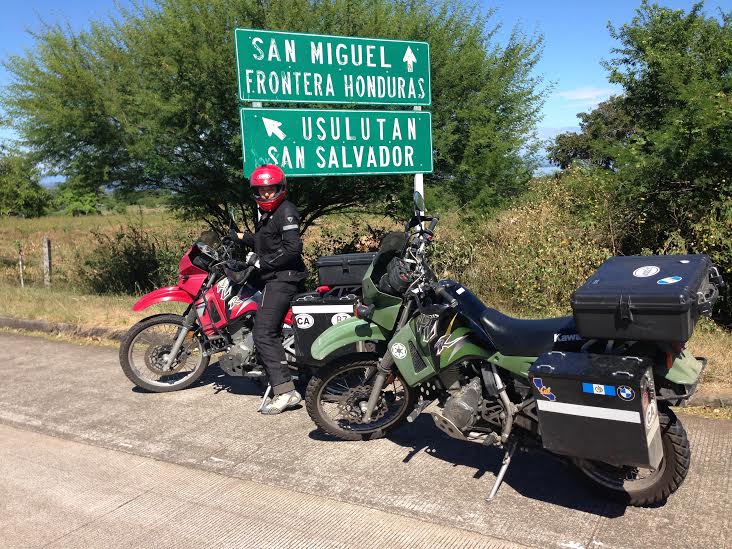
Alex poses next to a sign showing we are close to the Honduran border. Photo: Nathaniel Chaney
We are now in the Honduran capitol of Tegucigalpa and plan on leaving for Leon Nicaragua in a few days.
Thank you for sticking with me through this post – I know it was a little all over the place.
Big Pictures – Guatemala
Posted on November 24, 2013
(We are constantly trying to think of ways to tell our story without just giving our readers an elongated blow by blow of our trip in every single post. This post is going to summarize the last few days with photos and extended cutlines – enjoy!)
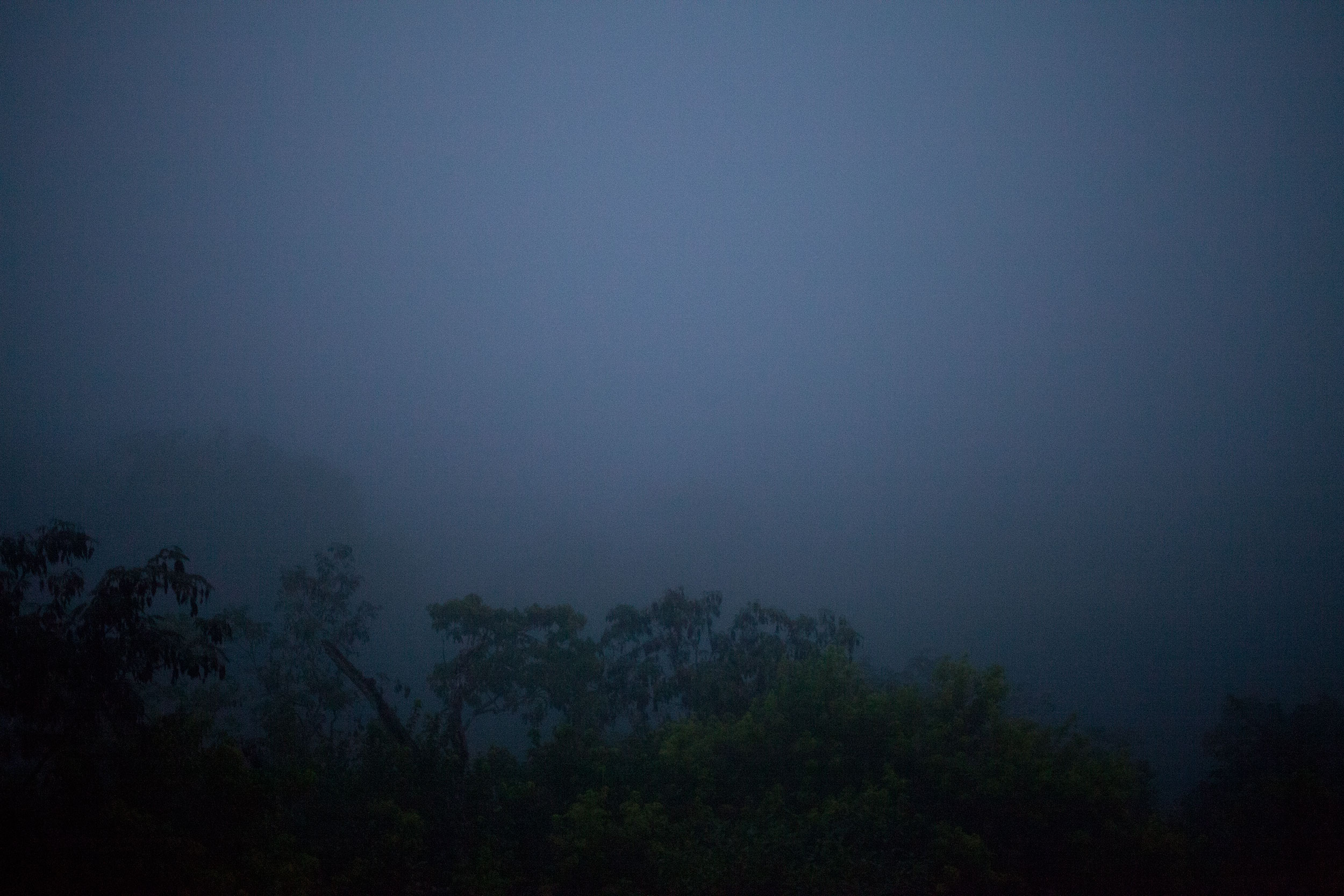
The border crossing from Belize to Guatemala took about two hours because we sought shelter in the Aduana office from a rainstorm but it should have taken only 45 minutes. We immediately left for Tikal National Park from the border and arrived to our hotel at 5:30pm. Should you ever go to Tikal we recommend the 4am hike to Temple 4. As the darkness starts to lift your view from the top of the pyramid goes from pitch black to grey (seen here) and just the tops of the trees are visible as the howler monkeys and birds start their morning. Sitting on the top of a 1,271 year old pyramid hearing the forest come alive is one of my favorite travel experiences to date – made more poignant by my realization that the sounds we were enjoying have existed far longer than the pyramid. This photo represents my favorite spanish word – ‘Madrugada’ The sliver of time between night and day. Photo: Alex Washburn
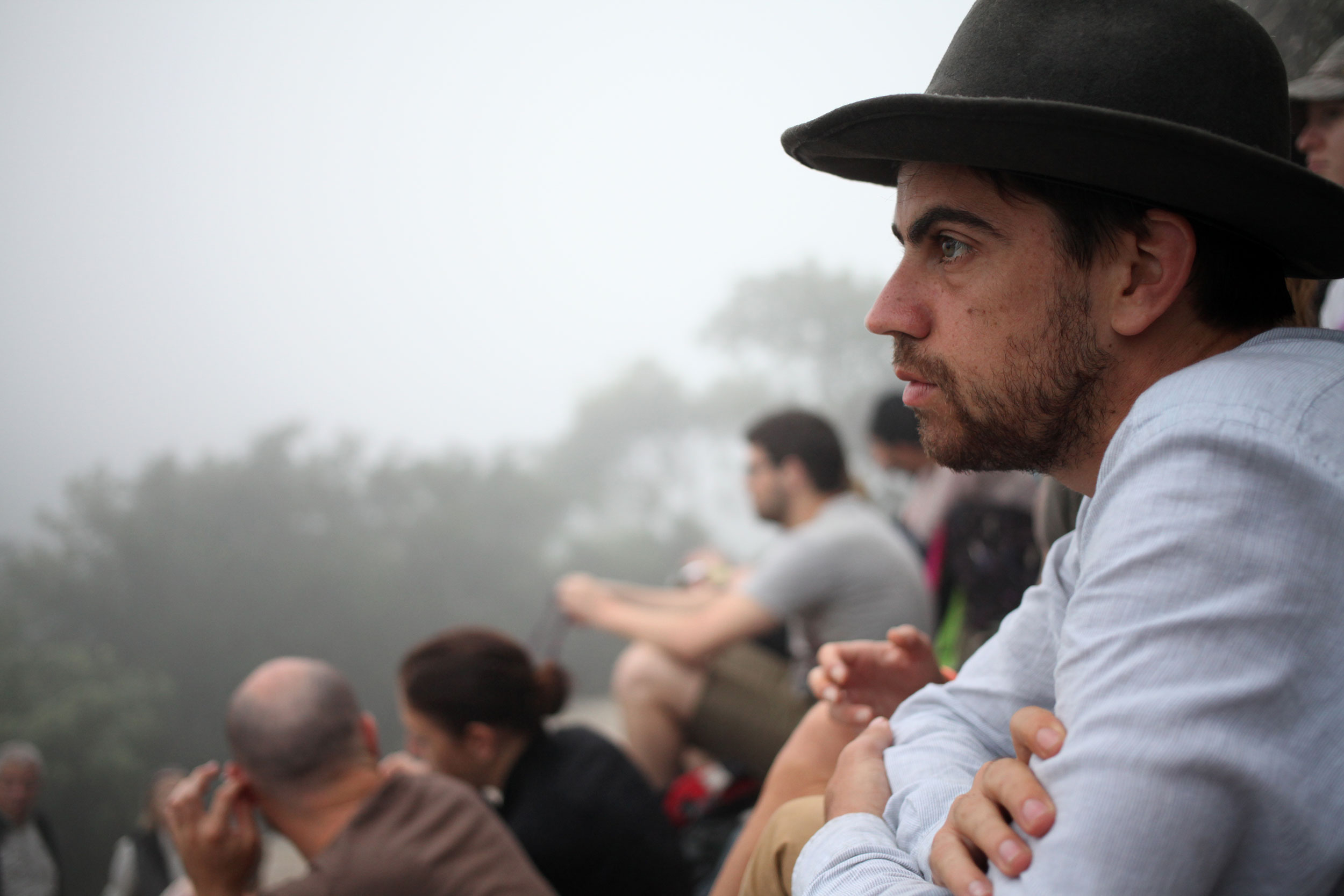
A tourist channeling Indiana Jones looks out across Tikal National Park from the top of Temple 4 just after sunrise. The moments where the tourists could collectively refrain from fidgeting were remarkable. Photo: Alex Washburn

Our tour guide (he wasn’t very good) leads the group towards Temple 1 in Tikal National Park. This temple was actually in one of the star wars movies and is quite famous. A benefit to going to the site so early is that there are very few other tour groups and the day hasn’t gotten unbearably hot yet. Photo: Alex Washburn
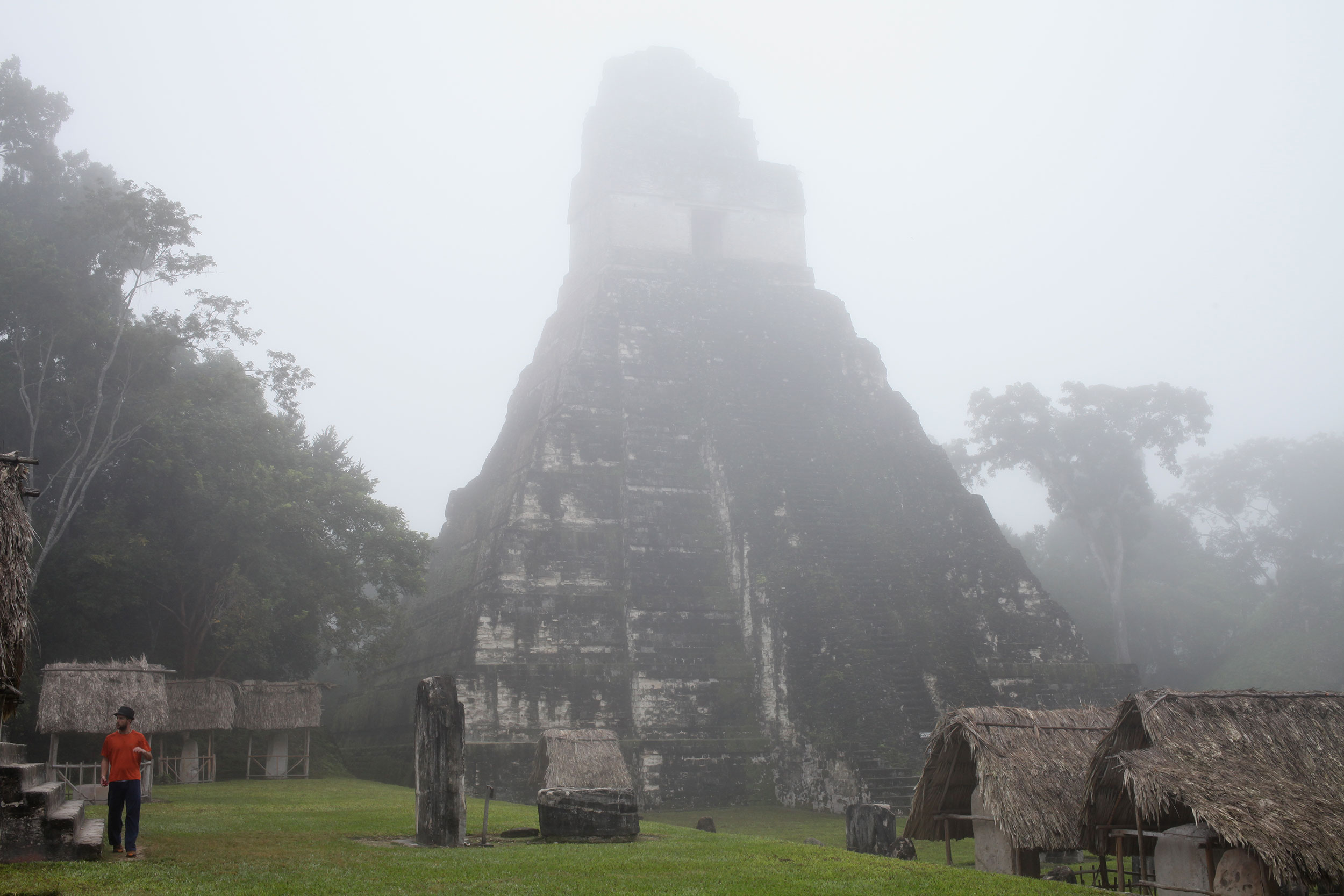
Our tour guide kept apologizing for the fog but I liked the way it looked. There is something very pleasing about walking around in it. Photo: Alex Washburn
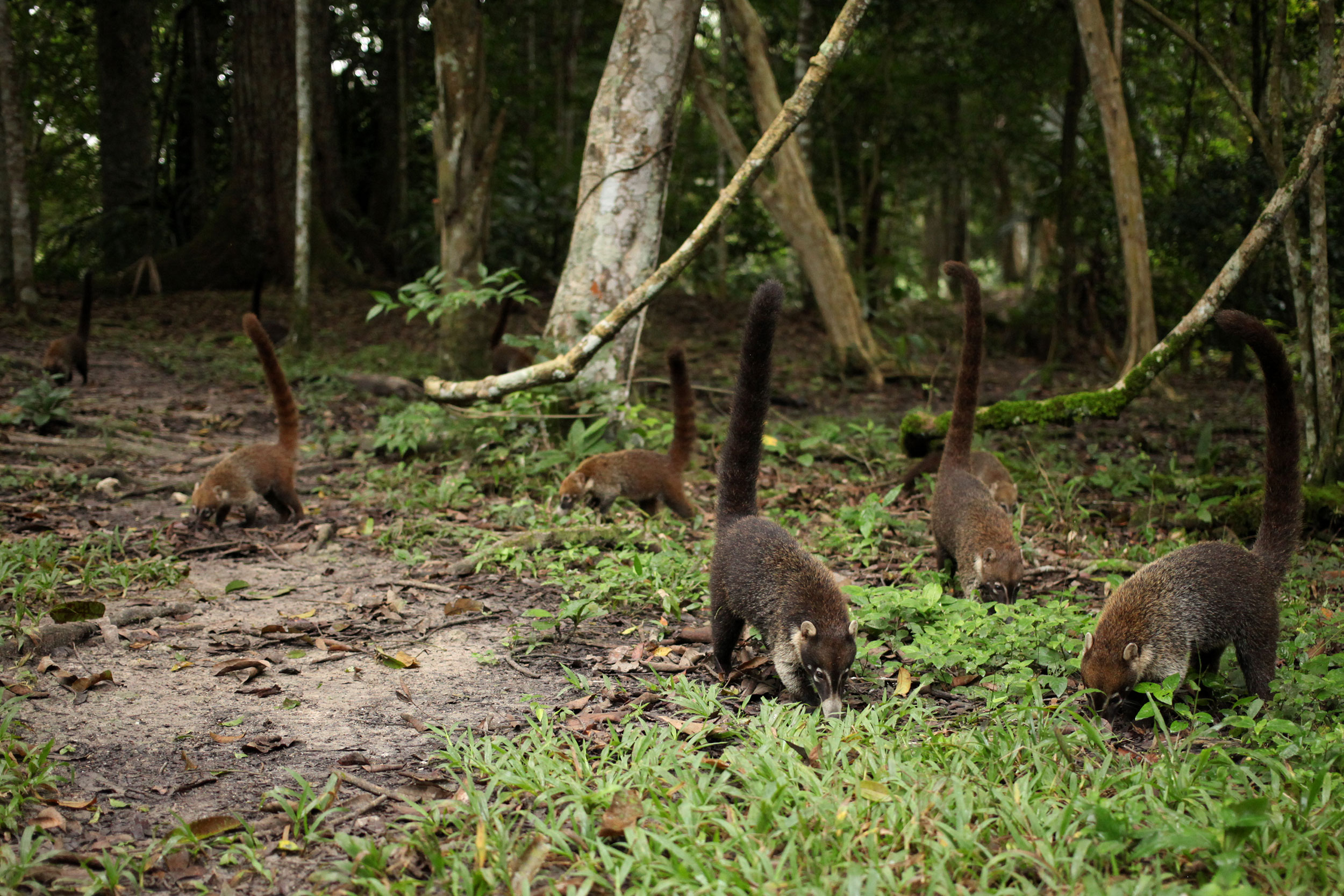
Seeing this family of Coatis was one of the best parts about staying in Tikal. This relative of the raccoon spends its day rooting around the forest floor like little pigs. I walked up to within about 15 feet of them and the older ones were totally unafraid. On their search for food they noodled within two or three feet of me. Photo: Alex Washburn
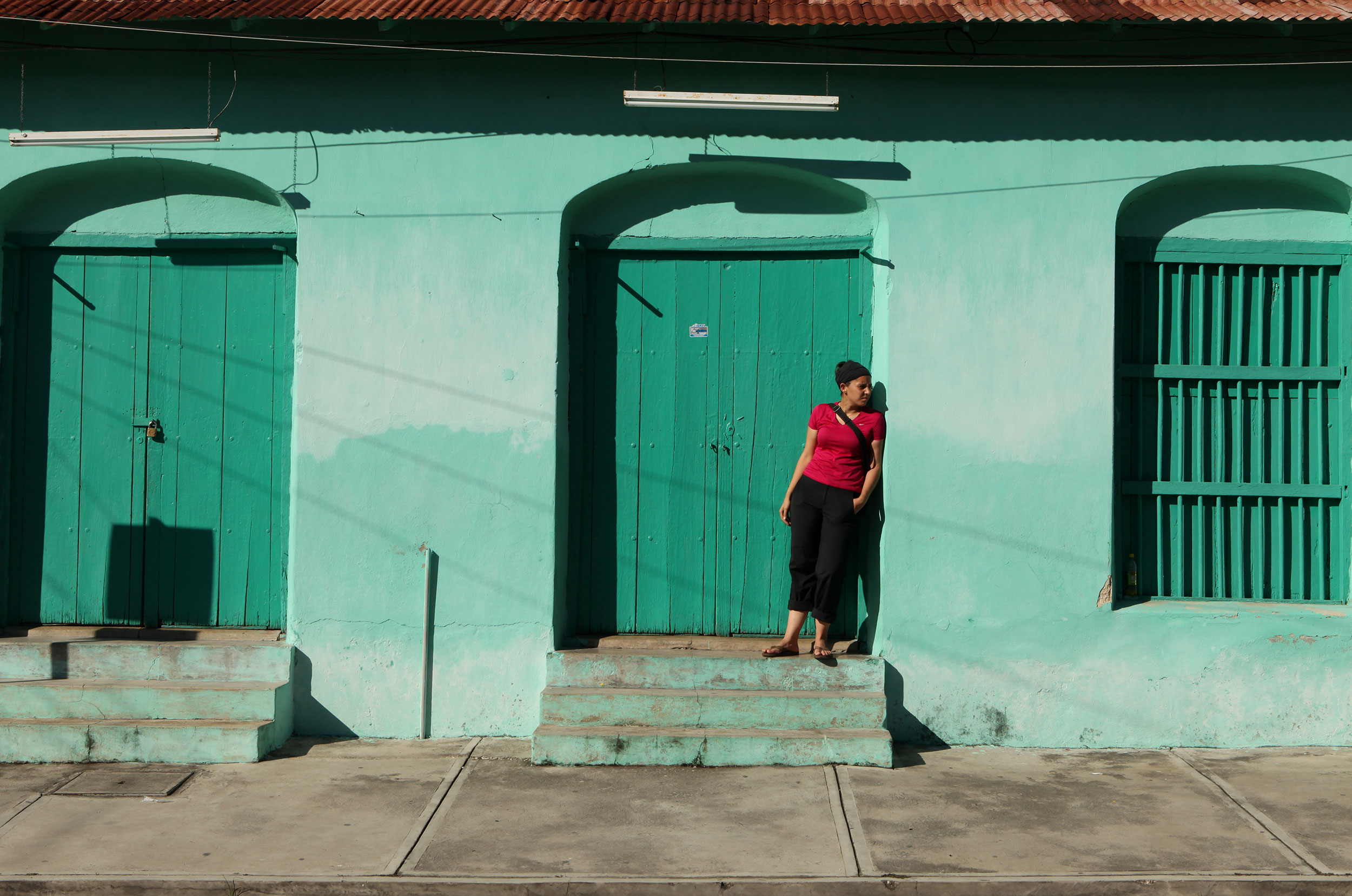
After Tikal’s dawn hike we took a quick nap and hit the road for Flores. I don’t really enjoy posing in front of monuments and things but I am a sucker for a really awesome wall. I had Nathaniel take this our first day in Flores. Photo: Nathaniel Chaney
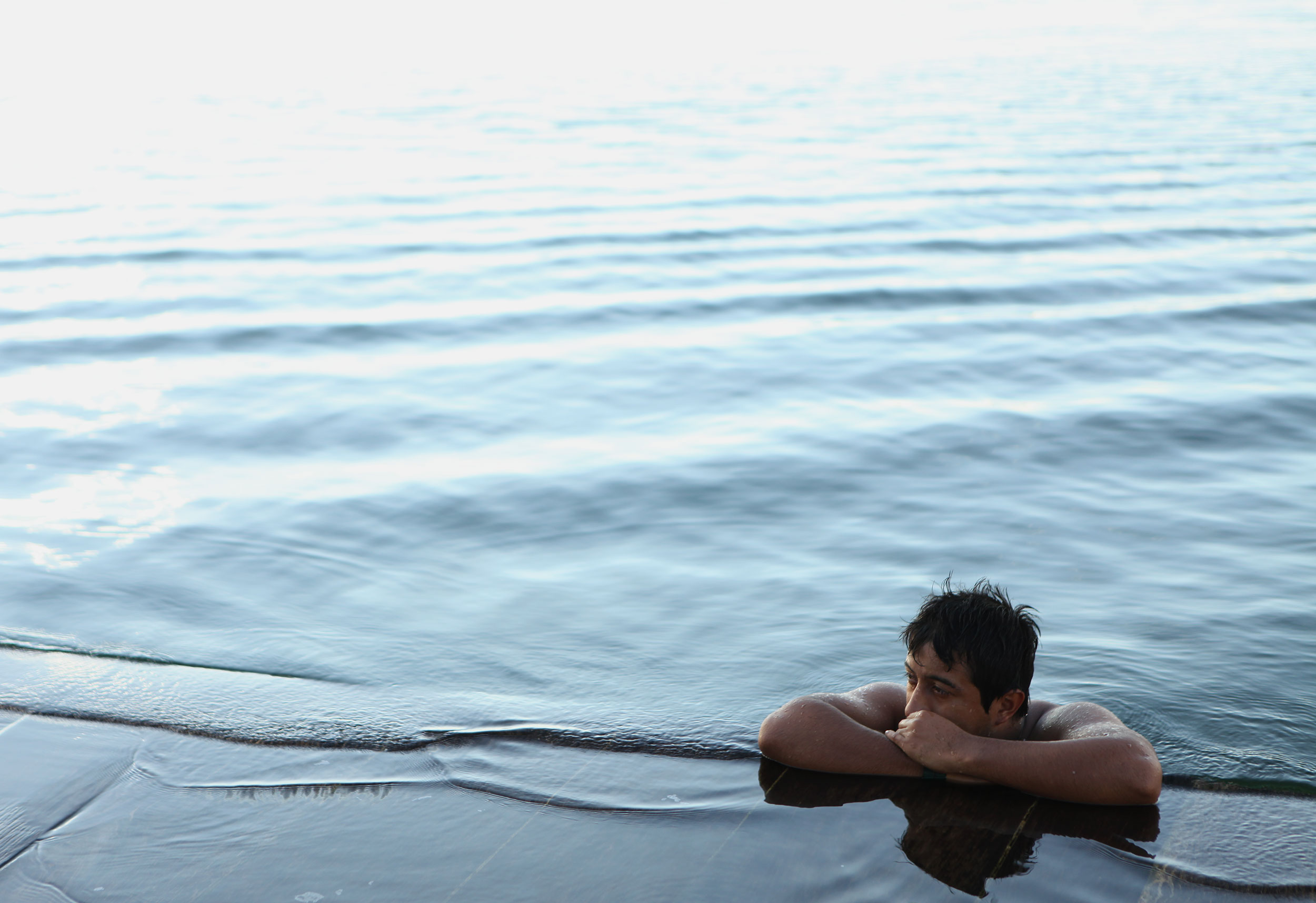
Flores Guatemala is a tiny island in the middle of Lake Peten Itza. The residents have a habit of jumping in the water at random moments – swimming for just a few minutes and then going back to whatever they were doing. This gentleman went for a really long swim and is resting for a moment while his girlfriend waits on the shore. Photo: Alex Washburn
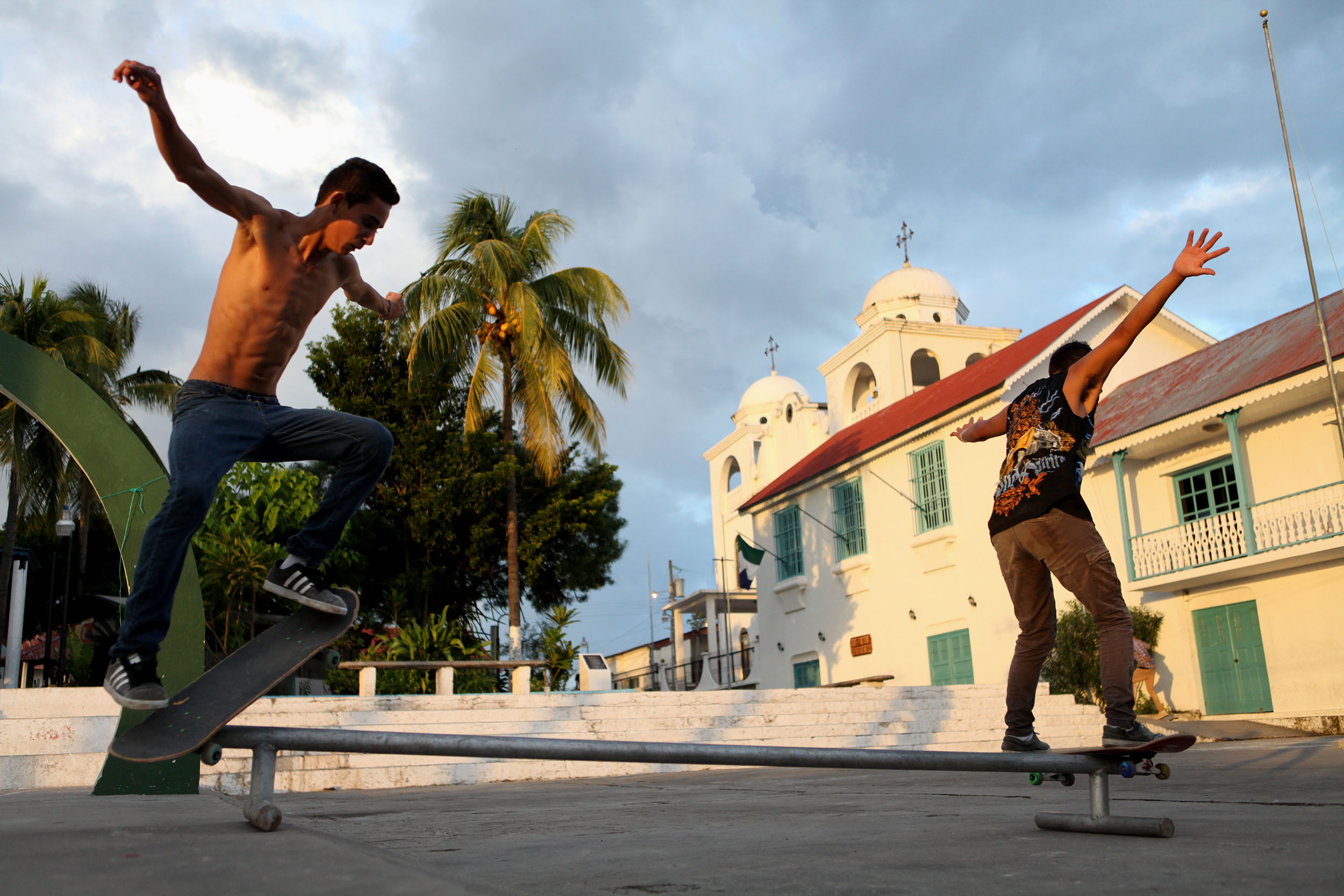
Flores is an island but it’s also basically one big hill full of one way cobblestone streets. The only place in town good for skateboarding is in the plaza at the very middle and top of the small community. The plaza has a church, basketball court and plenty of open concrete where the skateboarders have a rail to grind on. Xavier, 15, and Julio Ramirez, 17, (left to right) were some of the local kids we found hanging out there. Photo: Alex Washburn
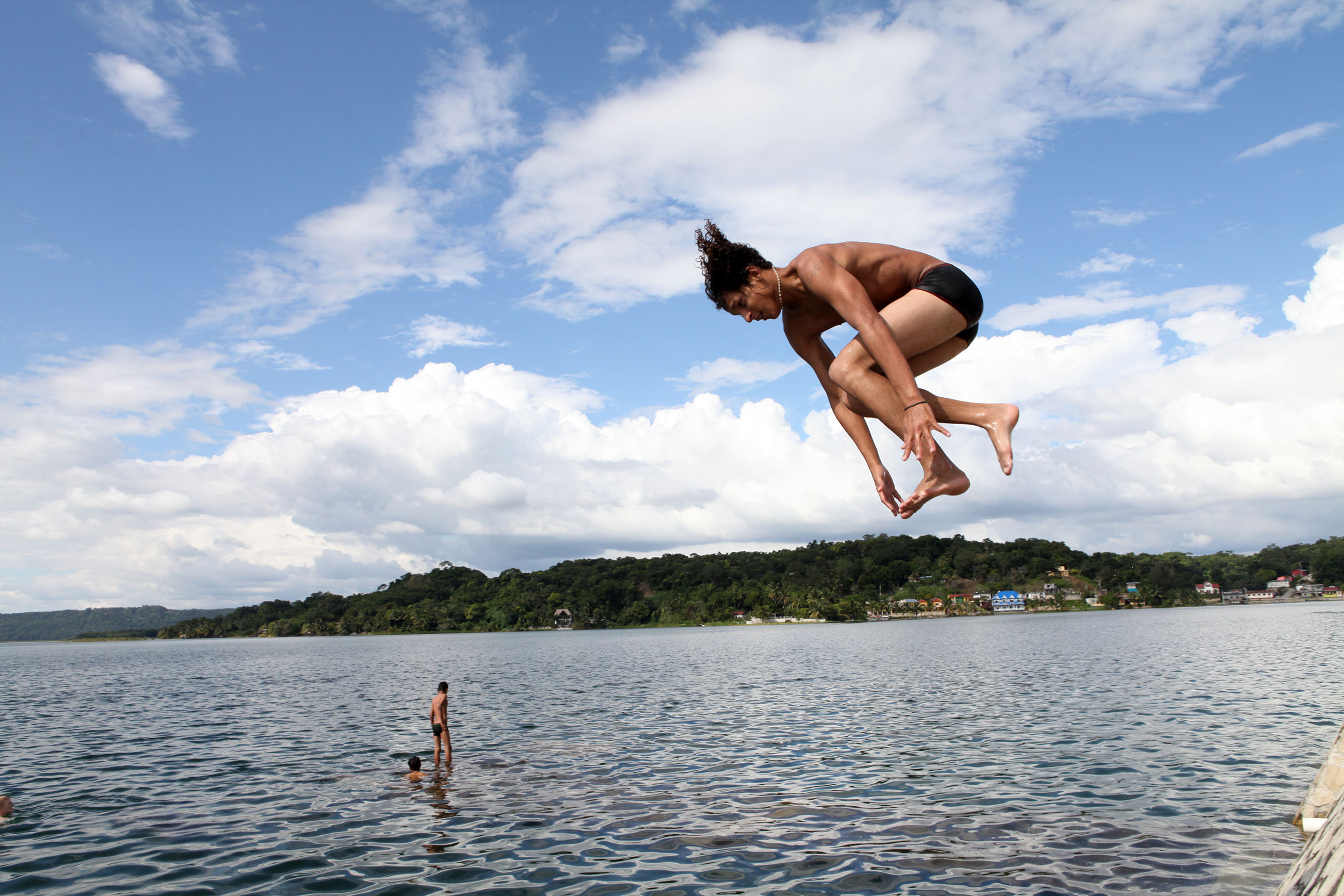
This is one of my favorite photos from Flores. Like so many men in town this kid showed up to the water, stripped into his underwear, dove and swam for about 15 minutes with a friend and then they hopped back on their scooter and left as quickly as they came. Photo: Alex Washburn
As I type this post and am about to publish it we are in the city of Coban Guatemala. Our ride here yesterday was miserable because it rained on us more or less all day. By the time we checked into our hotel we were both soaked and my hands looked like raisins. We hope to arrive to Antigua after 4-5 more hours or riding and we are both really excited for it. I went to Antigua several years ago with a friend and it is absolutely gorgeous.
Thanks for looking.
 Where the Autopista Ends