Where the Autopista Ends
Two motorcycle bloggers in the San Francisco Bay Area.
Three Roads
Posted on November 20, 2013
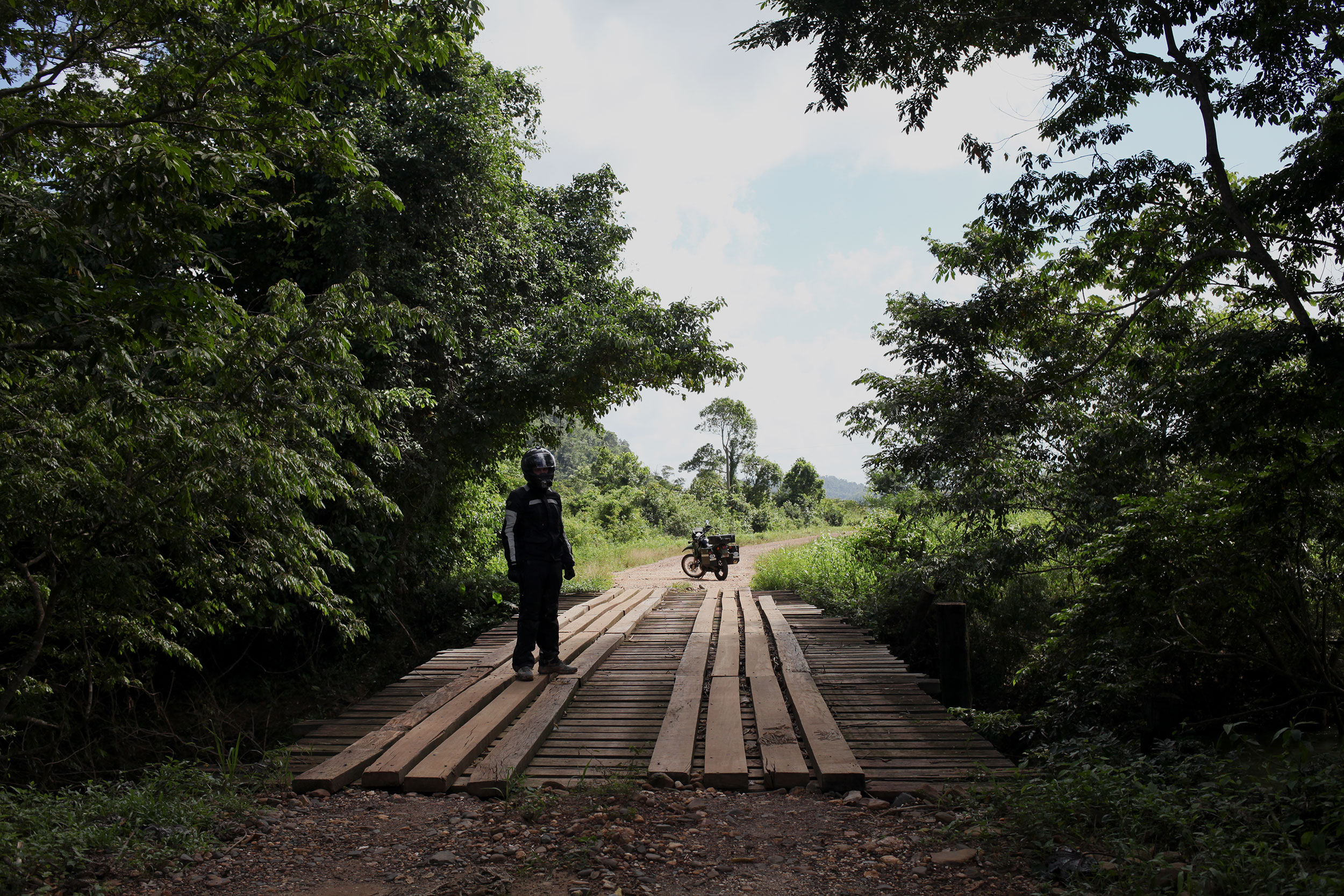
Nathaniel prepares to record me crossing a bridge along the gloriously named ‘Coastal Highway’. Photo: Alex Washburn
It is impossible to get lost driving in the country of Belize. It’s tiny – at only 8,867 square miles in size it is barely larger than the state of Massachusetts.
In addition to this; a large percentage of this tiny country’s land is still untouched and they have minimal infrastructure. This has negatives and positives for the country as a whole, but what it meant for us as we looked at a map on Sunday is that there was only one obvious route to Placencia from Belize city and really only three major roads in the whole country.
A Canadian very familiar to the country had warned us about how terrible a fourth road (the coastal highway) was but we took the warning with a grain of salt because foreigners from first world countries sometimes have a skewed perception of what a ‘bad’ road is.
Sunday morning several Belizeans at our hotel confirmed that the coastal highway (which by the way is neither coastal nor an actual highway) was a terrible road. However – when we came to the turnoff where we could take the unpaved coastal highway or continue on the road most traveled we decided to have a little adventure (video coming soon).
We were on the coastal highway for less than 10 minutes and I could feel the smile slowly spreading across my face. It was rocky, dirty, muddy bumpy and everything our Kawasaki KLRs were meant to handle when we decided they were the best bikes for the trip. It took us 2.5 hours to drive 37 miles and it was fantastic (even if I tipped over twice and got super muddy).
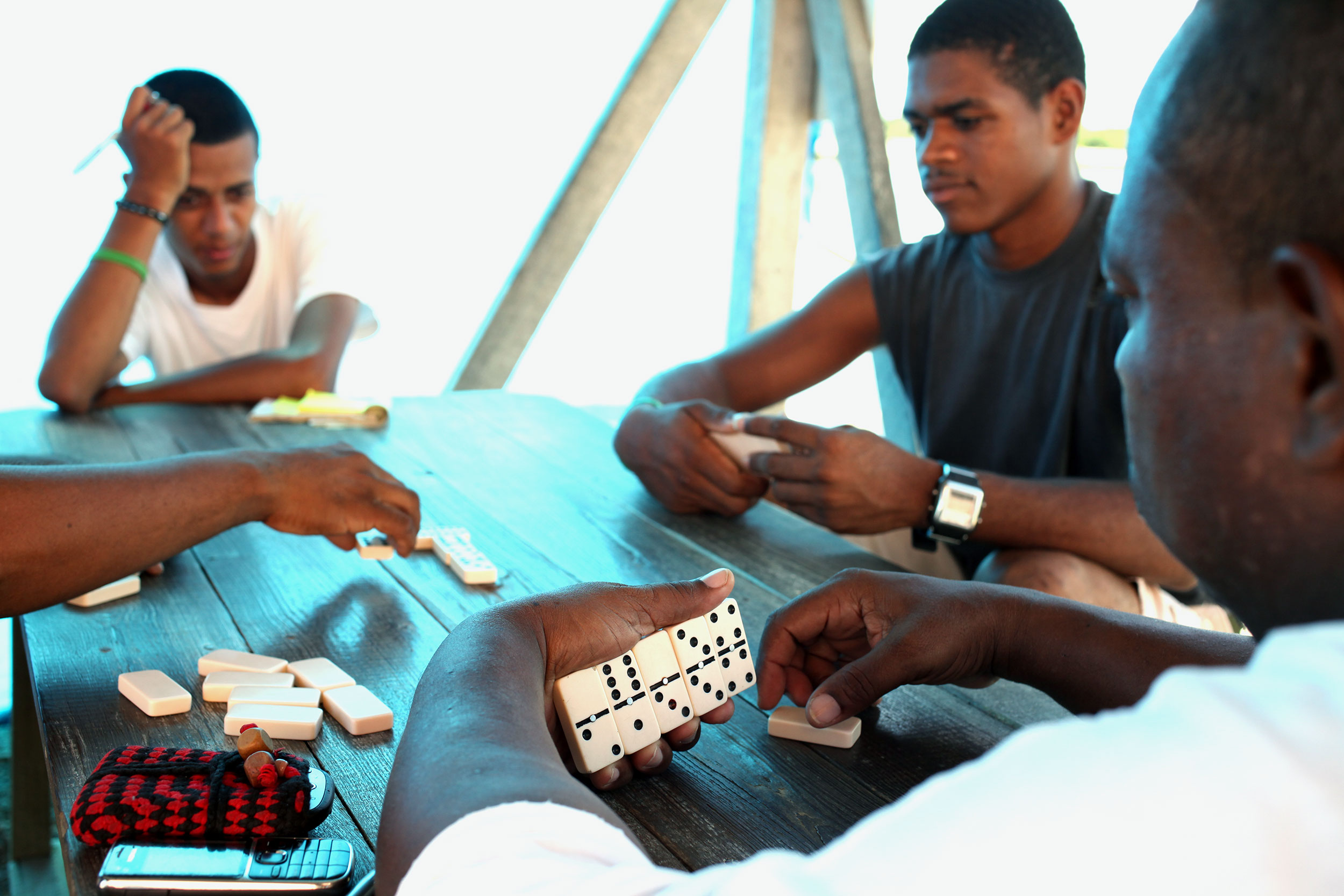
A group of locals concentrates on their game of dominos in the shade next to the only gas station in Placencia Belize. Photo: Alex Washburn
As we attempted to leave we ended up hanging out at a gas station for about twenty minutes with some of the locals. I was feeling really dehydrated and I didn’t want to start the three hour ride to San Ignacio before drinking some water so we filled up and chilled out. The taxi drivers and gas station attendants were more than happy to let us share their shade and laugh at their brisk games of dominos.
Belizeans have been super friendly towards us no matter where we’ve gone. There were a lot of homeless people and panhandlers in Belize City, but everyone we’ve met from gas station attendants to hotel clerks, fellow restaurant diners and random people on the street have been welcoming and talkative. The men at the gas station accepting our presence so quickly is just another example of this.
The ride to San Ignacio up the Hummingbird Highway was the most beautiful stretch of road we’ve come across in Belize. The hills are so overgrown with palm trees, flowers and vines they resemble the scenery in Jurassic Park. The asphault on the “highways” is generally in great condition and it isn’t until you drive through the cities that you encounter insane potholes. I have never experienced potholes like they have in Belize.
They are epic pits appearing from nowhere waiting to swallow your front tire whole. In many places swerving around one hole just dumps you right into another so it’s best to just ride straight through and try not to break your teeth as you grit through it.
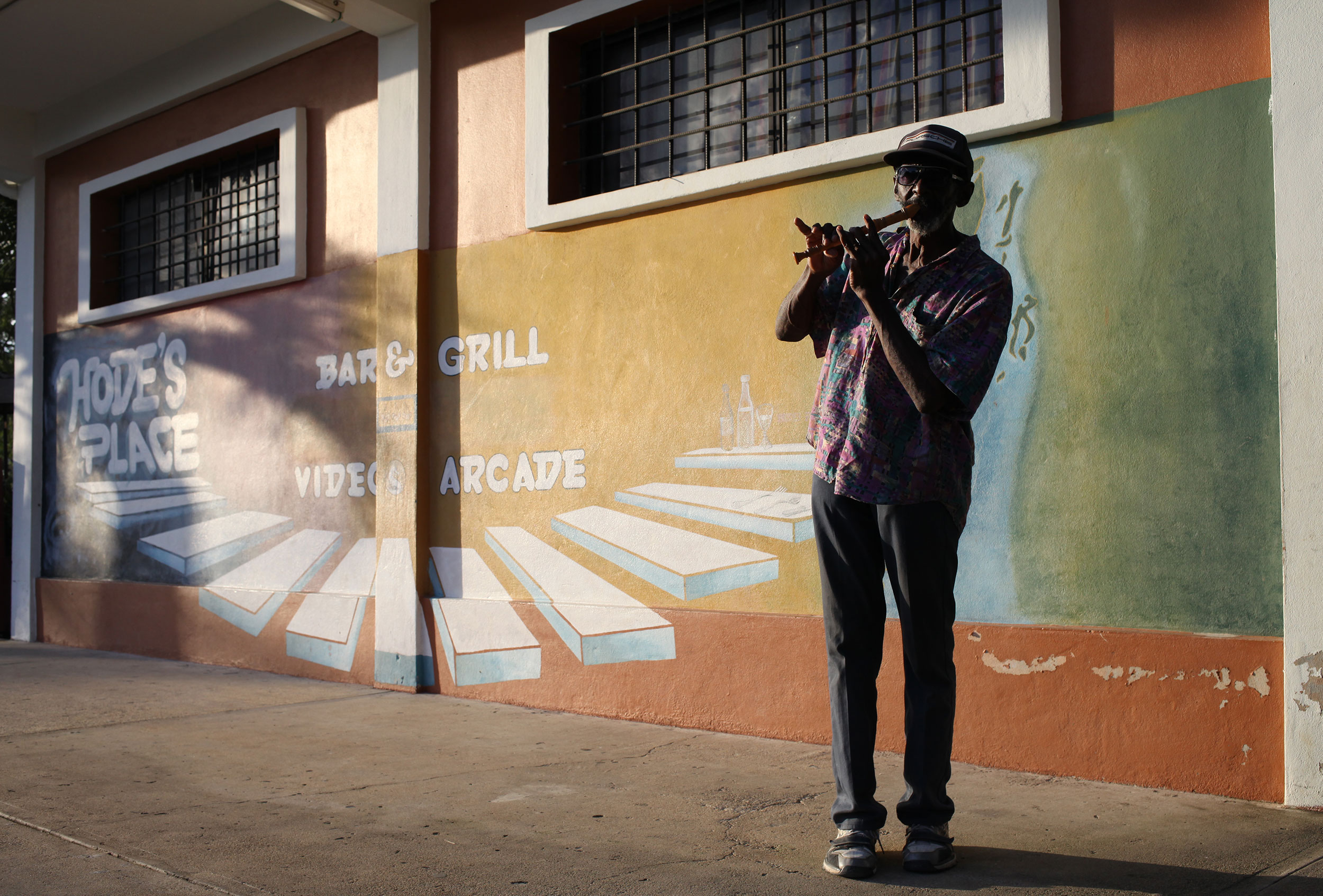
When we arrived to San Ignacio we had our first meal of the day at Hode’s where this flute player provided the soundtrack. Photo: Alex Washburn
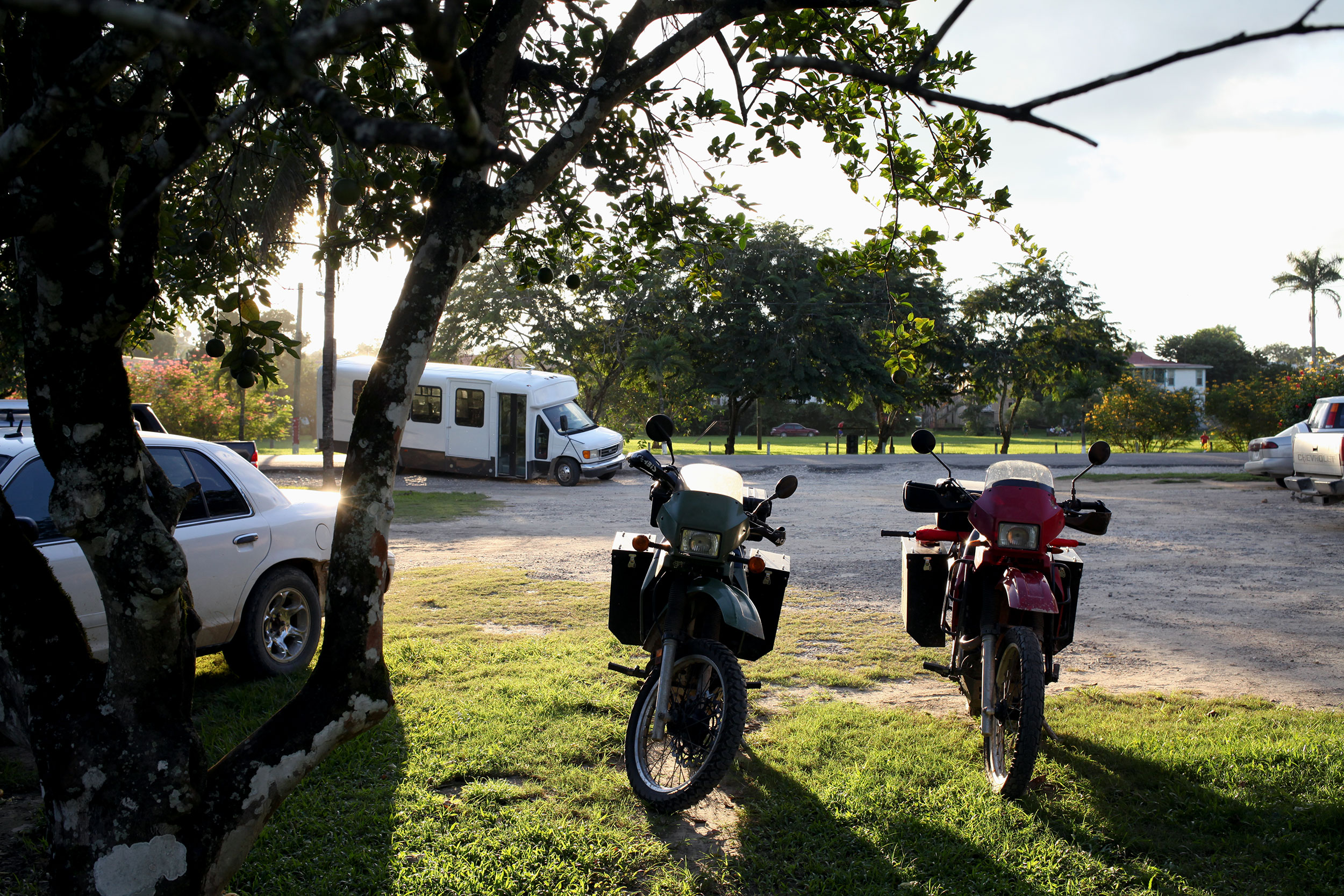
Our bikes parked in front of Hode’s restaurant in San Ignacio Belize. And yes – that is a giant red umbrella attached to my bike. Photo: Alex Washburn
We are both eager to (hopefully) cross the border into Guatemala after our appointment and continue our adventures in Spanish speaking Latin America.
RECOMMENDATION: If you are riding bikes from the US through Latin America it might be hard to get your bike serviced in Mexico depending on what you are riding. If you come to Belize – Motor Solutions in Belmopan is a well stocked shop that should be able to help you out and English is the official language of Belize which should be a relief if you don’t speak spanish.
The land of Piñas and Topes
Posted on November 7, 2013
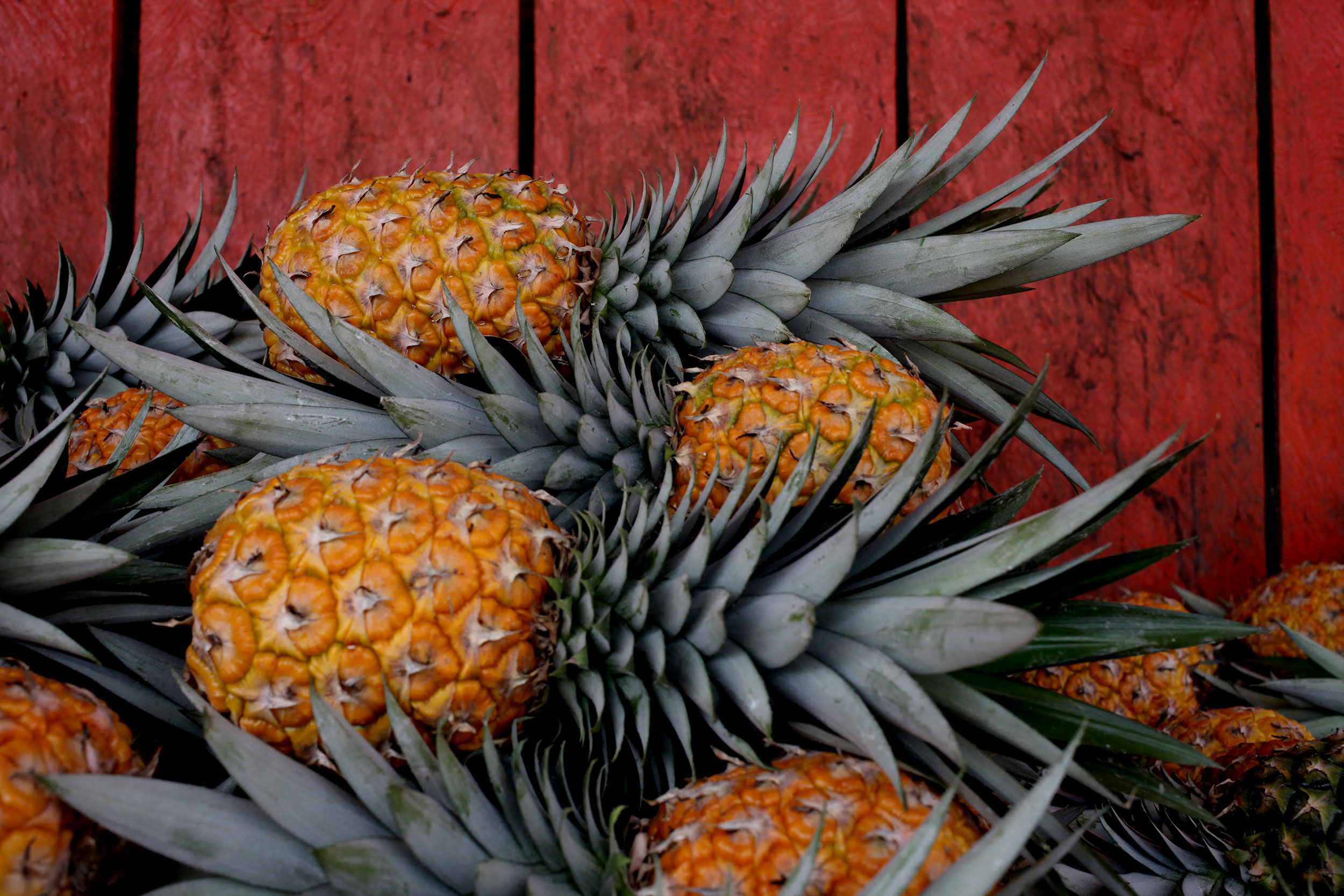
Piñas at a roadside stall just off Highway 145 in Mexico. Photo: Alex Washburn
One of the tidbits of knowledge that Ceasar (Alex’s cousin) passed onto us, well mostly for me, was that the country between Tuxtepec and Villahermosa could be considered the Land of Pineapple’s. Through Alex’s translation for me, he said something akin to “pineapples as far as the eyes can see” with a motion of the arms encompassing a wide circle.
Once we had chosen the northern road out of Oaxaca, it was predetermined for us that we would pass through the land of piñas (where you could get a bottle of fresh squeezed juice for a $1.00). Getting a later start than normal to the morning, we headed out of Tuxtepec, at fifteen miles an hour.
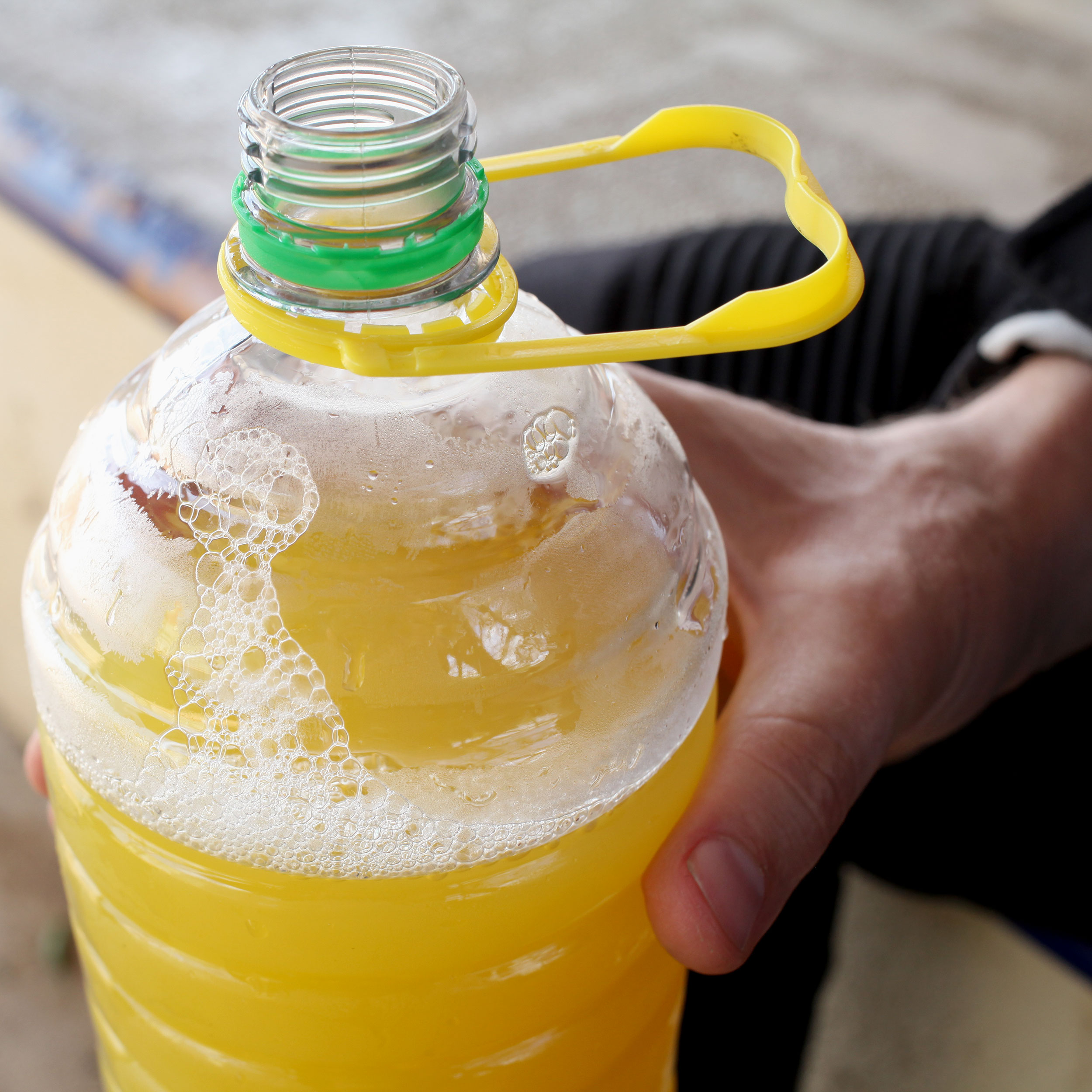
$15 pesos of Piña juice at a roadside stall off Highway 145 in Mexico. Photo: Alex Washburn
After stopping for some breakfast/lunch, Alex had me lead for a while and gave me instructions to stop at a pineapple stand that looked good. We got about fifty miles down the road, and I started sweating thinking I had missed the last one, when all of the sudden, like an oasis in the desert, a stand appeared in the distance with more pineapples than you can fathom.
Women stood in the road selling bottles of sweet, golden nectar while an older husband and wife stood in a shack on the side of the road crushing pineapples. I knew this was the place, the land of the piñas, and we pulled over, took our jackets off and picked up a bottle of fresh pineapple juice for a mere $15 pesos.
Imagine being able to stick a straw into a pineapple and drink the juice straight out of it. That is what it tasted like. Alex commented:
“You may never have pineapple juice this fresh ever again.”
It made the moment even more poignant. Sitting in the shade, the sun high in the sky and burning, the juice was as sweet and tangy as I had hoped, and it fueled us better then any Gatoraid could have (I am sure it had more sugar then two cokes together, but it was delicious).
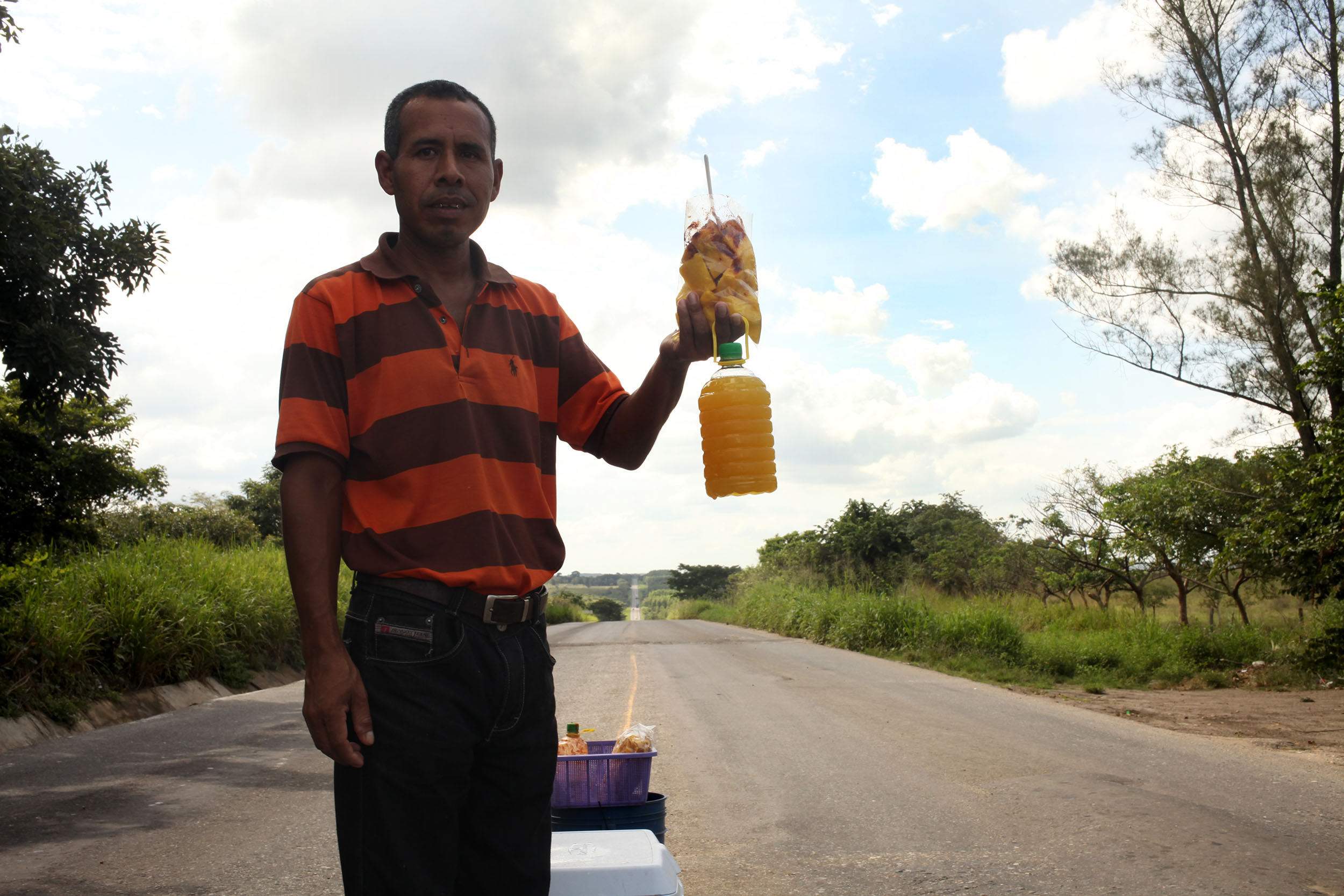
Portrait of a Piña vendor along Highway 145. They juice it, bottle it, ice it and sell it the same day. Photo: Alex Washburn
With our thirst quenched, we continued on toward our goal of Villahermosa. About fours hours into the riding of the day, the tope spotted landscape gave way to toll roads of US quality freeway status and we started to gain some distance.
We stopped for gas about an hour out of Villahermosa, and as we started to exit the Pemex (which I think are the only real gas stations in Mexico) I saw the sheen of water on the freeway. Not thinking too much of it, we both continued over it, and that is when I grasped our mistake. Alex made it across but as soon as my front tire hit the liquid, I began to skid and to my horror realized that the substance was oil.
As in all life situations where you brush against true adrenaline producing moments, time slowed down and I remember thinking clearly that I wasn’t going to be able to keep the bike up, that I was going down. The next thing I knew I was on the ground, and then I was up again, my muscles moved faster then I could think, and I was trying to lift my bike up, slipping in oil that covered a wide expanse of pavement.
It was a river.

Nathaniel does a systems check on his bike (and himself) after a car accessories vendor helped him to an oil free stretch of pavement. Photo: Alex Washburn
Luckily for me a guy came running up and offered a hand to get the bike up (Alex was able to stay upright, but couldn’t park her bike in the mess) and helped me get it over to the side of the road ahead of Alex. I thanked him as he ran off, maybe he was a guardian angel because he was gone even as quickly as he had shown up, and I assessed the damage. Other then some new scrapes to the panniers and my handle bar protecters, the bike was no worse for the wear.
Even a couple days removed, my heart still starts pumping when I think about this, but thankfully we were both going slow, and there hasn’t been any lasting damage to the bike (it fired right up once we got the situation under control). Furthermore, there was no bodily damage, I was completely protected by my equipment, I wasn’t trapped under the bike (thanks to the panniers), and the riding gear has paid off in my opinion. I now know what riding in oil is like, and I avoid substances on the road, even if they look like water just to be safe.
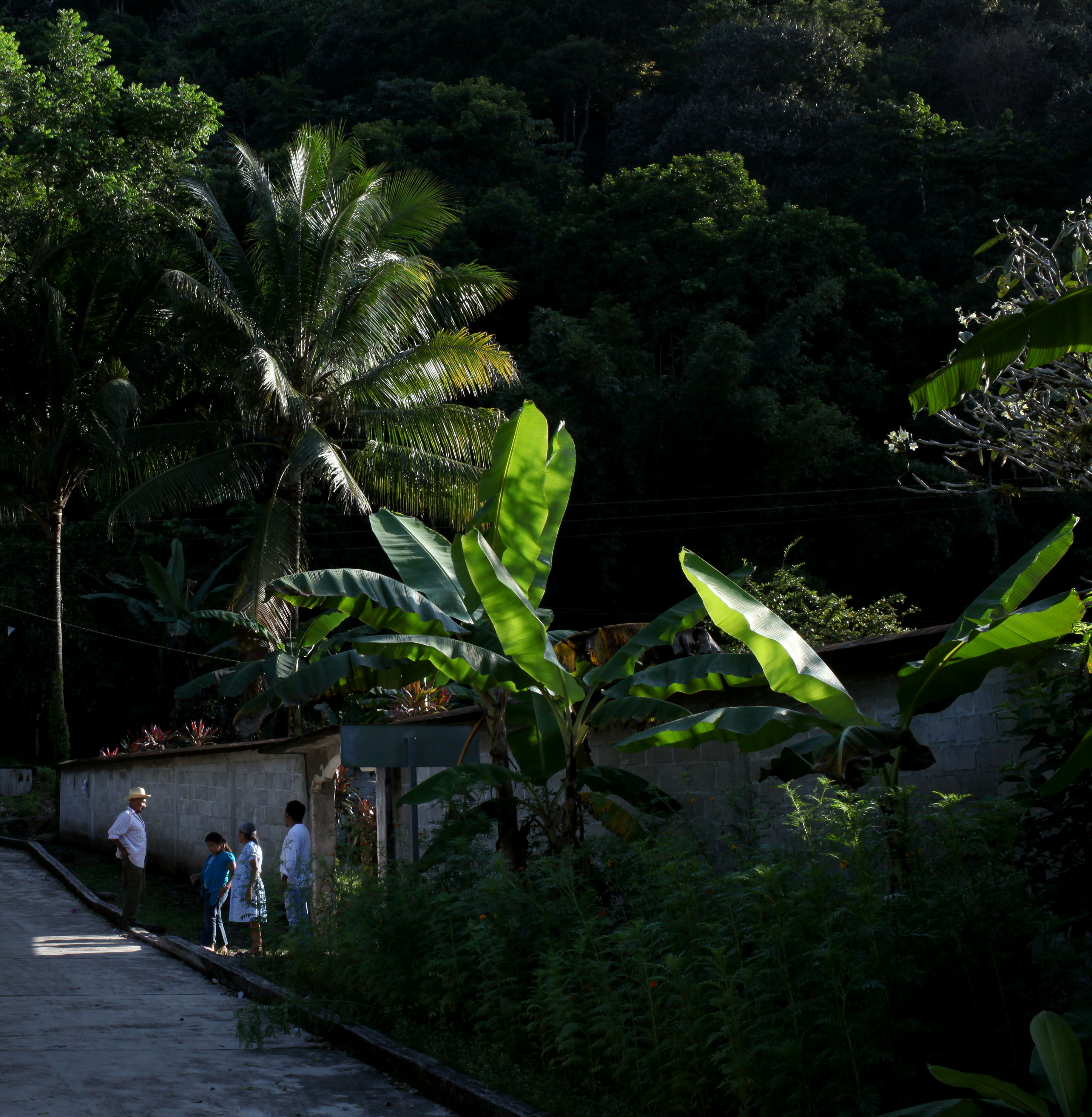
On the outskirts of San Mateo Yetla on Highway 175 out of Oaxaca. Photo: Alex Washburn
The next day was more riding, heading north, I distinctly remember getting the smell of salt in my nostrils and knowing that the ocean was near. I grew up in Santa Cruz, and while I may not have appreciated it then, the sea has a claiming effect on me that makes everything feel right with the world.
“How can things be bad if your by the ocean?”
We rode the whole day, along coasts lined with palm trees and fisherman. The final rays of the sun were fading over the water as we rode into Campache. It is the capital of the state and you can feel the forced jubilance it emulates for tourists in its historic district. For us it was just a hotel room, a warm shower, and a place to hang our helmets for the night. I am sure it is an amazing town, but we wont know on this trip.
Our days in Mexico are numbered, tonight we are sleeping in Merida and we plan Chichen-itza and a cenote (sinkhole) in the coming days, more adventures to come.
Days of the Dead
Posted on November 5, 2013
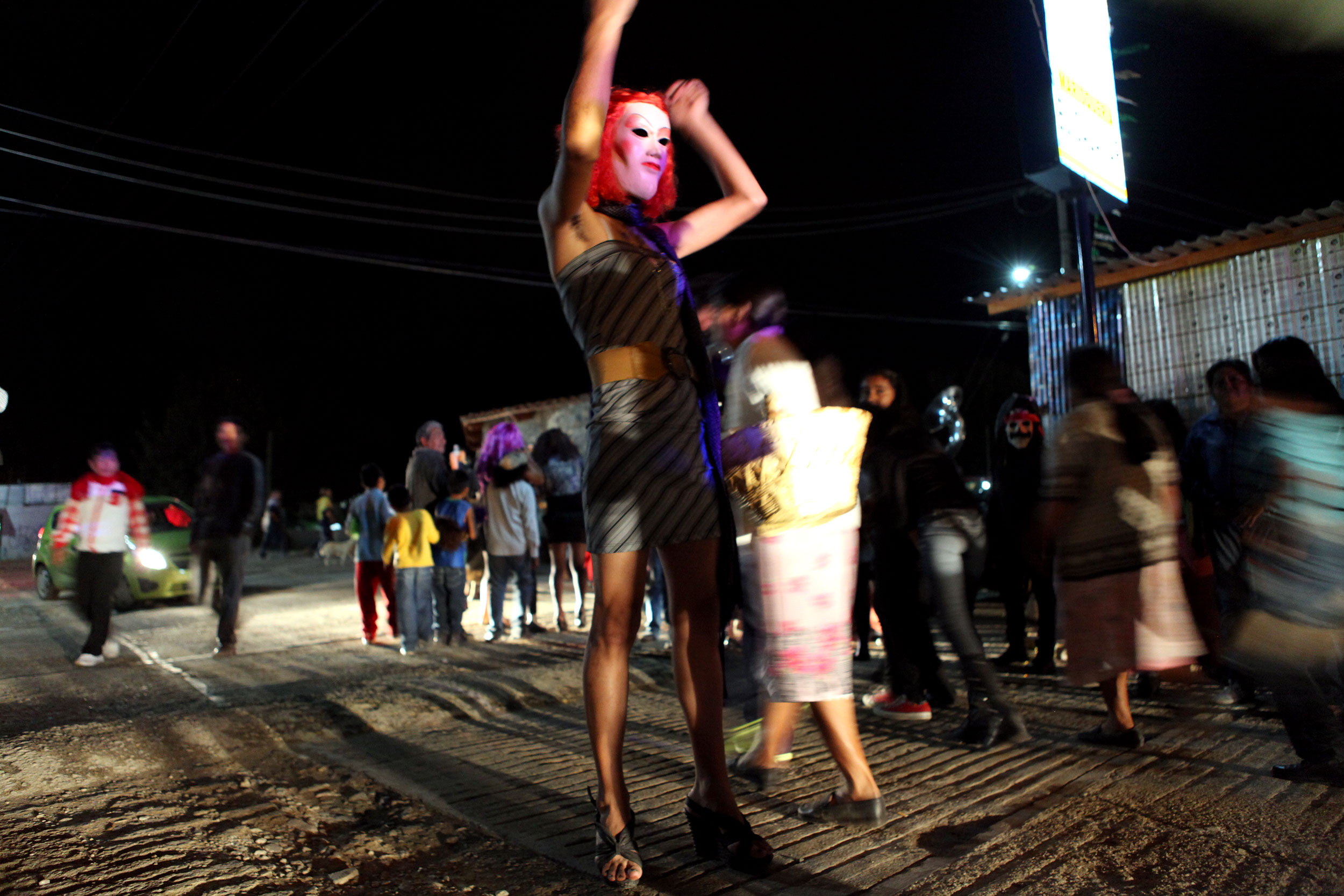
A man dressed in drag dances and poses in the lights of a police vehicle as residents The residents of Tule Mexico exit the city cemetery following a dance part on November 2, 2013. Photo: Alex Washburn
Alex did a pretty good job of filling everyone in on what was going on in Oaxaca for day of the dead (in fact there are multiple days of the dead, with one big celebration at the beginning for All Hallows’ Eve). It begs to be mentioned that for every flash happy maverick we saw in the cemeteries, there were plenty of tourists being respectful of the families and celebration (though there were a crushing amount of tourists).
On Friday afternoon we got back from Tule cemetery and having been out late the night before, going to three cemeteries for Day of the Dead, we thought we’d just spend the night in. However, someone was going around the hostel promoting a cemetery tour that night that would go to a couple of cemeteries we hadn’t been too.
We said yes and signed up, and only after did I find out it didn’t start till 8:30 and was a five to six hour tour (you read that right) meaning it wouldn’t be over till one or two in the morning. I almost ducked out at the last minute before the tour started, and after what was to come, I wish I had.
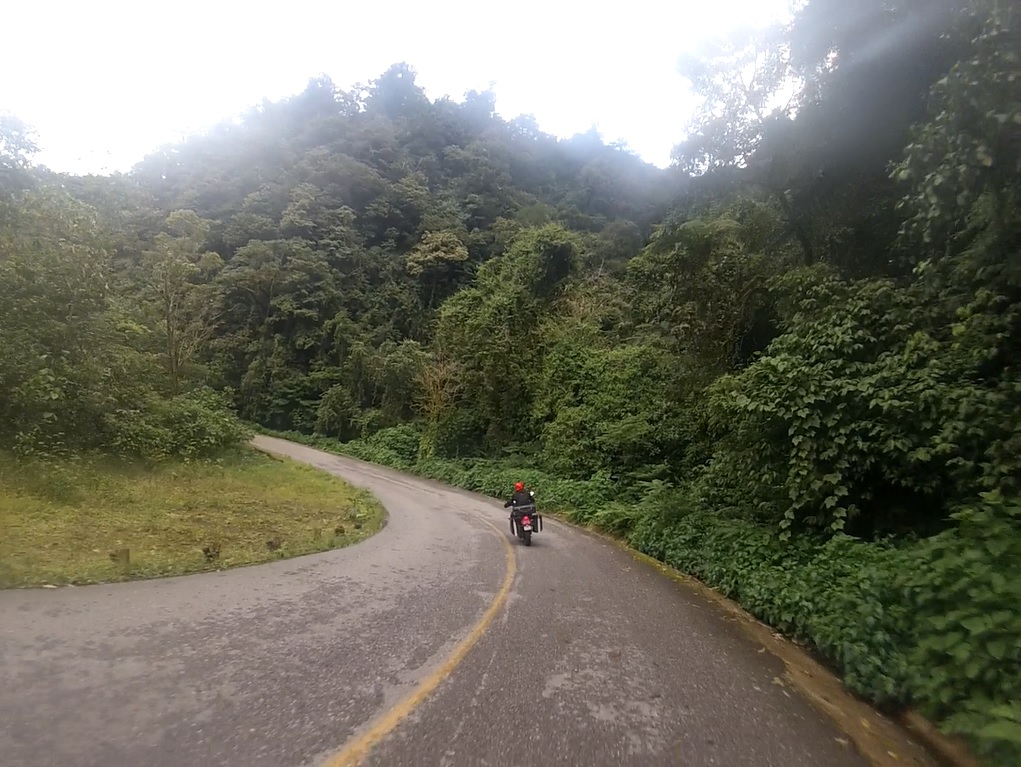
The road out of Oaxaca. Photo: Nathaniel Chaney
After leaving the main cemetery at 11pm, we then proceeded to be dragged from closed cemetery to closed cemetery until finally at 1am, the tour asked for the guide to just take us back to the hostel (where he informed us he wanted to take us to one more place that was supposed to be happening, we didn’t bite). Once returned, he offered us a free tour the next night, but we all declined citing other plans. I could think of nothing worse then to have to relive that experience again. I would pay money to not have to go a second time.
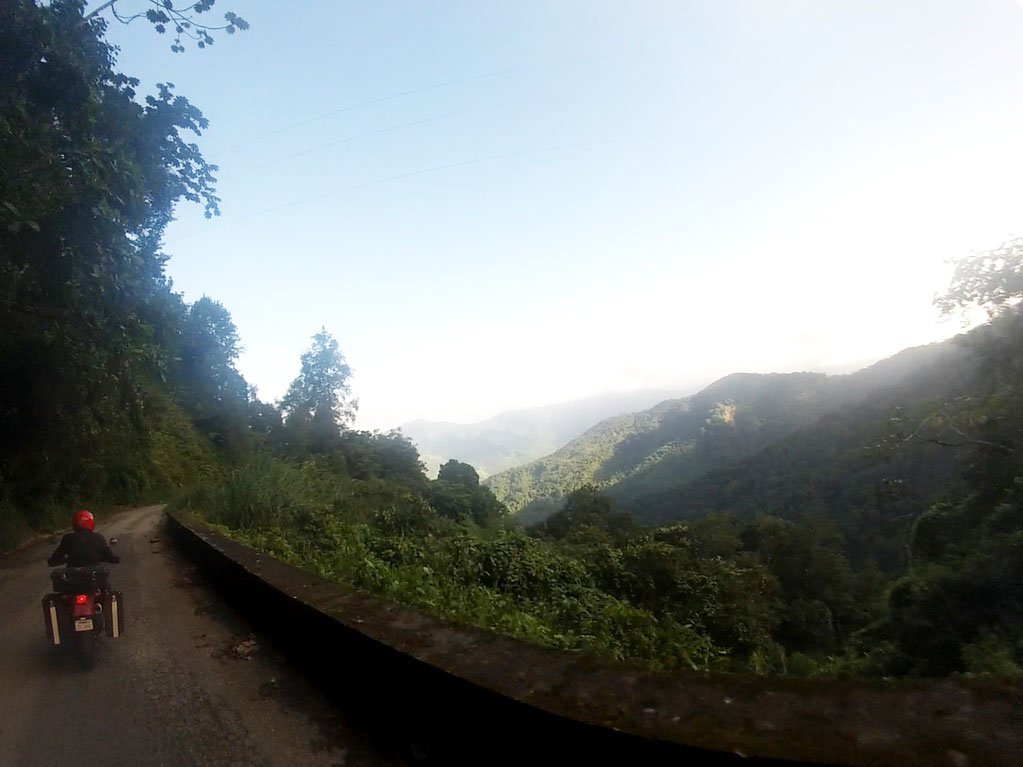
The road out of Oaxaca. Photo: Nathaniel Chaney
Alex’s cousin (who is a truck driver) told us that there were three options out of Oaxaca: 1) was a pleasant, but relatively boring back-track, 2) was over 200 miles of hairpins going kind of the wrong direction, and 3) (the one we picked) was just over 100 miles of s-turns with gorgeous views and a nature reserve.
Heading out of Oaxaca and into the mountains, it was all climb for the first two hours of the ride. What had started as a warm, muggy day in the valley quickly turned into a chilling, foggy climb where at one point we broke through the fog (yes literally climbed above the clouds),
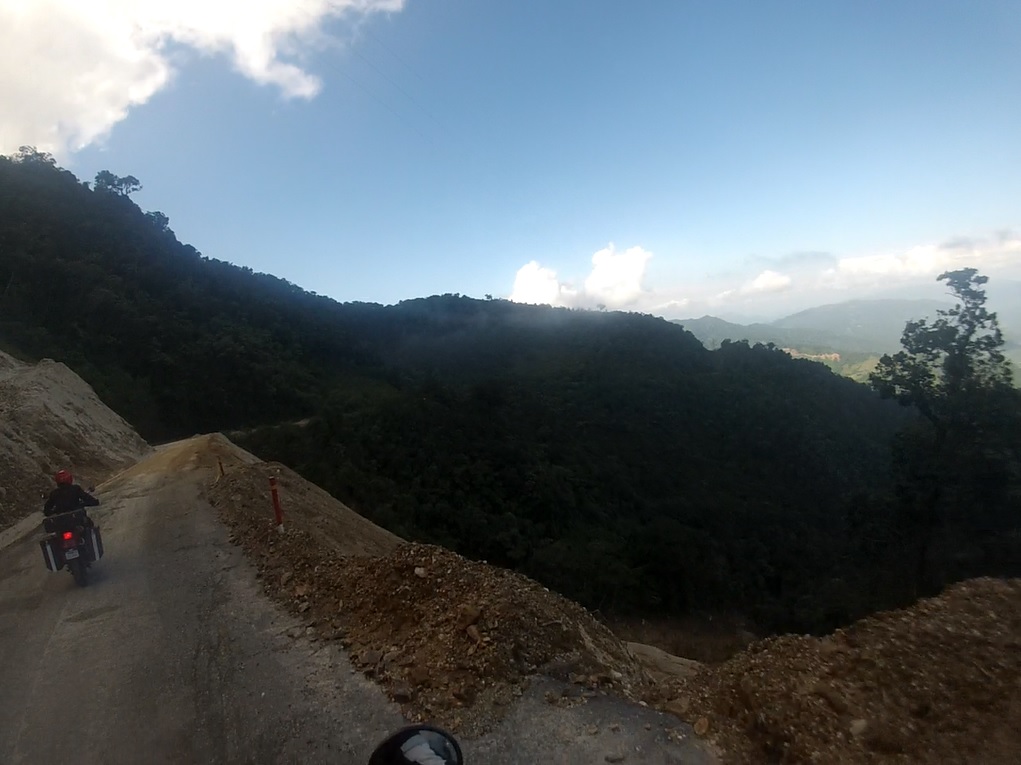
The road out of Oaxaca. Photo: Nathaniel Chaney
If you are ever in the Oaxaca region with your bike, you have to take the road from Tuxtepec to Oaxaca (hwy-175). Make sure your bike can handle the mountain terrain, but the views you get will be some of the best anywhere. We finally made our final descent, and rode on to Tuxtepec for the night.
Bye Bye Baja
Posted on October 29, 2013
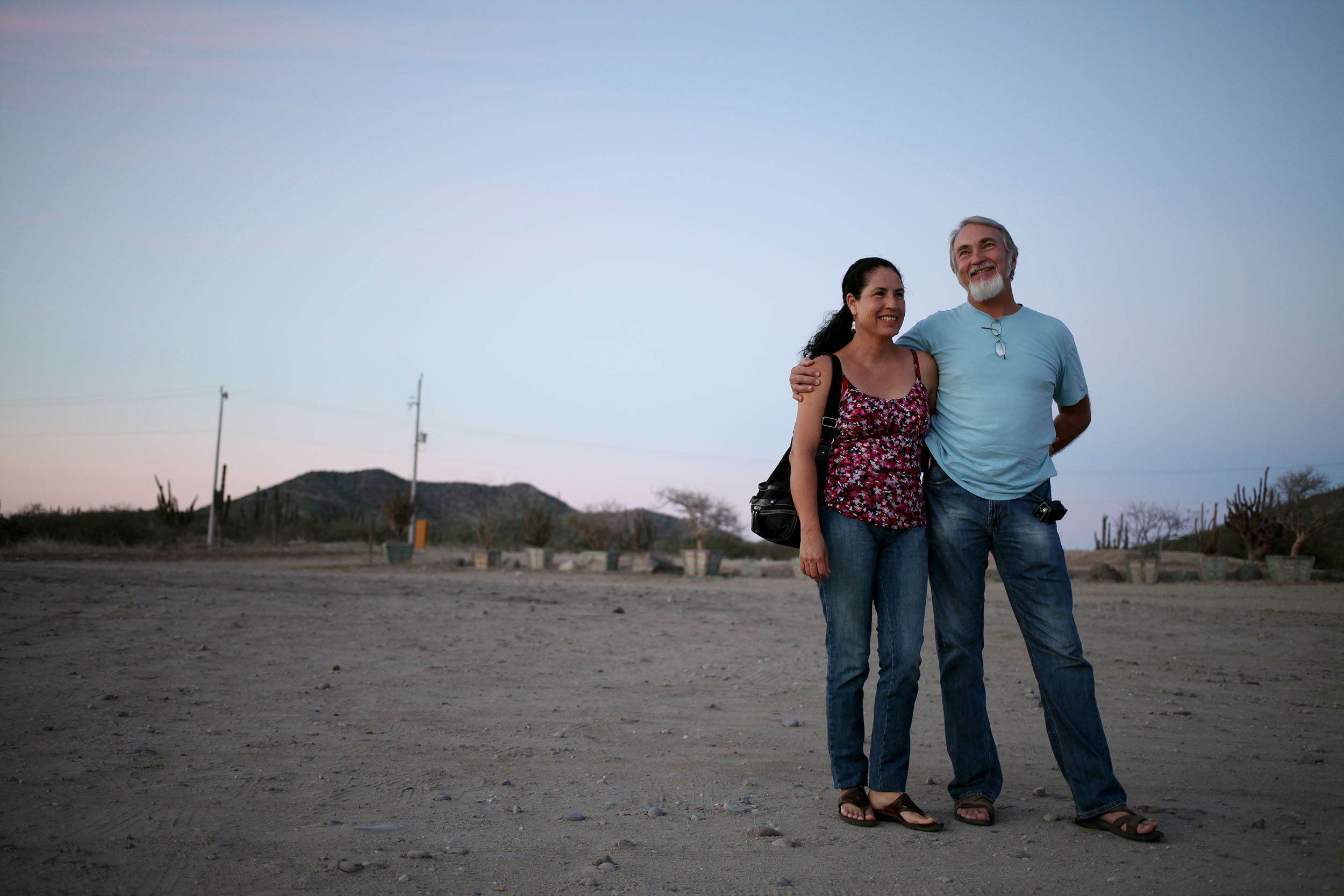
Eva and Rick are the lovely people who own Baja Backpackers in La Paz Mexico. Because of the problems with our paperwork we ended up staying at their hostel for over a week and Alex created a new web site for their business. Photo: Alex Washburn
After a week of being in a holding pattern in La Paz, Alex received her documents in the mail via DHL (thank you Val!) and by Wednesday we had everything we needed to board the ferry on Thursday. We got up early, did a little maintenance on Alex’s bike (which involved taking the gas tank completely off), packed all of the gear (which took longer due to a week of rust) and headed off to Pichilingue to get our importation documents for the motorcycles and board the ferry.
Several hours later, we boarded the ferry without any problems (it’s amazing how fast bureaucracy works when you have all the right paperwork!). Waiting to board the ferry, a fellow motorcyclist pulled up and helped us while away the time with good conversation. Jim was riding a BMW down from Seattle to his second home in Mazatlan. He had great stories of family, and his own adventures riding through Mexico, Belize, and Guatemala.


After securing the bikes on the ferry (which consisted of tying them down with rope) we headed to our seats, which were pretty comfortable and proceeded to watch some movies and sleep for the next 16 hours. Untied the bikes, and disembarked in Mazatlan without any instances, though while on board Alex had determined that we were going to have to ride 700 miles in two days to reach her family in Huamantla.
The first day we left Mazatlan at 11am and rode all day aside from a gas stop, and two tip overs, one by me and the other by Alex, into a car (count is 4-2 with two dinged cars), until dusk to reach Guadalajara setting a new one day record of 300 miles. The country between Mazatlan and Guadalajara is some of the best I have seen, and one name I thought of for this post was going to be ‘The Road of Butterflies’ as there were sections of road with hundreds of butterflies on either side (and sometimes in the middle).
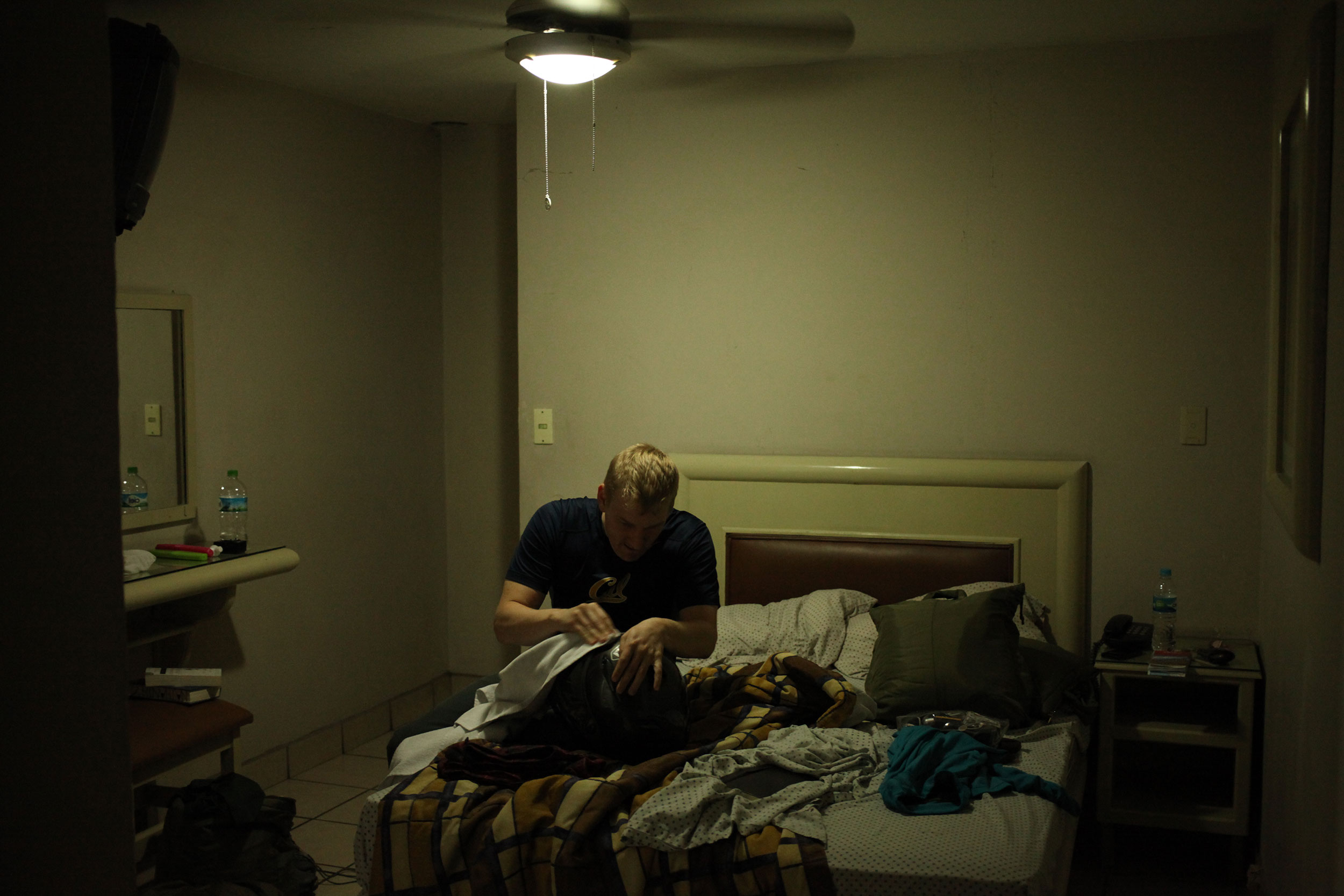
We pulled into a nice looking hotel in Guadalajara and intended to check into it until Alex saw a more “cost efficient” business across the street. The room was about $24 USD but it had hot water and was clean. Photo: Alex Washburn
Less than 12-hours later it was back on the bikes as ‘Alex the whip’ drove us on to Huamantla. From Guadalajara to Huamantla was going to be over 400 miles, my reaction the night before was:
“I don’t think we can do it, but fuck let’s give it a shot.”
We left just after sunrise and made it to Santiago de Querétaro by 2:30pm with only one stop for gas and food in between. That is when the things got really tough.
What some that haven’t rode a motorcycle or haven’t gone long distances don’t understand is that there is a slow deterioration of the feeling in one’s gluteus maximus as the day goes on. In the morning you’re fine, smelling fresh flowers and grass, listening to the roar of the engine and the wind past your helmet, meditating in your own world as the country passes you by. But as the day goes on you begin to loose feeling in your posterior, the smell of flowers is replaced by truck fumes, and the wind becomes a relentless howling echoed only by the constant drone of the hell-beast that is your horse trampling down any resemblance of a thought in your head.
At 4:00pm we stopped for gas (again), with rain clouds on the horizon of Mexico City D.F. my spirits were low, reflected in the idling of my engine, that had lowered as well, due to the altitude we had climbed that day. Alex insisted we could make it, and I had to channel a new inner level of zen to sally forth past the thoughts of doubt that continued to haunt me during the ride.
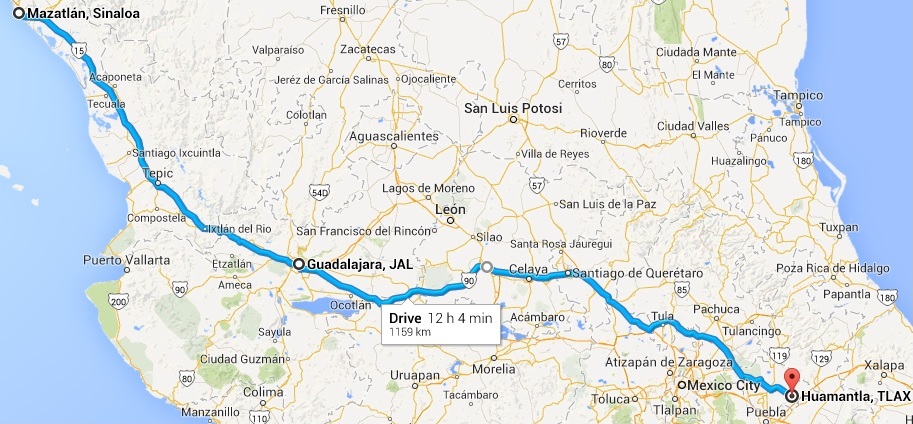
Our route from Mazatlan to Huamantla
A couple of drops of rain, some heavy wind, and another 100 miles brought us to the doorstep of Alex’s house in Mexico, in a little town named Huamantla that sits in the shadow of a mountain called ‘La Malinche’. A new record setting day of 432 miles came to an end with empty stomachs (and gas tanks) and sore bottoms. It was all made worth it when we were welcomed by family, given a hot meal, and a warm bed to collapse into.
You always reach your destination, even if it wasn’t where you planned.
We Are Tumbleweeds
Posted on October 14, 2013


Something Nathaniel and I quickly realized on the Baja Peninsula is that it takes you twice as long to get anywhere as you would expect.
We’ve ridden about 500 miles in the past two days and they’ve been a long two days. Mex 1 runs through the center of a ton of small towns and they’ve constructed speed bumps and s-turns to keep trucks and tourist from blowing through at 70 mph.
Overall the asphalt has been wonderful and other than a few towns doing road construction a regular cruiser bike would be able to make the trip.
I’m sorry for the small number of photos on the blog thus far.
At the moment we are focused on making a boat in La Paz on the 15th which is why we haven’t had much time to stop and smell the tortillas.
We literally got up at 6:30am today – were driving by 8am and didn’t stop for the night till 4:30. Other than a quick taco/gas  stop in Guerro Negro it was all riding. 250 some odd miles of gorgeous desert, rolling hills and a roaring engine.
There was this beautiful sweeping turn on the way to Guerro Negro and as I came half way around it I saw a flock of vultures eating something just on the side of the road.
They started to rise up into the air as I barreled down on them and I didn’t have time to stop. Realizing how disastrous hitting an animal the size of a vulture could be I may have yelled inside my helmet.
I let go of the throttle and flattened myself on my gas tank praying that extra foot of space was enough to go underneath them. It was – but it was a close call that left me rattled for a few minutes.
Today we leave Santa Rosalia and hope to get more than half way to La Paz.
 Where the Autopista Ends